Why Is My Credit Score Not Increasing?
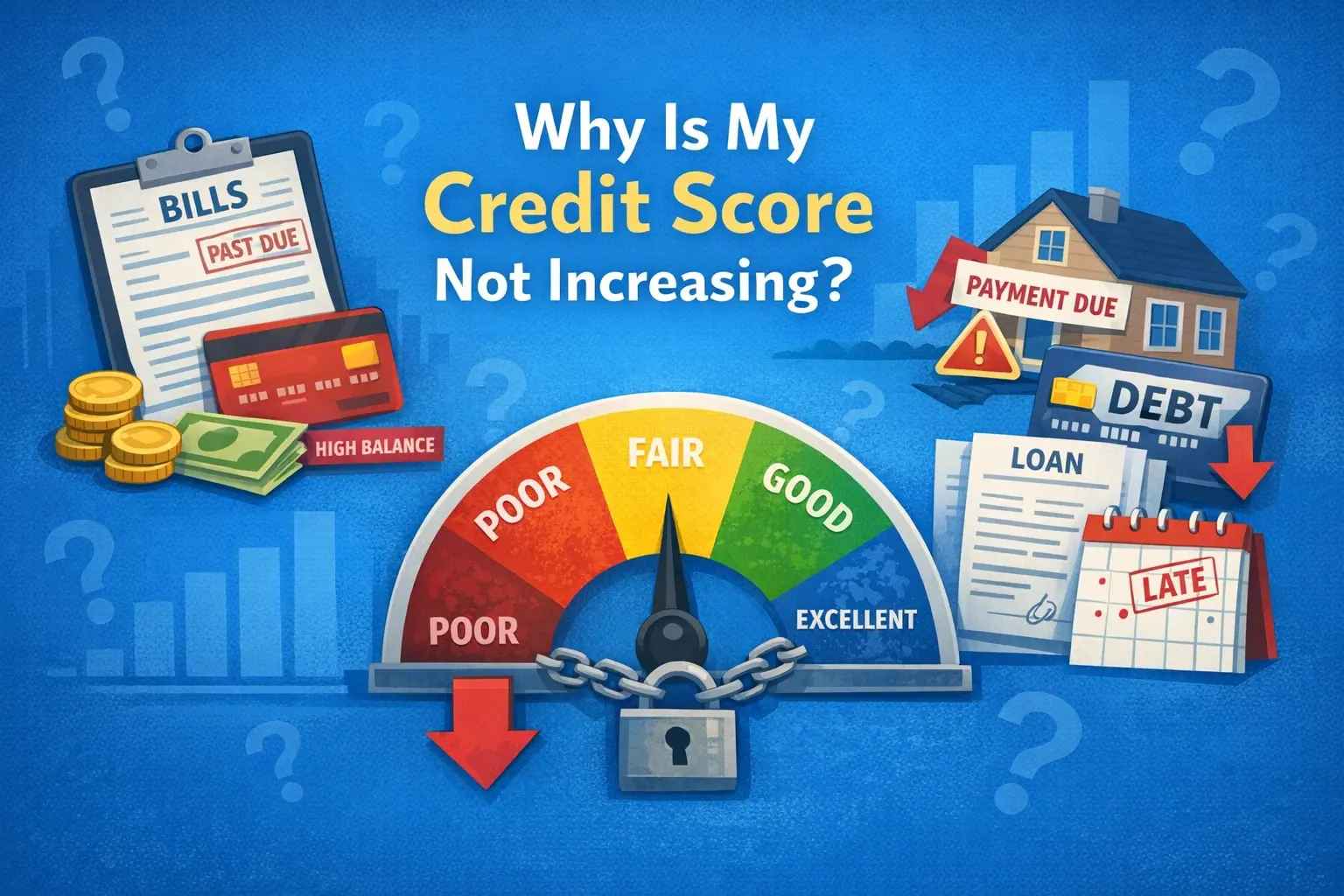
You’ve been paying every bill on time, keeping balances low, and avoiding new debt — yet your credit score refuses to budge. Millions of Americans feel the same frustration every month. In 2026, with rising living costs and evolving credit models, many consumers are watching their FICO or VantageScore stay flat or even dip slightly despite good habits.
The truth is, credit scores don’t always move in a straight line upward. Payment history (35% of your FICO score) and amounts owed (30%) are the biggest factors, but smaller issues — from outdated credit-report errors to high utilization on a single card — can keep your score locked in place.
At Credit Repair Ease, we specialize in identifying exactly why your score isn’t increasing and taking fast, legal action to fix it. This in-depth guide explains the eight most common reasons your credit score stays stuck and shows you exactly what you can do — including when professional credit repair makes the biggest difference.
Why Is My Credit Score Not Increasing?
1. Your Credit Utilization Ratio Is Too High
Even if you pay your credit cards in full every month, carrying balances above 30% of your available credit limits can drag your score down. Lenders see high utilization as a red flag that you’re overextended. The sweet spot for top-tier scores is under 10%.
Quick fix you can start today: Pay down revolving debt or request a credit-limit increase (without spending more). But if old accounts or reporting errors are inflating your utilization, a professional dispute is often faster.
2. A Single Late Payment (or Older Ones) Is Still Weighing You Down
Payment history is the single largest piece of your score. One 30-day late payment can drop your score 60–80 points and stay on your report for up to seven years. Even if you’ve been perfect for months, the negative mark continues to hold your score back until it ages or is removed.
Many people don’t realize that medical bills, utility payments, or even a single forgotten subscription can show up as late. Credit Repair Ease reviews every account and disputes any inaccurate or unverifiable late payments so they can be deleted permanently when possible.
3. Errors on Your Credit Reports Are Sabotaging Your Score
This is the #1 reason scores stay stuck for our clients. Up to 1 in 4 credit reports contain serious errors — accounts that aren’t yours, wrong balances, duplicate entries, or payments incorrectly marked late.
Under the Fair Credit Reporting Act (FCRA), you have the legal right to dispute anything inaccurate. Credit Repair Ease handles the entire process: we order all three reports (Equifax, Experian, TransUnion), identify every error, and file detailed disputes with the bureaus and creditors. Most clients see multiple negative items removed within 30–45 days.
4. Your Credit History Is Too Short or Too Thin
If you’re new to credit or only have a few accounts, lenders have less data to judge your reliability. Length of credit history makes up 15% of your score. Closing old accounts can actually shorten your average age of accounts and hurt your score more than you expect.
We help clients strategically keep positive accounts open while disputing negative ones that are dragging down the average age.
5. Too Many Hard Inquiries in a Short Time
Every time you apply for a loan, credit card, or even a new apartment, a hard inquiry hits your report. Too many in a 12-month window can lower your score and signal risk to lenders. Even rate-shopping for a mortgage or auto loan can add up if not done within the allowed window.
Credit Repair Ease doesn’t remove legitimate inquiries, but we do challenge any that were fraudulent or unauthorized.
6. Outstanding Collections, Charge-Offs, or Public Records
Collections, charge-offs, judgments, and tax liens are among the most damaging items. Even paid collections can linger and suppress your score. In 2026, many consumers are still feeling the impact of student-loan payment resumption and higher credit-card debt.
Our team negotiates directly with creditors and collection agencies to validate, update, or delete unverifiable negative items — often resulting in fast score gains.
7. You’ve Plateaued at a High Score
Ironically, the higher your score climbs (say, 750+), the harder it becomes to move it upward. Small changes have less impact once you’re already in the excellent range. This “plateau effect” is completely normal.
8. Your Credit Report Simply Hasn’t Updated Yet
Lenders report to the bureaus only once a month. If you just paid off a big balance or fixed a late payment, it can take 30–45 days for the change to appear. Patience helps — but persistent errors need professional intervention.
Why DIY Credit Repair Often Falls Short — And When Professional Help Wins
You can dispute errors yourself for free by mailing letters to the bureaus. But most consumers lack the time, legal knowledge, and follow-through to get results before the 30-day bureau deadline. Professional credit repair companies like Credit Repair Ease file detailed, FCRA-compliant disputes on your behalf, track every response, and re-dispute if the bureaus fail to investigate properly.
Our clients routinely see 50–100+ point increases once inaccurate items are removed — sometimes in as little as 45 days. We never promise specific results (no legitimate company can), but we do guarantee relentless work until every possible negative item is challenged.
Ready to Stop Wondering and Start Increasing Your Score?
Don’t let inaccurate information or lingering negatives keep you from the home loan, car payment, or credit card rewards you deserve. Credit Repair Ease has helped thousands of Americans across the United States clean up their credit reports and unlock better financial opportunities.
Call (888) 803-7889 right now for a free, no-obligation credit consultation. Our experts will review your situation, explain exactly what’s holding your score back, and map out a clear plan to get it moving upward.
📚More About Credit Score
Minimum Credit Score for a Boat Loan: What Lenders Require in 2026
October 13, 2026How Do I Find Out My Credit Score? 7 Free Ways to Check (2026)
October 6, 2026
What Is the Maximum Credit Score, and How Is It Calculated?
September 1, 2026