Credit Repair vs. Credit Counseling: Which Is Right for You?
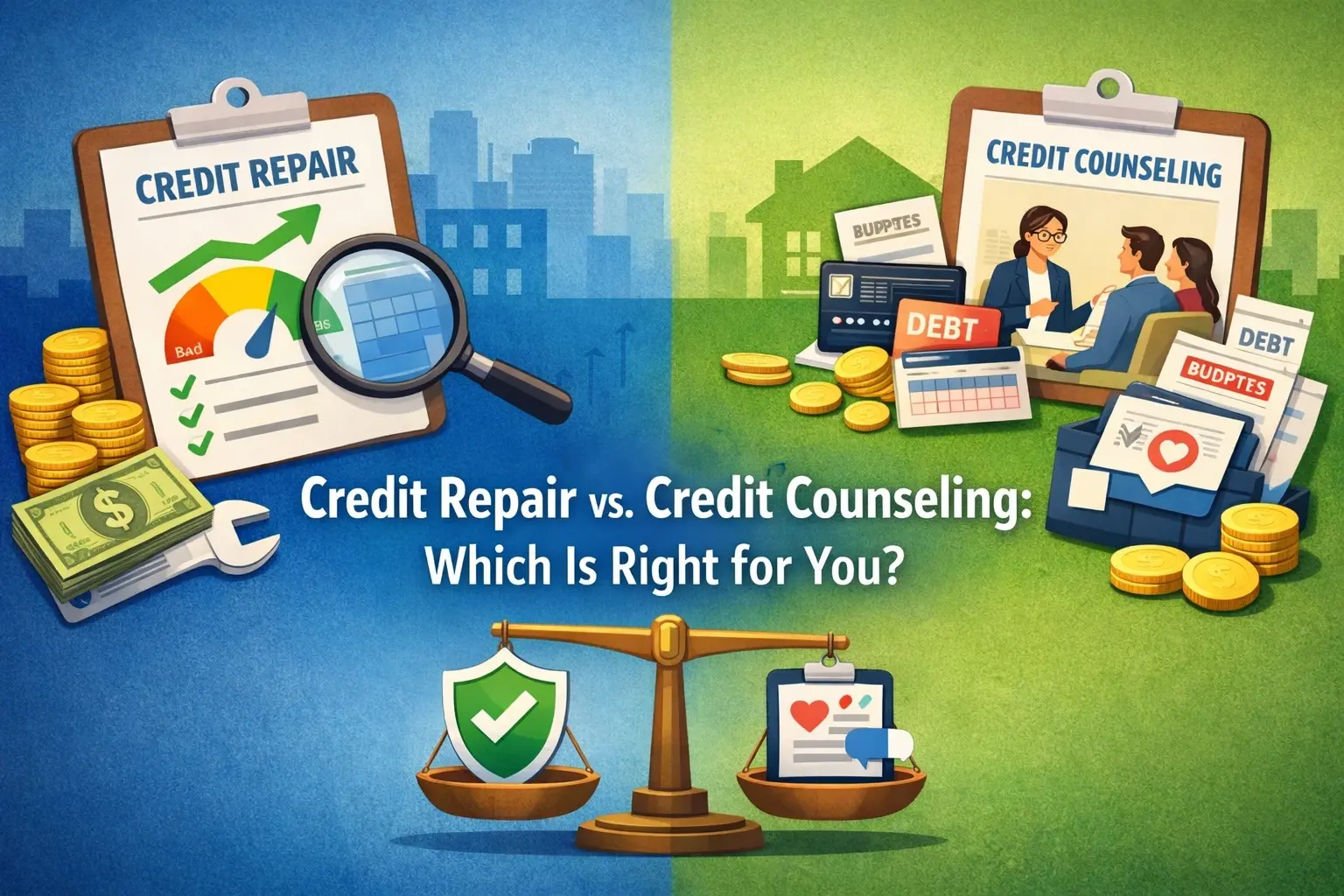
When you are struggling with a low credit score, high interest rates, or mounting debt, finding the right path forward can feel overwhelming. Two of the most common terms you will encounter are credit repair and credit counseling.
While they sound similar, they are entirely different financial strategies designed to solve completely different problems. Choosing the wrong one can delay your financial recovery and, in some cases, cause temporary damage to your credit profile.
This comprehensive guide breaks down the critical differences between credit repair and credit counseling, how they impact your credit scores, and how to choose the right strategy for your specific financial goals.
📌 Quick Summary:
What is the difference between credit repair and credit counseling?
Credit Repair focuses exclusively on fixing your credit reports. It involves identifying, challenging, and legally removing inaccurate, outdated, or unverifiable negative items (such as charge-offs, late payments, collections, and bankruptcies) from your credit reports under the Fair Credit Reporting Act (FCRA).
Credit Counseling focuses on managing debt and budgeting. Certified counselors help you manage existing debt, build realistic budgets, and set up Debt Management Plans (DMPs) to consolidate and pay down high-interest credit card debt over three to five years.
To discuss your custom credit goals and build a personalized plan to improve your credit standing, call our expert consultation desk at (888) 803-7889.
What is Credit Repair?
Credit repair is the process of correcting errors, inaccuracies, and unverifiable negative marks on your credit reports. Under the Fair Credit Reporting Act (FCRA), every American has the legal right to a 100% accurate, fair, and verified credit report. If a credit bureau or creditor cannot verify a negative mark on your report, they are legally required to delete it.
How the Credit Repair Process Works:
Credit Report Analysis: You pull and analyze your credit reports from all three major bureaus—Equifax, Experian, and TransUnion.
Identifying Negative Items: You isolate errors such as duplicate collections, accounts that don't belong to you, outdated late payments (older than 7 years), or incorrect account balances.
Filing Dispute Challenges: You submit formal, legally cited dispute letters to the credit bureaus and individual creditors demanding verification of the negative items.
Bureau Investigation: The bureaus have 30 to 45 days to investigate the disputes. If the creditor fails to respond or cannot verify the information, the item is permanently removed.
Common Items Removed Through Credit Repair:
Charge-offs and repossessions
Inaccurate late payments
Duplicate collection accounts
Inaccurate public records (bankruptcies, tax liens)
Incorrect personal information or identity theft marks
What is Credit Counseling?
Credit counseling is an educational and debt-management service, typically offered by nonprofit organizations. The primary goal of a credit counselor is to help you manage your existing debt obligations, improve your budgeting habits, and regain control of your personal finances.
How the Credit Counseling Process Works:
Financial Consultation: A certified counselor reviews your income, monthly expenses, assets, and overall debt load.
Budget Creation: The counselor helps you create a realistic monthly budget so you can live within your means.
Debt Management Plan (DMP): If you have high-interest credit card debt, the counselor may recommend a DMP. Under a DMP, your credit card debts are consolidated into a single monthly payment. The agency negotiates with your creditors to lower your interest rates and waive late fees.
Structured Payoff: You make a single monthly payment directly to the counseling agency, which then distributes the funds to your creditors over a 3-to-5-year period.
Head-to-Head Comparison: Credit Repair vs. Credit Counseling
Feature | Credit Repair | Credit Counseling |
|---|---|---|
Primary Focus | Deleting inaccurate negative marks on credit reports. | Managing high debt loads and creating household budgets. |
Ideal For | People with damaged credit due to errors, collections, or past mistakes. | People are struggling to pay off high-interest credit card debt. |
Credit Score Impact | Positive. Removing negative items generally leads to a direct score boost. | Mixed/Neutral. Consolidating debt helps, but DMPs require closing accounts. |
Cost Structure | Typically structured as flat-rate or monthly service fees. | Often free for budgeting, DMPs charge small setup and monthly fees. |
Timeline | Typically, 3 to 6 months to see substantial results. | Structured over 3 to 5 years to pay off the total debt. |
Main Advantage | Directly improves your credit score by cleaning up historical reports. | Lowers interest rates and stops collection calls. |
Credit Score Impact: How Each Option Affects Your Profile
One of the most important factors in choosing between these two paths is understanding how they will affect your credit score in both the short and long term.
How Credit Repair Affects Your Score:
Direct Improvements: Because your payment history accounts for 35% of your FICO score, removing even a single negative late payment or collection account can result in a significant, immediate score increase.
No Risk of Lowering Scores: The process of disputing inaccuracies does not negatively affect your score. It is a risk-free method of ensuring your credit report reflects your true creditworthiness.
How Credit Counseling Affects Your Score:
Initial Minor Drop: If you enroll in a Debt Management Plan (DMP), your creditors will require you to close your open credit cards. Closing open lines of credit reduces your total available credit, which increases your credit utilization ratio and can temporarily lower your credit score.
Long-Term Recovery: As you make consistent, on-time payments through the DMP and lower your overall debt load (improving your debt-to-income ratio), your credit score will slowly recover and build a strong foundation over time.
How to Choose the Right Strategy for Your Financial Goals
To determine which service is best for your current situation, ask yourself the following diagnostic questions:
Choose Credit Repair If:
You have a low credit score, but do not have overwhelming current debt.
Your credit reports are holding you back from securing a mortgage, buying a car, or qualifying for low-interest rates.
You have past collections, medical bills, charge-offs, or late payments on your report that are outdated, inaccurate, or unverified.
You want to clean up your credit history quickly (within 3 to 6 months).
Choose Credit Counseling If:
You have a stable credit score but are buried under high-interest credit card debt.
You are struggling to make the monthly minimum payments on your bills.
You need expert guidance to build a budget and manage your household spending.
You are prepared to close your credit card accounts and commit to a 3-to-5-year repayment plan.
Frequently Asked Questions (FAQ)
1. Is credit counseling better than credit repair?
Neither is objectively "better" because they solve different problems. Credit counseling is best for paying down large balances of active, high-interest debt. Credit repair is best for cleaning up historical negative inaccuracies on your credit report to boost your credit score quickly.
2. Can I do credit repair myself?
Yes. You can legally write and mail dispute letters to the credit bureaus yourself. However, working with a professional credit repair service saves you time, prevents common mistakes, and leverages expert knowledge of consumer protection laws (like the FCRA and FDCPA) to yield faster, more consistent deletions.
3. Will credit counseling show up on my credit report?
Enrolling in a Debt Management Plan (DMP) may place a note on your credit report stating that the account is being managed by a third-party agency. While this note does not directly lower your FICO score, some future lenders may view it as a sign of past financial distress when you apply for major loans.
4. How long does credit repair take compared to credit counseling?
Credit repair is a relatively fast process, typically taking 30 to 180 days (1 to 6 months) depending on the complexity of your credit report. Credit counseling (specifically a DMP) is a long-term commitment, typically taking 36 to 60 months (3 to 5 years) to fully pay off your creditors.
Take the First Step Toward Financial Freedom
Understanding the difference between credit repair and credit counseling is the first step toward regaining control of your financial destiny. Whether you need to dispute historical errors to boost your score or build a structured budget to pay down debt, taking action today is crucial.
If you want to clear negative, inaccurate items from your credit reports, qualify for better loan rates, and secure a higher credit score, we can help.
Call our credit consultation desk today at (888) 803-7889 to speak with an expert and build your custom score-boosting blueprint!
📚More About Credit Repair

How Long Before Buying a Home Should You Start Credit Repair?
June 30, 2026
What Happens During a Credit Repair Consultation?
June 9, 2026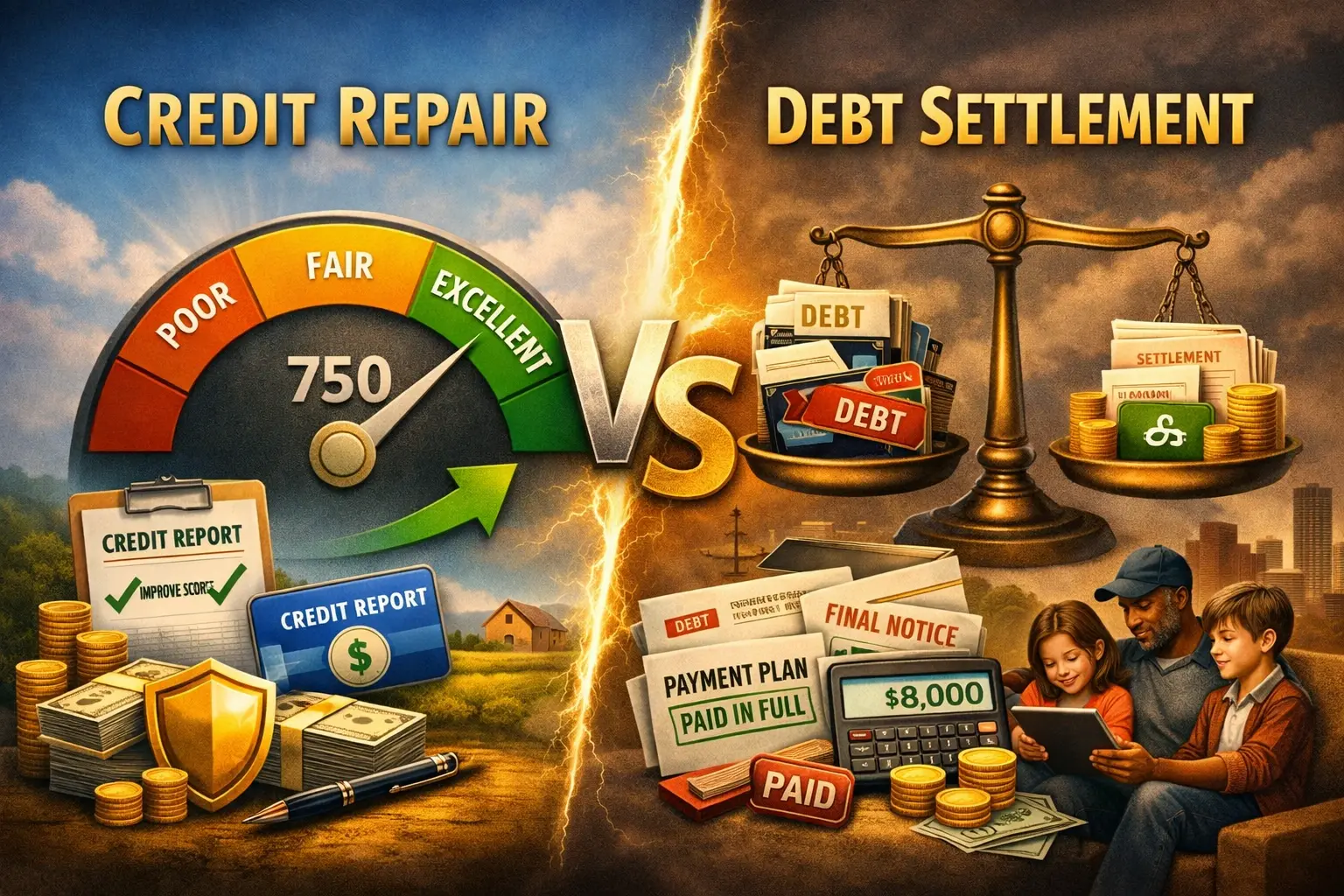
Credit Repair vs. Debt Settlement: What's the Difference and Which One Do You Need?
June 2, 2026