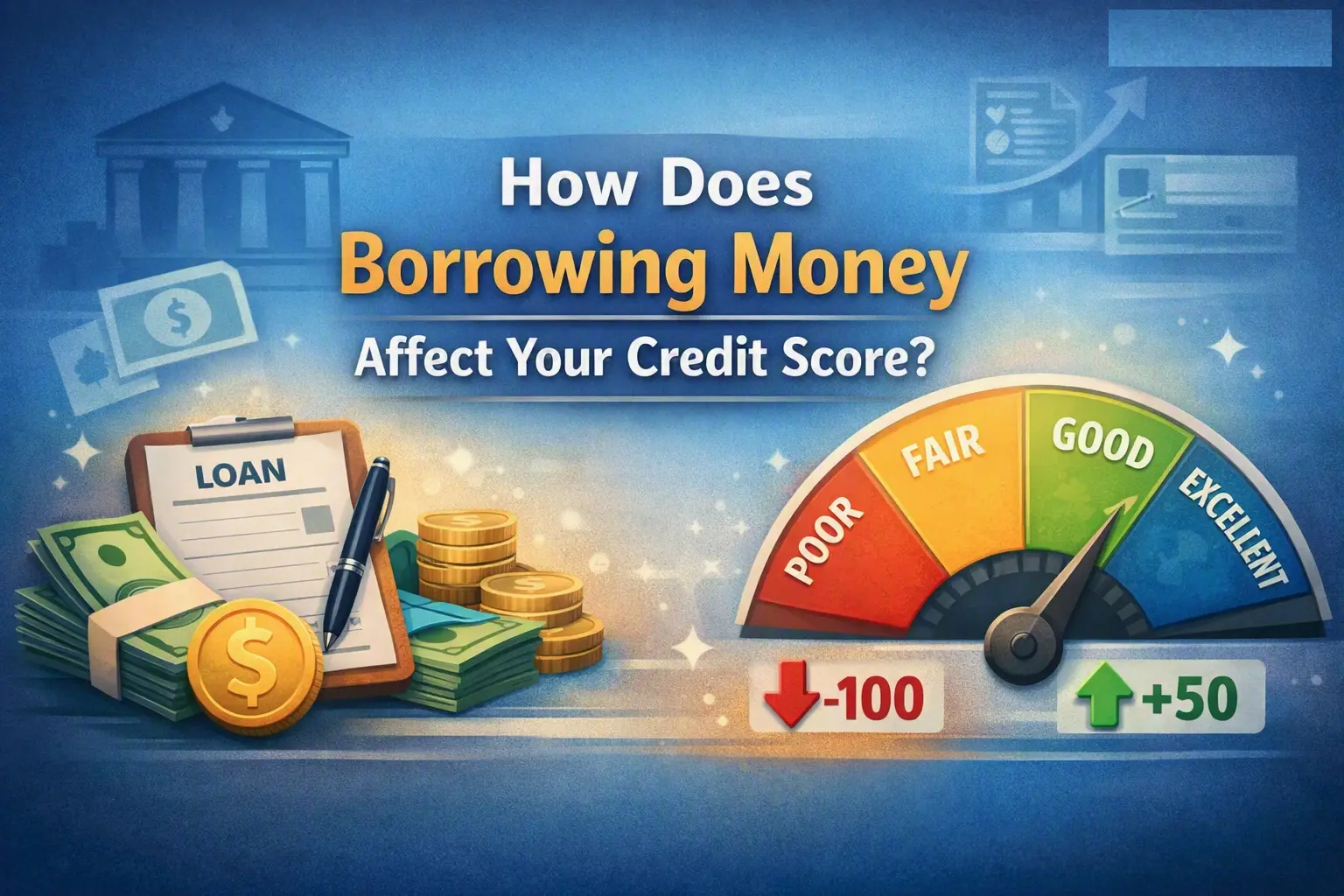
How Does Borrowing Money Affect Your Credit Score?
Introduction
Every time a consumer applies for a credit card, a personal loan, an auto loan, or a mortgage, the same question comes up: will this help or hurt my credit score? The honest answer is that borrowing money does both, in different ways and on different timelines. It can ding a score the moment a lender pulls a credit report, reshape it again once the new account posts, and then move it up or down for years afterward depending entirely on how the debt is repaid.
At CreditRepairEase.com, we look at this question the way a lender's underwriting team would: not as a single event, but as a sequence of scoring effects that stack on top of each other. Understanding that sequence is the difference between borrowing in a way that builds credit and borrowing in a way that quietly erodes it.
Quick Answer
Borrowing money affects a credit score through several distinct mechanisms, not just one. Applying for credit triggers a hard inquiry that typically costs five to ten points and fades from the score within about twelve months, even though it stays visible on the report for two years. Opening a new account temporarily lowers the average age of a credit file, which factors into the 15% "length of credit history" category.
For revolving credit such as credit cards, carrying a balance raises the credit utilization ratio, part of the 30% "amounts owed" category. Installment loans, including personal loans, auto loans, and mortgages, are scored differently: they don't count toward revolving utilization, and adding one can improve the 10% "credit mix" category for borrowers who previously had only credit cards. In nearly every case, the single largest factor is what happens next: payment history alone makes up 35% of a FICO Score, so on-time payments on new debt tend to outweigh the short-term dip from applying for it.
Key Findings
Payment history (35%) and amounts owed (30%) drive roughly two-thirds of a FICO Score, according to myFICO, the consumer division of the Fair Isaac Corporation. Length of credit history, credit mix, and new credit each account for 10–15%.
A hard inquiry typically lowers a score by five to ten points, with the effect fading within about a year, per Experian and FICO's own consumer guidance. Multiple inquiries on unrelated types of credit within a short window can compound the impact.
Rate-shopping windows protect borrowers. FICO scoring models group multiple inquiries for the same loan type (such as several mortgage or auto loan applications) made within a 14–45-day window into a single inquiry, rather than penalizing each one separately.
Utilization guidance from myFICO recommends staying under 30% of available revolving credit, with additional benefit below 10%. This applies specifically to credit cards and other revolving lines, not installment loans.
U.S. household debt reached $18.8 trillion in the second quarter of 2026, with credit card balances climbing to $1.26 trillion, according to the Federal Reserve Bank of New York's Household Debt and Credit Report. Roughly 60% of cardholders carry a revolving balance rather than paying in full each month.
The average APR on credit card accounts carrying a balance rose to 22.15% in Q2 2026, per the Federal Reserve's G.19 consumer credit data, which is one reason installment debt consolidation is a common strategy for lowering both interest costs and utilization.
Scoring models are changing. As of April 2026, the Federal Housing Finance Agency directed Fannie Mae and Freddie Mac to accept both FICO 10T and VantageScore 4.0 for mortgage underwriting alongside the classic FICO Score. Both newer models incorporate 24 months of trended balance data instead of a single-month snapshot, meaning a borrower who is actively paying down debt can be scored more favorably than under older models.
The national average FICO Score sits at approximately 713, reflecting a population where most consumers manage borrowing responsibly even as aggregate debt levels rise.
Two Types of Borrowing, Two Different Scoring Effects
Not all borrowed money is scored the same way. Revolving credit — credit cards and lines of credit — is judged largely by utilization: the percentage of available credit currently in use. Installment credit — personal loans, auto loans, student loans, and mortgages — is judged by a fixed repayment schedule instead. Maxing out a credit card and taking out a $20,000 auto loan can produce very different scoring outcomes even though both add to total debt, because only the credit card balance factors into the utilization ratio that makes up a large share of the "amounts owed" category. This is also why a large installment loan, like a mortgage, doesn't automatically tank a score the way a maxed-out credit card does, provided payments are made on time.
The Moment You Apply: Hard Inquiries
Submitting a loan or credit card application authorizes a hard inquiry, which is visible to other lenders and factored into the score. FICO's own guidance and multiple bureau sources put the typical impact at five points or fewer for well-established credit files, occasionally reaching ten to fifteen points for thinner files or borrowers who already carry high utilization. The inquiry remains on the credit report for two years but stops affecting the FICO Score after about twelve months. Because rate shopping is common for large purchases, scoring models bundle multiple mortgage or auto loan inquiries made within a 14–45 day window into a single inquiry, which is why comparing several lenders for the same loan rarely causes the damage many borrowers fear.
The Moment the Loan Posts: New Accounts, Age, and Mix
Once a loan or card is approved, two more factors shift. First, the average age of all accounts drops, since a brand-new account pulls the average down, and length of credit history makes up about 15% of the score. Second, credit mix, worth about 10%, is affected: a borrower who previously had only credit cards can see a benefit from adding an installment loan, since scoring models reward demonstrated experience managing different types of credit responsibly. Neither effect is usually large on its own, but they compound with the inquiry impact in the first month or two after a new account opens, which is why scores often dip slightly right after a loan closes before recovering.
The Ongoing Effect: Utilization and Payment History
This is where borrowing decisions matter most over time. For revolving credit, every statement cycle recalculates utilization based on the reported balance, so paying down a card before the statement closing date (not just the due date) can improve a score within a single billing cycle.
For any type of borrowed money, payment history is the dominant factor at 35% of the score, and it accumulates slowly: a strong track record built over months and years outweighs nearly everything else, while a single 30-day late payment can be more damaging than several hard inquiries combined.
Debt Consolidation: A Special Case
Debt consolidation loans illustrate how these factors interact. Rolling several high-utilization credit cards into one fixed-term installment loan often improves a score for two reasons: revolving utilization drops toward zero on the paid-off cards, and the new debt is now installment credit, which isn't scored the same way.
The trade-offs are a new hard inquiry, a new account that temporarily lowers average account age, and the temptation to run the paid-off cards back up, which erases the utilization benefit. Borrowers who keep the old cards open (to preserve available credit and account age) but stop using them tend to see the strongest long-term results.
The 2026 Scoring Model Shift: Trended Data
The move to FICO 10T and VantageScore 4.0 for conforming mortgages, now underway following the April 2026 FHFA directive, changes how borrowing history is read. Instead of scoring a single snapshot of current balances, these models evaluate up to 24 months of trended data, so a borrower who took on debt but has been steadily paying it down looks meaningfully different from one whose balance is flat or rising, even if their current balance is identical. This is a structural shift in how the timing and trajectory of borrowing, not just the fact of it, factors into a score.
Research Insights
The most overlooked pattern in this data isn't about any single loan type; it's about sequencing. Aggregate debt levels and average credit scores have both been rising through 2026, which on the surface looks contradictory. The New York Fed's own research points to an explanation often described as a "K-shaped" pattern: many households are managing new and existing debt responsibly, holding scores steady or improving them, while a smaller share carries persistently high revolving balances and drives delinquency figures.
The credit score impact of borrowing money, in other words, has far less to do with the loan itself than with which group a borrower falls into after the loan is approved. The transition to trended-data scoring models is a direct response to this: lenders want to distinguish a borrower actively paying down debt from one who is not, rather than relying on a single balance snapshot that can't tell the difference.
Consumer Impact
For a consumer deciding whether and how to borrow, a few practical implications follow directly from this data:
Time large purchases around statement dates. Paying down revolving balances before the statement closing date, not just the due date, affects the utilization figure that gets reported.
Cluster rate-shopping. Comparing multiple lenders for a mortgage or auto loan within a two-to-six week window limits the inquiry impact to roughly one hit instead of several.
Keep paid-off accounts open when possible. Closing a credit card after a debt consolidation loan reduces total available credit and can shorten average account age, working against the very utilization improvement the consolidation was meant to achieve.
Expect a short-term dip, not a permanent one. The combination of a hard inquiry and a new account typically produces a small, temporary drop that recovers within a few months of on-time payments.
Recognize that installment and revolving debt are not interchangeable for scoring purposes. A borrower deciding between a personal loan and a new credit card for the same expense is also choosing how that debt will be evaluated.
Future Outlook
The rollout of FICO 10T and VantageScore 4.0 across conforming mortgage underwriting is expected to continue through the rest of 2026 and into 2027, gradually giving lenders a more complete picture of how borrowers manage debt over time rather than at a single moment. Both newer models also expand the use of alternative data, including on-time rent and utility payments, which primarily benefits consumers with thin credit files who are building a track record for the first time. As household debt levels continue to climb alongside a resilient average national score, expect continued attention from regulators and researchers on the gap between borrowers who are managing new debt well and those falling behind, since that gap, more than the aggregate debt figures themselves, is what tends to drive future scoring model changes.
Frequently Asked Questions
Does taking out a personal loan hurt your credit score?
It can cause a small, temporary dip from the hard inquiry and new account, but personal loans are installment debt and don't affect your revolving utilization ratio. Many borrowers see their score recover within a few months and improve over time with on-time payments, especially if the loan diversifies their credit mix.
How many points does a hard inquiry take off your score?
Most sources, including FICO itself, put the typical impact at five points or fewer for established credit files, occasionally up to ten or fifteen points for thinner files or borrowers with already-high utilization. The effect generally fades within about twelve months.
Does paying off a loan early hurt your credit score?
Paying off an installment loan closes an account, which can slightly reduce average account age and credit mix, but the improved payment history and lower total debt usually outweigh that effect. Any dip tends to be minor and short-lived.
Is a credit card or an installment loan better for building credit?
Neither is universally better; they build different parts of a score. Credit cards, used with low utilization and paid on time, build payment history and demonstrate ongoing credit management. Installment loans build payment history too and add credit mix diversity, which matters more for borrowers who currently only have revolving accounts.
How does credit card debt affect your score differently than a loan?
Credit card balances count toward your utilization ratio, part of the 30% "amounts owed" category, and are recalculated every billing cycle. Installment loan balances are evaluated against a fixed repayment schedule instead, so a large auto loan or mortgage balance doesn't move your utilization figure the way a maxed-out card does.
Does a debt consolidation loan help or hurt your credit score?
It often helps over the medium term by lowering revolving utilization on the cards being paid off, though it typically causes a small initial dip from the new hard inquiry and account. The main risk is running the paid-off credit cards back up, which cancels out the benefit.
How long does it take for a new loan to be reflected in your score?
Lenders generally report new accounts to the credit bureaus within 30 to 60 days of opening, and inquiry-related score impact typically peaks in the first billing cycle before beginning to fade over the following months.
Conclusion
Borrowing money is not a single scoring event; it's a sequence: an inquiry when you apply, a shift in account age and credit mix when the loan posts, and then months or years of ongoing payment history and, for revolving credit, utilization. None of these effects operate in isolation, and none of them are permanent on their own. The consumers who come out ahead after taking on new debt are rarely the ones who avoided borrowing altogether; they're the ones who understood which category their new debt fell into and managed it accordingly. For consumers working to rebuild or protect their credit while managing existing debt, CreditRepairEase.com offers additional resources on credit repair strategies, and our team is available at (888) 803-7889 for questions about how a specific borrowing decision may affect an individual credit profile.
📚More About Credit Score
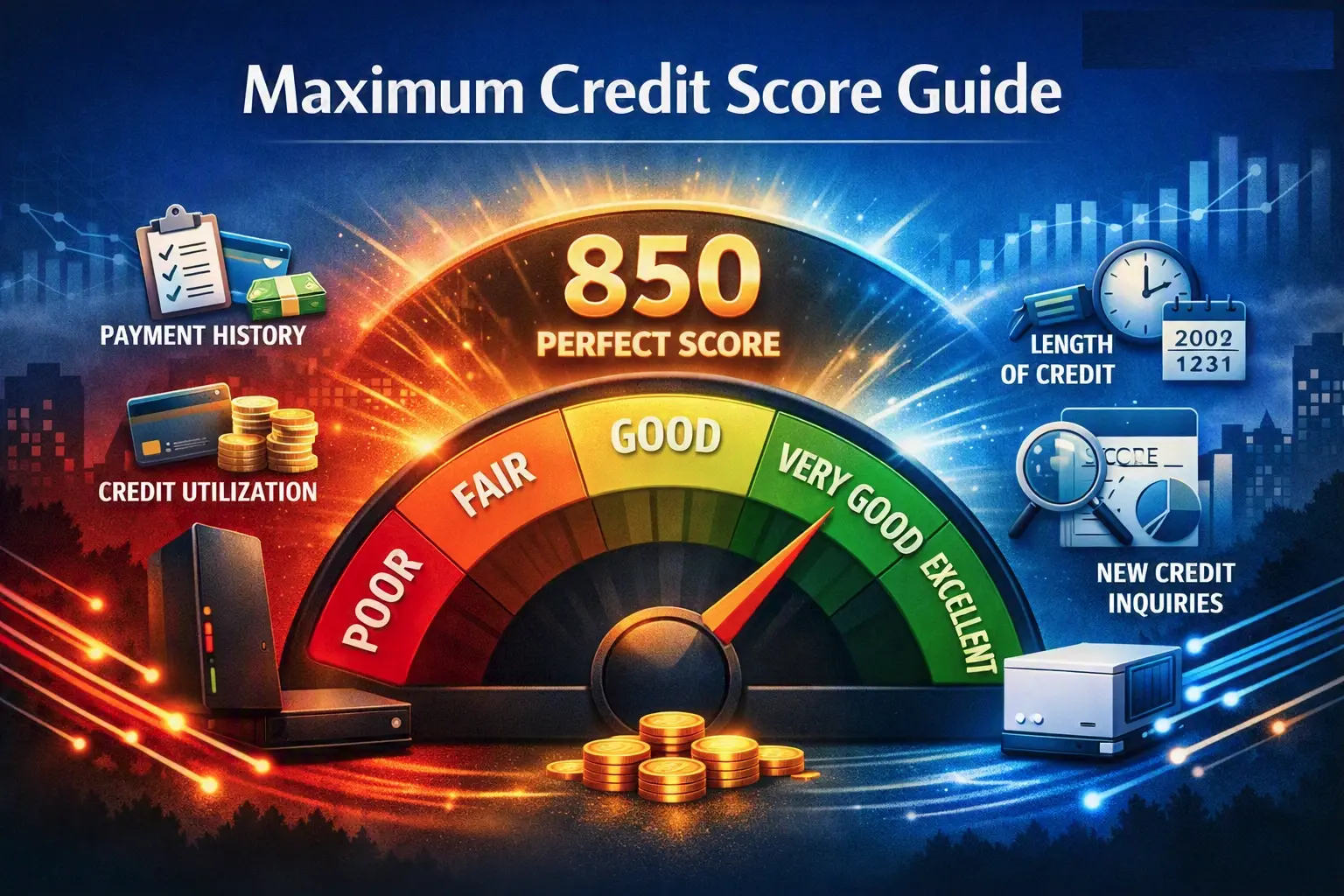
What Is the Maximum Credit Score, and How Is It Calculated?
September 1, 2026
How Many Americans Have a Perfect 850 Credit Score?
August 4, 2026
Can Paid Collections Improve Your Score?
July 14, 2026