-
Posted on: 24 Feb 2026
-
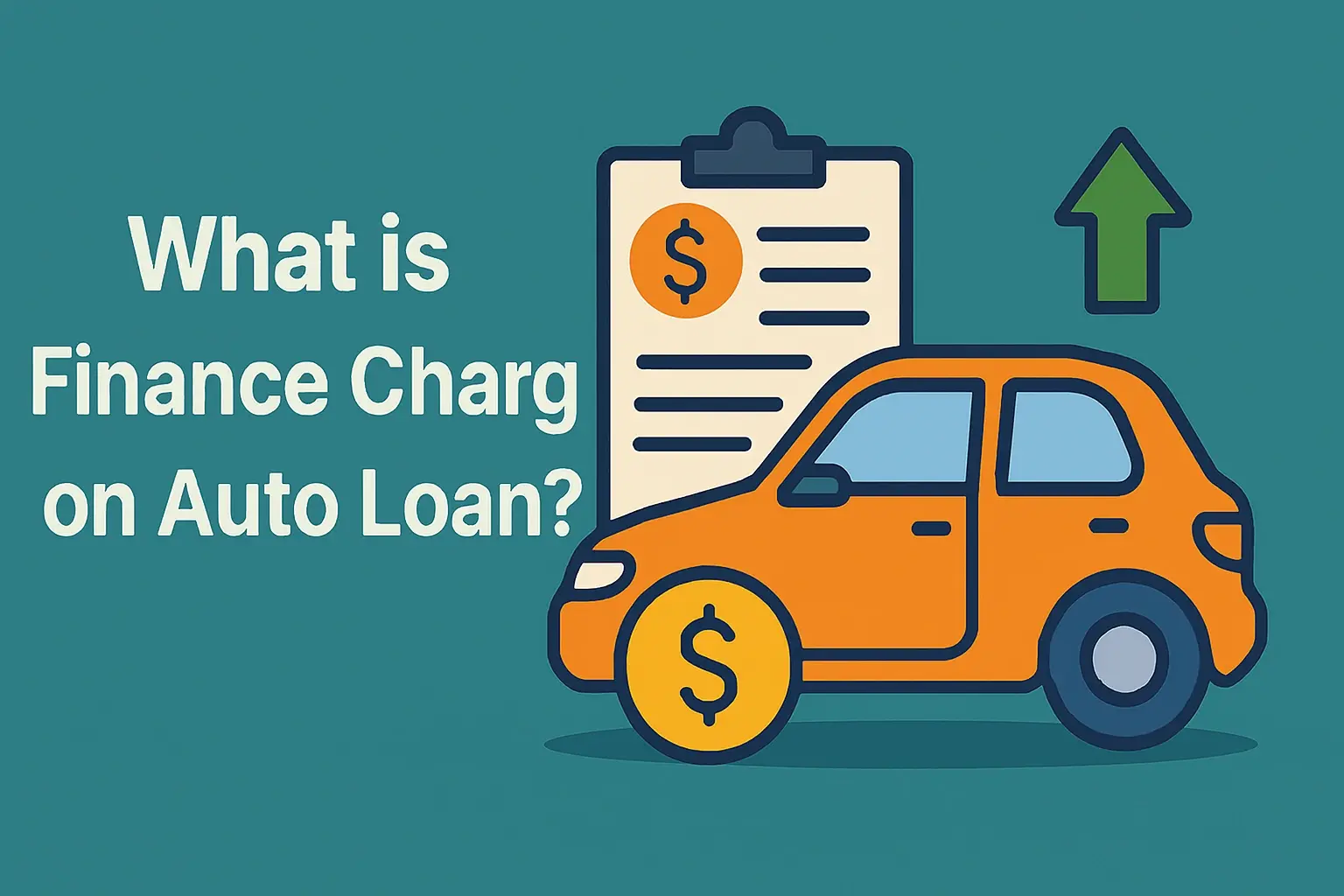
Understanding the finance charge on an auto loan is crucial for budgeting and making informed financial decisions. This fee, often overlooked, represents the total cost of borrowing money, encompassing interest and other associated expenses. Knowing what it entails helps you compare loan offers and secure the best deal.
What is a Finance Charge on an Auto Loan?
At its core, the finance charge on an auto loan is the total amount of money you will pay to borrow the principal amount for your vehicle purchase. It's the comprehensive cost of credit, representing everything you pay beyond the actual price of the car. This includes not only the interest accrued over the life of the loan but also any additional fees that the lender charges for processing, originating, or servicing the loan. In essence, it's the lender's profit and the cost of doing business with you. Understanding this figure is paramount, as it directly impacts the total amount you'll repay and can significantly influence your budget over the loan term. For instance, a seemingly small difference in the finance charge can translate into hundreds or even thousands of dollars over a typical 3-to-7-year auto loan period. Lenders are legally obligated to disclose this amount clearly, often as part of the Annual Percentage Rate (APR), which provides a standardized way to compare the true cost of different loan offers.
Components of an Auto Loan Finance Charge
The finance charge on an auto loan isn't a single, monolithic fee; rather, it's a composite of several elements that contribute to the overall cost of borrowing. While the primary component is almost always the interest, other fees can also be bundled into this calculation, making it essential to scrutinize the loan agreement. By dissecting these components, borrowers can gain a clearer picture of where their money is going and identify potential areas for negotiation or cost reduction.
Interest
Interest is the most significant part of the finance charge. It's the compensation the lender receives for allowing you to use their money. The interest rate, typically expressed as an annual percentage, is applied to the outstanding principal balance of the loan. Over the life of the loan, this interest accrues, meaning you pay a portion of it with each monthly payment. The longer the loan term and the higher the interest rate, the more you will pay in interest.
Loan Origination Fees
Some lenders charge a fee for processing and approving your loan application. This is known as an origination fee. It covers the administrative costs associated with setting up the loan, such as verifying your information, underwriting, and preparing the necessary paperwork. While not always present, these fees can add to the total finance charge.
Discount Points
Although more common in mortgage lending, discount points can sometimes appear in auto loans. A discount point is a fee paid directly to the lender at closing in exchange for a reduction in the interest rate. One point typically costs 1% of the loan amount. If you choose to pay points to lower your interest rate, the cost of these points is factored into the finance charge.
Loan Processing Fees
Beyond origination, lenders might charge various other processing fees. These can include fees for credit reports, appraisals (though rare for auto loans), or administrative services. Each of these fees, if applicable, contributes to the overall finance charge.
Mortgage Broker Fees (if applicable)
In some instances, you might work with a mortgage broker or a similar intermediary to secure an auto loan. If so, their commission or fee for arranging the loan could also be included in the finance charge, depending on the lender's practices and disclosure requirements.
Credit Insurance Premiums (Optional but often bundled)
While often presented as optional, lenders sometimes offer credit life, credit disability, or credit unemployment insurance. If you opt for these policies, the premiums are typically financed into the loan, meaning you pay interest on them, and they become part of the finance charge. It's crucial to understand that these are often high-cost insurance products and may not be necessary.
Understanding these individual components allows borrowers to better assess the true cost of their auto loan. By dissecting the finance charge, you can identify if a significant portion is due to interest or if various fees are inflating the total cost.
How is the Finance Charge Calculated?
The calculation of the finance charge on an auto loan is a process that can seem complex, but it fundamentally boils down to the cumulative cost of interest and fees over the loan's duration. While the exact mathematical formula can be intricate, the underlying principles are straightforward. Lenders use amortization schedules to determine how each payment is allocated between principal and interest, and this ongoing calculation is what builds the total finance charge.
The Amortization Process
Most auto loans use an amortizing loan structure. This means that each monthly payment you make consists of two parts: a portion that goes towards paying down the principal balance and a portion that covers the interest accrued since the last payment. In the early stages of the loan, a larger percentage of your payment goes towards interest, while a smaller portion reduces the principal. As the loan progresses, this ratio shifts, with more of your payment going towards the principal.
Calculating Interest
The interest for each payment period is calculated based on the outstanding principal balance at that time and the loan's interest rate. The formula typically looks like this:
Interest for the Period = (Outstanding Principal Balance × Annual Interest Rate) / Number of Payments per Year
For example, if you have a remaining balance of $20,000, an annual interest rate of 6% (0.06), and you make monthly payments (12 payments per year), the interest for that month would be:
( $20,000 × 0.06 ) / 12 = $100
This calculated interest amount is then added to the principal repayment portion of your total monthly payment.
Accumulating the Finance Charge
The total finance charge is the sum of all the interest payments made over the entire loan term, plus any upfront fees (like origination fees or points) that are financed into the loan. If there are no additional fees, the finance charge is simply the total amount of interest paid. If there are fees, they are added to this total interest to arrive at the complete finance charge.
Example Scenario (Simplified)
Let's consider a hypothetical auto loan:
Loan Amount (Principal): $25,000
Loan Term: 60 months (5 years)
Annual Interest Rate: 7%
Origination Fee: $300 (financed into the loan)
Using an auto loan calculator (or amortization formula), the estimated monthly payment would be around $528.10. Over 60 months, the total amount repaid would be approximately $31,686. The total interest paid would be around $6,386 ($31,686 - $25,000). The finance charge would then be the total interest plus the origination fee:
Finance Charge = Total Interest + Origination Fee
Finance Charge = $6,386 + $300 = $6,686
This $6,686 represents the total cost of borrowing the $25,000 for 60 months, in addition to the car's price.
The Role of APR
The Annual Percentage Rate (APR) is a broader measure that includes the interest rate plus certain fees, expressed as a yearly rate. It's designed to give consumers a more accurate picture of the total cost of borrowing. While the finance charge is a dollar amount, the APR is a percentage. Lenders are required to disclose both. A lower APR generally indicates a less expensive loan, assuming similar loan terms.
Understanding these calculation principles helps demystify the finance charge. It highlights how interest accrues and how fees contribute to the overall cost, empowering borrowers to make more informed comparisons between loan offers.
The Role of the Annual Percentage Rate (APR)
The Annual Percentage Rate (APR) is a critical metric for consumers evaluating auto loan offers. It's more than just the stated interest rate; it's a comprehensive measure of the cost of borrowing money. The APR is designed to provide a standardized way to compare the true expense of different loans, allowing borrowers to make more informed decisions. Understanding what APR encompasses and how it relates to the finance charge is fundamental to securing a favorable auto loan.
What APR Includes
While the interest rate is the primary component, the APR also incorporates other costs associated with obtaining the loan. These can include:
Interest Rate: The stated percentage charged on the loan balance.
Loan Origination Fees: Fees charged by the lender for processing and approving the loan.
Discount Points: Fees paid directly to the lender at closing to reduce the interest rate.
Certain Lender Fees: Other mandatory fees charged by the lender to obtain the loan, such as application fees or processing fees.
It's important to note that APR typically does not include all possible fees. For example, it usually excludes things like late payment fees, annual fees (if any), or the cost of optional products like extended warranties or credit insurance, unless these are financed into the loan and considered mandatory by the lender.
APR vs. Interest Rate
The key difference between the interest rate and the APR is that the APR provides a more holistic view of the loan's cost. The interest rate only reflects the cost of borrowing the principal, while the APR accounts for that interest plus most of the fees associated with the loan. Therefore, two loans with the same interest rate might have different APRs if one has higher fees than the other. Conversely, a loan with a slightly higher interest rate but significantly lower fees might have a lower APR than a loan with a lower interest rate but higher fees.
How APR is Calculated
The calculation of APR is standardized by regulations like the Truth in Lending Act (TILA) in the United States. It essentially converts the total finance charge (interest plus covered fees) into an annual percentage rate over the loan term. While the precise formula is complex, it ensures that all lenders use the same methodology, making comparisons meaningful.
Formula Concept: APR is the interest rate that equates the present value of the loan amount to the sum of all scheduled payments, including financed fees, over the loan's life.
Why APR is Crucial for Comparison
When shopping for an auto loan, comparing APRs is one of the most effective ways to determine which offer is truly the most economical. A lower APR generally signifies a lower overall cost for the loan. For example:
Loan A: $25,000 principal, 60 months, 5% interest rate, $500 origination fee.
Loan B: $25,000 principal, 60 months, 5.5% interest rate, $100 origination fee.
Without considering APR, Loan A appears better due to its lower interest rate. However, when fees are factored in, Loan B might have a lower APR, making it the more cost-effective choice. Lenders are required to clearly state the APR on loan disclosures, making this comparison straightforward.
APR and the Finance Charge
The APR is directly derived from the finance charge. The finance charge is the total dollar amount you pay for credit, and the APR is that dollar amount expressed as an annual percentage. A higher finance charge, all else being equal, will result in a higher APR. Conversely, a lower finance charge will lead to a lower APR.
In summary, the APR is your best friend when comparing auto loan offers. It's a standardized, all-inclusive rate that helps you understand the true cost of borrowing, moving beyond just the advertised interest rate to include essential fees. Always prioritize the loan with the lowest APR when other terms are comparable.
Factors Influencing Your Auto Loan Finance Charge
Several key factors significantly influence the total finance charge you'll incur on an auto loan. Understanding these elements empowers you to potentially negotiate better terms or make choices that minimize the overall cost of borrowing. Lenders assess various aspects of your financial profile and the loan itself to determine the risk involved, which directly translates into the price of credit.
Credit Score
Your credit score is arguably the most influential factor. A higher credit score (generally 700 and above) indicates to lenders that you are a low-risk borrower, likely to repay your debts on time. This often translates into lower interest rates and, consequently, a lower finance charge. Conversely, a lower credit score signals higher risk, leading lenders to charge higher interest rates to compensate for that risk, thus increasing the finance charge. For instance, in 2025, borrowers with excellent credit might qualify for rates as low as 4-6%, while those with subprime credit could face rates of 15-25% or even higher.
Loan Term (Duration)
The length of the loan term directly impacts the total finance charge. A longer loan term means you'll be making payments over a more extended period. While longer terms often result in lower monthly payments, they also mean that interest accrues for a longer duration. Consequently, the total amount of interest paid, and thus the finance charge, will be significantly higher on a 72-month loan compared to a 48-month loan for the same principal amount and interest rate.
Example (2025 Data):
Loan Term
Approx. Total Interest Paid (on $25,000 at 7%)
Approx. Finance Charge (incl. $300 fee)
48 months
$3,783
$4,083
60 months
$4,910
$5,210
72 months
$6,076
$6,376
This table clearly illustrates how extending the loan term dramatically increases the total finance charge.
Loan Amount (Principal)
The larger the amount you borrow (the principal), the higher the total finance charge will be, assuming the interest rate and loan term remain constant. This is because interest is calculated on the outstanding balance, so a larger balance naturally leads to more interest accruing over time.
Interest Rate
The interest rate is a direct multiplier in the calculation of interest. A higher interest rate means more money is charged for borrowing the principal. Even a small difference in the annual interest rate can lead to substantial variations in the total finance charge over the life of a multi-year loan. This is why securing the lowest possible interest rate is a primary goal when obtaining an auto loan.
Down Payment
Making a larger down payment reduces the principal amount you need to finance. A smaller loan amount directly leads to a lower total finance charge, as there is less money on which interest is calculated. A substantial down payment can also improve your chances of qualifying for a lower interest rate, further reducing the cost of borrowing.
Loan Fees
As discussed earlier, various fees can be rolled into the finance charge. These can include origination fees, processing fees, or even the cost of add-on products like GAP insurance or extended warranties if they are financed. Each of these fees increases the total amount you pay for the loan.
Vehicle Age and Type
While not a direct calculation factor in the same way as a credit score, the age and type of vehicle can indirectly influence the finance charge. Newer, more valuable vehicles might qualify for lower interest rates from some lenders, while older or high-mileage vehicles might be considered higher risk, potentially leading to higher rates. Lenders also consider the vehicle's collateral value, which affects their risk assessment.
Market Conditions and Lender Policies
Broader economic factors, such as the Federal Reserve's interest rate policies and overall market liquidity, can influence the prevailing auto loan interest rates. Additionally, individual lenders have their own risk appetites and pricing strategies, which can lead to variations in rates and fees offered to borrowers with similar profiles.
By understanding these influencing factors, borrowers can take proactive steps to manage and potentially reduce their auto loan finance charges. This might involve improving their credit score, saving for a larger down payment, shopping around for the best rates, or opting for a shorter loan term.
Comparing Finance Charges: Saving Money on Your Auto Loan
The process of comparing auto loan offers is critical for minimizing the total cost of your vehicle purchase. The finance charge is the most direct indicator of this cost, and by diligently comparing it across different lenders, you can save a significant amount of money over the loan's life. This section outlines a strategic approach to effectively compare finance charges and ensure you secure the most advantageous loan terms available in 2025-26.
Focus on the Annual Percentage Rate (APR)
As previously discussed, the APR is the most standardized and comprehensive metric for comparing loan costs. It incorporates the interest rate along with most mandatory fees, providing a single percentage that reflects the true annual cost of borrowing. When comparing loan offers, always prioritize the one with the lowest APR, assuming the loan terms (like the loan amount and duration) are similar.
Scrutinize the Total Finance Charge
While APR is excellent for initial comparison, it's also beneficial to look at the total finance charge in dollar terms. Many loan disclosures will explicitly state the total finance charge. This figure represents the actual dollar amount you will pay in interest and fees over the entire loan term. Comparing these dollar amounts directly can provide a clear understanding of the overall expense. A loan with a slightly higher APR but a significantly lower total finance charge might be preferable if the difference is substantial.
Understand the Loan Term's Impact
Never compare loans with different terms in isolation. A loan with a lower monthly payment might seem attractive, but if it has a longer term, it will almost certainly have a higher total finance charge. Always compare offers with the same loan term, or be aware of how extending or shortening the term affects the total cost. For example, comparing a 48-month loan offer to a 72-month offer requires careful analysis of the total finance charge for each, not just the monthly payment.
Evaluate All Fees
Don't just rely on the APR; take the time to understand all the fees associated with each loan offer. Review the loan disclosure documents carefully. Look for:
Origination Fees: Are they charged? How much are they?
Processing Fees: Are there other administrative charges?
Prepayment Penalties: Does the loan charge a fee if you pay it off early? This can impact your ability to save money by refinancing or making extra payments.
Late Fees: While not part of the finance charge, understanding these is crucial for overall loan management.
If two loans have the same APR but one has a higher origination fee that is financed, the total dollar amount repaid will be higher for the loan with the higher fee.
Use Online Comparison Tools and Calculators
Leverage the numerous online auto loan calculators and comparison tools available in 2025. These tools allow you to input loan details (amount, term, interest rate, fees) and quickly see the resulting monthly payments, total interest paid, and total finance charge. This can save considerable time and effort when evaluating multiple offers.
Shop Around at Different Lender Types
Don't limit your search to just one type of lender. Compare offers from:
Banks: Traditional financial institutions.
Credit Unions: Member-owned non-profits, often offering competitive rates.
Online Lenders: Specialized online platforms that may offer streamlined processes and competitive rates.
Dealership Financing: While convenient, always compare dealership offers against external lenders, as they may not always be the most cost-effective.
Each lender has different underwriting criteria and pricing models, so you might qualify for better terms at one institution than another.
Consider Pre-Approval
Getting pre-approved for an auto loan from your bank or a credit union before visiting a dealership can be a powerful negotiation tool. It gives you a concrete offer with a specific interest rate and loan term. You can then use this pre-approval as leverage when negotiating with the dealership's finance department. If the dealership can't beat your pre-approved offer, you know where to go.
Read the Fine Print
This cannot be stressed enough. Before signing any loan agreement, thoroughly read and understand all the terms and conditions. Pay close attention to the sections detailing the finance charge, APR, fees, and any clauses that might affect the total cost or your repayment obligations.
By adopting a systematic approach to comparing finance charges and APRs, focusing on total cost rather than just monthly payments, and diligently reviewing all associated fees, consumers can make a well-informed decision that saves them money throughout the life of their auto loan.
The Impact of Finance Charge on Your Total Auto Loan Cost
The finance charge is not merely a line item on a loan document; it represents the actual cost of borrowing money for your vehicle. Its impact on the total amount you repay is profound and can significantly alter your financial landscape over the loan's duration. Understanding this impact is key to appreciating the importance of minimizing the finance charge.
The Principal vs. The Finance Charge
When you purchase a car, the price of the vehicle is the principal amount of the loan. However, the total amount you hand over to the lender by the end of the loan term is the principal plus the finance charge. This means that for every dollar you borrow for the car itself, you'll end up paying extra due to the finance charge. For example, if you finance $25,000 for a car, and your total finance charge is $6,000, you will have paid a total of $31,000 to the lender.
Longer Loan Terms = Higher Finance Charges
One of the most significant impacts of the finance charge is its amplification over longer loan terms. While longer terms offer the allure of lower monthly payments, this comes at a steep price. Interest compounds over time, and the longer the period over which it's calculated, the more it accumulates. A 72-month loan will almost invariably have a substantially higher total finance charge than a 48-month loan for the same principal and interest rate. This difference can amount to thousands of dollars.
Illustrative Example (2025 Rates):
Consider a $30,000 auto loan at a 7% annual interest rate:
48-Month Term: Total Paid: ~$34,550; Total Finance Charge: ~$4,550
60-Month Term: Total Paid: ~$36,750; Total Finance Charge: ~$6,750
72-Month Term: Total Paid: ~$39,000; Total Finance Charge: ~$9,000
As you can see, extending the loan by 24 months (from 48 to 72) nearly doubles the total finance charge. This illustrates how the finance charge can dwarf the original loan principal over extended periods.
Interest Rate Sensitivity
The finance charge is highly sensitive to the interest rate. Even a small increase in the annual interest rate can lead to a significant jump in the total finance charge. This is why securing the lowest possible interest rate is paramount. For instance, a 1% difference in interest rate on a $30,000 loan over 60 months can mean paying hundreds or even thousands of dollars more in finance charges.
Impact on Affordability
The finance charge directly affects the true affordability of a vehicle. While the sticker price might seem manageable, the total cost, including the finance charge, is what truly matters. A high finance charge can make a vehicle much more expensive than initially perceived, potentially straining a buyer's budget for years to come.
Opportunity Cost
The money spent on finance charges is money that could have been used for other financial goals, such as saving for retirement, investing, paying down higher-interest debt, or building an emergency fund. Every dollar paid in finance charges represents a missed opportunity for wealth creation or financial security.
Equity Building
In the early stages of an amortizing loan, a larger portion of your payment goes towards interest (part of the finance charge), and a smaller portion goes towards the principal. This means you build equity in your vehicle much more slowly. If you need to sell the car early in the loan term, you might owe more on the loan than the car is worth (being "upside down"), partly due to the accumulated finance charge.
Potential for Refinancing Savings
Understanding the impact of the finance charge also opens doors for potential savings through refinancing. If market interest rates drop significantly after you've taken out your auto loan, or if your credit score improves, you might be able to refinance your loan at a lower interest rate. This would reduce your ongoing finance charge and the total amount you repay.
In conclusion, the finance charge is a critical component that dictates the true cost of your auto loan. It's not just about the monthly payment; it's about the cumulative dollars paid over time. By understanding its impact, borrowers are better equipped to make choices that minimize this cost, leading to greater financial efficiency and savings.
Strategies to Reduce Your Auto Loan Finance Charge
Minimizing the finance charge on your auto loan is a key objective for any savvy borrower. It directly translates to saving money that can be allocated to other financial priorities. Fortunately, there are several proactive strategies you can employ to reduce this cost. These strategies range from improving your financial standing before applying to making smart choices during the loan process.
1. Improve Your Credit Score
As highlighted earlier, your credit score is a primary determinant of your interest rate. The higher your score, the lower the rate you'll likely qualify for, and the lower your finance charge will be. In the months leading up to your auto loan application, focus on:
Paying all bills on time.
Reducing credit card balances to keep credit utilization low.
Avoid opening new credit accounts unnecessarily.
Checking your credit report for errors and disputing them.
A few points increase in your credit score can translate into hundreds or even thousands of dollars saved on finance charges over the loan term.
2. Make a Larger Down Payment
A larger down payment reduces the principal amount you need to borrow. A smaller loan amount means less interest accrues over time, directly lowering the total finance charge. Aim for as large a down payment as your budget allows. Even an extra $1,000 or $2,000 can make a noticeable difference.
3. Choose a Shorter Loan Term
While it means higher monthly payments, opting for a shorter loan term (e.g., 48 or 60 months instead of 72 or 84 months) dramatically reduces the total finance charge. You'll pay off the loan faster, and interest will accrue for a shorter period. Calculate the total finance charge for different terms to see the savings. The increase in monthly payment is often less than the total savings gained.
4. Shop Around and Compare Offers
This is one of the most effective ways to find the lowest interest rate and APR. Don't accept the first offer you receive, especially from a dealership. Apply for pre-approval from multiple lenders, including banks, credit unions, and online lenders. Compare the APRs and total finance charges carefully. Lenders compete for your business, and shopping around can lead to significant savings.
5. Negotiate the Interest Rate
Once you have pre-approved offers, you can use them as leverage to negotiate a better rate with other lenders, including the dealership. If you have a strong credit score and a competitive offer in hand, you might be able to convince a lender to lower their interest rate further.
6. Avoid Unnecessary Fees
Be vigilant about fees. Question any fees that seem excessive or unclear. If possible, negotiate to have certain fees waived or reduced. Ensure that only essential and clearly understood fees are included in your finance charge. Avoid financing optional products like extended warranties or GAP insurance unless you've thoroughly evaluated their value and cost.
7. Consider Certified Pre-Owned (CPO) Vehicles
CPO vehicles often come with manufacturer-backed warranties and have undergone rigorous inspections. Lenders may view these vehicles as less risky, potentially offering lower interest rates on loans for CPO cars compared to standard used vehicles.
8. Refinance Your Loan
If market interest rates fall significantly after you've purchased your vehicle, or if your credit score improves considerably, you may be able to refinance your auto loan. Refinancing to a lower interest rate can reduce your remaining finance charge and potentially lower your monthly payments.
9. Make Extra Payments
If your budget allows, make extra payments towards your principal whenever possible. Specify to your lender that extra payments should be applied directly to the principal balance. This will reduce the amount of interest that accrues over the life of the loan and help you pay off the loan faster, thus lowering the total finance charge.
By implementing these strategies, borrowers can take control of their auto loan costs and significantly reduce the total amount they pay in finance charges, leading to a more financially sound vehicle ownership experience.
Legal Disclosure Requirements for Finance Charges
Protecting consumers from predatory lending practices is a cornerstone of financial regulation. In the United States, the Truth in Lending Act (TILA), implemented by Regulation Z, mandates specific disclosures regarding the cost of credit, including the finance charge. These regulations ensure that borrowers have the necessary information to make informed decisions about their auto loans.
The Role of TILA
The Truth in Lending Act aims to promote the informed use of consumer credit by requiring disclosures about its terms and cost. For auto loans, this means lenders must clearly and conspicuously disclose key financial information before a consumer becomes obligated to repay the credit. The goal is to provide standardized information that allows for easy comparison of different credit offers.
Key Disclosures for Auto Loans
Under TILA, lenders are required to provide consumers with a Loan Estimate or a similar disclosure document that clearly outlines the terms of the loan. Crucial information that must be disclosed includes:
Amount Financed: The net amount of credit provided to the consumer or on their behalf.
Finance Charge: The dollar amount the credit will cost the consumer. This must be disclosed as a dollar amount.
Annual Percentage Rate (APR): The cost of credit as a yearly rate. This is a crucial tool for comparing loans.
Total of Payments: The sum of the Amount Financed and the Finance Charge, representing the total amount the consumer will pay over the loan's life.
Payment Schedule: The number, amount, and timing of loan payments.
Prepayment Penalties: Disclosure of any penalties or fees associated with paying off the loan early.
Late Payment Fees: Information on fees charged for missed or late payments.
Security Interest: Disclosure that the vehicle serves as collateral for the loan.
Why These Disclosures Matter
These mandated disclosures are vital for several reasons:
Transparency: They bring transparency to the often complex world of lending, ensuring borrowers understand what they are signing up for.
Comparison: Standardized disclosures like APR and the total finance charge allow consumers to effectively compare offers from different lenders.
Informed Decision-Making: Armed with this information, borrowers can make choices that align with their financial goals and capabilities, avoiding costly mistakes.
Protection Against Deception: They help protect consumers from hidden fees or misleading terms that could inflate the cost of credit.
What to Look For in Disclosures
When reviewing your auto loan disclosure, pay particular attention to:
The Finance Charge: Ensure this dollar amount is clearly stated and aligns with your understanding of the loan's cost.
The APR: Compare this figure across all offers. A lower APR is generally better.
All Fees: Verify that all fees are itemized and understood. If a fee is not clear, ask for clarification.
Loan Term: Confirm the duration of the loan and how it affects the total payments.
Consequences for Non-Compliance
Lenders who fail to comply with TILA's disclosure requirements can face significant penalties, including fines and civil liability. This regulatory oversight reinforces the importance of accurate and transparent disclosure of the finance charge and other loan terms.
Understanding your legal rights and the required disclosures is a powerful tool for consumers. By carefully reviewing these documents, you can ensure you are getting a fair deal and avoid unexpected costs associated with your auto loan.
Finance Charge vs. Interest: Understanding the Nuance
While often used interchangeably in casual conversation, "finance charge" and "interest" are distinct terms in the context of lending, particularly auto loans. Understanding the difference is crucial for accurately assessing the total cost of borrowing and making informed financial decisions. The finance charge is a broader umbrella term that encompasses interest but also includes other associated costs.
Interest: The Cost of Borrowing Money
Interest is the fee paid to the lender for the use of their money. It's calculated as a percentage of the outstanding loan principal. For example, if you borrow $20,000 at a 6% annual interest rate, you will pay a certain amount of interest over the life of the loan. This is the fundamental cost of credit.
Formula: Interest = Principal × Rate × Time
In an amortizing loan, the interest portion of each payment is calculated based on the remaining principal balance at that specific time. Early in the loan, a larger portion of your payment goes towards interest; later, more goes towards principal.
Finance Charge: The Total Cost of Credit
The finance charge, as defined by regulations like the Truth in Lending Act (TILA), is the total dollar amount that credit will cost the consumer. It includes not only the interest charged but also any other fees or charges associated with obtaining and maintaining the credit. These additional charges can include:
Interest
Loan Origination Fees
Loan Processing Fees
Discount Points (if paid)
Credit Report Fees (if financed)
Certain Mandatory Insurance Premiums (if financed)
Essentially, the finance charge is the sum of all the costs you incur to borrow the money, beyond the principal itself.
The Relationship Between Them
Interest is always a component of the finance charge. However, the finance charge is not always solely comprised of interest. Think of it this way:
Finance Charge = Interest + Other Fees
If a loan has no additional fees beyond interest, then the finance charge is equal to the total interest paid. However, most auto loans will have at least some processing or origination fees, which will be added to the interest to calculate the total finance charge.
Why the Distinction Matters
Understanding this distinction is important for several reasons:
Accurate Cost Assessment: Relying solely on the interest rate can give you an incomplete picture of the loan's true cost. The finance charge provides a more comprehensive figure.
Comparison Shopping: When comparing loan offers, you need to look at both the interest rate and the APR (which incorporates many fees). The total finance charge dollar amount is also a key comparison point. A loan with a slightly lower interest rate but higher fees might end up costing you more overall than a loan with a slightly higher interest rate but minimal fees.
Regulatory Compliance: Lenders are legally required to disclose the finance charge as a specific dollar amount. This transparency helps consumers understand the full expense.
Example
Let's say you take out an auto loan where:
Total Interest Paid = $5,000
Loan Origination Fee = $400
Processing Fee = $100
In this scenario:
The Interest is $5,000.
The Finance Charge is $5,000 (Interest) + $400 (Origination Fee) + $100 (Processing Fee) = $5,500.
The finance charge of $5,500 represents the total cost of borrowing the money, which is more than just the interest alone.
In conclusion, while interest is the primary cost of borrowing, the finance charge encompasses all costs associated with the loan. Always look at the finance charge and the APR to get a complete understanding of how much your auto loan will truly cost you.
Common Misconceptions About Auto Loan Finance Charges
The world of auto loans can be confusing, and misconceptions about finance charges are common. These misunderstandings can lead consumers to make costly decisions. By clarifying these common myths, borrowers can approach auto loan negotiations with greater confidence and accuracy.
Misconception 1: The Finance Charge is Just the Interest
Reality: As discussed, the finance charge is the total cost of credit, which includes interest plus various fees like origination fees, processing fees, and potentially others. Focusing only on interest will lead to an underestimation of the loan's total cost.
Misconception 2: A Lower Monthly Payment Always Means a Cheaper Loan
Reality: A lower monthly payment is often achieved by extending the loan term. While this makes the loan more affordable on a month-to-month basis, it significantly increases the total finance charge due to interest accruing over a longer period. Always look at the total finance charge and APR, not just the monthly payment.
Misconception 3: Dealership Financing Always Offers the Best Rates
Reality: Dealership financing can be convenient, and sometimes they offer promotional rates (like 0% APR). However, they don't always provide the most competitive terms. Dealerships often work with multiple lenders, and their goal is to make a profit. It's crucial to compare dealership offers with pre-approved loans from banks and credit unions to ensure you're getting the best deal.
Misconception 4: You Can't Negotiate the Finance Charge
Reality: While some fees might be non-negotiable, the interest rate (and thus the finance charge) is often negotiable, especially if you have a good credit score and have shopped around. Lenders want your business, and presenting competitive offers can give you leverage to negotiate a lower rate.
Misconception 5: All Fees are Included in the APR
Reality: While the APR is designed to be a comprehensive measure, it doesn't always include *every* possible fee. Mandatory fees associated with obtaining the loan are typically included, but optional products (like extended warranties, GAP insurance if not financed) or penalties (like late fees or prepayment penalties) are often excluded. Always review the full loan agreement.
Misconception 6: Prepayment Penalties Are Rare on Auto Loans
Reality: While less common than on mortgages, some auto loans may include prepayment penalties. These fees discourage you from paying off the loan early. Always check your loan agreement for such clauses, as they can negate the savings you might achieve by making extra payments or refinancing.
Misconception 7: Your Credit Score Doesn't Matter Much for Used Cars
Reality: Your credit score is a primary factor for any loan, whether for a new or used vehicle. Lenders use it to assess risk. A lower credit score will almost certainly result in a higher interest rate and a larger finance charge, regardless of whether the car is new or used.
Misconception 8: You Only Pay Interest on the Original Loan Amount
Reality: Interest is calculated on the outstanding principal balance. In an amortizing loan, as you pay down the principal, the interest you pay each month decreases. However, if fees are financed into the loan, you end up paying interest on those fees as well, increasing the overall finance charge.
Dispelling these common misconceptions empowers consumers to approach auto loan applications with a clearer understanding of what they are agreeing to. This knowledge is key to securing a fair loan and avoiding unnecessary costs.
Conclusion: Mastering Your Auto Loan Finance Charge
Navigating the complexities of auto loans can feel daunting, but understanding the finance charge is a critical step toward financial empowerment. This comprehensive fee, encompassing interest and various associated costs, represents the true price you pay for borrowing money to purchase your vehicle. By dissecting its components, recognizing the factors that influence it—from your credit score to the loan term—and actively employing strategies to reduce it, you can significantly lower the overall cost of your auto loan.
Always prioritize comparing the Annual Percentage Rate (APR) across multiple lenders, as it provides the most standardized measure of a loan's true cost. Scrutinize the total finance charge in dollar terms and be wary of longer loan terms that, while offering lower monthly payments, dramatically inflate the total amount repaid. Remember that proactive steps like improving your credit, making a larger down payment, and diligently shopping for the best rates are your most powerful tools.
By staying informed, asking questions, and comparing offers rigorously, you can master your auto loan finance charge, ensuring that your vehicle purchase is a sound financial decision that serves your budget and long-term financial well-being. Don't let the cost of credit be a hidden burden; understand it, manage it, and minimize it.
null
What Is Finance Charge On Auto Loan

Krystin Bresolin