-
Posted on: 09 Mar 2026
-
Understanding Pre-Approval: Your First Step to a New Car
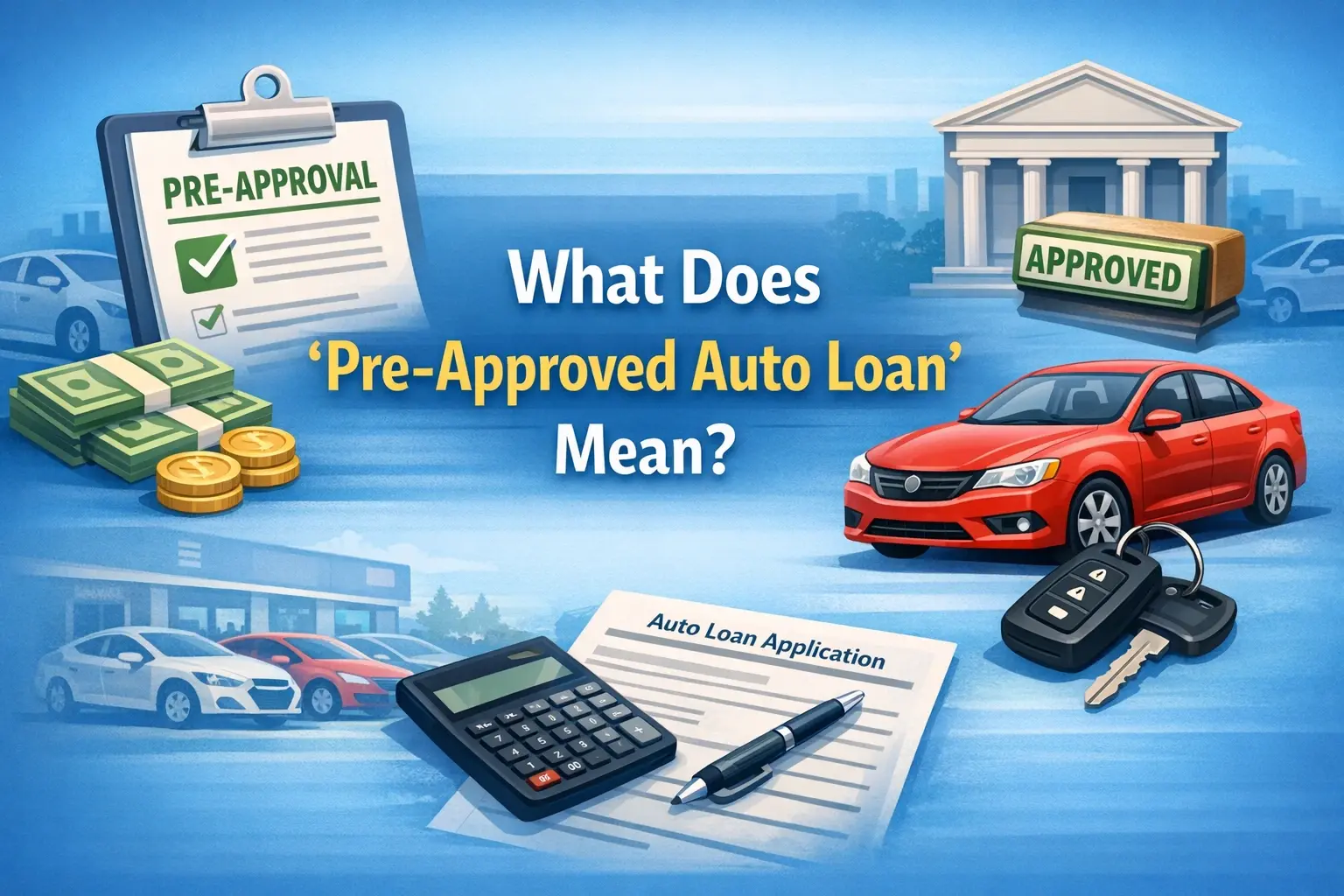
Securing a pre-approved auto loan before stepping onto a dealership lot is a game-changer for car buyers in 2025-26. It’s not just about knowing how much you can borrow; it’s about wielding significant negotiation power and streamlining your entire car-buying journey. This guide will demystify what a pre-approved auto loan means, how it works, and why it's your smartest move.
What Exactly is a Pre-Approved Auto Loan?
A pre-approved auto loan is a conditional commitment from a lender to provide you with a specific amount of money for a vehicle purchase, at a particular interest rate, for a set period. It signifies that a lender has reviewed your financial information, including your credit history, income, and debt-to-income ratio, and has determined you are likely to qualify for a loan up to a certain limit. This isn't a final loan offer, but it's a strong indication of your borrowing power and the terms you can expect. Think of it as a financial green light that sets the stage for your car shopping experience.
In essence, it’s a lender’s preliminary endorsement of your creditworthiness for an auto loan. This process typically involves a more thorough review of your financial standing than a simple pre-qualification, bringing you closer to a final loan decision. For consumers in 2025-26, understanding this distinction is crucial for making informed financial decisions.
The Core Concept
At its heart, pre-approval is about reducing uncertainty. When you're pre-approved, you know the ballpark figure you can spend, which immediately narrows down your car search. You won't waste time looking at vehicles far outside your budget. Furthermore, it gives you a benchmark interest rate. If the dealership offers financing, you can compare their offer against your pre-approved rate, ensuring you're getting a competitive deal. This proactive approach transforms the often-stressful car-buying process into a more controlled and confident endeavor.
Key Components of Pre-Approval
A pre-approved auto loan typically outlines several critical components:
Loan Amount: The maximum amount the lender is willing to finance.
Interest Rate (APR): The annual percentage rate you can expect to pay on the loan. This is often a fixed rate, providing stability.
Loan Term: The duration over which you'll repay the loan (e.g., 48, 60, or 72 months).
Expiration Date: Pre-approvals are not indefinite; they usually have a validity period, often 30 to 90 days.
These components are vital because they form the foundation of your car-buying budget and negotiation strategy. Without them, you're essentially negotiating blind.
How Does Auto Loan Pre-Approval Work?
The pre-approval process is designed to be efficient yet thorough, giving lenders confidence in your ability to repay a loan while providing you with valuable financial insight. It typically involves a credit application, a credit check, and a review of your financial documentation.
The Application and Credit Check
You begin by submitting a formal loan application to a lender. This application will request personal information such as your name, address, employment details, income, and housing expenses. The lender then performs a hard inquiry on your credit report. This hard pull allows them to access your credit score and detailed credit history, which are crucial for assessing your risk as a borrower. Lenders look at factors like your payment history, credit utilization, length of credit history, and the types of credit you have.
Underwriting and Conditional Approval
Once the credit check is complete, the lender's underwriting department reviews your application and credit report. They assess your overall financial health to determine your capacity to handle monthly loan payments. This includes verifying your income and employment, and calculating your debt-to-income ratio (DTI). If your profile meets their lending criteria, they will issue a pre-approval letter. This letter is not a guarantee of final loan approval but a strong indication based on the information provided and reviewed. It will specify the maximum loan amount, the estimated interest rate, and the loan term they are prepared to offer.
What the Lender Looks For
Lenders evaluate several key aspects of your financial profile:
Credit Score: A higher score generally leads to better interest rates and loan terms. For 2025-26, scores above 700 are typically considered good to excellent.
Income Stability: Lenders want to see a consistent and reliable source of income that can comfortably cover loan payments.
Debt-to-Income Ratio (DTI): This ratio compares your total monthly debt payments to your gross monthly income. A lower DTI indicates more financial flexibility. For auto loans, lenders often prefer a DTI below 43%.
Employment History: A stable employment history suggests consistent income.
Loan-to-Value (LTV) Ratio: This compares the loan amount to the value of the vehicle you intend to purchase. A lower LTV (meaning a larger down payment) reduces the lender's risk.
Understanding these factors helps you prepare for the application and know what to expect during the review process.
The Powerful Advantages of Getting Pre-Approved
Securing pre-approval for an auto loan offers a multitude of benefits that can significantly enhance your car-buying experience. It’s a strategic move that empowers you with knowledge, leverage, and a clearer path to ownership.
Budgeting Clarity and Control
One of the most immediate benefits is a clear understanding of your budget. Knowing the maximum amount you can borrow and the potential interest rate allows you to set a realistic price range for your vehicle search. This prevents the disappointment of falling in love with a car you can't afford and avoids the temptation to overspend. You can confidently browse dealerships, knowing exactly what financial parameters you need to adhere to. This financial clarity translates directly into greater control over the entire purchase process.
Negotiation Leverage
Armed with a pre-approval letter, you enter the dealership with a powerful negotiating tool. You have a pre-determined interest rate from an external lender. This allows you to compare the dealership's financing offer directly. If the dealership can beat your pre-approved rate, great! If not, you can choose to proceed with your pre-approved loan, potentially saving you hundreds or even thousands of dollars in interest over the life of the loan. This competitive edge shifts the power dynamic in your favor.
Time Savings at the Dealership
When you've already secured pre-approval, you can bypass the dealership's finance office for initial loan discussions. This means you can focus your time on test-driving vehicles, inspecting their condition, and negotiating the purchase price. The financing aspect is largely settled, allowing for a more streamlined and efficient visit to the dealership. This is particularly valuable for busy individuals who want to complete their car purchase without spending an entire day at the dealership.
Wider Lender Options
Pre-approval isn't limited to traditional banks. You can explore options from credit unions, online lenders, and even some dealerships themselves (though comparing external offers is key). This broadens your access to potentially better rates and terms than you might find if you rely solely on the dealership's in-house financing. For 2025-26, the online lending landscape offers numerous competitive choices.
Reduced Stress and Pressure
The car-buying process can be fraught with anxiety. Knowing your financing is largely secured significantly reduces the pressure. You're not at the mercy of the dealership's finance department to approve your loan on the spot. This allows you to make decisions based on the car you want and the best overall deal, rather than being pressured into a financing package that might not be ideal.
Potential for Better Rates and Terms
Lenders offering pre-approval often compete for your business. By shopping around for pre-approval from multiple institutions, you increase your chances of securing the lowest possible interest rate and the most favorable loan terms available to you. This can lead to substantial savings over the life of the loan.
Pre-Approval vs. Pre-Qualification: What's the Difference?
While often used interchangeably, pre-approval and pre-qualification are distinct stages in the loan application process, with pre-approval representing a more concrete step towards securing financing. Understanding this difference is crucial for setting accurate expectations.
Pre-Qualification: The Initial Estimate
Pre-qualification is an initial assessment of your borrowing potential based on self-reported financial information. When you seek pre-qualification, you provide basic details about your income, assets, and debts. The lender then uses this information, often without a full credit check, to give you a rough estimate of how much you might be able to borrow.
Key characteristics of pre-qualification:
Speed: It's typically very quick, often taking just a few minutes.
Information: Relies heavily on information you provide, which may not be fully verified.
Credit Check: Usually does not involve a hard credit inquiry, meaning it won't impact your credit score.
Outcome: Provides a general idea of loan eligibility, not a commitment.
Think of pre-qualification as a preliminary screening. It gives you a ballpark figure but doesn't guarantee anything.
Pre-Approval: The Deeper Dive
Pre-approval, on the other hand, involves a more rigorous process. You submit a formal loan application, and the lender conducts a hard credit inquiry. They verify your income, employment, and other financial details. Based on this comprehensive review, the lender issues a conditional commitment to lend you a specific amount at a particular interest rate, subject to certain conditions (like the vehicle's appraisal).
Key characteristics of pre-approval:
Thoroughness: Involves a detailed review of your financial information and credit history.
Credit Check: Requires a hard credit inquiry, which can slightly impact your credit score.
Outcome: Offers a conditional commitment to lend, including a specific loan amount, interest rate, and term.
Validity: Comes with an expiration date.
Pre-approval is a much stronger indicator of your actual borrowing power and is considered a more reliable step before actively shopping for a car.
A Comparative Look
Here's a table summarizing the key differences:
Feature
Pre-Qualification
Pre-Approval
Information Required
Basic, self-reported
Detailed, verified
Credit Check
Usually soft inquiry or none
Hard inquiry
Lender Commitment
Estimate, no commitment
Conditional commitment
Accuracy
Less accurate
More accurate
Impact on Credit Score
Minimal to none
Slight, temporary dip
Time to Obtain
Minutes
Hours to days
For serious car buyers in 2025-26, aiming for pre-approval provides a more solid foundation for their purchase than relying on pre-qualification alone.
Who Offers Pre-Approved Auto Loans?
A wide array of financial institutions offer pre-approved auto loans, giving consumers diverse options to explore. The best choice for you will depend on your credit profile, financial needs, and preference for dealing with institutions.
Traditional Banks
Major national banks and local community banks are primary sources for auto loan pre-approvals. They often offer competitive rates, especially for customers with excellent credit histories. Their application processes are typically well-established, and they provide a sense of security and reliability.
Credit Unions
Credit unions, which are non-profit member-owned cooperatives, are renowned for offering some of the most competitive interest rates on auto loans. If you are a member of a credit union, it's often a great place to start your pre-approval search. Their member-centric approach often translates into better terms and more personalized service.
Online Lenders
The rise of fintech has made online lenders a significant player in the auto loan market. These lenders often provide a streamlined, digital application process that can be completed entirely online, sometimes within minutes. They can be particularly attractive for borrowers with less-than-perfect credit, as some specialize in subprime lending. Examples include providers like LightStream, Capital One Auto Navigator, and Carvana's financing options. For 2025-26, the online space continues to innovate with user-friendly platforms.
Dealership Financing Departments
While it's generally advisable to get pre-approved *before* visiting a dealership, many dealerships have their own financing arms or partnerships with lenders. They can offer pre-approvals, but it's crucial to compare their offers against external pre-approvals to ensure you're getting the best deal. Sometimes, dealerships can secure financing from lenders you might not have access to directly.
Factors to Consider When Choosing a Lender
When exploring your pre-approval options, consider these factors:
Interest Rates (APR): Always compare the Annual Percentage Rate, which includes fees.
Loan Terms: Look for terms that fit your budget and financial goals.
Fees: Be aware of any origination fees, late payment fees, or prepayment penalties.
Customer Service: Consider the lender's reputation for customer support.
Application Process: Evaluate how easy and transparent the application and approval process is.
Loan Limits: Ensure the lender offers loan amounts that meet your needs.
Shopping around for pre-approval from multiple sources is highly recommended to find the most advantageous offer.
Your Step-by-Step Guide to Getting Pre-Approved
Navigating the pre-approval process is straightforward when you follow a clear, systematic approach. By preparing in advance and understanding each step, you can secure your pre-approved auto loan efficiently and confidently.
Step 1: Assess Your Financials
Before you even start looking for lenders, take stock of your current financial situation.
Credit Score Check: Obtain your credit score from one or more of the major credit bureaus (Equifax, Experian, TransUnion). Many credit card companies and financial apps offer free credit score monitoring. Understanding your score is the first step to knowing what kind of rates you might qualify for.
Income Verification: Gather recent pay stubs, tax returns, or other documentation that proves your income.
Debt Assessment: List all your outstanding debts, including credit cards, student loans, mortgages, and any other loans. Calculate your total monthly debt payments.
Budgeting: Determine how much you can realistically afford for a monthly car payment, including insurance, gas, and maintenance.
Step 2: Shop Around for Lenders
Don't settle for the first lender you find. Explore options from various sources:
Banks: Check with your current bank and other national or local banks.
Credit Unions: If you're eligible for membership, credit unions often offer competitive rates.
Online Lenders: Research reputable online lenders that specialize in auto loans. Many allow you to check pre-approval odds without a hard credit pull.
When comparing lenders, pay close attention to the interest rates (APR), loan terms, fees, and customer reviews.
Step 3: Submit Loan Applications
Once you've identified a few promising lenders, it's time to formally apply for pre-approval. You'll typically need to provide:
Personal information (name, address, date of birth, Social Security number)
Employment details (employer name, position, length of employment)
Income information (gross annual income)
Housing information (monthly rent or mortgage payment)
Details of existing debts
Be prepared for a hard credit inquiry at this stage, as lenders will pull your credit report to assess your creditworthiness. It's advisable to apply for pre-approval from multiple lenders within a short timeframe (typically 14-45 days, depending on the credit scoring model) to minimize the impact on your credit score. This is because credit scoring models often treat multiple inquiries for the same type of loan within this window as a single inquiry.
Step 4: Receive and Review Pre-Approval Offers
After submitting your applications, lenders will review your information and, if you qualify, issue pre-approval letters. These letters will detail the maximum loan amount, the estimated interest rate, and the loan term. Carefully review each offer, comparing the APR, fees, and terms. Ensure the loan amount meets your needs and the interest rate is competitive.
Step 5: Select Your Best Offer
Choose the pre-approval offer that provides the most favorable terms for your situation. This offer will be your benchmark when you go to the dealership. You now have a clear understanding of your borrowing power and the rate you should aim for.
Step 6: Visit the Dealership
With your pre-approval in hand, you can now confidently shop for a car. Test drive vehicles within your pre-approved budget. When you find a car you like, negotiate the purchase price first. Once the price is agreed upon, you can discuss financing. Present your pre-approval letter and see if the dealership can match or beat the interest rate and terms offered by your chosen lender.
Step 7: Finalize the Loan
If the dealership's financing doesn't beat your pre-approved offer, you can proceed with your external lender. You'll need to provide the dealership's purchase agreement and information about the specific vehicle you've chosen. The lender will then finalize the loan, and you'll sign the paperwork to complete the purchase.
What Information Do You Need for Pre-Approval?
To successfully navigate the pre-approval process for an auto loan, lenders require a comprehensive set of information to assess your financial stability and creditworthiness. Having these documents and details ready will expedite the application process and increase your chances of securing favorable terms.
Personal Identification
Lenders need to verify your identity. You will typically need to provide:
Full legal name
Date of birth
Social Security number
Current residential address and previous addresses (if you've moved recently)
Contact information (phone number, email address)
Employment and Income Details
Proof of stable income is paramount for lenders. Be prepared to provide:
Employer's name and address
Your job title and length of employment
Gross monthly or annual income
Recent pay stubs (usually the last two or three)
For self-employed individuals or those with variable income, tax returns (typically the last two years) may be required.
Housing Information
Lenders want to understand your monthly expenses. This includes:
Whether you rent or own your home
Monthly rent or mortgage payment amount
Details about any other significant monthly housing-related expenses
Debt and Liability Information
To calculate your debt-to-income ratio, lenders will ask for details on your existing financial obligations:
Outstanding balances and minimum monthly payments for credit cards
Balances and monthly payments for any existing loans (e.g., student loans, personal loans, other auto loans, mortgages)
Information on any other significant recurring debts
Credit History Understanding
While lenders will pull your credit report, having a general understanding of your credit history is beneficial. This includes:
Your approximate credit score (if known)
Awareness of any past bankruptcies, defaults, or significant late payments
Vehicle Information (If Applicable)
If you are trading in a vehicle or have a specific car in mind, some lenders may ask for:
Year, make, and model of the vehicle you intend to purchase
Vehicle Identification Number (VIN), if you have a specific car selected
Information about your current vehicle, if you plan to trade it in
Having all this information organized and readily accessible will significantly streamline the pre-approval application process, allowing you to move forward with your car purchase more quickly and with greater confidence.
Key Factors Influencing Your Pre-Approval Terms
The terms of your pre-approved auto loan—specifically the interest rate, loan amount, and repayment period—are not arbitrary. They are determined by a lender's assessment of your financial profile and the associated risk. Understanding these factors can help you prepare and potentially improve your chances of securing better terms.
Credit Score: The Primary Driver
Your credit score is arguably the most significant factor influencing your pre-approval terms. A higher credit score signals to lenders that you are a responsible borrower with a history of managing debt effectively.
Excellent Credit (740+): Typically qualifies for the lowest interest rates, larger loan amounts, and more flexible terms.
Good Credit (670-739): Generally receives competitive rates, though perhaps not the absolute best.
Fair Credit (580-669): May qualify for loans, but likely at higher interest rates and potentially with stricter terms.
Poor Credit (<580): Can be challenging to secure pre-approval. If approved, expect significantly higher interest rates and potentially shorter loan terms, or the need for a co-signer or larger down payment.
For 2025-26, lenders are particularly attuned to creditworthiness due to economic fluctuations.
Income and Employment Stability
Lenders need assurance that you have the capacity to repay the loan.
Income Level: A higher, stable income generally allows for larger loan amounts and more manageable payments.
Employment History: A consistent job history with your current employer demonstrates reliability. Frequent job changes can be a red flag for lenders.
Debt-to-Income Ratio (DTI)
Your DTI is a critical metric that compares your total monthly debt obligations to your gross monthly income.
Lower DTI: Indicates you have more disposable income available to cover loan payments, making you a lower risk. Lenders often prefer a DTI below 43% for auto loans.
Higher DTI: Suggests you may be overextended financially, which can lead to loan denial or less favorable terms.
Loan-to-Value Ratio (LTV)
The LTV ratio compares the amount you wish to borrow against the market value of the vehicle.
Lower LTV: Achieved through a larger down payment or by choosing a less expensive vehicle. This reduces the lender's risk, potentially leading to better terms.
Higher LTV: Means you are financing a larger portion of the car's value, increasing the lender's risk and potentially resulting in higher interest rates or stricter requirements.
Loan Term Length
The duration of the loan impacts both your monthly payment and the total interest paid.
Shorter Terms: Result in higher monthly payments but less total interest paid over the life of the loan.
Longer Terms: Offer lower monthly payments but significantly increase the total interest paid, and may come with slightly higher interest rates.
Lenders will consider your overall financial profile when determining the acceptable loan terms.
Down Payment Amount
A substantial down payment not only reduces the LTV ratio but also signals your commitment to the purchase and your financial preparedness. It can often lead to better interest rates and loan terms.
Navigating the Dealership with Your Pre-Approval Power
Having a pre-approved auto loan transforms your dealership visit from a potentially nerve-wracking experience into a strategic negotiation. It empowers you to make informed decisions and avoid common pitfalls.
Focus on the Car Price First
Your primary objective when you first arrive at the dealership should be to negotiate the purchase price of the vehicle. Do not discuss financing or trade-in value until you have a firm, agreed-upon price for the car itself. This prevents the dealership from manipulating numbers across different aspects of the deal (e.g., offering a lower price but a higher interest rate).
Present Your Pre-Approval Strategically
Once the price is settled, you can then discuss financing. Present your pre-approval letter from your external lender. This immediately establishes a benchmark for the interest rate and loan terms. State clearly that you have secured financing and are looking to see if the dealership can offer a more competitive rate.
Comparing Financing Offers
The dealership's finance department will likely try to secure financing for you through its network of lenders. They will present you with their offer. At this point, you have two offers to compare:
Your Pre-Approved Offer: This is your baseline.
The Dealership's Offer: Compare the APR, loan term, and any associated fees.
If the dealership can beat your pre-approved rate (meaning a lower APR), it's generally a good idea to go with their financing, as it simplifies the process to a single lender. However, if their offer is higher or less favorable, you can politely decline and inform them that you will be proceeding with your pre-approved loan.
Avoiding Dealership Financing Traps
Be wary of common tactics:
"We Can Get You Approved": This is often said to pressure you into their financing without comparing it to your external offer.
Hidden Fees: Always scrutinize the final contract for unexpected fees.
"Buy Rate" vs. "Sell Rate": Dealerships may mark up the interest rate they get from a lender to increase their profit. Your pre-approval bypasses this.
Extended Warranties and Add-ons: These are often pushed aggressively in the finance office. Evaluate them independently and ensure they fit your budget and needs, and don't let them distract from the loan terms.
What If the Dealership Can't Match?
If the dealership's financing offer isn't as good as your pre-approval, you have the freedom to walk away from their financing and use your pre-approved loan. This is where your negotiation power truly shines. You are not dependent on their finance office for approval.
The Final Paperwork
Once you've agreed on the car price and chosen your financing (either the dealership's best offer or your pre-approved loan), you'll proceed to the final paperwork. Carefully review all documents before signing, ensuring all numbers match what you agreed upon.
What Happens After You're Pre-Approved?
Receiving a pre-approval letter for an auto loan marks a significant milestone in your car-buying journey. It signifies that a lender has assessed your financial standing and is willing to offer you financing under specific terms. However, it's crucial to understand that pre-approval is not the final step. Several actions and considerations follow this initial approval.
Shopping for Your Vehicle
With your pre-approval in hand, you can now confidently shop for a vehicle within your determined budget. You know the maximum loan amount you can secure and the approximate interest rate you can expect. This allows you to focus your search on financially feasible cars, saving you time and preventing the disappointment of falling in love with a car outside your price range.
Dealership Negotiations
When you visit a dealership, your pre-approval letter gives you a strong negotiating position. You can focus on negotiating the purchase price of the car first. Once the price is agreed upon, you can then present your pre-approval and see if the dealership's financing department can offer a better interest rate or loan terms. If they can't, you have the option to use your external pre-approved loan.
Final Loan Approval and Underwriting
Even after pre-approval, the lender will conduct a final review once you've selected a specific vehicle. This typically involves:
Vehicle Appraisal: The lender will need to verify the value of the car you intend to purchase, often through an appraisal or by checking market values. The loan amount will be based on the vehicle's value, not just the purchase price, and must fall within the LTV ratio the lender is comfortable with.
Final Verification: The lender may re-verify your income, employment, and other financial details.
Loan Documentation: If all checks are satisfactory, the lender will issue a final loan commitment. You will then sign the loan documents, which officially finalizes the loan.
This final stage ensures that the loan aligns with the lender's policies and the specifics of the vehicle you've chosen.
Loan Disbursement
Once the loan is finalized and all paperwork is signed, the lender will disburse the funds. This typically involves sending a check or wiring the money directly to the dealership to cover the purchase price of the vehicle. In some cases, especially with online lenders, the funds might be disbursed to you, and you are then responsible for paying the dealership.
Loan Servicing
After the purchase, your loan will be serviced by the lender. This means you will make regular monthly payments according to the agreed-upon schedule. It's important to make these payments on time to maintain a good credit history and avoid late fees or penalties.
Expiration of Pre-Approval
Remember that pre-approval letters have an expiration date, typically ranging from 30 to 90 days. If you don't purchase a vehicle within this timeframe, you may need to reapply for pre-approval, and your terms could change based on market conditions or your financial situation at that time.
Debunking Common Misconceptions About Pre-Approval
Despite its clear benefits, pre-approval for auto loans is often misunderstood. Dispelling these common myths can help car buyers leverage this powerful tool more effectively.
Misconception 1: Pre-Approval is a Guaranteed Loan
Reality: Pre-approval is a *conditional* commitment. While it indicates a high likelihood of approval, it is not a final guarantee. The lender still needs to verify the vehicle's value, and your financial situation must remain stable until the final loan closing. Any significant changes in your credit or financial standing could impact the final decision.
Misconception 2: You Must Use the Dealership's Financing
Reality: This is entirely false. Your pre-approval from an external lender gives you the freedom to choose your financing source. You should always compare the dealership's offer to your pre-approved offer and choose the one that provides the best overall value.
Misconception 3: Pre-Approval Limits Your Car Options
Reality: Quite the opposite! Pre-approval clarifies your budget, allowing you to focus on cars you can realistically afford. This prevents you from wasting time on vehicles outside your financial reach and enables you to confidently explore options within your pre-determined price range.
Misconception 4: Getting Pre-Approved is Time-Consuming
Reality: While it requires more effort than pre-qualification, the pre-approval process is often quite efficient, especially with online lenders. Many can provide a pre-approval decision within hours or a day, significantly less time than the entire dealership process. The time invested upfront saves considerable time and stress later.
Misconception 5: It Only Benefits People with Perfect Credit
Reality: While excellent credit scores yield the best terms, pre-approval is beneficial for all credit profiles. For those with less-than-perfect credit, pre-approval provides a realistic understanding of what terms they can expect, allowing them to shop for vehicles accordingly and potentially find lenders specializing in subprime auto loans. It sets realistic expectations.
Misconception 6: Pre-Approval is the Same as Pre-Qualification
Reality: As discussed earlier, pre-approval involves a deeper financial review and a hard credit pull, resulting in a conditional loan commitment. Pre-qualification is a quick, often self-reported estimate with no real commitment. Pre-approval is a much stronger indicator of borrowing power.
Pre-Approval Prospects for Various Credit Profiles
Your credit score is a pivotal factor in determining your eligibility and the terms of an auto loan pre-approval. Lenders use it as a primary indicator of your creditworthiness. Understanding how different credit profiles are viewed can help you set realistic expectations for 2025-26.
Excellent Credit Scores (740+)
Borrowers with excellent credit scores are in the strongest position. They can typically expect:
Lowest Interest Rates: Often qualifying for rates at or near the prime rate, leading to significant savings over the loan's life.
Higher Loan Amounts: Lenders are more willing to finance larger purchases.
More Flexible Terms: Access to longer repayment periods if desired.
Faster Approval: The process is usually very smooth and quick.
Examples of lenders that cater well to this group include major banks and specialized online lenders like LightStream.
Good Credit Scores (670-739)
Individuals with good credit scores are also strong candidates for pre-approval and can secure favorable terms.
Competitive Interest Rates: While not always the absolute lowest, rates are still very attractive.
Wide Range of Loan Options: Most lenders will offer pre-approval.
Standard Loan Terms: Generally offered standard repayment periods.
Many credit unions and national banks are excellent options here.
Fair Credit Scores (580-669)
Borrowers in this range may face more challenges, but pre-approval is still possible.
Higher Interest Rates: Expect APRs to be higher than those for good or excellent credit.
Potentially Lower Loan Amounts: Lenders may limit the amount they are willing to finance.
Shorter Loan Terms: May be offered shorter repayment periods to mitigate risk.
Need for Co-signer or Larger Down Payment: Sometimes required to secure approval.
Specialty auto finance companies and some online lenders might be more accommodating. It's crucial to check your credit report for errors that might be dragging your score down. If you find inaccuracies, consider using a service like Credit Repair Ease to help dispute them. A clean credit report can significantly improve your chances.
Poor Credit Scores (Below 580)
Securing pre-approval with poor credit is the most challenging.
Very High Interest Rates: APRs can be exceptionally high, making the overall cost of the vehicle significantly more expensive.
Limited Loan Amounts: Lenders may offer very small loan amounts.
Strict Terms: Shorter repayment terms, higher down payment requirements, or mandatory co-signers are common.
Fewer Lenders: Options are limited to lenders specializing in subprime auto loans, which often come with less favorable conditions.
For individuals with poor credit, focusing on improving their credit score before applying is often the most strategic approach. Services like Credit Repair Ease can assist in this process by helping to identify and address issues on your credit report.
Importance of Credit Repair
Before diving into loan applications, especially if your credit score is less than ideal, it's highly recommended to check your credit report thoroughly. Understanding where you stand is the first step toward improving your financial standing. If you find errors or negative marks that are unfairly impacting your score, professional assistance can be invaluable. Companies like Credit Repair Ease offer expert services to help dispute inaccuracies and work towards a cleaner credit report, which can significantly improve your chances of getting approved for a pre-approved auto loan with better terms. Don't hesitate to reach out to them for a consultation.
Maximizing Your Pre-Approval Advantage
Securing a pre-approved auto loan is a significant step, but to truly maximize its benefits, you need a strategic approach. It's about more than just knowing your borrowing limit; it's about leveraging that knowledge to get the best possible deal on your next vehicle.
Apply to Multiple Lenders
As mentioned, don't stop at the first lender. Applying to several reputable banks, credit unions, and online lenders within a short period allows you to compare offers directly. This competition among lenders can drive down interest rates and improve loan terms. Remember that multiple inquiries for auto loans within a 14-45 day window are often treated as a single inquiry by credit scoring models, minimizing the impact on your credit score.
Understand All Terms and Fees
Beyond the interest rate, scrutinize the entire loan agreement. Look for:
Origination Fees: Some lenders charge a fee for processing the loan.
Late Payment Fees: Understand the penalties for missing a payment.
Prepayment Penalties: Ensure you can pay off the loan early without incurring extra charges if you wish to do so.
Loan Term: Choose a term that balances monthly affordability with the total interest paid.
Negotiate the Car Price Aggressively
Your pre-approval gives you leverage. Use it to negotiate the lowest possible purchase price for the vehicle *before* discussing financing. Once the price is firm, then introduce your pre-approval to see if the dealership can beat your rate. This two-step negotiation process is key.
Consider a Down Payment
Even if your pre-approval doesn't require a down payment, making one can significantly improve your loan terms. A larger down payment reduces the loan-to-value ratio, lowers your monthly payments, and can sometimes lead to a better interest rate. It also demonstrates your commitment to the purchase.
Know Your Credit Score and Report
Regularly checking your credit score and report is always a good practice. If you notice any discrepancies or negative items that seem incorrect, address them promptly. Improving your credit score can unlock better loan offers. For assistance with credit repair, consider reaching out to professionals who can help navigate this complex process.
Be Prepared to Walk Away
The most powerful negotiation tool is the willingness to walk away. If you aren't getting the terms you want, or if the dealership is being difficult, be prepared to leave and use your pre-approved loan from another lender. This stance often encourages better offers.
Stay Within Your Budget
The pre-approval amount is a ceiling, not a target. It's wise to shop for vehicles that fall comfortably below your maximum pre-approved amount. This provides a buffer for unexpected expenses and insurance costs, and allows for a more relaxed buying experience.
Conclusion: Your Path to a Smarter Car Loan
Understanding "what does a pre-approved auto loan mean" is the first step towards a more empowered and financially sound car-buying experience. It's a conditional commitment from a lender, based on a thorough review of your financial profile, that sets a clear borrowing limit and interest rate. This knowledge arms you with invaluable negotiation power at the dealership, allowing you to focus on securing the best possible price for your vehicle.
The benefits are substantial: clear budgeting, reduced stress, time savings, and the potential for significantly lower interest payments over the life of the loan. By shopping around for pre-approval from various institutions—banks, credit unions, and online lenders—you can identify the most competitive offers tailored to your creditworthiness. Remember that pre-approval is distinct from pre-qualification; it involves a deeper financial assessment and offers a more concrete financial picture.
Ultimately, obtaining a pre-approved auto loan in 2025-26 is not just a procedural step; it's a strategic advantage. It transforms you from a passive buyer into an informed negotiator, paving the way for a smarter, more affordable car ownership journey. Take the proactive step today to secure your pre-approval and drive away with confidence.
null
What Does Pre Approved Auto Loan Mean

Krystin Bresolin