-
Posted on: 28 Feb 2026
-
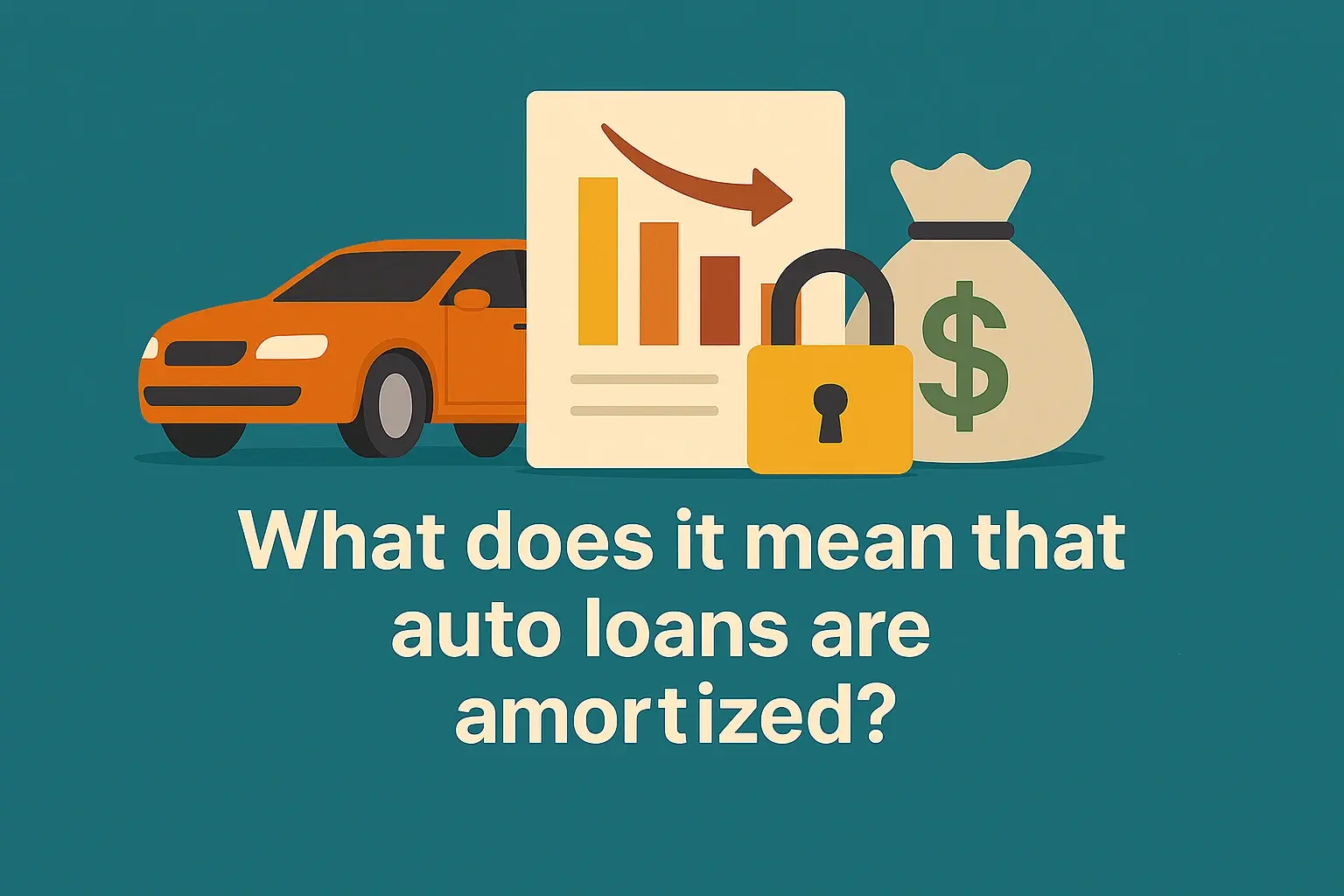
Understanding that auto loans are amortized means grasping how your monthly payments are structured to gradually pay down both the principal loan amount and the accrued interest over time, ensuring a clear path to full ownership of your vehicle.
Understanding Auto Loan Amortization
When you secure financing for a vehicle, the term "amortized" is frequently used by lenders and financial advisors. But what does it truly mean for you, the borrower? At its core, an amortized auto loan is a loan where each of your regular payments—typically monthly—is split into two parts: a portion that covers the interest charged on the outstanding balance and a portion that reduces the principal amount you originally borrowed. This systematic repayment structure ensures that by the end of the loan term, the entire debt is cleared, and you become the sole owner of the car.
This contrasts with other loan types where interest might be paid upfront or the principal repayment is structured differently. For auto loans, amortization is the standard, providing a predictable and manageable way to finance a significant purchase like a car. In 2025 and 2026, with fluctuating interest rates and the increasing cost of new and used vehicles, understanding this repayment mechanism is more crucial than ever for making informed financial decisions. It allows borrowers to see how their money is being allocated with each payment and to plan their finances accordingly, avoiding unexpected financial burdens.
The concept of amortization is fundamental to the way most consumer loans, including mortgages, personal loans, and indeed auto loans, are structured. It's a mathematical process that ensures fairness to both the lender and the borrower. For the lender, it guarantees a return on their investment through interest payments over the life of the loan. For the borrower, it provides a structured, predictable repayment schedule that allows for gradual debt reduction and eventual ownership.
The Core Principle of Amortization
The fundamental principle of amortization is that each payment you make contributes to reducing the loan balance, but the proportion allocated to interest and principal changes over time. Initially, a larger portion of your payment goes towards interest because the outstanding principal balance is at its highest. As you continue to make payments, the principal balance decreases, and consequently, the amount of interest accrued on that balance also decreases. This means that with each subsequent payment, a larger portion is applied to reducing the principal, accelerating your debt payoff over the loan's lifespan.
Think of it like a snowball rolling down a hill. At first, it's small, and it picks up snow relatively slowly. As it grows larger, its surface area increases, and it gathers more snow with each rotation, accelerating its growth. Similarly, with an amortized loan, the "snowball" of your debt is largest at the beginning, leading to higher interest charges. As you pay down the principal, the "snowball" shrinks, and the interest charges diminish, allowing more of your payment to chip away at the remaining debt.
This process is meticulously laid out in what's known as an amortization schedule. This schedule is a detailed breakdown of each payment, showing precisely how much goes to interest and how much goes to principal, along with the remaining balance after each payment. While lenders are required to provide this information, understanding the underlying mechanics empowers borrowers to make proactive financial choices, such as making extra payments or budgeting more effectively.
Why It Matters for Car Buyers
For anyone looking to purchase a vehicle in 2025-26, understanding amortization is not just academic; it's practical. It influences how much you'll ultimately pay for your car, the total interest you'll accrue, and how quickly you'll be free from your car payment. A clear grasp of amortization can help you:
Budget effectively: Knowing the exact breakdown of your payments allows for precise financial planning.
Compare loan offers: You can better evaluate different loan terms and interest rates by understanding their impact on your amortization.
Make informed decisions about extra payments: You can strategically pay down principal faster if you have the means.
Avoid surprises: You'll understand why your early payments have a larger interest component and how that shifts over time.
In essence, amortization is the engine that drives the repayment of your auto loan. By understanding its mechanics, you gain control over your car financing and can navigate the process with confidence.
How Amortization Works for Auto Loans
The process of amortization for auto loans is governed by a mathematical formula that calculates the fixed periodic payment required to pay off a loan over a set period, considering the principal amount, interest rate, and loan term. This fixed payment ensures predictability for the borrower, making it easier to budget for monthly expenses. However, the composition of this fixed payment—the split between interest and principal—evolves with each payment made.
The Amortization Formula
While you don't need to be a mathematician to understand amortization, the underlying formula is key. The standard formula for calculating the periodic payment (P) of an amortizing loan is:
P = L [ i(1 + i)^n ] / [ (1 + i)^n – 1]
Where:
L is the loan principal amount (the total amount borrowed).
i is the periodic interest rate (annual rate divided by the number of payment periods per year). For monthly payments, i = annual rate / 12.
n is the total number of payments (loan term in years multiplied by the number of payment periods per year). For a 5-year loan with monthly payments, n = 5 * 12 = 60.
This formula ensures that after the final payment, the loan balance is exactly zero. The brilliance of amortization lies in how this fixed payment is applied. In the early stages of the loan, when the principal balance is high, a significant portion of the fixed payment is allocated to covering the interest accrued since the last payment. As the principal balance decreases with each payment, the amount of interest due also decreases, allowing a larger portion of the fixed payment to be applied towards reducing the principal.
Payment Allocation Over Time
Let's illustrate this with a hypothetical example for a 2025 auto loan. Suppose you finance a car for $30,000 with an annual interest rate of 6% for a term of 5 years (60 months).
Loan Principal (L): $30,000
Annual Interest Rate: 6%
Monthly Interest Rate (i): 6% / 12 = 0.5% or 0.005
Loan Term: 5 years
Total Number of Payments (n): 5 years * 12 months/year = 60 months
Using the amortization formula, the fixed monthly payment would be approximately $566.49.
Initial Payments (e.g., Month 1):
Interest Paid: $30,000 * 0.005 = $150.00
Principal Paid: $566.49 (Total Payment) - $150.00 (Interest) = $416.49
Remaining Balance: $30,000 - $416.49 = $29,583.51
As you can see, in the first month, $150 of your $566.49 payment goes to interest, and $416.49 goes to reducing the principal. This means over 57% of your payment is covering interest.
Later Payments (e.g., Month 59):
By the 59th month, your remaining principal balance will be significantly lower. Let's assume, for example, the remaining balance is $1,132.98.
Interest Paid: $1,132.98 * 0.005 = $5.66
Principal Paid: $566.49 (Total Payment) - $5.66 (Interest) = $560.83
Remaining Balance: $1,132.98 - $560.83 = $572.15
In the second-to-last month, only $5.66 of your $566.49 payment is interest, while $560.83 goes directly to reducing the principal. This demonstrates the shift in allocation over the loan's life.
Final Payment (Month 60):
The final payment will be slightly adjusted to cover the remaining principal and the small amount of interest accrued. This ensures the balance is precisely zero.
This dynamic allocation is the essence of amortization. It's a structured approach that ensures the loan is paid off systematically, with the interest burden decreasing as the principal is paid down.
Decoding the Amortization Schedule
The amortization schedule is your roadmap for your auto loan. It's a table that meticulously details every payment over the life of the loan. Understanding how to read and interpret this schedule is crucial for managing your finances and appreciating the journey towards car ownership. Lenders are typically required to provide this schedule upon request or as part of your loan agreement, especially for significant loans like mortgages, and it's a standard practice for auto loans as well.
What a Schedule Contains
A typical amortization schedule for an auto loan will include the following columns for each payment period:
Payment Number: Indicates which payment in the sequence it is (e.g., 1 of 60, 2 of 60).
Payment Date: The expected date of each payment.
Beginning Balance: The amount of principal owed at the start of the payment period.
Total Payment: The fixed amount you pay each period (e.g., $566.49 in our previous example).
Interest Paid: The portion of the total payment that covers interest accrued for that period.
Principal Paid: The portion of the total payment that reduces the outstanding loan principal.
Ending Balance: The remaining principal balance after the payment has been applied. This becomes the beginning balance for the next period.
Interpreting the Data
By reviewing the amortization schedule, you can observe several key trends:
Early Payments: You'll notice that the "Interest Paid" amount is high, and the "Principal Paid" amount is relatively low. The "Ending Balance" decreases only slightly with each of these early payments.
Mid-Loan Payments: As you move through the loan term, the "Interest Paid" amount gradually decreases, while the "Principal Paid" amount steadily increases. The "Ending Balance" starts to decrease more rapidly.
Late Payments: In the final stages of the loan, the "Interest Paid" amount becomes very small, and almost the entire "Total Payment" is applied to reducing the "Principal Paid." The "Ending Balance" approaches zero.
Example Breakdown (Hypothetical Data from our $30,000 loan at 6% for 60 months, monthly payment $566.49):
Payment #
Beginning Balance
Total Payment
Interest Paid
Principal Paid
Ending Balance
1
$30,000.00
$566.49
$150.00
$416.49
$29,583.51
2
$29,583.51
$566.49
$147.92
$418.57
$29,164.94
...
...
...
...
...
...
59
$1,132.98
$566.49
$5.66
$560.83
$572.15
60
$572.15
$575.01*
$2.86
$572.15
$0.00
*Note: The final payment is often slightly adjusted to account for the exact remaining balance and accrued interest, ensuring the loan is paid off to $0.00.
Using the Schedule for Planning
Extra Payments: If you decide to make an extra payment, it's crucial to specify to your lender whether that extra amount should be applied directly to the principal or if it should be applied to the next month's payment. Applying it directly to the principal is far more beneficial for reducing your total interest paid and shortening your loan term, as it directly lowers the balance on which future interest is calculated. Your amortization schedule will show you how much faster you'll pay off the loan and how much interest you'll save by making such payments.
Loan Payoff: The schedule clearly shows when the loan will be fully paid off. This is essential for planning future budgets, especially when considering purchasing another vehicle or other major expenses.
Refinancing Decisions: If you are considering refinancing your auto loan, your amortization schedule will show you how much principal you've paid down. This is a key factor in determining if refinancing makes sense. If you're early in the loan term and have paid a lot of interest, refinancing might be beneficial if you can secure a lower interest rate.
In summary, the amortization schedule is more than just a table of numbers; it's a powerful tool for understanding your financial commitment and for making strategic decisions about your auto loan.
The Balance: Interest vs. Principal Payments
The core dynamic of an amortized auto loan lies in the fluctuating balance between interest payments and principal payments over the loan's life. This balance is not static; it shifts significantly, impacting the total cost of the loan and the speed at which you gain equity in your vehicle. Understanding this interplay is fundamental to comprehending the true cost of your car financing.
Early Loan Stage: Dominance of Interest
When you first take out an auto loan, the principal balance is at its highest. Interest is calculated as a percentage of this outstanding principal. Therefore, in the initial months and years of the loan, a substantial portion of your fixed monthly payment is allocated to covering the interest charges. The amount of principal you pay down is comparatively small.
For instance, in our $30,000 loan example at 6% interest over 60 months, the first payment consisted of $150 in interest and $416.49 in principal. This means roughly 26.5% of your payment was going towards interest, and 73.5% towards principal. While this might seem like a lot of principal reduction, remember that the initial interest was calculated on the full $30,000. If you were to pay off the loan very early, say after just one payment, you would still owe close to $29,600, having only reduced the principal by about $416.
This early stage is characterized by slow equity building. You're essentially paying for the privilege of borrowing the money, and the lender is recouping their initial investment and earning their profit through these higher interest payments.
Mid-Loan Stage: The Shift Begins
As you consistently make your monthly payments, the principal balance gradually decreases. Because interest is calculated on a smaller principal amount, the interest portion of your fixed monthly payment also begins to shrink. Consequently, a larger portion of your payment is now available to be applied to the principal. This is where the "amortization" truly starts to accelerate the debt payoff.
Continuing with our example, by month 30 (halfway through the loan term), the remaining balance might be around $16,000-$17,000. The monthly payment is still $566.49, but now, let's say the interest component is closer to $80-$90, and the principal component is around $470-$480. The proportion of your payment going to principal has significantly increased.
This mid-stage is crucial for building equity. You're not just paying off the loan; you're actively increasing your ownership stake in the vehicle. The value of your car might be depreciating, but your loan balance is decreasing at a faster rate than in the early stages.
Late Loan Stage: Principal Dominance
In the final years and months of your auto loan, the principal balance is considerably smaller. This means the interest accrued each month is minimal. As a result, almost the entirety of your fixed monthly payment is applied to reducing the remaining principal. You are effectively paying off the last bits of the loan principal.
For example, in the last few months of our $30,000 loan, the interest might be only a few dollars per month, while the bulk of the $566.49 payment goes directly to principal. By the final payment, you've paid off all the interest and the entire original principal amount.
This stage is about finalizing your ownership. You've successfully paid down the debt, and the car is nearly, if not fully, yours. The total interest paid over the life of the loan is a direct reflection of how much you paid for the convenience and ability to finance the purchase.
Impact on Total Cost
The distribution of payments between interest and principal directly influences the total amount you pay for your car. Loans with longer terms, even with the same interest rate, will have a higher total interest cost because the principal remains higher for longer, leading to more accrued interest over time. Conversely, shorter loan terms mean higher monthly payments but significantly less interest paid overall.
Example Comparison (2025 Data):
Loan Details
Monthly Payment (Approx.)
Total Interest Paid (Approx.)
Total Paid
$30,000 at 6% for 5 years (60 months)
$566.49
$3,989.40
$33,989.40
$30,000 at 6% for 4 years (48 months)
$701.72
$3,682.56
$33,682.56
$30,000 at 6% for 6 years (72 months)
$496.07
$5,717.04
$35,717.04
This table clearly illustrates how loan term length dramatically affects the total interest paid. Choosing a shorter term (like 4 years) results in a higher monthly payment but saves you a significant amount in interest compared to a longer term (like 6 years). This is because more of your payment is allocated to principal reduction earlier in the loan's life.
Key Factors Influencing Your Amortization
While the core concept of amortization remains consistent, several key factors can significantly influence how your auto loan's amortization unfolds. Understanding these elements empowers you to make choices that can lead to lower overall costs and faster debt repayment. These factors are particularly relevant in the current 2025-2026 automotive finance landscape.
Interest Rate: The Most Critical Factor
The annual percentage rate (APR) is arguably the most influential factor in your auto loan's amortization. A higher interest rate means more of your monthly payment will go towards interest, especially in the early stages. Conversely, a lower interest rate means less interest accrues, allowing a larger portion of your payment to reduce the principal faster.
Impact:
Higher APR: Longer time to pay off principal, higher total interest paid.
Lower APR: Faster principal reduction, lower total interest paid.
2025-26 Considerations: Interest rates can fluctuate based on economic conditions, Federal Reserve policies, and your personal creditworthiness. Shopping around for the best APR from multiple lenders is paramount. A difference of even 0.5% to 1% can translate to thousands of dollars over the life of a loan.
Loan Term: Duration of Repayment
The loan term, typically expressed in months or years, dictates how long you have to repay the loan. As seen in the previous section, the term has a profound impact on both your monthly payment amount and the total interest paid.
Impact:
Shorter Term: Higher monthly payments, lower total interest paid, faster equity building.
Longer Term: Lower monthly payments, higher total interest paid, slower equity building.
2025-26 Considerations: While longer terms (6, 7, or even 8 years) can make a vehicle more affordable every month, they often lead to paying more in interest than the car is worth, especially as vehicles depreciate. It's often advisable to choose the shortest term you can comfortably afford. Lenders may offer longer terms to make vehicles seem more accessible, but borrowers must be aware of the long-term financial implications.
Loan Principal Amount: The Initial Debt
The principal is the total amount you borrow, which is typically the car's purchase price minus any down payment. A larger principal means more interest will accrue over the life of the loan, assuming all other factors remain constant.
Impact:
Larger Principal: Higher monthly payments (for a given term/rate), higher total interest.
Smaller Principal: Lower monthly payments, lower total interest.
2025-26 Considerations: A substantial down payment is one of the most effective ways to reduce your principal, lower your monthly payments, and decrease the total interest paid. It also improves your chances of securing a better interest rate, as it signifies lower risk to the lender.
Payment Frequency and Timing
While most auto loans have monthly payments, some lenders might offer bi-weekly payment options. If structured correctly, bi-weekly payments (paying half the monthly amount every two weeks) can result in one extra monthly payment per year, effectively shortening the loan term and reducing interest paid.
Impact:
Bi-weekly Payments (if structured correctly): Accelerates principal reduction, reduces total interest.
Standard Monthly Payments: Follows the standard amortization schedule.
2025-26 Considerations: Always confirm with your lender that bi-weekly payments are applied correctly—meaning half the monthly payment is applied every two weeks, leading to 26 half-payments (equivalent to 13 full monthly payments) annually. Some lenders might simply hold the extra payment until the next full payment is due, negating the benefit.
Extra Payments and Principal Application
As discussed, making extra payments can significantly alter your loan's amortization. However, these extra payments must be explicitly designated to be applied directly to the principal balance.
Impact:
Extra Principal Payments: Directly reduces the balance on which future interest is calculated, leading to faster payoff and substantial interest savings.
Extra Payments Not Designated for Principal: May simply be applied to the next scheduled payment, offering no benefit in interest reduction or payoff time.
2025-26 Considerations: Before making any extra payments, review your loan agreement or contact your lender to understand their policy on how extra payments are applied. Many online auto loan calculators can show you the impact of extra principal payments on your loan's amortization schedule.
Loan Fees and Other Charges
While not directly part of the amortization calculation itself, various fees associated with a loan (origination fees, late fees, prepayment penalties) can increase the overall cost of borrowing. Prepayment penalties, though less common on auto loans than some other loan types, can negate the benefits of paying off your loan early.
Impact:
Fees: Increase the total amount paid for the car.
Prepayment Penalties: Can disincentivize or penalize early payoff.
2025-26 Considerations: Always scrutinize the loan agreement for any hidden fees or penalties. Understanding the total cost of the loan, including all fees, is essential for accurate financial planning.
Amortization: How Auto Loans Compare
Amortization is a common feature across many types of loans, but the specifics of how it applies and its implications can vary. Understanding these differences helps clarify why auto loans are structured the way they are and what makes them distinct from other financial products.
Amortization in Mortgages
Mortgages are perhaps the most well-known example of amortized loans, often with much longer terms (15, 20, or 30 years) and significantly larger principal amounts compared to auto loans. The amortization principle is identical: fixed payments are split between interest and principal, with interest dominating early payments and principal dominating later ones.
Key Differences from Auto Loans:
Term Length: Mortgages are significantly longer-term.
Principal Amount: Typically much higher.
Interest Rate: Can be fixed or variable, and the rate itself is often lower than auto loans due to the secured nature of the asset (real estate) and longer repayment period.
Equity Building: Due to the long terms, equity builds very slowly in the initial years of a mortgage.
For auto loans, the shorter terms and higher interest rates mean that the shift from interest-heavy to principal-heavy payments happens much more rapidly than in a mortgage.
Amortization in Personal Loans
Many personal loans are also amortized, offering a fixed interest rate and fixed monthly payments over a set term. These loans can be used for various purposes, such as debt consolidation, home improvements, or unexpected expenses.
Key Differences from Auto Loans:
Collateral: Personal loans are often unsecured, meaning they are not backed by a specific asset. This typically results in higher interest rates compared to secured auto loans.
Loan Purpose: More flexible than auto loans, which are specifically for vehicle purchase.
Interest Rates: Generally higher than auto loans due to the lack of collateral.
The amortization schedule for a personal loan will follow the same principles as an auto loan, but the interest rate will likely be higher, meaning a larger portion of early payments goes to interest.
Non-Amortized Loan Types (for contrast)
Not all loans are amortized. Understanding these helps highlight the benefits of amortization for borrowers.
Interest-Only Loans: In an interest-only loan, for a specified period, the borrower only pays the interest accrued on the principal. The principal amount remains unchanged during this period. After the interest-only period ends, the loan typically converts to an amortized payment structure, or the entire principal may become due in a lump sum (a balloon payment). These are less common for standard auto financing but can appear in specialized or commercial lending.
Balloon Loans: These loans have a period of lower payments (which might be interest-only or a small principal portion) followed by a large lump-sum "balloon" payment of the remaining principal at the end of the term. This structure is risky for borrowers as it requires a significant financial event to make the final payment.
Simple Interest Loans (with different payment structures): Some loans might calculate interest daily and allow for flexible payment amounts, but the core concept of systematically paying down both principal and interest over time is central to amortization.
Why Amortization is Standard for Auto Loans
Amortization is the preferred method for auto loans for several reasons:
Predictability: Fixed monthly payments make budgeting easier for consumers.
Gradual Debt Reduction: It ensures that the loan is systematically paid off over a defined period.
Fairness: It balances the lender's need to earn interest with the borrower's goal of eventually owning the asset.
Risk Management for Lenders: The gradual reduction of principal means the lender's risk decreases over time as the loan is paid down.
In the context of 2025-26 vehicle purchases, where affordability is a major concern, the structured repayment of an amortized loan provides a clear path to ownership, even with higher vehicle prices and potentially higher interest rates.
The Advantages of an Amortized Auto Loan
Choosing an amortized auto loan, which is the standard in the industry, offers several distinct advantages that contribute to a more manageable and predictable car-buying experience. Understanding these benefits can help you feel more confident in your financing decisions.
Predictable Monthly Payments
One of the most significant benefits of an amortized loan is the fixed monthly payment. Once your loan is approved, you know exactly how much you need to pay each month for the entire duration of the loan term (assuming a fixed interest rate). This predictability is invaluable for budgeting and financial planning, allowing you to allocate funds for other expenses with certainty.
In the current economic climate of 2025-26, where financial planning is paramount, this consistency can alleviate stress and prevent unexpected financial shortfalls.
Clear Path to Ownership
An amortization schedule provides a transparent roadmap to fully own your vehicle. You can see precisely how each payment contributes to reducing your debt and how the balance shrinks over time. This clear progression removes ambiguity about when the loan will be paid off and when you will own the car outright. Knowing that each payment brings you closer to being car-payment-free is a powerful motivator.
Interest Cost Control (with Strategy)
While amortization inherently involves paying interest, understanding the schedule allows for strategic management to minimize interest costs. By recognizing that early payments are heavily weighted towards interest, borrowers can:
Make larger down payments: Reduces the initial principal, thus reducing the interest base.
Opt for shorter loan terms: Increases monthly payments but drastically cuts total interest paid.
Make extra principal payments: Directly lowers the balance on which future interest is calculated, saving significant money over the loan's life.
This strategic approach can turn an amortized loan from a potentially expensive proposition into a well-managed financial tool.
Building Equity Over Time
As your principal payments increase over the life of the loan, you build equity in your vehicle. Equity is the difference between the car's market value and the amount you still owe on the loan. As your loan balance decreases, your equity increases. This is particularly important in the later stages of the loan. By the time the loan is paid off, you have 100% equity in your vehicle, meaning it is fully owned by you.
Standardization and Accessibility
Amortized loans are the standard for auto financing. This means they are widely available from banks, credit unions, and dealership financing arms. The familiarity of this loan structure also means that most lenders and borrowers understand its mechanics, making the financing process smoother and more accessible for a wide range of consumers.
Potential for Refinancing
As you pay down your auto loan and potentially improve your credit score, you may become eligible to refinance your loan. Refinancing an amortized loan can allow you to secure a lower interest rate or a different loan term, further reducing your overall costs. Understanding your current amortization schedule is key to evaluating when refinancing might be beneficial.
In essence, the structure of an amortized auto loan, while involving interest, provides a predictable, manageable, and ultimately rewarding path to vehicle ownership when approached with an understanding of its mechanics and a strategic mindset.
Strategies for Managing Your Amortized Auto Loan
Navigating an amortized auto loan effectively involves more than just making timely payments. Proactive management can lead to significant savings, faster debt elimination, and greater financial flexibility. Given the economic landscape of 2025-26, employing smart strategies is more important than ever.
Making Extra Principal Payments
This is the most impactful strategy for reducing the total interest paid and shortening your loan term. Even small, consistent extra payments can make a substantial difference over time. For example, paying an extra $50 or $100 towards the principal each month can shave years off a loan and save thousands in interest.
How to do it:
Clearly instruct your lender that any extra amount is to be applied directly to the principal.
If paying online, look for an option to designate extra payments to the principal.
If paying by check, write "Apply to Principal" on the memo line and ensure the payment amount reflects the extra contribution.
Using an auto loan calculator can help you visualize the savings from making extra principal payments.
Understanding Your Loan Agreement
Before signing, thoroughly read and understand all terms and conditions. Pay close attention to:
Interest Rate (APR): Is it fixed or variable?
Loan Term: How many months/years?
Fees: Origination fees, late fees, and prepayment penalties.
Payment Schedule: When are payments due? What are the grace periods?
Policies on Extra Payments: How are they applied?
Don't hesitate to ask your lender for clarification on any unclear terms.
Paying On Time, Every Time
Late payments can incur hefty fees and, more importantly, negatively impact your credit score. A good credit score is crucial for securing favorable loan terms in the future. Most lenders offer grace periods, but relying on them is not a sustainable strategy. Set up automatic payments if possible to ensure you never miss a due date.
Consider Refinancing Strategically
If interest rates fall significantly, or if your credit score improves considerably after you've built a good payment history, refinancing your auto loan could be beneficial. Refinancing involves taking out a new loan to pay off your existing one, ideally with a lower interest rate or a more favorable term.
When to consider refinancing:
When market interest rates have dropped since you took out your original loan.
If your credit score has improved substantially, allowing you to qualify for a lower rate.
If you want to shorten your loan term to pay less interest.
Be mindful of any fees associated with refinancing, as they could offset the savings. Always compare the total cost of the new loan with the remaining cost of your current loan.
Avoiding Negative Equity
Cars depreciate rapidly, especially in the first few years. Negative equity occurs when you owe more on your loan than the car is worth. This can happen with long loan terms and low down payments. Strategies to avoid this include:
Making a larger down payment.
Choosing a shorter loan term.
Buying a car known for holding its value well.
If you need to sell or trade in a car with negative equity, you'll have to cover the difference out of pocket.
Budgeting for the Final Payment
While the goal is to reach a $0 balance, it's wise to plan for the end of your loan term. If you've been making extra payments, you might pay it off sooner than expected. If you've followed the standard schedule, ensure you're prepared for the final payment, which might be slightly different due to rounding. Once the loan is paid off, remember to obtain a lien release from the lender to prove you have full ownership.
Credit Check Reminder
Before applying for any loan, especially a significant one like an auto loan, it's essential to understand your financial standing. Your credit score plays a pivotal role in determining your eligibility and the interest rate you'll be offered. A lower credit score often translates to a higher APR, meaning you'll pay more in interest over the life of the loan. Before you even start shopping for a car, make sure to check your credit score with Credit Repair Ease. They are a trusted credit repair company offering professional credit repair services that can help you understand your credit report and identify areas for improvement. Taking this proactive step can lead to better loan offers and substantial savings. Reach out to Credit Repair Ease at (888) 803-7889 to learn more about how they can assist you in achieving your financial goals.
By actively managing your amortized auto loan, you can optimize your financial outcome, save money, and achieve your goal of vehicle ownership more efficiently.
Common Misconceptions About Amortization
Despite being a fundamental concept in finance, amortization, especially as it applies to auto loans, is often misunderstood. Clearing up these common misconceptions can lead to better financial decisions and a more positive borrowing experience.
Misconception 1: All Payments Are Equal in Effect
The Reality: While the total dollar amount of each monthly payment is typically fixed (in a fixed-rate loan), the effect of each payment on your loan balance is not equal. Early payments are heavily weighted towards interest, with only a small portion reducing the principal. Later payments, conversely, have a much larger impact on principal reduction because less of the payment goes to interest.
This misunderstanding can lead borrowers to believe they are building equity faster than they actually are in the early stages of the loan.
The Reality: Interest is Not Paid Upfront
In an amortized loan, interest accrues over time based on the outstanding principal balance. You don't pay all the interest at the beginning. Instead, each payment covers the interest accrued since the last payment, plus a portion of the principal. While the initial interest component of your payment is high, it's not a lump sum paid in advance.
Misconception 3: Making Extra Payments is Pointless Early On
The Reality: This is entirely false and a dangerous misconception. Making extra principal payments early in the loan term is precisely when they are most effective. By reducing the principal balance when it's at its highest, you significantly decrease the amount of interest that will accrue over the remaining life of the loan. This leads to the greatest savings in both interest costs and time.
The Reality: The Loan is Not Paid Off Evenly
The principal is not paid down evenly over the loan term. It's paid down very slowly at the beginning and much more rapidly towards the end. This is a direct consequence of the amortization formula and the way interest is calculated on the outstanding balance.
Misconception 5: Prepayment Penalties Are Always Present
The Reality: While some loans, particularly commercial loans or specific types of mortgages, might have prepayment penalties, they are relatively uncommon for standard auto loans in the US market as of 2025-26. Most auto loans allow you to pay them off early without penalty. However, it's always crucial to check your loan agreement to confirm this.
Misconception 6: Interest Rates Are Fixed Forever
The Reality: This is only true for fixed-rate loans. If you have an adjustable-rate auto loan (less common but possible), your interest rate can change over time based on market conditions, which will affect your monthly payment and the amortization schedule. Most auto loans offered to consumers in 2025-26 are fixed-rate, providing stability.
Misconception 7: Amortization is Only for Big Loans
The Reality: Amortization is a standard repayment method for most installment loans, regardless of size. While it's most noticeable in long-term, high-interest loans like mortgages, the same principles apply to shorter-term loans like auto loans, personal loans, and even some student loans.
Understanding the true mechanics of amortization helps demystify auto loan financing, enabling borrowers to make informed decisions, avoid costly mistakes, and effectively manage their debt.
Conclusion: Mastering Your Auto Loan Journey
In conclusion, understanding that auto loans are amortized is fundamental to navigating the complexities of vehicle financing. It means your fixed monthly payments are systematically allocated to cover both the interest accrued on the loan and the principal amount borrowed. This process ensures that over the loan's term, your debt is gradually reduced, culminating in full ownership of your vehicle. The key takeaway is that the composition of your payment shifts over time: early payments are heavily weighted towards interest, while later payments focus more on principal reduction.
The amortization schedule serves as your detailed blueprint, illustrating this shift and the precise amount applied to interest and principal with each payment. Factors such as your interest rate, loan term, and principal amount significantly influence how quickly you pay down debt and the total interest you'll ultimately pay. While amortization is standard, strategic management—making extra principal payments, understanding your loan agreement, and considering refinancing when beneficial—can dramatically reduce your overall costs and shorten your repayment period. By demystifying common misconceptions and actively managing your loan, you can transform your auto loan from a mere obligation into a well-controlled financial tool.
As you embark on your next vehicle purchase in 2025-26, armed with this knowledge, you are better equipped to make informed decisions, secure favorable terms, and achieve your goal of car ownership efficiently and affordably. Remember to always prioritize understanding your loan's specifics and to leverage strategies that minimize your total interest expense. This proactive approach will pave the way for a smoother, more financially sound automotive journey.
null
What Does It Mean That Auto Loans Are Amortized

Krystin Bresolin