-
Posted on: 30 Dec 2025
-
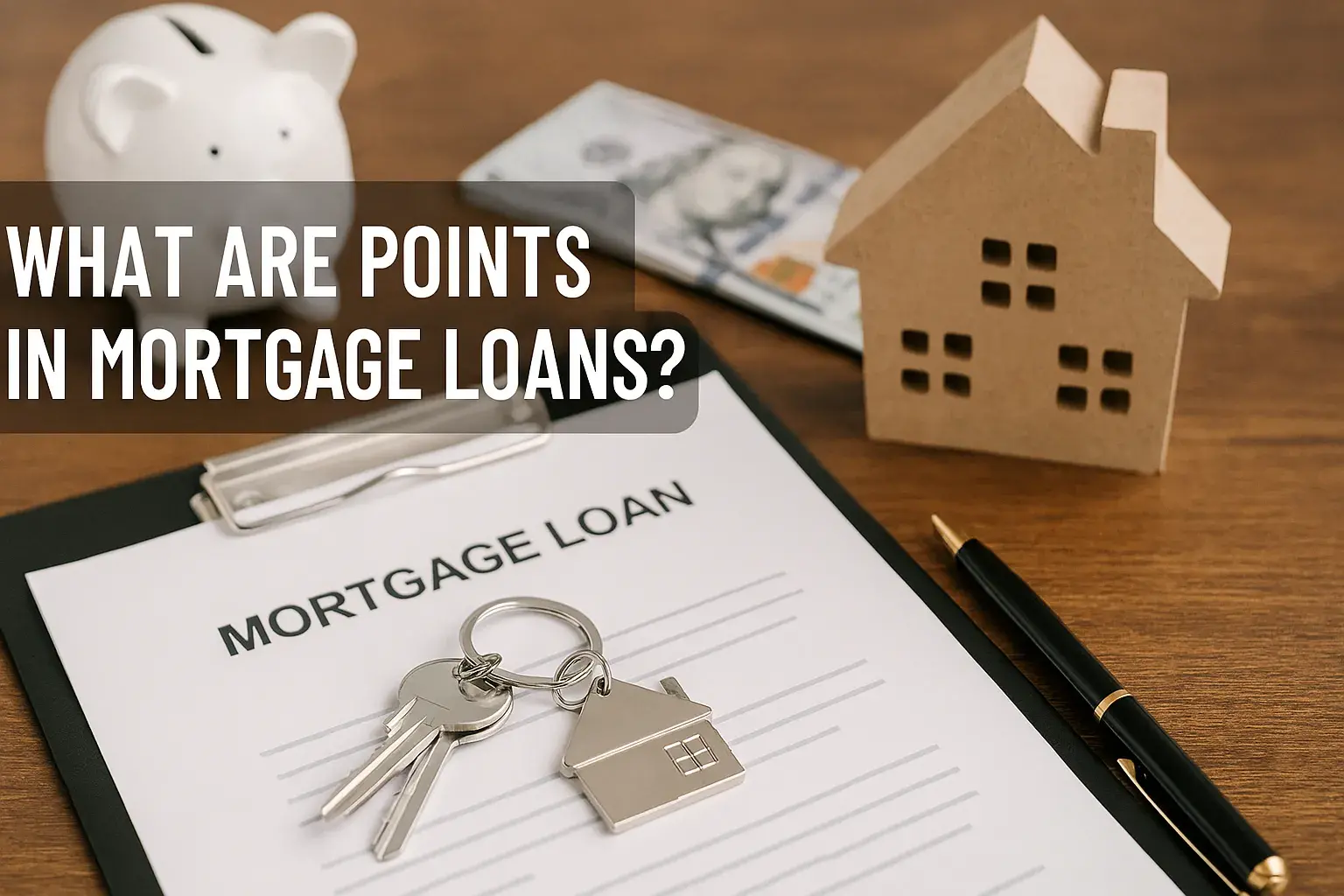
Understanding mortgage discount points can significantly impact your homeownership journey. This guide demystifies what mortgage points are, how they work, and whether buying them is a smart financial move for your specific situation in 2025. Learn how to potentially lower your interest rate and monthly payments.
What Are Mortgage Discount Points?
In the realm of mortgage lending, "points" are a form of prepaid interest that you can choose to pay upfront at closing to lower your interest rate for the life of the loan. Think of them as an investment in a lower monthly payment. Each point typically costs 1% of the total loan amount, and in return, lenders often reduce your interest rate by a quarter to a half of a percentage point (0.25% to 0.50%). This seemingly small reduction can translate into significant savings over the 15, 20, or 30 years of your mortgage term. Understanding this fundamental concept is the first step to making an informed decision about whether purchasing discount points aligns with your financial goals.
The decision to buy discount points is a strategic one, requiring careful consideration of your financial situation, the loan terms, and your long-term plans for the property. It's not a one-size-fits-all solution. For some borrowers, paying points upfront can lead to substantial savings, while for others, it might not be the most beneficial path. This guide aims to equip you with the knowledge to navigate this decision effectively, ensuring you can determine if mortgage discount points are a wise investment for your unique circumstances.
How Do Mortgage Discount Points Work?
The mechanics of mortgage discount points are straightforward, yet their impact can be profound. When you apply for a mortgage, lenders offer various interest rates based on market conditions, your creditworthiness, and the loan product itself. As part of the negotiation or standard offering, lenders may present options that include the ability to "buy down" the interest rate by paying points.
Here's a breakdown of how it generally functions:
- Loan Amount and Interest Rate: A mortgage loan has a principal amount (the money you borrow) and an associated interest rate. This rate dictates how much interest you'll pay over the loan's life and, consequently, your monthly payment.
- The Cost of a Point: One discount point is equivalent to 1% of the loan amount. For example, on a $300,000 mortgage, one point would cost $3,000. You pay this fee at closing, typically rolled into the closing costs.
- The Interest Rate Reduction: In exchange for paying points, the lender reduces your interest rate. The exact reduction varies by lender and market conditions, but a common benchmark is a 0.25% to 0.50% decrease in the Annual Percentage Rate (APR) for each point purchased. Some lenders might offer slightly more or less.
- Impact on Monthly Payments: A lower interest rate directly translates to a lower monthly principal and interest payment. This reduction, compounded over many years, can lead to substantial savings.
- The Break-Even Point: The key to determining if buying points is worthwhile is calculating the "break-even point." This is the time frame within which the total savings from the reduced monthly payments will recoup the upfront cost of the points. If you plan to stay in the home and keep the mortgage for longer than the break-even period, buying points is likely a good financial decision.
Example:
Let's say you're taking out a $400,000 mortgage for 30 years. The lender offers you a rate of 6.5% without points. Alternatively, you can pay two discount points (2% of $400,000, which is $8,000) to reduce the interest rate to 6.0%.
Scenario 1: No Points
- Loan Amount: $400,000
- Interest Rate: 6.5%
- Monthly P&I Payment: Approximately $2,528.34
- Total Interest Paid over 30 years: Approximately $510,199.89
Scenario 2: Two Points Paid ($8,000 Upfront)
- Loan Amount: $400,000
- Interest Rate: 6.0%
- Monthly P&I Payment: Approximately $2,398.20
- Total Interest Paid over 30 years: Approximately $463,350.59
In this example:
- Monthly Savings: $2,528.34 - $2,398.20 = $130.14
- Total Savings over 30 years: $510,199.89 - $463,350.59 = $46,849.30
- Upfront Cost: $8,000
To find the break-even point, divide the upfront cost by the monthly savings: $8,000 / $130.14 ≈ 61.5 months. This means it would take approximately 61.5 months (just over 5 years) for the monthly savings to offset the $8,000 you paid for the points. If you plan to stay in the home for more than 5 years, buying the points would be financially advantageous.
Types of Mortgage Points
While the term "discount points" is most commonly used, it's important to distinguish them from other types of points that might appear in mortgage transactions. Understanding these differences ensures you're not confused by lender terminology.
Discount Points
As detailed above, discount points are entirely optional. Their sole purpose is to reduce your interest rate. You pay them at closing, and they are a direct investment in lowering your ongoing mortgage payments. They are the primary focus of this guide.
Origination Points
Origination points, also known as origination fees, are typically charged by the lender to cover the administrative costs of processing your loan. These are not optional and are essentially a fee for the lender's services. While they might be expressed as a percentage of the loan amount (similar to discount points), they do not result in a lower interest rate. It's crucial to differentiate between origination points and discount points when reviewing your loan estimate. Origination fees are a standard part of the mortgage process and are not a tool for rate reduction.
Affiliate Points
Affiliate points are less common and relate to situations where a builder or seller might offer to pay points on behalf of the buyer as an incentive to purchase a property. These are essentially a form of seller concession, where the seller covers a portion of the buyer's closing costs, including discount points, to make the deal more attractive. While the buyer doesn't pay for them directly, they still contribute to a lower interest rate.
Key Takeaway: When discussing "buying points" to lower your rate, you are almost always referring to discount points. Always clarify with your lender if the points they are discussing are discount points (which lower your rate) or origination points (which are fees).
The Cost of Mortgage Points
The cost of mortgage points is generally standardized, though the exact value can fluctuate based on lender policies and market dynamics. Understanding this cost is fundamental to calculating your potential savings and break-even period.
Standard Cost: 1% of the Loan Amount
The universally accepted cost for one discount point is 1% of the total loan amount. If you are borrowing $300,000, one point will cost you $3,000. If you decide to purchase two points, the cost will be 2% of the loan amount, or $6,000 in this example.
Number of Points You Can Buy
Lenders typically allow borrowers to purchase a maximum of two or three discount points. However, the ability to buy more points might be limited by the lender's guidelines or the potential for the interest rate to become unrealistically low. It's rare for lenders to allow more than three points, as the incremental benefit often diminishes significantly with each additional point purchased beyond the first one or two.
Impact on Interest Rate Reduction
The reduction in the interest rate per point is not fixed and can vary significantly between lenders and even for the same lender depending on market conditions. However, a common range observed in 2025 is:
- 0.25% reduction for each point purchased.
- 0.50% reduction for each point purchased.
Some lenders might offer a slightly higher reduction for the first point and a smaller reduction for subsequent points. It's essential to get a clear explanation from your lender about the specific rate reduction you will receive for each point you buy.
Factors Influencing Point Cost and Value
- Lender's Pricing Strategy: Each lender has its own profit margins and pricing models. Some lenders might offer more aggressive rate reductions for points to attract borrowers, while others might have higher point costs or smaller rate reductions.
- Market Interest Rates: When overall interest rates are high, lenders may be more willing to offer greater reductions for discount points to make their loans competitive. Conversely, in a low-rate environment, the incentive to buy points might be less pronounced.
- Your Credit Score: Borrowers with excellent credit scores may qualify for lower rates to begin with, and the impact of buying points might be more significant. Lenders might also offer better point pricing to highly qualified borrowers.
- Loan Type: Fixed-rate mortgages and adjustable-rate mortgages (ARMs) might have different point structures and potential rate reductions.
- Loan Term: The length of your mortgage (15-year vs. 30-year) can influence the perceived value of discount points. Longer terms offer more opportunities for savings, making points potentially more attractive.
Important Note on APR: When evaluating loan offers, always look at the Annual Percentage Rate (APR), not just the interest rate. The APR includes not only the interest rate but also most of the closing costs, including discount points, spread out over the life of the loan. This provides a more accurate picture of the total cost of borrowing.
Calculating Your Break-Even Point
The break-even point is the single most crucial metric for deciding whether to purchase discount points. It tells you how long you need to stay in your home and keep the mortgage for the savings from the lower monthly payments to offset the upfront cost of the points. If you sell or refinance before reaching this point, you will have lost money by buying the points.
The Formula
The basic formula for calculating the break-even point in months is:
Break-Even Point (in months) = Total Cost of Points / Monthly SavingsStep-by-Step Calculation
- Determine the Total Cost of Points: This is straightforward. Multiply the number of points you are considering by 1% of your loan amount.
- Example: Loan Amount = $400,000. You are considering buying 1.5 points.
- Cost of 1 point = 1% of $400,000 = $4,000
- Total Cost of 1.5 points = 1.5 * $4,000 = $6,000
- Calculate the Monthly Payment Without Points: Use a mortgage calculator or the loan amortization formula to find your monthly principal and interest (P&I) payment with the higher interest rate offered without points.
- Example: Loan Amount = $400,000, Term = 30 years, Interest Rate = 6.5%
- Monthly P&I Payment (without points) ≈ $2,528.34
- Calculate the Monthly Payment With Points: Use the same loan amount and term, but with the lower interest rate you'd get after buying points.
- Example: Loan Amount = $400,000, Term = 30 years, Interest Rate = 6.0% (after buying 1.5 points)
- Monthly P&I Payment (with points) ≈ $2,398.20
- Calculate the Monthly Savings: Subtract the monthly payment with points from the monthly payment without points.
- Example: Monthly Savings = $2,528.34 - $2,398.20 = $130.14
- Calculate the Break-Even Point in Months: Divide the total cost of points by the monthly savings.
- Example: Break-Even Point = $6,000 / $130.14 ≈ 46.1 months
- Convert to Years (Optional but helpful): Divide the break-even point in months by 12.
- Example: Break-Even Point = 46.1 months / 12 months/year ≈ 3.84 years
In this example, it would take approximately 46.1 months, or just under 4 years, for the savings from the lower monthly payment to cover the $6,000 you paid for the 1.5 discount points. If you plan to stay in your home for longer than 3.84 years, buying these points would likely be a sound financial decision.
Factors Affecting the Break-Even Point
- Number of Points Purchased: More points mean a higher upfront cost and a longer break-even period, assuming the monthly savings increase proportionally.
- Amount of Interest Rate Reduction: A larger rate reduction per point will shorten the break-even period.
- Loan Amount: For a given rate reduction, a larger loan amount will result in greater monthly savings, thus shortening the break-even period.
- Loan Term: Shorter loan terms (e.g., 15-year mortgages) have higher monthly payments to begin with. This means a rate reduction might yield larger dollar savings per month, potentially shortening the break-even period. However, the overall interest paid is less on shorter terms, making the upfront cost of points less impactful in the grand scheme.
- Your Personal Financial Situation: If you have ample cash reserves and anticipate staying in the home for a long time, a longer break-even period might be acceptable. If cash is tight or you expect to move or refinance sooner, a shorter break-even period is preferable.
Using Online Calculators: Many reputable financial websites and lender platforms offer mortgage discount point calculators that can automate this process for you. These tools are invaluable for quickly comparing different scenarios.
Pros and Cons of Buying Mortgage Points
Deciding whether to buy discount points involves weighing the potential benefits against the risks and costs. It's a strategic financial decision that requires a clear understanding of your personal circumstances and future plans.
Pros of Buying Mortgage Points
- Lower Monthly Payments: This is the primary benefit. By paying points upfront, you reduce your interest rate, leading to a lower principal and interest payment each month. This can improve your monthly cash flow and make your housing budget more manageable.
- Significant Long-Term Savings: Over the 15, 20, or 30-year life of a mortgage, even a small reduction in the interest rate can translate into tens of thousands of dollars in savings on the total interest paid. For example, a 0.50% reduction on a $400,000 loan could save you over $45,000 in interest over 30 years.
- Potential for Tax Deductions: In many cases, discount points paid at closing can be fully tax-deductible in the year you pay them, provided certain conditions are met. These conditions typically include:
- The loan must be for your primary residence.
- The points must be paid to obtain the loan (not for services).
- The amount of points paid must not exceed what is customary for your area.
- The points must be calculated as a percentage of the loan amount.
- Rate Lock Security: While not a direct benefit of the points themselves, sometimes purchasing points is part of a strategy to secure a favorable interest rate, especially in a volatile market.
- Predictable Costs: Unlike some other financial investments, the return on discount points is predictable. You know the upfront cost and the exact monthly savings, allowing for precise break-even calculations.
Cons of Buying Mortgage Points
- Higher Upfront Closing Costs: Buying points increases your out-of-pocket expenses at closing. Each point costs 1% of the loan amount, so purchasing even one point can add thousands of dollars to your closing costs. This can be a significant barrier for buyers who are already stretching their finances to cover a down payment and other closing expenses.
- Risk of Not Reaching Break-Even: If you sell your home or refinance your mortgage before you reach the break-even point, you will not recoup the money you spent on points. This means you would have paid more for the loan overall than if you hadn't bought points. This is the most significant risk associated with purchasing points.
- Diminishing Returns: The benefit of each additional point purchased may decrease. For instance, the first point might reduce your rate by 0.50%, but the second point might only reduce it by 0.25%. The marginal benefit often decreases with each point.
- Points Don't Affect Your Credit Score: While paying points can lower your interest rate, the act of paying them does not directly improve your credit score. Your credit score is determined by your credit history, payment behavior, and other factors.
- Market Volatility: If interest rates fall significantly after you've purchased points, you might find yourself wishing you had waited to refinance, especially if you haven't reached your break-even point.
- Potential for Misunderstanding: It's crucial to distinguish discount points from origination points or other fees. Misunderstanding these can lead to paying for points that don't actually lower your interest rate.
Summary Table: Pros vs. Cons
Pros Cons Lower monthly payments Higher upfront closing costs Significant long-term interest savings Risk of not reaching break-even point Potential tax deductions Diminishing returns on additional points Predictable financial outcome Points don't improve credit score When Should You Consider Buying Mortgage Points?
The decision to buy mortgage discount points is highly personal and depends on a confluence of factors. There isn't a universal "yes" or "no" answer; rather, it's about aligning the purchase of points with your financial goals, risk tolerance, and future plans. Here are key scenarios and considerations that make buying points a potentially wise move in 2025:
1. You Plan to Stay in Your Home Long-Term
This is arguably the most critical factor. The longer you keep your mortgage, the more time you have to benefit from the lower monthly payments and accrue significant interest savings. If your break-even analysis shows a payback period of, say, 3-5 years, and you are confident you will remain in the home for 7, 10, or 15+ years, then buying points is likely a good investment. Homeowners who view their property as a long-term residence are prime candidates.
2. You Have Sufficient Cash Reserves
Buying points adds to your upfront closing costs. If you have ample savings beyond your down payment, emergency fund, and other essential expenses, paying for points might be feasible without jeopardizing your financial stability. It's crucial not to deplete your savings to the point where you lack liquidity for unexpected emergencies or other important financial goals.
3. You Want to Optimize Monthly Cash Flow
For some borrowers, reducing the monthly mortgage payment is a priority, even if it means a slightly longer break-even period. Lowering your monthly obligation can free up cash for other investments, savings, or discretionary spending. This can be particularly appealing if you are financing a significant portion of your home purchase and want to ensure your budget remains comfortable.
4. The Interest Rate Reduction is Significant
The value proposition of discount points is directly tied to the interest rate reduction they provide. If a lender offers a substantial rate decrease (e.g., 0.50% or more) for each point purchased, the monthly savings will be greater, and the break-even point will be shorter. In such cases, the investment in points becomes more attractive.
5. You're in a Stable or Declining Interest Rate Environment (with caution)
If current interest rates are high and expected to remain stable or decline slightly, buying points can lock in a lower rate for the long term. However, if rates are expected to drop dramatically, you might be better off waiting to refinance later. The key is to assess the market outlook and your personal timeline.
6. You Can Itemize Deductions on Your Taxes
As mentioned, discount points paid on your primary residence are often tax-deductible. If you itemize your deductions, this tax benefit can effectively reduce the net cost of the points, making them a more appealing option. However, remember that tax laws can change, and individual circumstances vary. Always consult a tax professional.
7. You Have a High Loan Amount
On larger loan amounts, even a small percentage reduction in the interest rate can lead to substantial dollar savings per month. This means that for borrowers with high loan balances, the monthly savings from buying points can be significant, leading to a shorter break-even period compared to someone with a smaller loan.
Scenarios Where Buying Points Might NOT Be Advisable:
- Short-Term Plans: If you anticipate selling your home or refinancing within 3-5 years, the break-even period for buying points might be longer than your intended ownership period.
- Limited Cash Reserves: If paying for points would strain your finances or deplete your emergency fund, it's generally not a wise move.
- Low Interest Rate Environment: When interest rates are already very low, the potential for further reduction through points might be minimal, making the upfront cost less justifiable.
- High Origination Fees: If the lender's origination fees are already very high, adding the cost of points might make the overall closing costs prohibitive.
- Uncertainty About Future Income: If your future income is uncertain, prioritizing lower upfront costs and a slightly higher monthly payment might offer more financial flexibility.
Ultimately, the decision hinges on your ability to calculate the break-even point and your confidence in staying in the home long enough to realize the savings. It's a balance between upfront cost and long-term benefit, tailored to your individual financial landscape.
Alternatives to Buying Mortgage Points
While discount points can be a valuable tool for reducing your mortgage interest rate, they are not the only strategy available to homeowners looking to manage their housing costs. In 2025, several alternatives can achieve similar or even better financial outcomes, depending on your specific situation and market conditions.
1. Shop Around Extensively for Lenders
This is the most fundamental and often most effective alternative. Different lenders have varying pricing structures, profit margins, and risk appetites. By obtaining loan estimates from multiple lenders (banks, credit unions, online mortgage brokers), you can compare interest rates, fees, and points offered. You might find a lender offering a lower interest rate without any points, or with a better rate-to-point ratio than another.
- Tip: Request identical loan terms and amounts from each lender to ensure a fair comparison.
2. Negotiate with Your Lender
Don't be afraid to negotiate. If you have a strong credit score and a solid financial profile, you may have leverage. You can ask your lender to match or beat a rate offered by a competitor, or to reduce fees. Sometimes, a lender will waive certain fees or offer a slightly better rate to secure your business, negating the need to pay for points.
3. Improve Your Credit Score
A higher credit score typically qualifies you for lower interest rates from the outset. Before applying for a mortgage or considering points, focus on improving your creditworthiness. This involves paying bills on time, reducing credit utilization, and correcting any errors on your credit report. Even a small improvement in your credit score can translate into significant interest savings over the life of the loan, often more than what points could offer.
- 2025 Insight: Lenders are increasingly sophisticated in their credit scoring models. A score of 740 or higher often unlocks the best rates.
4. Consider a Shorter Loan Term
While not directly an alternative to points, choosing a shorter loan term (e.g., a 15-year mortgage instead of a 30-year mortgage) will result in a higher monthly payment but a significantly lower interest rate and less total interest paid over the life of the loan. This strategy inherently reduces the overall cost of borrowing without requiring upfront payments for points.
5. Look for Lender Credits or Incentives
Some lenders may offer credits towards closing costs, which can offset the expense of points or other fees. These credits might be tied to specific loan programs, or they might be part of a promotional offer. Always inquire about any available incentives.
6. Explore Different Loan Programs
Government-backed loan programs (like FHA or VA loans) or specific lender programs might offer unique benefits or structures that could be more advantageous than a conventional loan with discount points. Research all available options.
7. Make a Larger Down Payment
A larger down payment reduces the loan-to-value (LTV) ratio. A lower LTV often qualifies you for better interest rates because it represents less risk for the lender. If you have the funds, increasing your down payment can be a more impactful way to lower your borrowing costs than paying for points.
8. Consider an Adjustable-Rate Mortgage (ARM) - With Caution
ARMs typically offer a lower initial interest rate than fixed-rate mortgages. If you plan to sell or refinance before the fixed-rate period ends, or if you anticipate interest rates falling significantly in the future, an ARM could be a way to benefit from lower initial payments. However, ARMs carry the risk of future rate increases, making them unsuitable for risk-averse borrowers.
Comparison of Strategies:
Strategy Primary Benefit When It's Most Effective Shopping Lenders Lower rates and fees without upfront cost Always, regardless of credit score or plans Improving Credit Score Access to best rates and lower overall cost Before applying for a mortgage Shorter Loan Term Significantly less total interest paid If you can afford higher monthly payments Larger Down Payment Lower LTV, better rates, potentially lower loan amount If you have substantial savings Negotiation Potentially better terms or waived fees With strong credit and multiple offers By exploring these alternatives, you can make a more informed decision about the best way to secure favorable mortgage terms, potentially achieving your financial goals without the commitment and risk associated with buying discount points.
Frequently Asked Questions About Mortgage Points
Navigating the world of mortgage finance can bring up many questions. Here, we address some of the most common inquiries about discount points to further clarify their role and impact on your homeownership journey.
Q1: Are discount points always a good idea?
A: No, discount points are not always a good idea. Their value depends heavily on your individual circumstances, particularly how long you plan to stay in the home and keep the mortgage. If your break-even period is longer than your expected ownership, buying points might not be financially beneficial.
Q2: How many points can I typically buy?
A: Most lenders allow borrowers to purchase up to two or three discount points. However, the exact number can vary by lender, and the effectiveness of each additional point often diminishes. It's always best to ask your loan officer about their specific policies.
Q3: Can I finance the cost of discount points into my mortgage?
A: In most cases, yes. The cost of discount points is typically rolled into the total loan amount. This means you'll finance the points over the life of the loan, and your monthly payments will be slightly higher than if you paid them in cash at closing. However, this can be a way to purchase points if you don't have the immediate cash available, but it will increase the total interest paid over time.
Q4: What's the difference between discount points and origination points?
A: Discount points are optional fees paid to lower your interest rate. Origination points (or origination fees) are charged by the lender to cover the costs of processing your loan and do not reduce your interest rate. It's crucial to understand which type of point you are being charged.
Q5: How do I know if I've reached my break-even point?
A: You reach your break-even point when the total amount saved from your lower monthly payments equals the total amount you paid for the discount points. For example, if you paid $6,000 for points and your monthly savings are $150, your break-even point is 40 months ($6,000 / $150). After 40 months, all subsequent savings are pure profit.
Q6: Can I get a refund for points if I refinance soon after buying my home?
A: Generally, no. Once you pay for discount points, the cost is considered sunk. If you refinance shortly after purchasing points, you will not receive a refund for them. This is why carefully calculating your break-even point is so important.
Q7: Are discount points tax-deductible?
A: In many cases, yes, if they are paid on your primary residence and meet IRS requirements. They are often considered prepaid interest. However, tax laws can be complex, and your eligibility depends on your specific financial situation and whether you itemize deductions. Always consult with a qualified tax advisor for personalized advice.
Q8: What is the typical interest rate reduction per point?
A: The reduction varies by lender and market conditions, but a common range is a 0.25% to 0.50% decrease in the Annual Percentage Rate (APR) for each point purchased. Some lenders might offer slightly more or less, especially for the first point.
Q9: Should I buy points if interest rates are expected to fall?
A: If rates are expected to fall significantly, it might be more advantageous to wait and refinance later, rather than buying points now. However, if you need to lock in a rate and plan to stay long-term, buying points can still be beneficial even in a declining rate environment, as long as your break-even point is met.
Q10: How do discount points affect my loan estimate?
A: Discount points are typically shown on Section A of the Loan Estimate, under "Origination Charges." They will be listed with their cost (e.g., "$6,000.00 for 1.5 discount points"). The Annual Percentage Rate (APR) will also reflect the cost of these points, making it a more comprehensive measure of the loan's cost.
Conclusion
Understanding mortgage discount points is a crucial step in making an informed decision about your home financing in 2025. These optional fees, costing 1% of your loan amount per point, can effectively lower your interest rate, leading to reduced monthly payments and substantial long-term savings on interest paid. The key to determining their value lies in calculating your break-even point – the time it takes for your monthly savings to recoup the upfront cost of the points.
While buying points offers compelling benefits like lower monthly cash flow and potential tax deductions, it also comes with risks, primarily the higher upfront closing costs and the possibility of not reaching your break-even point if you sell or refinance too soon. Alternatives such as diligently shopping for lenders, improving your credit score, and negotiating terms can often achieve similar savings without the upfront investment and associated risk.
Ultimately, the decision to purchase discount points should be a strategic one, aligned with your long-term homeownership plans, financial stability, and risk tolerance. By carefully weighing the pros and cons, calculating your break-even point, and considering all available alternatives, you can confidently choose the mortgage strategy that best serves your financial future.
What Are Points in Mortgage Loans? A Simple Guide to Mortgage Discount Points

Krystin Bresolin