-
Posted on: 31 Mar 2026
-
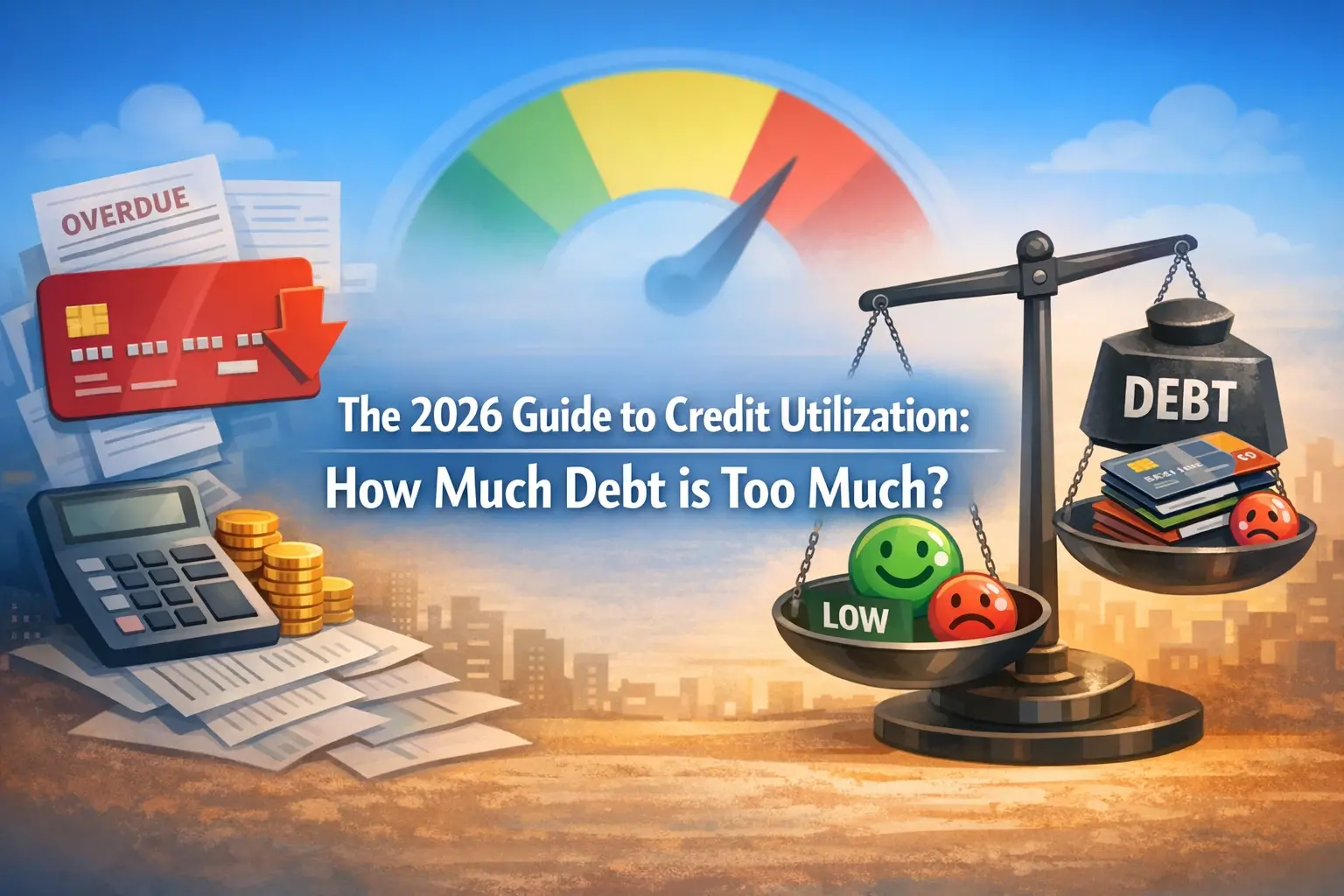
In 2026, your credit score opens (or closes) doors to everything from home loans and auto financing to better interest rates on everyday credit cards. Yet one factor quietly controls up to 30% of your FICO® Score and nearly 20-30% of VantageScore® models: credit utilization ratio.
High credit utilization doesn’t just signal “too much debt” to lenders — it can slash your score by 50–100+ points in a single reporting cycle. The good news? Utilization is one of the fastest factors you can improve. This comprehensive 2026 guide breaks down exactly what credit utilization is, how much debt is truly “too much,” and proven strategies to lower it. We’ll also show how professional credit repair services from Credit Repair Ease can accelerate your results when DIY efforts fall short.
What Is Credit Utilization Ratio?
The credit utilization ratio measures how much of your available revolving credit (mainly credit cards and lines of credit) you’re currently using. It’s calculated as:
(Total revolving balances ÷ Total revolving credit limits) × 100
Example: If you have $4,000 in credit card balances and $15,000 in total limits, your utilization is 26.7%.
Lenders and scoring models view this ratio as a real-time snapshot of your financial responsibility. Unlike payment history (35–40% of your score), utilization updates monthly and can swing your score dramatically — even if you’ve never missed a payment.
Important note: Utilization only considers revolving debt. Mortgages, auto loans, and student loans (installment debt) don’t factor into this ratio, though they affect your overall debt-to-income (DTI) ratio.
The Ideal Credit Utilization Ratio in 2026
The benchmark hasn’t changed in 2026, but the bar for “excellent” credit has risen.
- Excellent (800+ FICO): 1–10% utilization
- Very Good/Good (740–799): Under 30%
- Fair (670–739): 30–49% (noticeable score drag)
- Poor (below 670): 50%+ (severe damage)
Experts at WalletHub, Experian, and FICO consistently recommend keeping utilization below 30% to avoid penalties — but top-tier scores require single-digit utilization (under 10%). Zero utilization isn’t ideal either; scoring models prefer to see responsible, low-level usage over complete inactivity on all cards.
In 2026, with rising interest rates and tighter lending standards, even 30% can limit your access to premium offers. Aim lower for maximum impact.
How Much Debt Is Too Much? Red Flags by Credit Tier
There’s no universal “debt limit,” but here’s what utilization looks like across credit tiers in 2026:
Credit Tier Typical Utilization Score Impact Lender Perception Exceptional (800+) 1–9% Positive boost Low-risk borrower Good (670–799) 10–29% Neutral to minor drag Manageable Fair (580–669) 30–49% 40–80 point drop possible Higher risk Poor (below 580) 50%+ 80–150+ point drop Overextended/high default risk
Debt becomes “too much” when:- Utilization exceeds 30% across all cards
- One or more individual cards hit 50%+ (per-card utilization matters)
- You’re only making minimum payments while balances grow
- High utilization combines with recent late payments or collections
At this point, you’ll see higher APRs, denied applications, and even impacts on insurance premiums or rental approvals.
Why Credit Utilization Matters More Than Ever in 2026
Economic pressures — inflation, buy-now-pay-later (BNPL) programs, and rising living costs — have pushed average utilization higher for many households. Scoring models now weigh utilization more heavily in pre-approval algorithms. A single month of maxed-out cards can delay mortgage pre-approvals or auto financing by weeks.
The silver lining: Utilization is not permanent. Unlike late payments (which stay 7 years), you can reset this factor every 30 days when issuers report to the bureaus.
7 Proven Strategies to Lower Your Credit Utilization in 2026
- Pay balances before the statement closes. Make extra payments mid-cycle so the balance reported to bureaus is lower.
- Request credit limit increases (smartly). If you’ve paid on time for 6+ months, ask issuers for higher limits. This instantly lowers your ratio without new debt.
- Spread purchases across multiple cards. Never max out one card — keep each under 10–15%.
- Consolidate with a personal loan or 0% balance transfer. Move high-interest revolving debt to installment loans (which don’t affect utilization) or promotional cards.
- Make multiple payments per month. Reduce the reported balance even if you can’t pay in full.
- Keep old cards open. Closing accounts shrinks your total available credit and spikes utilization.
- Cut unnecessary spending. Track expenses for 30 days and redirect money straight to balances.
Implementing even 2–3 of these can drop your ratio 10–20% in one month, and boost your score 20–60 points.
When DIY Isn’t Enough: Time for Professional Credit Repair
If high utilization stems from inaccurate reporting, collections, or overwhelming medical/charged-off debt, self-help only goes so far. Errors on your credit report can artificially inflate balances or show closed accounts as open with limits. Negative items also prevent limit increases.
This is where Credit Repair Ease shines.
How Credit Repair Ease Optimizes Your Credit Utilization
Credit Repair Ease is an aggressive, attorney-powered credit repair company dedicated to removing inaccuracies, outdated negatives, and unverifiable items from your Equifax, Experian, and TransUnion reports. Their process directly supports healthier utilization in three ways:
- Dispute and deletion of errors — Wrongly reported high balances, duplicate accounts, or inflated limits are challenged and often removed within 30–45 days.
- Debt validation & negotiation support — They help verify and resolve collections or charge-offs that keep your revolving debt high.
- Ongoing monitoring + personalized utilization plans — Clients receive credit monitoring, score tracking, and expert guidance on limit increases, balance transfers, and spending strategies.
Thousands of clients have used Credit Repair Ease to drop utilization from 60%+ to under 15% while simultaneously raising scores 100+ points. Their transparent, results-focused approach makes credit repair simple and effective.
Whether you’re preparing for a major purchase or simply tired of high-interest debt cycles, Credit Repair Ease’s credit repair services deliver faster, more reliable results than going it alone.
Frequently Asked Questions About Credit Utilization in 2026
Q: Does closing a credit card lower my utilization?
No, it usually raises it by reducing your total available credit. Keep cards open unless they have high annual fees.Q: Is 0% utilization bad?
It’s better than high utilization but not optimal. Lenders like to see responsible use (1–10%).Q: How quickly can I improve utilization?
You can see score changes in 30–45 days once new lower balances are reported.Q: Can Credit Repair Ease help with high utilization directly? Yes — by cleaning your report and providing utilization-optimization coaching as part of their comprehensive credit repair services.
Take Control of Your Credit Utilization Today
Your credit utilization ratio is one of the most powerful levers you have for building financial freedom in 2026. Keep it under 30% (ideally 10% or less), and you’ll unlock better rates, more approvals, and greater peace of mind.
If high balances, errors, or collections are holding you back, don’t wait. Let the experts at Credit Repair Ease handle the heavy lifting while you focus on smarter spending and faster payoff plans.
Ready to lower your utilization and boost your credit score? Call Credit Repair Ease today at (888) 803-7889 or visit their site to get started with a free credit consultation. Your 2026 financial breakthrough starts with one smart move — optimizing your credit utilization.
null
The 2026 Guide to Credit Utilization: How Much Debt is Too Much?

Krystin Bresolin