-
Posted on: 18 Mar 2026
-
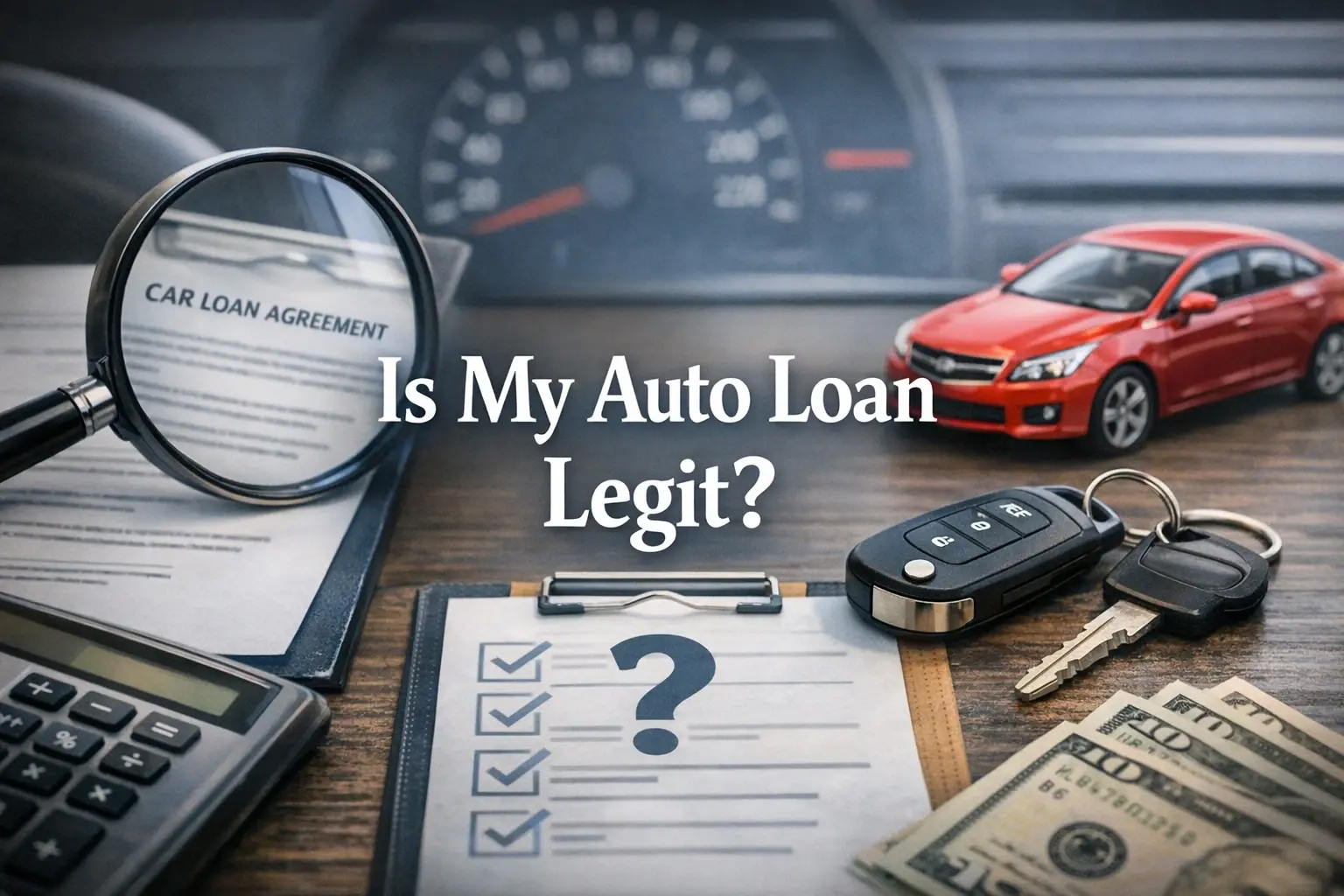
Navigating the world of auto loans can feel complex, but ensuring your loan is legitimate is crucial. This guide provides a comprehensive checklist and expert advice to help you verify the authenticity of your auto loan offer and protect yourself from scams. We'll cover everything from understanding loan documents to spotting red flags.
Understanding Auto Loan Legitimacy
When you're looking to finance a vehicle, the promise of a new car can be exciting. However, amidst the eagerness, it's vital to pause and ask: "Is my auto loan legitimate?" A legitimate auto loan is a contract with a reputable financial institution or lender that adheres to all federal and state regulations. It outlines clear terms, conditions, and repayment schedules. Conversely, an illegitimate loan might be a scam designed to defraud you, involve predatory lending practices, or be offered by an unauthorized entity. Understanding the difference is your first line of defense against financial harm.
In 2025-26, the automotive market continues to see fluctuating interest rates and diverse financing options. This environment makes it even more critical to be vigilant. Scammers often prey on individuals in urgent need of a vehicle or those with less-than-perfect credit, offering seemingly "too good to be true" deals. A legitimate loan process involves transparency, thorough documentation, and established regulatory oversight. Recognizing the hallmarks of a genuine loan offer can save you from significant financial distress, identity theft, and legal complications.
Key Indicators of a Legitimate Auto Loan
A legitimate auto loan offer will typically exhibit several consistent characteristics. These are the fundamental building blocks of a trustworthy financial transaction. By familiarizing yourself with these indicators, you can quickly assess the validity of an offer.
Transparent and Detailed Information
Reputable lenders will provide a clear, itemized breakdown of all costs associated with the loan. This includes:
Principal Loan Amount: The exact amount you are borrowing for the vehicle.
Annual Percentage Rate (APR): The true cost of borrowing, expressed as a yearly rate, which includes interest and certain fees. This is a crucial figure for comparison.
Loan Term: The duration of the loan, typically in months.
Monthly Payment: The fixed amount you'll pay each month.
Fees: Any origination fees, processing fees, late payment fees, or early payoff penalties should be clearly stated.
Total Cost of the Loan: The sum of all payments over the loan's life, including interest and fees.
A legitimate lender will not be vague about these details. They will provide a Loan Estimate or a similar document outlining these figures before you commit.
Established Lender Identity
Legitimate lenders are typically well-known financial institutions like:
Major banks (e.g., Chase, Bank of America, Wells Fargo)
Credit unions (local or national)
Reputable online lenders specializing in auto financing (e.g., Capital One Auto Finance, LightStream, Ally Bank)
Franchise dealerships that offer direct financing through their own captive finance companies (e.g., Ford Credit, Toyota Financial Services).
These entities have physical addresses, established websites, and verifiable contact information. They are registered with relevant financial regulatory bodies.
Standard Application and Approval Process
A legitimate auto loan application process involves:
A formal application requiring your personal and financial information.
A credit check (with your explicit permission).
A review of your income and employment verification.
A clear explanation of the terms and conditions.
A formal loan agreement to sign.
Be wary of lenders who skip these steps or rush the process.
No Upfront Payment for Loan Approval
Legitimate lenders do not require you to pay a large sum of money up front as a guarantee or processing fee before the loan is approved and finalized. While some origination fees are standard and disclosed, asking for a significant payment (especially via wire transfer, gift cards, or cryptocurrency) to secure a loan is a major red flag.
Reasonable Interest Rates and Terms
While rates vary based on creditworthiness, market conditions, and loan terms, legitimate lenders offer rates that are competitive and within industry norms. Predatory lenders often charge exorbitant interest rates that can trap borrowers in a cycle of debt. For 2025-26, average APRs for new car loans can range from around 5% to 10% for borrowers with good credit, and higher for those with lower credit scores. Used car loans typically have slightly higher rates. Anything significantly above these ranges warrants scrutiny.
Red Flags: Signs of a Potentially Illegitimate Loan
Just as there are clear signs of legitimacy, there are also distinct red flags that should immediately raise your suspicion. Recognizing these can help you disengage from a potentially fraudulent offer before it causes harm.
Unsolicited Offers and High-Pressure Tactics
While pre-approved offers exist, be cautious of overly aggressive, unsolicited calls or emails promising guaranteed loan approval regardless of your credit history. Scammers use high-pressure tactics to make you feel rushed, preventing you from thinking critically. They might say, "This offer expires today!" or "We only have one spot left!"
Requests for Upfront Payments via Unusual Methods
As mentioned, a significant red flag is a lender demanding upfront payment for loan approval, especially if they insist on payment through methods like:
Wire transfers (e.g., Western Union, MoneyGram)
Gift cards (e.g., Amazon, Apple, Google Play)
Cryptocurrency
Prepaid debit cards
Legitimate institutions use standard banking channels for fees and payments.
Vague Lender Information or Lack of Contact Details
If the lender is difficult to identify, has no physical address, or only provides a generic email address or a temporary phone number, be suspicious. They might operate under a fake business name or claim to be affiliated with a legitimate company without authorization.
Guaranteed Approval Regardless of Credit
While some lenders specialize in subprime auto loans, a promise of "guaranteed approval for everyone" with no regard for credit history or income is highly unrealistic and often a sign of a scam. Lenders need to assess risk.
Unusual Loan Terms or Excessive Fees
Be wary of loans with exceptionally short repayment terms that result in unaffordable monthly payments, or loans with hidden fees that aren't disclosed upfront. Predatory loans might include excessive charges for things like "processing," "documentation," or "insurance" that are not standard.
Lack of Proper Documentation
A legitimate lender will provide you with a detailed loan agreement and other necessary disclosures. If they are reluctant to provide written documentation or present a contract that is vague or incomplete, it's a warning sign.
Online-Only Lenders with No Physical Presence or Regulatory Information
While many reputable lenders operate online, they will still have clear company information, regulatory disclosures, and a verifiable business registration. Be extra cautious if an online lender provides minimal information and appears to have no real-world presence or regulatory oversight.
Verifying Lender Credentials
Before you proceed with any auto loan offer, it's essential to verify the legitimacy of the lender. This step can save you from falling victim to fraud.
Check with Regulatory Bodies
Financial institutions are regulated at both the federal and state levels. You can check their credentials through:
The Consumer Financial Protection Bureau (CFPB): The CFPB is a federal agency that protects consumers in the financial sector. You can check for complaints or information about lenders on their website.
State Banking Departments: Most states have a banking department or financial services regulator that licenses and oversees lenders operating within their borders. A quick search for "[Your State] Banking Department" will lead you to their official website.
Better Business Bureau (BBB): While not a regulatory body, the BBB provides ratings and reviews of businesses, which can offer insights into a lender's reputation and customer service.
Research the Lender Online
Conduct thorough online research:
Search for the lender's name along with terms like "scam," "fraud," "review," or "complaint."
Look for their official website. A professional, well-maintained website with clear contact information and a physical address is a good sign.
Check for reviews on reputable financial forums or consumer review sites.
Verify Contact Information
Call the lender using the phone number listed on their official website or a verifiable source. Be wary if the number is a mobile phone, a VoIP number, or if you get an automated system that doesn't provide clear company identification.
Check for Physical Address
Legitimate lenders, even online ones, usually have a verifiable physical address. Use online mapping tools to confirm the address appears to be a legitimate business location and not a P.O. box or a residential address.
Look for Licensing Information
Lenders are often required to be licensed to operate in specific states. Look for licensing information on their website or ask them directly for their license numbers. You can often verify these numbers with the relevant state regulatory agency.
Deep Dive into Loan Documents
The loan agreement is the legally binding contract between you and the lender. Thoroughly understanding its contents is paramount. Don't hesitate to ask questions if anything is unclear.
The Loan Estimate (LE)
For most mortgages and some other types of loans, you'll receive a Loan Estimate within three business days of applying. For auto loans, this might be presented as a pre-approval letter or a detailed offer sheet. It should clearly outline:
The loan amount
Interest rate (APR)
Monthly payment
Loan term
Estimated closing costs or fees
Estimated total payoff amount
Compare this document carefully with other offers and ensure all figures are as expected.
The Promissory Note and Security Agreement
This is the core of the loan contract. Key elements to scrutinize include:
Borrower and Lender Information: Ensure all names and addresses are correct.
Loan Amount and Interest Rate: Double-check that these figures match what was agreed upon.
Repayment Schedule: Understand when payments are due, how they are applied (principal vs. interest), and what happens if you miss a payment.
Late Fees and Penalties: Note the grace period for late payments and the exact amount of the penalty.
Prepayment Penalties: Check if you will be charged a fee for paying off the loan early. This is less common on auto loans, but still possible.
Default Clauses: Understand what constitutes a default on the loan and the consequences, such as repossession of the vehicle.
Collateral: The loan is secured by the vehicle itself. Ensure this is clearly stated.
Allonge and Endorsements: If the loan is sold or transferred, these documents are important. Ensure they are handled correctly.
Understanding Fees
Scrutinize every fee listed. Common fees might include:
Origination Fee: A fee charged for processing the loan.
Doc Fee (Documentation Fee): A fee for preparing the loan documents.
Credit Report Fee: A small fee to cover the cost of pulling your credit report.
Title and Registration Fees: Often paid to the state, but sometimes bundled.
Be wary of excessive or unexplained fees. Ask for a justification for any fee you don't understand.
Read the Fine Print
This advice is classic for a reason. The fine print often contains important details about your rights, responsibilities, and the lender's policies. Pay close attention to sections on:
Changes to loan terms
Communication methods
Arbitration clauses
Your right to cancel or rescind (though this is rare for auto loans after signing)
Comparing Auto Loan Offers: What to Look For
If you're shopping for an auto loan, you'll likely receive multiple offers. Comparing them effectively is key to securing the best and most legitimate deal.
APR is King
While the monthly payment is what you'll see most often, the Annual Percentage Rate (APR) is the most accurate way to compare the true cost of borrowing. A lower APR means you'll pay less interest over the life of the loan. Don't just compare advertised interest rates; always look at the APR, which includes most fees.
Loan Term Matters
A longer loan term means lower monthly payments, but you'll pay more interest overall. A shorter term means higher monthly payments but less interest paid. Consider your budget and financial goals when choosing a term. For 2025-26, the average auto loan term for new cars is around 70 months, and for used cars, it's about 65 months. Longer terms can sometimes come with higher APRs.
Total Cost of the Loan
Calculate the total amount you will pay over the life of the loan by multiplying the monthly payment by the number of months in the loan term, and then adding any upfront fees. This gives you the ultimate cost of the vehicle if financed.
Fees and Other Charges
As discussed, itemize all fees associated with each offer. A slightly higher APR with no fees might be better than a lower APR with significant hidden charges.
Lender Reputation and Customer Service
Consider the lender's reputation for customer service. Are they responsive? Do they have positive reviews? A smooth, transparent process with good communication is invaluable.
Flexibility and Options
Some lenders offer more flexibility, such as allowing extra payments without penalty or offering payment deferral options in emergencies. While not always standard, these can be valuable.
Comparison Table Example (Illustrative for 2025-26 Market)
Feature
Lender A (Bank)
Lender B (Credit Union)
Lender C (Online Lender)
Loan Amount
$30,000
$30,000
$30,000
APR
6.5%
6.2%
6.8%
Loan Term
72 Months
60 Months
75 Months
Estimated Monthly Payment
$466.36
$531.36
$433.39
Origination Fee
$0
$150
$299
Total Estimated Interest
$3,577.92
$1,881.60
$4,504.25
Total Cost of Loan (incl. fees)
$33,577.92
$32,031.60
$34,803.25
Prepayment Penalty
No
No
No
Note: This table is for illustrative purposes only. Actual figures will vary based on individual creditworthiness and market conditions in 2025-26.
Common Auto Loan Scams and How to Avoid Them
Being aware of common scam tactics is your best defense. Here are some prevalent schemes and how to sidestep them:
The "Guaranteed Approval" Scam
How it works: Lenders promise approval regardless of credit score or income, often requiring an upfront fee. Once paid, they disappear or provide a loan with exorbitant terms.
Avoidance: No legitimate lender can guarantee approval without a proper assessment. If it sounds too good to be true, it probably is.
The Title Loan Scam
How it works: You use your car's title as collateral for a short-term, high-interest loan. If you can't repay, they repossess your vehicle.
Avoidance: While legal in some areas, title loans are predatory. Avoid them if possible. If you must consider one, understand the extremely high APRs (often 300% or more) and the risk of losing your car.
The "Phishing" Scam
How it works: Scammers send fake emails or texts that look like they're from a legitimate bank or dealership, asking you to click a link to "verify" your loan application or update your information. Clicking the link can lead to malware or a fake website designed to steal your personal data.
Avoidance: Never click on suspicious links in emails or texts. Always go directly to the lender's official website or call them using a number you've independently verified.
The "Fake Dealership" Scam
How it works: Scammers create fake online listings for vehicles at incredibly low prices. They ask for a deposit or full payment upfront, often through wire transfer or gift cards, and then disappear without providing the car or any refund.
Avoidance: Always verify the dealership's legitimacy. If buying online, use secure payment methods and be wary of deals that seem too good to be true. Never pay a deposit without seeing the vehicle and verifying the seller.
The "Loan Flipping" Scam
How it works: A lender might offer to refinance your existing auto loan, promising lower payments. However, they actually extend the loan term significantly, increasing the total interest paid, or add hidden fees that negate any savings.
Avoidance: Carefully compare the terms of any refinancing offer to your current loan. Understand the total cost of the new loan, not just the monthly payment.
What to Do If You Suspect Your Auto Loan Isn't Legit
If you have doubts about the legitimacy of your auto loan offer or agreement, take immediate action.
Stop All Communication and Payments
If you suspect a scam, cease all contact with the individual or entity. Do not make any further payments or provide any more personal information.
Gather All Documentation
Collect every piece of paper related to the loan offer: emails, letters, loan agreements, receipts for any payments made, and any advertising materials. This evidence will be crucial for reporting the incident.
Contact Your Bank or Credit Card Company
If you have already made payments, especially via credit card or bank transfer, contact your financial institution immediately. They may be able to help you dispute the charges or recover funds, particularly if fraud is involved.
Report the Incident
Report the suspected scam to the relevant authorities:
Federal Trade Commission (FTC): The FTC is the primary federal agency for collecting reports of fraud. You can file a complaint online at ReportFraud.ftc.gov.
Consumer Financial Protection Bureau (CFPB): File a complaint with the CFPB at consumerfinance.gov.
Your State Attorney General: Your state's Attorney General's office can investigate consumer protection violations.
Local Police Department: If you believe you have been a victim of outright fraud or identity theft, file a police report.
Better Business Bureau (BBB): Report the company to the BBB to warn other consumers.
Consult with a Legal Professional
If you have signed a loan agreement and suspect it is predatory or fraudulent, consult with a consumer protection attorney. They can advise you on your rights and options.
Credit Check Reminder
Before you even apply for a loan, or if you're reviewing an offer you've received, understanding your credit score is paramount. A strong credit score often unlocks better interest rates and more favorable loan terms, making the entire process smoother and more affordable. If you're unsure about your credit standing or believe it might be hindering your loan prospects, consider seeking professional assistance. Companies like Credit Repair Ease offer expert credit repair services to help you improve your creditworthiness. They can analyze your credit reports, identify errors, and work with credit bureaus on your behalf. Taking proactive steps to manage your credit can significantly impact the legitimacy and affordability of your auto loan. Don't hesitate to reach out to Credit Repair Ease at (888) 803-7889 to learn more about how they can assist you in achieving your financial goals.
Your Rights as an Auto Loan Borrower
Understanding your rights empowers you to navigate the auto loan process confidently and protect yourself from unfair practices. While specific regulations can vary slightly by state, several federal laws provide a baseline of protection:
The Truth in Lending Act (TILA)
This federal law, implemented by Regulation Z, requires lenders to disclose the true cost of credit. This includes providing the Annual Percentage Rate (APR), finance charge, amount financed, and total payments. Lenders must provide this information clearly and conspicuously.
The Fair Credit Reporting Act (FCRA)
This act governs how credit reporting agencies collect, use, and share your credit information. It gives you the right to:
Access your credit reports from the three major bureaus (Equifax, Experian, TransUnion) for free once a year.
Dispute inaccurate information on your credit reports.
Know if information on your credit report was used against you in a loan denial.
The Equal Credit Opportunity Act (ECOA)
ECOA prohibits discrimination in credit transactions based on race, color, religion, national origin, sex, marital status, or age. It also protects applicants who receive public assistance.
The Fair Debt Collection Practices Act (FDCPA)
If your loan goes into default and a third-party debt collector attempts to collect the debt, the FDCPA protects you from abusive, deceptive, and unfair debt collection practices.
Right to Review Loan Documents
You have the right to thoroughly review all loan documents before signing them. You also have the right to ask questions about any terms or conditions you don't understand. A legitimate lender will not pressure you to sign without understanding.
Right to Pay Off the Loan Early
While some loans may have prepayment penalties, you generally have the right to pay off your loan early. Understand any such penalties before signing the agreement.
Right to Receive Statements
You have the right to receive regular statements detailing your loan balance, payments made, and interest paid.
Familiarizing yourself with these rights is a crucial part of ensuring your auto loan is legitimate and that you are treated fairly throughout the loan's lifecycle.
Conclusion
Verifying the legitimacy of your auto loan is a critical step in protecting your financial well-being. By understanding the key indicators of a legitimate offer, recognizing red flags, diligently verifying lender credentials, and thoroughly scrutinizing loan documents, you can confidently navigate the auto financing landscape. Always prioritize transparency, clear communication, and reputable institutions. Remember that unsolicited offers, requests for unusual upfront payments, and high-pressure tactics are significant warning signs of potential scams.
Should you ever suspect an auto loan offer is not legitimate, act swiftly: cease communication, gather all documentation, and report the incident to relevant authorities like the FTC and CFPB. Your proactive approach and awareness are your strongest defenses. By staying informed about your rights as a borrower and exercising due diligence, you can secure an auto loan that is not only legitimate but also serves your financial interests effectively. Ensure you always have a clear understanding of the APR, loan term, and all associated fees before committing to any agreement.
null
Is My Auto Loan Legit

Krystin Bresolin