-
Posted on: 18 Mar 2026
-
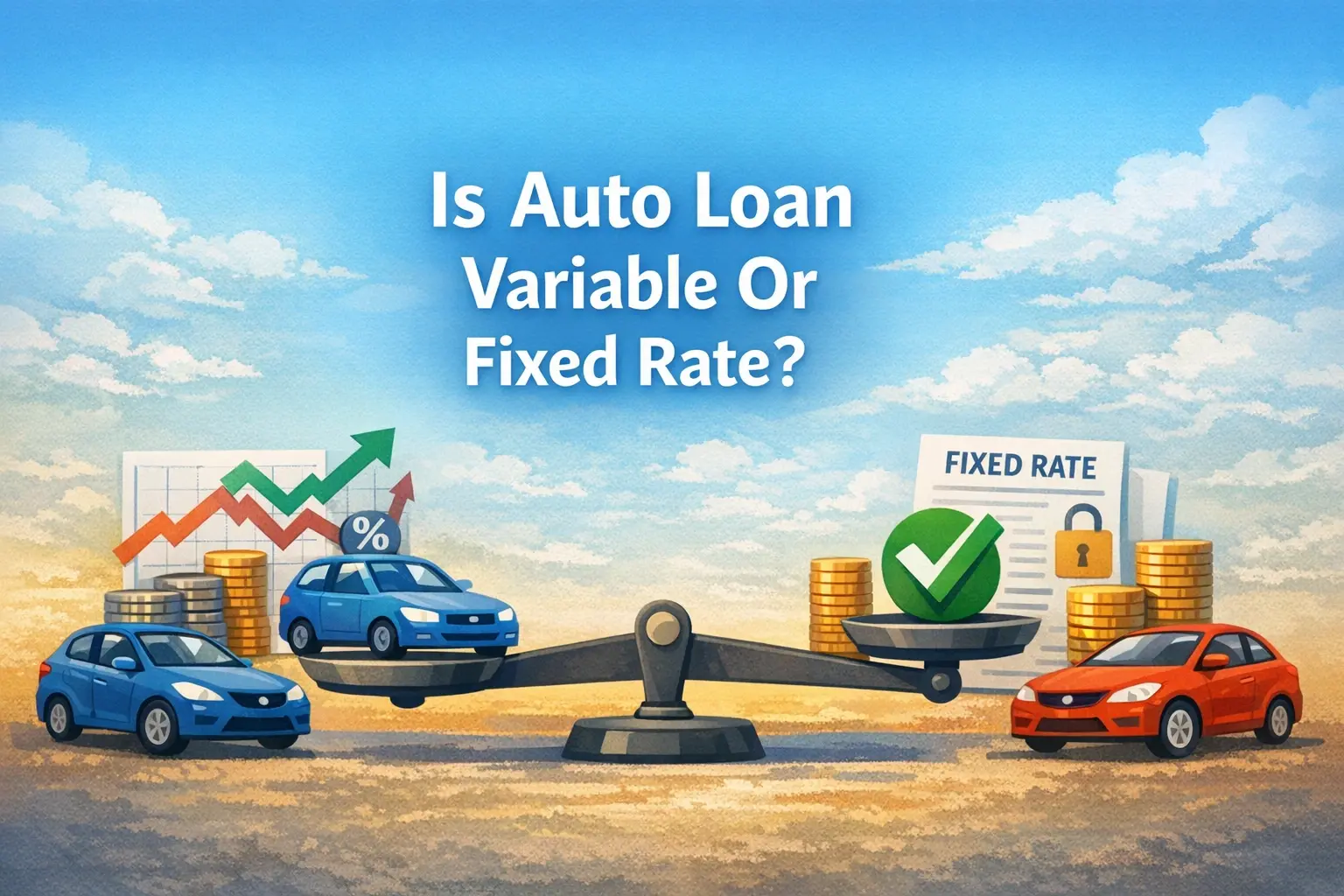
Understanding whether an auto loan is a variable or fixed rate is crucial for budgeting and financial planning. This guide breaks down the differences, pros, and cons, and helps you decide which type best suits your needs in the current 2025-2026 market.
Understanding Auto Loan Rates: Fixed vs. Variable
When you're in the market for a new or used vehicle, securing financing is often the next step. A critical component of any auto loan is its interest rate. The two primary types of interest rates you'll encounter are fixed and variable. Understanding the fundamental differences between these two is paramount to making a sound financial decision that aligns with your budget and risk tolerance. In the dynamic financial landscape of 2025-2026, where interest rate fluctuations can significantly impact your monthly payments and overall loan cost, this knowledge is more valuable than ever. This section will lay the groundwork for understanding what each rate type entails before we delve into its specific advantages and disadvantages.
What is an Interest Rate?
At its core, an interest rate is the cost of borrowing money. Lenders, whether they are banks, credit unions, or online lenders, charge interest as a fee for providing you with the funds to purchase your vehicle. This rate is typically expressed as an annual percentage rate (APR), which includes not only the interest but also certain fees associated with the loan. The APR is the true cost of borrowing and is what you should compare when shopping for the best auto loan deals. The interest rate directly influences your monthly payment and the total amount you will repay over the life of the loan. A lower APR generally means lower costs, while a higher APR means you'll pay more.
The Two Main Types of Auto Loan Rates
The auto loan market primarily offers two distinct interest rate structures: fixed and variable. Each has its own set of characteristics that appeal to different borrower profiles and economic conditions. Fixed rates offer stability and predictability, making budgeting straightforward. Variable rates, on the other hand, offer the potential for lower initial payments but come with the risk of future increases. Understanding these core differences is the first step in determining which type of auto loan is best suited for your financial situation.
Fixed-Rate Auto Loans: The Predictable Path
A fixed-rate auto loan is characterized by an interest rate that remains the same for the entire duration of the loan term. This means your monthly principal and interest payment will never change from the day you sign the loan agreement until the day you make your final payment. This predictability is the primary appeal of fixed-rate loans, offering a sense of security and making it easier to manage your household budget.
How Fixed-Rate Loans Work
When you secure a fixed-rate auto loan, the lender calculates your interest rate based on several factors, including your credit score, the loan term, the vehicle's age and value, and the prevailing market interest rates at the time of application. Once this rate is set, it's locked in. For example, if you take out a 60-month auto loan with a fixed APR of 7.5%, your monthly payment for principal and interest will remain the same for all 60 months. Even if market interest rates rise significantly during your loan term, your rate will not be affected. Conversely, if market rates fall, you won't benefit from a lower payment unless you refinance the loan.
Advantages of Fixed-Rate Loans
The benefits of choosing a fixed-rate auto loan are numerous, particularly for borrowers who prioritize stability and ease of budgeting:
Predictable Payments: This is the most significant advantage. Knowing your exact monthly payment allows for precise budgeting, reducing the stress of unexpected financial changes. You can confidently allocate funds each month without worrying about rate hikes.
Protection Against Rising Rates: If market interest rates increase after you've secured your loan, your fixed rate shields you from these increases. This can be particularly beneficial in an environment where interest rates are expected to trend upwards, as is a possibility in the 2025-2026 economic outlook.
Simplicity: Fixed-rate loans are straightforward. There are no complex calculations or variables to track, making them easy to understand and manage.
Easier Budgeting for Long-Term Goals: With a consistent payment, it's easier to plan for other financial goals, such as saving for a down payment on a house, investing, or building an emergency fund.
Disadvantages of Fixed-Rate Loans
While fixed-rate loans offer significant advantages, they also have potential drawbacks:
Potentially Higher Initial Rate: Lenders often price fixed-rate loans slightly higher than variable-rate loans to compensate for the risk of rates rising. This means your initial APR might be a bit higher than what you could get with a variable rate, especially if market rates are currently low.
No Benefit from Falling Rates: If market interest rates decrease after you've locked in your fixed rate, you won't automatically benefit from the lower rates. To take advantage of falling rates, you would need to refinance your auto loan, which can involve additional costs and paperwork.
May Not Be the Cheapest Option in a Falling Rate Environment: If you anticipate interest rates will fall significantly over your loan term, a fixed rate might end up costing you more in the long run compared to a variable rate that could adjust downwards.
Who is a Fixed-Rate Loan Best For?
Fixed-rate auto loans are an excellent choice for:
Budget-Conscious Individuals: Anyone who needs to know their exact monthly expenses to manage their finances effectively.
Borrowers Who Plan to Keep the Car Long-Term: If you intend to keep the vehicle for the entire loan term, the stability of a fixed rate is highly beneficial.
Those Who Prefer Predictability Over Potential Savings: Individuals who value peace of mind and are willing to potentially pay a slightly higher initial rate for guaranteed payment stability.
Borrowers in an Environment of Rising Interest Rates: If economic forecasts suggest interest rates are likely to climb, locking in a fixed rate now can save you money over time.
Variable-Rate Auto Loans: The Potentially Flexible Option
A variable-rate auto loan, also known as an adjustable-rate auto loan, features an interest rate that can fluctuate over the life of the loan. This fluctuation is typically tied to a benchmark interest rate, such as the prime rate or the Secured Overnight Financing Rate (SOFR). While variable rates often start lower than fixed rates, they carry the inherent risk that your interest rate, and consequently your monthly payment, could increase.
How Variable-Rate Loans Work
With a variable-rate auto loan, the lender sets an initial interest rate, often referred to as the introductory rate. This rate is usually lower than what you might find on a comparable fixed-rate loan. However, this rate is not permanent. It is tied to an underlying index, and as that index moves, your loan's interest rate will adjust accordingly. Lenders will specify how often the rate can adjust (e.g., annually, semi-annually) and whether there are any caps on how much the rate can increase per adjustment period or over the entire life of the loan. For example, a variable rate might be described as "Prime + 2% with an annual adjustment and a 5% lifetime cap." If the prime rate increases, your APR will also increase.
Advantages of Variable-Rate Loans
Variable-rate auto loans offer several potential benefits, particularly in certain economic conditions:
Lower Initial Interest Rate: The most common advantage is a lower starting APR compared to fixed-rate loans. This can result in lower monthly payments during the initial period of the loan, freeing up cash flow.
Potential for Savings if Rates Fall: If the benchmark interest rate decreases over the loan term, your variable rate will also decrease, leading to lower monthly payments and a reduced total cost of borrowing. This is a significant appeal in a declining interest rate environment.
Flexibility for Short-Term Ownership: If you plan to sell the car or pay off the loan relatively quickly, you might benefit from the lower initial rate without being exposed to the long-term risk of rate increases.
Disadvantages of Variable-Rate Loans
The potential for rate increases is the primary concern with variable-rate loans:
Payment Uncertainty: The biggest drawback is the unpredictability of your monthly payments. As interest rates rise, your payments will increase, which can strain your budget and make financial planning more challenging.
Risk of Higher Overall Cost: If interest rates rise significantly over the life of the loan, a variable-rate loan could end up costing you more in total interest than a fixed-rate loan, even with a lower initial rate.
Complexity: Understanding how your rate is calculated, the benchmark index, adjustment periods, and any caps can be more complex than with a fixed-rate loan.
Caps May Not Offer Full Protection: While rate caps can limit the maximum increase, they might still allow for substantial payment hikes that could become unaffordable.
Who is a Variable-Rate Loan Best For?
Variable-rate auto loans might be suitable for:
Borrowers Who Expect Rates to Fall: If you believe interest rates will decrease in the coming years, a variable rate could offer significant savings.
Individuals Planning to Sell or Pay Off the Loan Quickly: If you plan to trade in your vehicle or pay off the loan within a few years, you can benefit from the lower initial rate before significant rate increases might occur.
Those Comfortable with Payment Fluctuations: Borrowers who have a flexible budget and can absorb potential increases in their monthly payments.
Individuals with Strong Financial Buffers: Those who have substantial savings or other financial resources to fall back on if their loan payments increase unexpectedly.
Key Differences: Fixed vs. Variable Auto Loans at a Glance
To solidify your understanding, here's a comparative look at the core distinctions between fixed and variable rate auto loans. This table highlights the most important aspects to consider when making your choice.
Feature
Fixed-Rate Auto Loan
Variable-Rate Auto Loan
Interest Rate Stability
Remains the same for the entire loan term.
Can change over the loan term, tied to a benchmark index.
Monthly Payments
Consistent and predictable.
Can fluctuate, potentially increasing or decreasing.
Initial Interest Rate (Typical)
May be slightly higher than variable rates.
Often starts lower than fixed rates.
Risk of Rising Rates
None. You are protected from rate increases.
High. Payments can increase if benchmark rates rise.
Benefit from Falling Rates
No, unless you refinance.
Yes. Payments can decrease if benchmark rates fall.
Budgeting Ease
Excellent. Easy to plan expenses.
Challenging. Requires flexibility for payment changes.
Complexity
Simple.
More complex, involves understanding indices and caps.
Best For
Budget-conscious borrowers, long-term ownership, and those who value predictability.
Borrowers expecting rates to fall, short-term ownership, and those comfortable with risk.
Factors Influencing Your Decision
Choosing between a fixed and variable rate auto loan isn't a one-size-fits-all decision. Several personal and economic factors should guide your choice. By carefully considering these elements, you can align your loan type with your financial goals and risk tolerance.
Your Personal Financial Situation
Your current and projected financial stability plays a crucial role. If your income is steady and predictable, you might be more comfortable with the potential fluctuations of a variable rate. However, if your income is variable or you have significant financial obligations, the predictability of a fixed rate is likely a safer bet.
Income Stability: Is your income consistent month-to-month? If yes, you might consider a variable rate. If it fluctuates, stick to fixed.
Existing Debt Load: How much other debt do you have? High existing debt might make the certainty of a fixed payment more appealing.
Emergency Fund: Do you have a robust emergency fund? A strong cushion can provide peace of mind if you opt for a variable rate and payments increase.
Future Financial Goals: Are you saving for a down payment on a house or planning other major expenses? Predictable loan payments make it easier to budget for these.
Your Risk Tolerance
Your comfort level with uncertainty is a key determinant. Are you someone who prefers to know exactly what your financial obligations are each month, or are you willing to accept some risk for the potential of lower initial costs or future savings?
Risk-Averse: If you strongly dislike uncertainty and prefer to avoid any possibility of higher payments, a fixed-rate loan is your clear choice.
Risk-Tolerant: If you're comfortable with the possibility of payments rising in exchange for a potentially lower starting rate or the chance of future savings if rates fall, a variable rate might be considered.
Economic Outlook and Interest Rate Trends
The prevailing economic conditions and forecasts for interest rates are critical considerations, especially in the 2025-2026 period. Central banks' monetary policies, inflation rates, and geopolitical events all influence interest rate movements.
Rising Rate Environment: If economists and financial institutions predict that interest rates will increase in the near future (a common concern for 2025-2026), locking in a fixed rate now is generally advisable. This protects you from future rate hikes.
Falling Rate Environment: Conversely, if the consensus is that rates will decline, a variable-rate loan could offer significant savings as your rate adjusts downward.
Stable Rate Environment: In a period of relative stability, the choice might come down more to your personal preferences and the specific rates offered by lenders.
Loan Term Length
The duration of your auto loan can also influence the best rate type. Longer loan terms expose you to more potential interest rate fluctuations.
Shorter Terms (e.g., 36-48 months): If you plan to pay off the loan relatively quickly, the risk associated with variable rates is diminished. However, the potential for savings might also be less significant.
Longer Terms (e.g., 60-84 months): For longer loan terms, the stability of a fixed rate becomes more important. The longer the term, the greater the chance that market rates will change, potentially impacting a variable rate significantly.
How to Choose the Right Rate Type for Your Auto Loan
Making the final decision requires a systematic approach. Here's a step-by-step guide to help you navigate the process and select the rate type that best aligns with your circumstances.
Step 1: Assess Your Budget and Income
Before you even look at loan offers, conduct a thorough review of your personal finances. Understand your monthly income, expenses, and any existing debt obligations. Determine how much you can comfortably afford for a monthly car payment. If your budget is tight or your income is inconsistent, prioritize the certainty of a fixed-rate loan.
Step 2: Evaluate Your Risk Tolerance
Honestly assess how you feel about financial uncertainty. Would a sudden increase in your monthly car payment cause significant stress? If the answer is yes, a fixed rate is the more prudent choice. If you have a substantial emergency fund and can absorb payment increases, you might explore variable rates.
Step 3: Research Current and Projected Interest Rate Trends
Stay informed about the economic climate. Consult reputable financial news sources, economic forecasts, and reports from central banks. Pay attention to discussions about inflation, monetary policy, and potential shifts in interest rates. For 2025-2026, understanding whether rates are expected to rise or fall is crucial. For instance, if the Federal Reserve signals a tightening monetary policy, expect rates to trend upwards, favoring fixed rates.
Step 4: Compare Loan Offers from Multiple Lenders
Never settle for the first loan offer you receive. Shop around at different banks, credit unions, and online lenders. When comparing offers, pay close attention to:
APR: This is the most important figure to compare.
Rate Type: Clearly identify if the offer is fixed or variable.
Loan Term: Ensure you're comparing offers with the same loan duration.
Fees: Look for origination fees, late fees, and prepayment penalties.
Variable Rate Details: If it's a variable rate, understand the benchmark index, adjustment frequency, margin, and any caps.
Step 5: Run Payment Scenarios for Variable Rates
If you are considering a variable-rate loan, it's wise to model potential payment increases. For example, if a variable rate is currently 6% and the forecast suggests it could rise to 8% or even 10% over the loan term, calculate what your monthly payment would be at those higher rates. Can you comfortably afford those payments?
Step 6: Consider Refinancing Options
Regardless of the rate type you choose initially, remember that you can often refinance your auto loan later. If you secure a fixed rate and market rates fall significantly, you might consider refinancing to a lower fixed rate. If you have a variable rate and rates rise unexpectedly, you could refinance to a fixed rate to gain stability.
Impact of Interest Rates on Auto Loans (2025-2026 Outlook)
The automotive financing market in 2025-2026 is heavily influenced by the broader economic environment and monetary policy decisions. Understanding these trends can provide valuable context for choosing between fixed and variable rates.
Federal Reserve Policy and Its Effect
The Federal Reserve's monetary policy is a primary driver of interest rates in the U.S. In recent years, the Fed has adjusted its benchmark interest rate (the federal funds rate) to manage inflation and economic growth. For 2025-2026, analysts are closely watching the Fed's stance. If inflation remains a concern, the Fed might maintain higher interest rates or even implement further hikes, which would generally lead to higher auto loan rates across the board. Conversely, if inflation cools and economic growth moderates, the Fed might consider rate cuts, potentially lowering auto loan APRs.
Inflation and Its Correlation with Loan Rates
Inflation erodes the purchasing power of money. Lenders typically price interest rates higher during periods of high inflation to ensure that the real return on their loans (the interest earned after accounting for inflation) remains positive. In 2025-2026, if inflation continues to be a significant factor, expect lenders to demand higher interest rates, making both fixed and variable rates potentially more expensive than in previous low-inflation periods. This dynamic further emphasizes the importance of securing the best possible rate and understanding the implications of rate type.
Market Competition and Lender Strategies
The auto loan market is competitive, with numerous lenders vying for borrowers. Lenders' strategies can influence the rates they offer. In a market where lenders are eager to expand their loan portfolios, they might offer more attractive rates or promotions. Conversely, in a tighter credit market, rates might be less competitive. It's crucial to remember that lenders assess risk differently, which is why comparing offers is so vital. Some lenders might be more aggressive with fixed rates, while others might push variable rates with attractive introductory offers.
Impact on New vs. Used Car Loans
Interest rates can also differ between new and used car loans. New cars, being less risky for lenders due to their newness and often longer manufacturer warranties, may sometimes qualify for slightly lower interest rates than used cars. However, the difference in rate type (fixed vs. variable) is generally more impactful than the new/used distinction on the rate itself, though the overall APR will be higher for used cars.
Understanding Your Credit Score and Loan Rates
Your credit score is one of the most significant factors determining the interest rate you'll be offered on an auto loan. A higher credit score signals to lenders that you are a lower credit risk, making them more willing to offer you better terms, including lower interest rates.
How Credit Scores Affect Loan Offers
Lenders use credit scores to assess your creditworthiness. A good credit score (typically 670 and above) suggests a history of responsible borrowing and repayment. Borrowers with excellent credit scores (740 and above) often qualify for the lowest available APRs on both fixed and variable rate loans. Conversely, individuals with lower credit scores (below 670) may face higher interest rates or, in some cases, may need to seek specialized lenders or co-signers. The difference of even a percentage point or two in APR can translate into thousands of dollars saved or spent over the life of a car loan.
Credit Repair Ease Reminder: Before you apply for any loan, especially a significant one like an auto loan, it's crucial to understand your credit standing. A strong credit score is your key to better loan terms and lower interest rates. If you're concerned about your credit history or want to improve your score before applying, consider seeking professional assistance. Credit Repair Ease offers professional credit repair services designed to help you navigate the complexities of credit reporting and dispute inaccuracies. Reach out to Credit Repair Ease at (888) 803-7889 to learn how they can help you achieve a healthier credit profile and secure more favorable loan terms.
Impact of Credit Score on Fixed vs. Variable Rates
While a good credit score generally leads to lower rates for both fixed and variable loans, the impact can be nuanced. Lenders might offer more competitive introductory rates on variable loans to attract borrowers, but the risk premium for borrowers with lower credit scores can be substantial. For those with excellent credit, the choice between fixed and variable might hinge more on interest rate forecasts and personal preference, as they'll likely qualify for the best rates regardless of type. For borrowers with less-than-perfect credit, the stability of a fixed rate might be more appealing, even if the initial rate is slightly higher, to avoid the risk of a variable rate increasing beyond their ability to pay.
Common Auto Loan Scenarios and Rate Choices
To illustrate how the decision between fixed and variable rates plays out, let's consider a few common scenarios:
Scenario 1: The Budget-Conscious Buyer
Profile: Sarah has a stable job but lives on a tight monthly budget. She needs a reliable car for her commute and wants to ensure her expenses are predictable. She plans to keep the car for at least five years.
Recommendation: Sarah should opt for a fixed-rate auto loan. The predictability of her monthly payment will allow her to budget effectively and avoid any financial surprises. Even if market rates were to fall, the peace of mind from a consistent payment would outweigh potential minor savings.
Scenario 2: The Rate Watcher
Profile: David is financially savvy and believes interest rates are likely to decline over the next few years. He plans to trade in his car after three years and is comfortable managing potential payment fluctuations in the short term.
Recommendation: David might consider a variable-rate auto loan. If his prediction of falling rates proves correct, he could benefit from lower monthly payments. He would need to carefully review the loan terms, including any caps and adjustment periods, and ensure he can afford payments if rates do rise unexpectedly.
Scenario 3: The First-Time Car Buyer with Average Credit
Profile: Emily is buying her first car. Her credit score is in the average range (around 680). She's concerned about qualifying for a loan and wants to manage her payments carefully. She plans to keep the car for about four years.
Recommendation: Emily should prioritize a fixed-rate auto loan. While her credit score might qualify her for a variable rate, the stability of a fixed rate offers more security. She should focus on finding the best possible fixed APR she can qualify for, understanding that her average credit might mean a slightly higher rate than someone with excellent credit. She should also work on improving her credit score to secure better terms.
Scenario 4: The Long-Term Car Owner
Profile: Mark is purchasing a vehicle he intends to drive for the next decade. He values long-term financial planning and wants to minimize his overall borrowing costs over the entire ownership period.
Recommendation: A fixed-rate auto loan is the most suitable choice for Mark. Over the past ten years, market interest rates have been highly likely to fluctuate. Locking in a fixed rate protects him from potential rate surges and provides a consistent payment that he can factor into his long-term financial plans.
Conclusion: Making an Informed Choice
Navigating the world of auto loans requires understanding the fundamental differences between fixed and variable rates. In the current economic climate of 2025-2026, where interest rate movements are a constant consideration, this knowledge is more critical than ever. A fixed-rate auto loan offers the invaluable benefit of predictable monthly payments, making budgeting straightforward and shielding you from the uncertainty of rising interest rates. This makes it an ideal choice for those who prioritize financial stability and long-term planning.
Conversely, a variable-rate auto loan may start with a lower interest rate, offering potential savings if rates fall. However, it carries the inherent risk of increased payments if market rates climb, which can strain your budget and increase the overall cost of the loan. This option might suit borrowers who anticipate falling rates or plan to pay off their loan quickly, and who are comfortable with payment fluctuations.
Ultimately, the "best" choice depends on your individual financial situation, risk tolerance, and outlook on future interest rate trends. By carefully assessing your budget, researching current economic conditions, comparing offers from multiple lenders, and understanding the details of each loan product, you can make an informed decision. Remember that your credit score significantly impacts the rates you'll be offered, so maintaining good credit is always a wise financial strategy. With this comprehensive understanding, you are well-equipped to secure an auto loan that aligns perfectly with your financial goals and provides peace of mind on the road ahead.
null
Is Auto Loan Variable Or Fixed Rate

Krystin Bresolin