-
Posted on: 27 Feb 2026
-
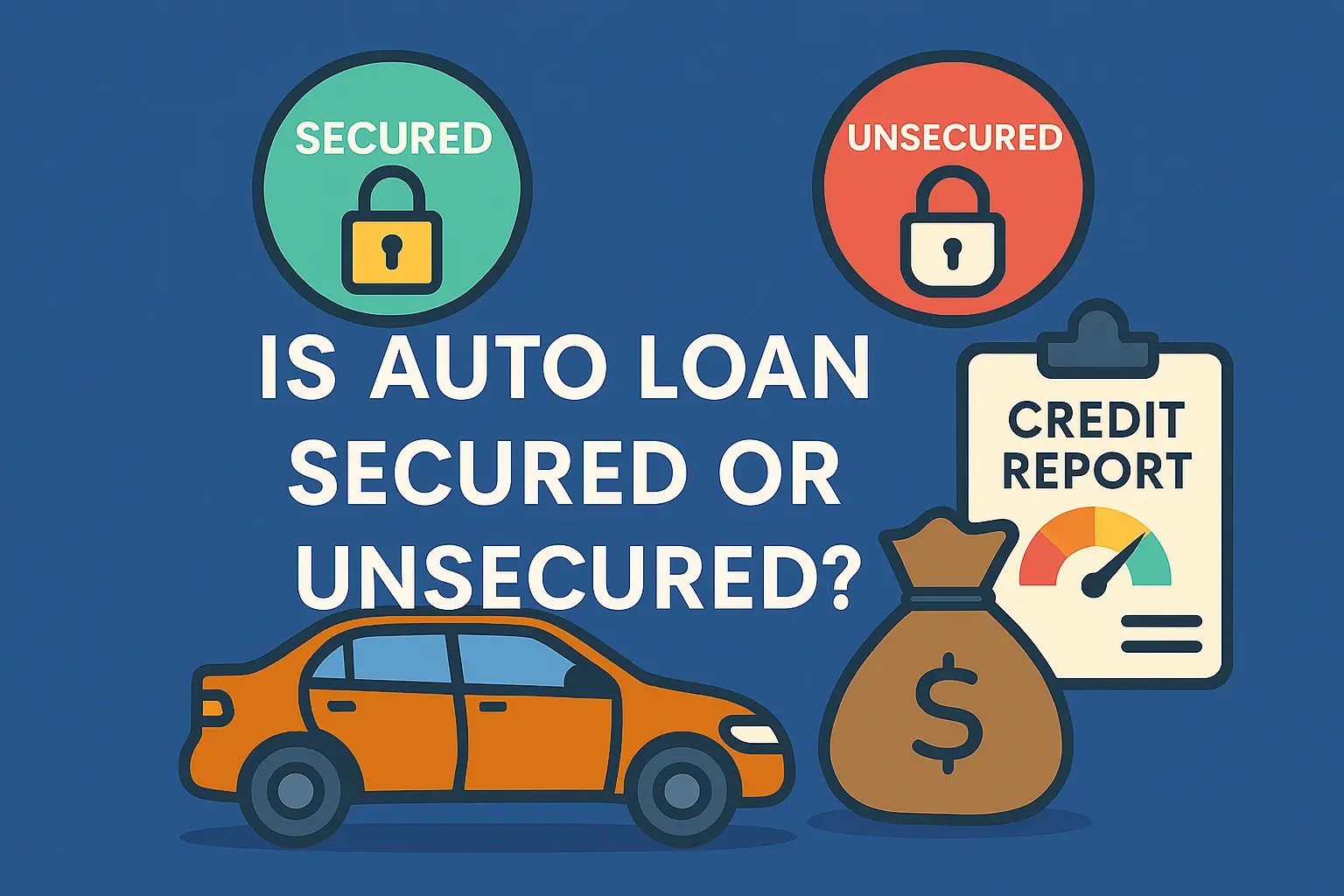
Understanding whether an auto loan is secured or unsecured is crucial for car buyers. This distinction impacts loan terms, interest rates, and the risk involved. This guide clarifies the nature of auto loans, providing insights for informed financial decisions in 2025-26.
What is an Auto Loan?
An auto loan, also known as a car loan, is a sum of money borrowed from a financial institution to purchase a vehicle. This loan is repaid over a set period, typically several years, with interest. The borrower makes regular payments, usually monthly, until the entire principal amount plus interest is paid off. Auto loans are a cornerstone of vehicle acquisition for millions, enabling individuals and families to finance their transportation needs without needing the full purchase price upfront.
Secured vs. Unsecured Loans: The Fundamental Difference
To understand auto loans, it's essential to grasp the core distinction between secured and unsecured loans. This difference hinges on whether the loan is backed by collateral.
Secured Loans
A secured loan is a loan backed by an asset that the borrower owns. This asset, known as collateral, serves as security for the lender. If the borrower defaults on the loan (fails to make payments as agreed), the lender has the legal right to seize and sell the collateral to recover their losses. Because the lender's risk is reduced by the presence of collateral, secured loans often come with lower interest rates and more favorable terms compared to unsecured loans. Common examples include mortgages (backed by the house) and auto loans (backed by the vehicle).
Unsecured Loans
An unsecured loan, on the other hand, is not backed by any collateral. The lender extends credit based solely on the borrower's creditworthiness, which is determined by their credit history, income, and overall financial stability. Without collateral to fall back on, unsecured loans carry a higher risk for the lender. Consequently, they typically have higher interest rates and may require stricter eligibility criteria. Examples of unsecured loans include most credit cards, personal loans, and student loans.
Is an Auto Loan Secured or Unsecured? The Definitive Answer
In the vast majority of cases, an auto loan is a **secured loan**. When you take out a loan to purchase a car, the vehicle itself serves as the collateral for that loan. This means that the lender holds a lien on the vehicle until the loan is fully repaid. If you fail to make your loan payments, the lender has the right to repossess the car.
This is the standard practice across the automotive financing industry. Lenders offer auto loans because the vehicle provides a tangible asset that can be recovered if the borrower defaults, significantly mitigating the lender's financial risk. This structure allows lenders to offer more competitive interest rates and loan terms to borrowers.
Why Are Auto Loans Typically Secured?
The primary reason auto loans are typically secured is to protect the lender. Purchasing a vehicle is a significant financial commitment, and the car itself represents a substantial asset. By taking a security interest in the vehicle, lenders reduce their exposure to risk. Here's a breakdown of why this security is paramount:
Mitigation of Lender Risk: The most crucial factor. If a borrower defaults, the lender can repossess and sell the car to recoup some or all of the outstanding loan balance. This is far more effective than trying to collect a debt from a borrower with no tangible asset to seize, as would be the case with an unsecured loan.
Lower Interest Rates: Reduced risk for the lender translates into lower interest rates for the borrower. The security provided by the vehicle allows lenders to offer more attractive Annual Percentage Rates (APRs), making car ownership more affordable.
Increased Accessibility: Secured loans generally make it easier for a wider range of borrowers to qualify. Even individuals with less-than-perfect credit might be able to secure an auto loan because the collateral reduces the lender's concern about creditworthiness alone.
Encourages Responsible Borrowing: Knowing that the vehicle is at risk of repossession can incentivize borrowers to make their payments on time and manage their finances responsibly.
Understanding Collateral in Auto Loans
Collateral is the asset pledged by a borrower to secure a loan. In the context of an auto loan, the vehicle being financed is the collateral. The lender places a lien on the vehicle's title, which is a legal claim on the property. This lien remains in place until the loan is paid off in full. Once the loan is satisfied, the lender releases the lien, and the borrower receives a clear title, signifying full ownership.
The value of the collateral plays a significant role in the loan terms. Lenders typically assess the vehicle's market value to determine the maximum loan amount they are willing to offer. This is often related to the loan-to-value (LTV) ratio, a metric used to assess the risk of a loan. A lower LTV (meaning the loan amount is a smaller percentage of the vehicle's value) generally indicates a less risky loan for the lender.
The Role of the Vehicle as Collateral
The vehicle's role as collateral is multifaceted:
Security for the Lender: It's the primary security. The lender's ability to repossess the car is its fallback if payments cease.
Determines Loan Amount: The vehicle's value, often assessed through industry guides like Kelley Blue Book (KBB) or the National Automobile Dealers Association (NADA) values, influences how much a lender will finance. For instance, lenders might not finance 100% of a very old or high-mileage vehicle's value.
Impacts Interest Rates: The perceived risk associated with the collateral (e.g., a new car versus a used car with a higher mileage) can subtly influence the interest rate offered.
Requires Insurance: Lenders will mandate that the borrower maintain comprehensive and collision insurance on the vehicle throughout the loan term. This insurance protects both the borrower and the lender against damage or theft of the collateral. The lender is typically listed as a lienholder on the insurance policy.
Implications of a Secured Auto Loan
The secured nature of auto loans has several direct implications for borrowers:
Benefits of Secured Auto Loans
While the risk of repossession is present, secured auto loans offer significant advantages:
Lower Interest Rates: As mentioned, the reduced risk for lenders allows them to offer lower APRs. For 2025-26, borrowers with good credit might see rates ranging from 4% to 7% for new cars and 6% to 10% for used cars, significantly lower than typical unsecured loan rates.
Higher Borrowing Limits: Because the loan is secured by a valuable asset, lenders are often willing to finance a larger portion of the vehicle's purchase price, sometimes up to 100% for new vehicles.
Easier Approval for Some: While a good credit score is always beneficial, the collateral can make it easier for individuals with fair or even some subprime credit to get approved compared to unsecured loans.
Builds Credit History: Making timely payments on an auto loan is an excellent way to build or improve your credit score. A positive payment history demonstrates financial responsibility to future lenders.
Risks of Secured Auto Loans
The primary risk associated with secured loans is the potential loss of the collateral:
Repossession: If you miss payments or default on your auto loan, the lender can legally repossess the vehicle. This means you lose the car and will still likely owe money on the loan (a deficiency balance), as the sale of the repossessed car may not cover the full amount owed.
Impact on Credit Score: Repossession is a severe negative mark on your credit report, significantly damaging your credit score for many years.
Insurance Requirements: You are legally obligated to maintain comprehensive and collision insurance, which adds to the overall cost of car ownership.
Lien on Title: You do not have a clear title to the vehicle until the loan is fully paid off. This can affect your ability to sell or trade in the vehicle freely.
Are There Any Unsecured Auto Loans?
While the vast majority of loans specifically marketed and structured for car purchases are secured, there are scenarios where a car purchase might be financed indirectly through an unsecured loan. These are not typically called "auto loans" but rather personal loans used for a vehicle purchase.
Personal Loans for Car Purchases
Some individuals opt to take out a personal loan to buy a car. Personal loans are generally unsecured. If approved, the borrower receives a lump sum of cash, which they can then use to purchase a vehicle outright. The car itself is not collateral for the personal loan.
Pros of using an unsecured personal loan for a car:
Full Ownership Immediately: You own the car outright from the moment of purchase. There is no lien on the title.
No Specific Insurance Requirements: While you'd still want insurance, the lender typically doesn't mandate comprehensive and collision coverage specifically for their loan.
Cons of using an unsecured personal loan for a car:
Higher Interest Rates: Personal loans, being unsecured, almost always carry higher interest rates than secured auto loans. For 2025-26, unsecured personal loan rates can range from 7% to 36% or even higher, depending on creditworthiness.
Stricter Eligibility: Lenders are more cautious with unsecured loans, so approval often requires an excellent credit score and a strong financial profile.
Lower Loan Amounts: Lenders may be hesitant to offer very large personal loans for car purchases, especially for more expensive vehicles, due to the lack of collateral.
No Asset Protection: If you default on the personal loan, the lender cannot repossess the car. However, they can pursue other collection methods, including wage garnishment or legal action, and your credit score will be severely impacted.
Therefore, while technically possible, using an unsecured personal loan for a car purchase is generally less financially advantageous than a secured auto loan, especially for those seeking the best rates and terms.
Factors Influencing Loan Security
While auto loans are predominantly secured, certain factors can influence the lender's approach and the overall security of the loan arrangement, even if the vehicle remains collateral.
Credit Score and Loan Security
Your credit score is a critical determinant of your loan terms, even for secured loans. A higher credit score signals to lenders that you are a reliable borrower with a history of managing debt responsibly. This can lead to:
Lower Interest Rates: Borrowers with excellent credit (740+) can secure the lowest APRs on auto loans. For 2025-26, these rates might be as low as 4-5% for new cars.
Higher Loan Approval Likelihood: A strong credit score significantly increases your chances of getting approved.
More Favorable Terms: You might be offered longer repayment periods or lower down payment requirements.
Conversely, a lower credit score (below 670) indicates a higher risk. Lenders may compensate for this risk by:
Charging Higher Interest Rates: Rates for borrowers with fair credit (580-669) can be in the 10-15% range, and for subprime borrowers (below 580), they can exceed 20%.
Requiring a Larger Down Payment: To reduce their exposure, lenders might ask for a down payment of 10-20% or more.
Offering Shorter Loan Terms: This ensures the loan is repaid faster, reducing the time the lender is at risk.
Even with a lower credit score, the vehicle acts as collateral, making the loan "secured." However, the terms will reflect the increased risk.
Loan Amount and Security
The amount you borrow relative to the vehicle's value is crucial. Lenders use the Loan-to-Value (LTV) ratio. For example, if a car is worth $20,000 and you borrow $18,000, your LTV is 90%. Lenders have maximum LTV thresholds they are comfortable with. For new cars, this might be 100% or slightly more to cover taxes and fees. For used cars, it's often lower, perhaps 90% or 80%, especially for older vehicles.
If you want to borrow more than the lender's maximum LTV allows, you'll need to make a larger down payment. This effectively reduces the LTV and makes the loan more secure for the lender.
Lender Risk Appetite
Different lenders have varying risk appetites. Banks, credit unions, and online lenders all have their own underwriting standards. Some lenders specialize in prime borrowers, while others cater to subprime markets. A lender's risk appetite will influence:
Interest Rates Offered: Lenders with a higher risk appetite might offer loans to borrowers with lower credit scores, but at a higher interest rate.
Approval Criteria: Some lenders are more flexible with credit history, income verification, or debt-to-income ratios.
Loan Product Offerings: Certain lenders might offer specialized programs for first-time buyers or those with limited credit history, which could still be secured loans but with specific terms.
The secured nature of the auto loan provides a baseline of security for all lenders, but these other factors fine-tune the specific terms and conditions.
The Auto Loan Application Process in 2025-26
The process of applying for an auto loan has become increasingly streamlined, with many options available both online and through traditional financial institutions. Understanding these steps can help you navigate the process efficiently.
What to Expect During Pre-Approval
Before you even set foot in a dealership, getting pre-approved for an auto loan is a smart move. This involves applying for a loan with a bank, credit union, or online lender. The lender will review your financial information, including your credit score, income, and employment history. If approved, you'll receive a pre-approval letter stating the maximum loan amount, interest rate (APR), and loan term you qualify for. This gives you a clear budget and negotiating power at the dealership. It also helps you compare offers outside of dealer financing.
Understanding Interest Rates and APRs
The interest rate is the cost of borrowing money, expressed as a percentage of the principal loan amount. The Annual Percentage Rate (APR) is a broader measure that includes the interest rate plus any additional fees associated with the loan (like origination fees). APR provides a more accurate representation of the total cost of borrowing.
For 2025-26, average APRs for new cars with excellent credit hover around 5-6%, while used cars might be 7-9%. These rates can fluctuate based on economic conditions and the Federal Reserve's monetary policy. A lower APR means you'll pay less in interest over the life of the loan.
Loan Terms and Repayment Structures
The loan term is the duration over which you agree to repay the loan. Common terms for auto loans range from 36 months (3 years) to 72 months (6 years), and sometimes even 84 months (7 years) for newer, more expensive vehicles. Longer terms result in lower monthly payments but mean you'll pay more interest overall and may owe more than the car is worth for a longer period (underwater).
Repayment is typically structured as fixed monthly payments. This means the amount you pay each month remains the same throughout the loan term. The payment is applied first to the interest accrued and then to the principal balance.
Comparing Auto Loan Offers
It's crucial to shop around for the best auto loan. Obtain pre-approval from multiple lenders (banks, credit unions, online lenders) and compare their offers. Key factors to compare include:
APR: The lowest APR will save you the most money on interest.
Loan Term: Consider how the term affects your monthly payment and total interest paid.
Fees: Look for origination fees, late fees, prepayment penalties, etc.
Down Payment Requirements: Some lenders may require a down payment, while others offer 100% financing.
Don't just accept the first offer you receive. Even a small difference in APR can save you thousands of dollars over the life of the loan.
The Importance of Reading the Fine Print
Before signing any loan agreement, meticulously read all terms and conditions. Pay close attention to:
Prepayment Penalties: Some loans charge a fee if you pay off the loan early.
Late Payment Fees: Understand the penalties for missed payments.
Repossession Clauses: Be aware of the lender's rights in case of default.
GAP Insurance: This optional insurance covers the difference between what you owe on the loan and the car's actual cash value if it's totaled or stolen. It's often recommended, especially if you have a small down payment or a long loan term.
Understanding these details will prevent surprises and ensure you are comfortable with the loan obligations.
Credit Check Reminder
Before embarking on the journey of applying for any loan, especially a significant one like an auto loan, it's paramount to understand your financial standing. Your credit score is a key determinant in loan approval and the interest rates you'll be offered. A strong credit score can unlock lower rates and more favorable terms, saving you a substantial amount of money over time. Conversely, a low score might lead to rejection or excessively high interest rates. Before you submit any applications, make sure to check your credit score. For professional assistance and guidance in understanding and potentially improving your credit report, consider reaching out to Credit Repair Ease. They are a trusted credit repair company offering professional credit repair services. You can call them at (888) 803-7889 to discuss your credit situation and learn how they can help you achieve a better financial future, making your auto loan application process smoother and more successful.
Alternatives to Traditional Auto Loans
While secured auto loans are the most common method for financing a car, other options exist that might suit different financial situations or preferences.
Leasing vs. Buying
Leasing a car is essentially a long-term rental agreement. You pay to use the car for a set period (typically 2-4 years) and mileage limit, and at the end of the lease, you return the vehicle. Buying, on the other hand, means you own the car outright after paying off the loan.
Leasing Advantages:
Lower monthly payments compared to financing a purchase.
Opportunity to drive a new car every few years with the latest technology.
No worries about depreciation or selling the car.
Leasing Disadvantages:
You don't own the car.
Mileage restrictions and wear-and-tear charges can be costly.
Higher total cost if you plan to keep the car long-term.
No equity built.
Financing a purchase with a secured auto loan leads to ownership, building equity over time. While monthly payments might be higher, you ultimately own an asset.
Dealer Financing vs. Bank Loans
Dealer Financing: Dealerships often offer their own financing options, sometimes through partnerships with banks or their own captive finance companies (e.g., Ford Credit, Toyota Financial Services). They may offer attractive promotional rates, especially on new vehicles. However, it's essential to compare these rates with those from external lenders, as they may not always be the best deal.
Bank Loans (and Credit Unions/Online Lenders): These are loans obtained directly from a financial institution. They often provide competitive rates and terms, especially if you have an existing relationship with the bank. Shopping around with multiple banks and credit unions is highly recommended.
A key difference is that dealer financing is tied to the car purchase, while bank loans are separate. You can secure a bank loan first and then use the funds at any dealership.
Buying a Used Car with a Loan
Secured auto loans are also commonly used for purchasing pre-owned vehicles. The principles remain the same: the vehicle serves as collateral. However, there are some nuances when financing used cars.
Factors Affecting Used Car Loan Terms
Age and Mileage: Older cars with higher mileage are generally considered riskier by lenders. This can result in higher interest rates and potentially lower loan-to-value ratios, meaning you might need a larger down payment.
Vehicle Condition: While lenders primarily rely on book values, a vehicle in poor condition might be less desirable as collateral.
Shorter Loan Terms: Lenders might prefer shorter loan terms for used cars to ensure the loan is paid off before the vehicle depreciates significantly or becomes too old.
Higher Interest Rates: Due to the increased risk associated with depreciation and potential maintenance issues, interest rates for used car loans are typically higher than for new cars. For 2025-26, expect rates to be 1-3% higher than for comparable new car loans.
GAP Insurance Importance: For used cars, especially those with a high LTV, GAP insurance becomes even more critical. If the car is totaled, the insurance payout might not cover the outstanding loan balance, leaving you with a debt for a car you no longer have.
Despite these factors, financing a used car with a secured loan remains a practical and accessible way to acquire reliable transportation.
Conclusion: Navigating Your Auto Loan Options
The question, "Is an auto loan secured or unsecured?" has a clear answer for the vast majority of car buyers: it is overwhelmingly a **secured loan**. The vehicle you purchase acts as collateral, providing security for the lender and enabling them to offer more favorable terms, including lower interest rates and higher borrowing limits, compared to unsecured loans. While personal loans can be used to buy cars and are typically unsecured, they come with higher rates and stricter eligibility requirements, making them less ideal for most car purchases.
Understanding this fundamental aspect of auto financing is the first step toward making an informed decision. By recognizing the role of collateral, comparing offers from multiple lenders, and carefully reviewing loan terms, you can secure a loan that best fits your financial situation. Remember to always check your credit score before applying, as it significantly impacts your loan options and costs. With careful planning and diligent shopping, you can successfully navigate the auto loan landscape and drive away in your new vehicle with confidence.
null
Is Auto Loan Secured Or Unsecured

Krystin Bresolin