-
Posted on: 03 Mar 2026
-
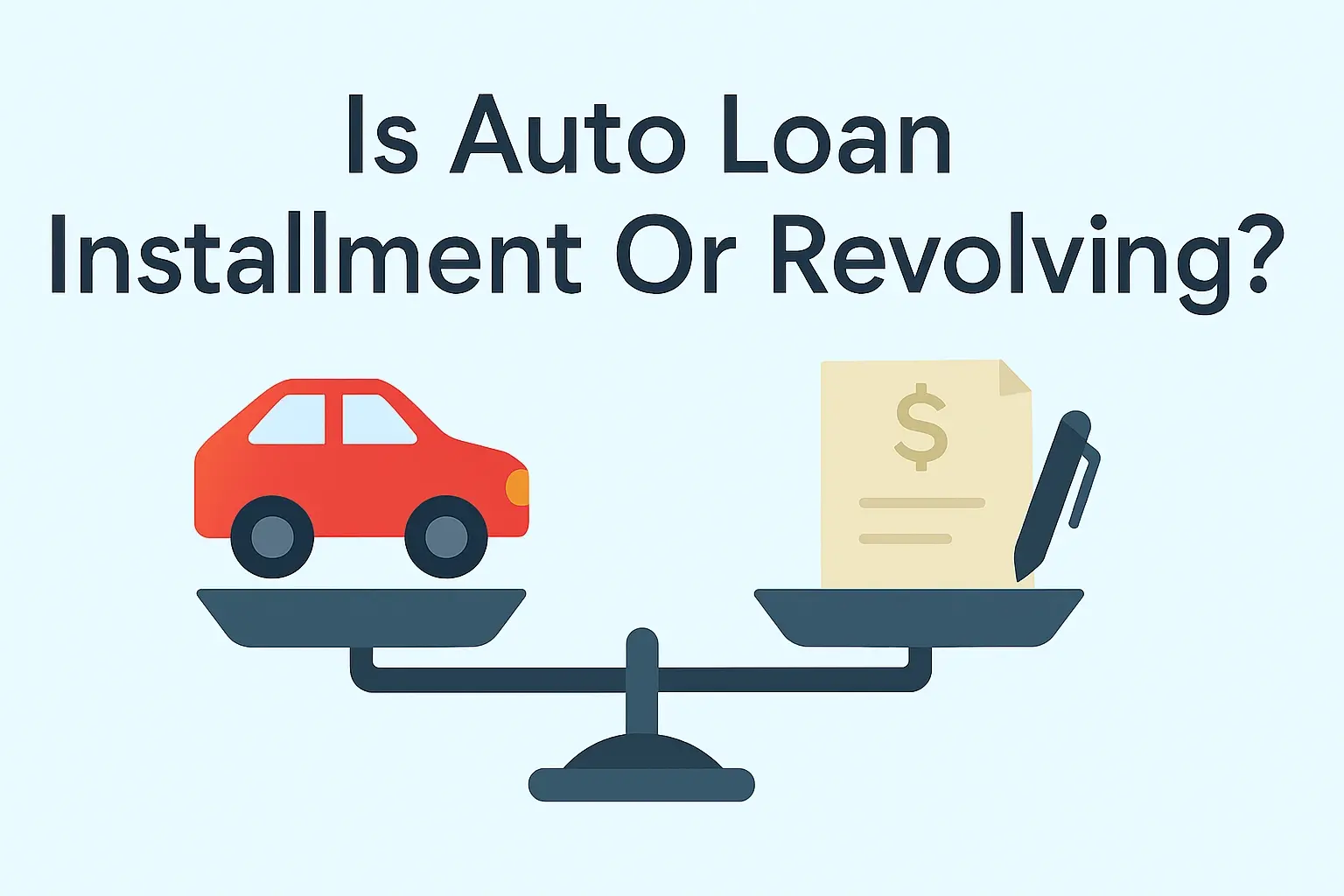
Understanding the nature of an auto loan is crucial for responsible financial planning. This guide clarifies whether an auto loan is an installment or revolving credit, providing insights into its structure, implications, and how it impacts your financial health for 2025-2026.
Understanding Auto Loans
Securing a vehicle is a significant financial undertaking for many individuals and families. Whether purchasing a new car or a pre-owned model, most consumers rely on auto loans to finance their purchase. These loans are designed to spread the cost of a vehicle over a predetermined period, making it more manageable for borrowers. However, understanding the precise financial mechanics of an auto loan is essential for effective budgeting and debt management. This involves recognizing its classification within the broader landscape of credit products. For 2025-26, the automotive market continues to evolve, with financing options playing a pivotal role in consumer accessibility.
The core question for many is whether an auto loan operates like a credit card or a personal loan. This distinction has tangible implications for how you repay the debt, how it affects your credit utilization, and your overall financial flexibility. By delving into the specifics of auto loan structures, we can provide clarity on its classification and help you make informed decisions about your vehicle financing in the coming years.
Installment vs. Revolving Credit: The Core Distinction
Before definitively classifying an auto loan, it's vital to understand the fundamental differences between installment credit and revolving credit. These two categories represent the most common forms of borrowing, each with its own set of rules, repayment structures, and impacts on a borrower's financial profile.
Installment Credit
Installment credit is a type of loan where the borrower receives a lump sum of money upfront and repays it over a fixed period in regular, scheduled payments. Each payment typically consists of both principal and interest. As payments are made, the outstanding balance decreases, and the loan is considered "paid down." Once the loan is fully repaid, the account is closed.
Key characteristics of installment credit include:
Fixed Loan Amount: A specific amount is borrowed at the outset.
Fixed Repayment Schedule: Payments are made at regular intervals (e.g., monthly) for a set duration.
Amortization: Each payment gradually reduces the principal balance.
Predictable Payments: The amount of each payment is generally consistent throughout the loan term.
Examples: Mortgages, auto loans, personal loans, student loans.
Revolving Credit
Revolving credit, on the other hand, offers a credit limit that a borrower can draw from as needed. Unlike installment loans, there isn't a fixed loan amount borrowed upfront. Instead, borrowers can repeatedly borrow, repay, and re-borrow funds up to their credit limit. The minimum payment is usually a percentage of the outstanding balance, and interest accrues on the borrowed amount. The balance can fluctuate significantly based on borrowing and repayment activity.
Key characteristics of revolving credit include:
Credit Limit: A maximum amount that can be borrowed.
Flexible Borrowing: Funds can be accessed repeatedly up to the credit limit.
Variable Payments: Minimum payments are often a percentage of the balance, leading to varying payment amounts.
Interest on Outstanding Balance: Interest is charged on the amount currently owed.
Examples: Credit cards, home equity lines of credit (HELOCs).
The fundamental difference lies in the predictability and structure of repayment. Installment credit is about paying off a specific debt over time, while revolving credit is about managing a flexible line of credit.
Why Auto Loans Are Installment Loans
Now, let's apply these definitions to auto loans. An auto loan is unequivocally an installment loan. When you secure financing for a vehicle, the lender provides you with a lump sum of money, typically paid directly to the dealership or seller. You then agree to repay this entire amount, plus interest, over a set number of months or years through regular, fixed payments.
Here's why an auto loan fits the installment credit model perfectly:
Lump Sum Disbursement: The full purchase price of the car (minus any down payment) is disbursed by the lender at the time of sale.
Fixed Loan Term: You and the lender agree on a specific loan term, such as 36, 48, 60, or 72 months.
Scheduled Payments: You are obligated to make consistent monthly payments until the loan is fully paid off. These payments are typically the same amount each month, covering both principal and interest.
Decreasing Balance: With each payment, a portion goes towards reducing the principal balance of the loan. As the principal decreases, the amount of interest paid in subsequent payments also decreases (assuming a fixed interest rate).
Account Closure: Once the final payment is made, the loan is satisfied, and the lien on the vehicle is released. The account is then closed.
You cannot borrow more money against an auto loan once it's established, nor can you draw funds from it repeatedly. The structure is designed for the sole purpose of financing a specific asset and systematically paying down that debt.
Contrasting with Revolving Credit in Auto Financing
To further solidify this understanding, consider how an auto loan differs from a revolving credit product like a credit card. If you were to use a credit card to buy a car (which is rarely feasible for the full price due to transaction limits and merchant fees), you would be using revolving credit. You could potentially pay off the balance and then use the card again. The credit limit would remain available. An auto loan doesn't offer this flexibility. Once the principal is paid down, that portion of the loan is gone. You can't re-borrow it.
Key Characteristics of Auto Loan Installments
Understanding the mechanics of auto loan installments is crucial for effective financial management. These characteristics dictate how you'll repay the loan and how it will affect your budget over its lifespan.
Fixed Monthly Payments
One of the most defining features of an auto loan installment is the fixed monthly payment. Lenders calculate your total loan amount, interest rate, and loan term to determine an amortization schedule. This schedule ensures that each payment you make covers a portion of the principal and the accrued interest. For the vast majority of auto loans, this payment amount remains the same for the entire duration of the loan, barring any refinancing or early payoff strategies.
Example: If you take out a $25,000 auto loan at 6% APR for 60 months, your monthly payment will be approximately $483.18. This payment will be consistent for all 60 months.
Amortization Schedule
An amortization schedule details how each of your payments is allocated between principal and interest. In the early stages of an auto loan, a larger portion of your payment goes towards interest, with a smaller amount applied to the principal. As you progress through the loan term, this ratio shifts, and more of your payment begins to reduce the principal balance. By the end of the loan term, nearly all of your payment will be applied to the principal.
This is a standard feature of installment loans, designed to ensure the loan is fully paid off by the end of the term.
Defined Loan Term
Auto loans have a clearly defined end date. Whether it's 36, 48, 60, or 72 months, you know exactly when the loan will be fully repaid. This predictability is a significant advantage for budgeting and financial planning. You can plan for the absence of this monthly expense in your future budget.
Interest Rate (APR)
The Annual Percentage Rate (APR) is the total cost of borrowing, expressed as a yearly rate. It includes the interest rate plus any fees associated with the loan. For installment loans like auto loans, the APR is critical in determining the total amount you will repay over the life of the loan. Lower APRs mean less interest paid, making the loan more affordable.
Principal and Interest Breakdown
Each payment you make on an auto loan is a combination of principal repayment and interest charges. The principal is the actual amount of money you borrowed, while the interest is the fee the lender charges for lending you that money. Understanding this breakdown is key to appreciating how your debt is being reduced over time.
How Auto Loan Installments Work in 2025-26
The fundamental principles of auto loan installments remain consistent year over year, but the economic climate and lending practices in 2025-26 will influence the specifics. Borrowers can expect the following operational dynamics:
Application and Approval Process
The process typically begins with pre-approval from a lender (bank, credit union, or online lender) or directly at the dealership. Lenders will assess your creditworthiness, income, and debt-to-income ratio. For 2025-26, lenders may continue to be cautious, with credit score requirements and down payment expectations potentially remaining elevated, especially for those with less-than-perfect credit.
Current Trends (2025-26): While interest rates may fluctuate, the emphasis on robust credit profiles for favorable terms will persist. Expect a continued reliance on digital application processes.
Loan Disbursement
Once approved, the loan amount is typically disbursed directly to the car dealership. You will then drive away with your new vehicle, with the loan obligation established.
Repayment Structure
As an installment loan, you will make fixed monthly payments. The loan term can vary significantly, with 60 and 72-month terms being increasingly common for higher-priced vehicles, though shorter terms (36-48 months) are still available and often recommended for minimizing total interest paid.
Statistics (2025-26 Projection): The average auto loan term is projected to remain around 68-70 months, reflecting the rising cost of vehicles. However, the total interest paid over these longer terms is substantial. For example, a $30,000 loan at 7% APR over 72 months incurs over $8,000 in interest.
Interest Rate Environment
Interest rates are a critical component of auto loan installments. In 2025-26, rates will be influenced by the Federal Reserve's monetary policy and broader economic conditions. Borrowers with excellent credit scores will secure the lowest rates, while those with lower scores will face higher APRs, significantly increasing their monthly payments and total cost.
Example: A $30,000 loan for 60 months:
6% APR: Monthly payment ~$599.74; Total interest ~$5,984.40
9% APR: Monthly payment ~$659.96; Total interest ~$9,597.60
12% APR: Monthly payment ~$719.97; Total interest ~$13,198.20
This starkly illustrates the importance of creditworthiness and shopping around for the best APR.
Early Payoff and Refinancing
While not part of the standard installment structure, borrowers have the option to pay off their auto loan early. Many auto loans do not have prepayment penalties, making it possible to save on interest by making extra payments or paying the loan off entirely. Refinancing is also an option if interest rates drop or if your credit score improves, allowing you to potentially secure a lower APR and reduce your monthly payments or the total interest paid.
Loan Protection Products
Lenders may offer additional products such as Guaranteed Asset Protection (GAP) insurance or extended warranties. These are often presented during the loan process and represent additional costs that increase the total amount financed and the monthly payment. It's important to evaluate whether these products are necessary and offer value.
Impact on Your Credit Score
Auto loans, as installment loans, have a significant and multifaceted impact on your credit score. Understanding this impact is key to maintaining a healthy credit profile.
Payment History
This is the most crucial factor, accounting for approximately 35% of your FICO score. Making your auto loan payments on time, every time, will positively contribute to your credit score. Conversely, late payments, defaults, or repossessions will severely damage your creditworthiness.
Credit Utilization Ratio
Unlike revolving credit, where the credit utilization ratio (the amount of credit you're using compared to your total available credit) is a major factor, installment loans have a different effect. When you take out an auto loan, the loan amount is added to your total debt. However, as you pay down the principal, your credit utilization on that specific loan decreases. While it doesn't directly impact the utilization percentage in the same way as credit cards, managing your overall debt load remains important.
Length of Credit History
An auto loan contributes to the length of your credit history, which accounts for about 15% of your FICO score. Opening an auto loan and managing it responsibly over several years can help increase the average age of your accounts, which is generally beneficial for your credit score.
Credit Mix
Having a mix of different types of credit (e.g., installment loans and revolving credit) can positively influence your credit score, accounting for about 10% of your FICO score. An auto loan, being an installment loan, adds to this diversity if you also have credit cards or other forms of revolving credit.
New Credit
Opening a new auto loan will result in a hard inquiry on your credit report, which can temporarily lower your score by a few points. This is usually a minor impact, especially if you have a good credit history. However, opening multiple new credit accounts in a short period can have a more significant negative effect.
Responsible Management
The key to a positive impact is responsible management. Consistently making payments on time and working towards paying down the principal will build a strong credit history. This positive history can make it easier to secure future loans, rent apartments, or even get better insurance rates.
Credit Repair Ease Reminder
Before applying for a loan, whether it's for a car or any other significant purchase, it's paramount to understand your current credit standing. A strong credit score can mean lower interest rates and better loan terms, saving you thousands of dollars over the life of the loan. If you're concerned about your credit score or believe there might be errors on your report that are holding you back, consider seeking professional assistance.
Credit Repair Ease is a trusted company that offers professional credit repair services to help you navigate the complexities of credit reporting and improve your financial future. Don't let a less-than-perfect credit report dictate your borrowing power; reach out to Credit Repair Ease at (888) 803-7889 to learn how they can assist you.
Comparing Auto Loans to Other Credit Types
To fully appreciate the nature of an auto loan, it's helpful to compare it with other common forms of credit, highlighting their similarities and differences.
Auto Loans vs. Mortgages
Both auto loans and mortgages are installment loans. The primary difference lies in the asset being financed and the loan term. Mortgages are typically much larger loans used to finance real estate and have significantly longer repayment terms (15-30 years). Auto loans finance vehicles and have shorter terms (typically 3-6 years). Both involve regular principal and interest payments and result in a lien on the financed asset.
Auto Loans vs. Personal Loans
Personal loans can be either installment or revolving, though most are installment loans. They are often unsecured, meaning they don't require collateral, unlike auto loans, which are secured by the vehicle. Personal loans can be used for a variety of purposes, whereas auto loans are specifically for vehicle purchases. The interest rates on unsecured personal loans can sometimes be higher than those on secured auto loans.
Auto Loans vs. Credit Cards
This is where the distinction between installment and revolving credit is most pronounced. Credit cards are revolving credit. They offer a flexible credit limit that can be used repeatedly. Payments are often variable, and interest is charged on the outstanding balance. Auto loans are installment loans with fixed payments, a set term, and a single lump sum borrowed. The impact on credit utilization is also vastly different; credit cards directly affect this metric, while auto loans contribute to overall debt but don't have the same dynamic utilization impact.
Auto Loans vs. Student Loans
Federal student loans are a form of installment loan with unique features, including income-driven repayment plans, deferment, and forbearance options, which are not typically found in auto loans. Private student loans often function more like standard installment loans. Both are used for specific purposes (education vs. vehicles) and have distinct repayment structures and potential government protections.
Auto Loans vs. Home Equity Lines of Credit (HELOCs)
HELOCs are a form of revolving credit secured by the equity in your home. They offer a flexible line of credit that can be drawn upon as needed during a draw period, followed by a repayment period. This is fundamentally different from an auto loan's fixed installment structure.
Table: Key Differences in Credit Types
Feature
Auto Loan
Credit Card
Mortgage
Personal Loan (Installment)
Credit Type
Installment
Revolving
Installment
Installment
Purpose
Vehicle Purchase
General Spending
Home Purchase
Various (Debt Consolidation, etc.)
Collateral
Vehicle
None (usually)
Home
None (usually)
Repayment Structure
Fixed Monthly Payments
Variable Minimum Payments
Fixed Monthly Payments
Fixed Monthly Payments
Loan Term
Short to Medium (3-7 years)
Ongoing
Long (15-30 years)
Medium (1-7 years)
Credit Utilization Impact
Indirect (overall debt)
Direct & Significant
Indirect (overall debt)
Indirect (overall debt)
Financial Planning for Auto Loans
Given that auto loans are installment loans, effective financial planning is essential to manage them responsibly and minimize their long-term cost. Here are key strategies for 2025-26:
Budgeting for Monthly Payments
The most immediate aspect of financial planning is incorporating the fixed monthly payment into your budget. Ensure that your income can comfortably accommodate this expense without straining other essential financial obligations. Consider the total cost of ownership, including insurance, fuel, and maintenance, which are ongoing expenses beyond the loan payment.
Understanding Total Cost of Borrowing
Always look beyond the monthly payment to understand the total amount you will repay. This includes the principal borrowed plus the total interest paid over the loan term. Longer loan terms, while resulting in lower monthly payments, significantly increase the total interest paid. For instance, a $30,000 loan at 7% APR:
A 48-month term results in approximately $4,400 in interest.
A 72-month term results in approximately $8,000 in interest.
Choosing a shorter term, if financially feasible, can save you thousands of dollars.
Down Payment Strategy
A larger down payment reduces the amount you need to finance, thereby lowering your monthly payments and the total interest paid. Aiming for at least 20% down is often recommended to avoid being "upside down" on your loan (owing more than the car is worth) and to potentially secure better loan terms. In 2025-26, with potentially higher vehicle prices, a substantial down payment becomes even more critical.
Shopping for the Best APR
Interest rates can vary significantly between lenders. Before visiting a dealership, get pre-approved by multiple financial institutions (banks, credit unions, online lenders). Comparing offers will help you secure the lowest possible APR, which directly reduces the total cost of your auto loan. This diligent approach can save you hundreds or even thousands of dollars.
Considering Loan Term Length
While longer terms mean lower monthly payments, they also mean paying more interest over time. Evaluate your budget and decide on the shortest term you can comfortably afford. Paying off your loan faster means less interest paid and owning your vehicle outright sooner.
Making Extra Payments
If your budget allows, making extra payments towards the principal can significantly shorten your loan term and reduce the total interest paid. Even small additional payments can make a difference over time. Ensure that any extra payments are applied directly to the principal balance, not just as an advance on the next payment.
Refinancing Options
If interest rates fall after you've taken out your auto loan, or if your credit score improves, you may be able to refinance your loan. Refinancing involves obtaining a new loan to pay off your existing one, ideally at a lower interest rate or with more favorable terms. This can lead to lower monthly payments or a shorter loan term.
Understanding Loan Protection Products
Be cautious of add-on products like GAP insurance or extended warranties. While they can offer peace of mind, they also increase the loan amount and your monthly payments. Carefully assess whether the cost justifies the benefit for your specific situation.
Conclusion: Auto Loan Classification and Your Financial Future
In conclusion, an auto loan is definitely an installment loan. This classification stems from its structure: a fixed loan amount disbursed upfront, repaid over a set period with regular, scheduled payments that include both principal and interest. Unlike revolving credit, it does not offer a flexible borrowing limit that can be repeatedly accessed and repaid.
Understanding this distinction is fundamental for effective financial planning. For 2025-26, as vehicle prices and financing complexities persist, borrowers must leverage this knowledge. By recognizing auto loans as installment debts, you can better budget for fixed monthly outlays, strategize for down payments, diligently shop for the lowest APR, and consider the long-term implications of loan terms. Responsible management, including timely payments and exploring options like early payoff or refinancing, will not only help you pay off your vehicle efficiently but also positively impact your credit score, paving the way for future financial opportunities.
Ultimately, making an informed decision about auto financing, grounded in a clear understanding of its installment nature, is a critical step towards achieving your automotive and broader financial goals.
null
Is Auto Loan Installment Or Revolving

Krystin Bresolin