-
Posted on: 24 Feb 2026
-
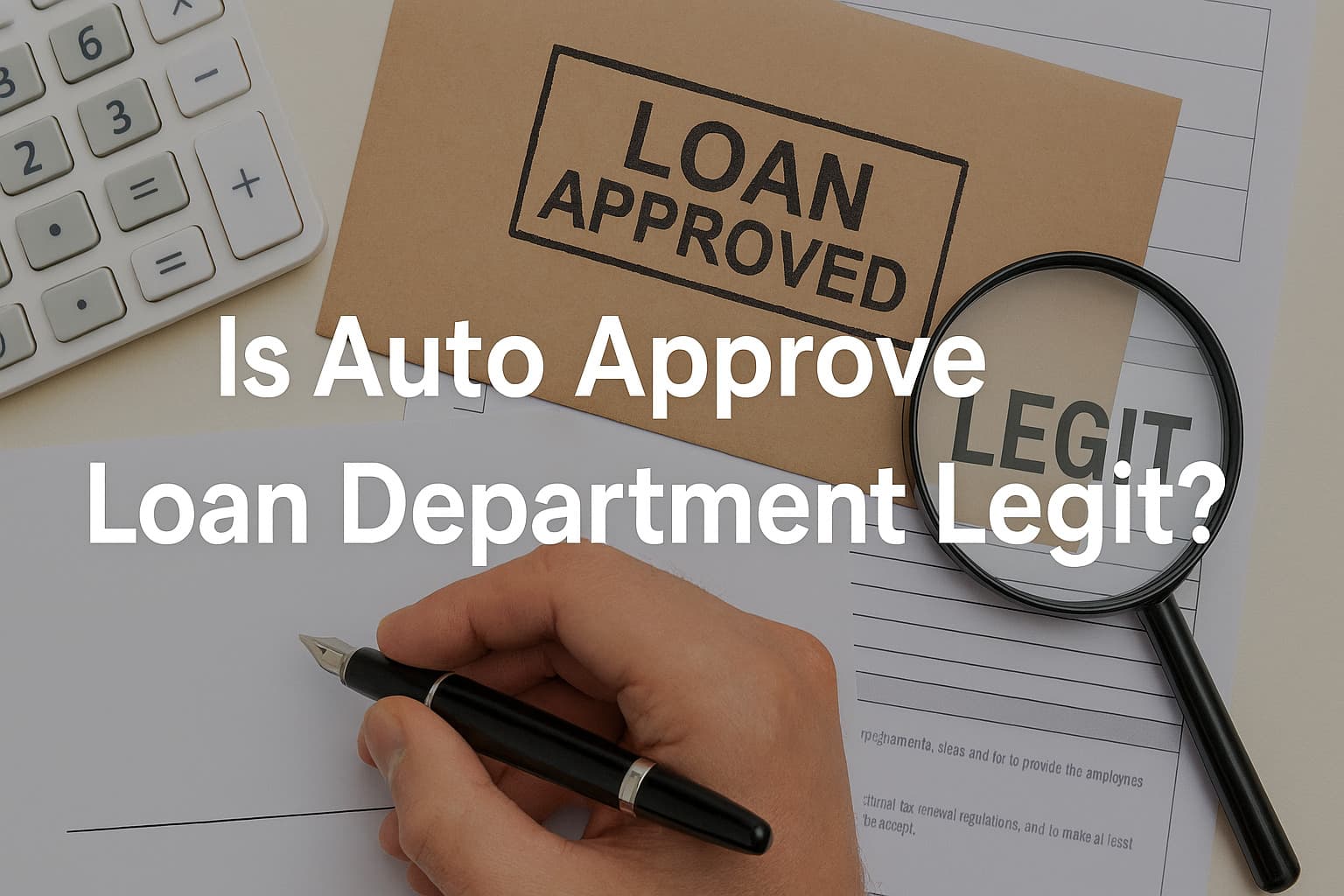
Navigating the world of loans can be complex, and questions like "Is Auto Approve Loan Department Legit?" are common. This guide provides a comprehensive, fact-based analysis to help you understand the legitimacy of auto approve loan departments, their operational models, and how to protect yourself from potential scams, ensuring you make informed financial decisions for 2025-26.
Understanding "Auto Approve" Loan Departments
The term "auto approve loan department" often conjures images of instant loan approvals with minimal scrutiny. In reality, the landscape is far more nuanced. Legitimate financial institutions, whether traditional banks, credit unions, or reputable online lenders, do not offer guaranteed "auto approval" for loans. Instead, they utilize sophisticated algorithms and underwriting processes to assess risk and determine eligibility. The allure of an "auto approve" department, however, can be a powerful marketing tool, often employed by less scrupulous entities to attract borrowers, particularly those facing financial difficulties.
It's crucial to differentiate between pre-qualification and true auto-approval. Pre-qualification involves a preliminary assessment of your financial standing based on information you provide, giving you an estimate of what you might be approved for. This is not a guarantee of approval. True auto-approval, as often marketed, is largely a myth in the regulated lending industry. When you encounter services that heavily emphasize "auto approval," it's a signal to exercise extreme caution and conduct thorough due diligence.
The primary goal of any loan department, legitimate or otherwise, is to assess a borrower's ability and willingness to repay a loan. This involves evaluating creditworthiness, income stability, debt-to-income ratio, and other financial indicators. The speed at which this process appears to happen can vary significantly. Reputable lenders have streamlined their processes, especially for online applications, leading to faster decisions, but this speed is a result of efficiency, not a lack of due diligence. The term "auto approve" often masks a lack of proper vetting, which can lead to predatory lending practices.
For 2025-26, regulatory bodies continue to emphasize consumer protection in lending. This means that while technology is advancing to speed up loan processing, the fundamental principles of responsible lending remain. Understanding what "auto approve" truly implies in the context of the current financial market is the first step in discerning legitimate offers from potential scams. We will delve deeper into how legitimate lenders operate and how to spot the tell-tale signs of fraudulent operations.
How "Auto Approve" Loan Departments Typically Work
The operational model behind entities advertising "auto approve" loan departments often diverges significantly from that of regulated financial institutions. While legitimate lenders use a multi-faceted approach to assess risk, services claiming instant or automatic approval often employ simpler, and sometimes predatory, strategies. Understanding these methods is key to identifying whether a department is legitimate or a front for a scam.
Marketing and Lead Generation
The primary function of an "auto approve" department, in many cases, is not to lend money directly but to generate leads. They may collect personal and financial information from a large number of applicants, regardless of their actual creditworthiness. This information is then sold to third-party lenders, brokers, or even scammers. The promise of easy approval acts as a magnet for individuals desperate for funds, making them more likely to divulge sensitive data.
Simplified (or Non-Existent) Underwriting
Instead of rigorous credit checks and income verification, some "auto approve" operations might rely on superficial criteria or even bypass underwriting altogether. This can lead to the approval of loans that borrowers cannot realistically afford, setting them up for default. In other instances, the "approval" might be for a very small amount at exorbitant interest rates, or the process might be designed to collect upfront fees without any intention of providing a loan.
Upfront Fees and Hidden Costs
A common tactic employed by fraudulent "auto approve" operations is the requirement of upfront fees. These fees are often disguised as processing fees, application fees, insurance premiums, or administrative costs. Legitimate lenders typically do not charge significant upfront fees before disbursing loan funds. The promise of "auto approval" makes borrowers more susceptible to paying these fees, believing it's a necessary step to secure the loan quickly.
Data Harvesting and Identity Theft
Beyond selling leads, some entities use the guise of loan applications to harvest personal data for identity theft. Social Security numbers, bank account details, and other sensitive information can be misused for fraudulent purposes. The speed and ease promised by "auto approve" departments can lower a borrower's guard, making them less cautious about the information they share.
Loan Flipping and Predatory Lending
In some scenarios, an "auto approve" department might be linked to predatory lending schemes. This could involve "flipping" loans, where a borrower is encouraged to take out a new, larger loan to pay off an existing one, often at a higher interest rate, trapping them in a cycle of debt. The initial "auto approval" is just the bait to get them into the system.
For 2025-26, the sophistication of online scams continues to evolve. While technology allows for faster legitimate loan processing, it also provides new avenues for fraudsters. It's important to remember that regulated lenders operate under strict compliance laws designed to protect consumers. Any entity that bypasses these norms, especially by promising "auto approval," should be viewed with extreme skepticism.
Types of Loans Often Misrepresented
The promise of "auto approval" is frequently associated with specific types of loans that are often sought by individuals facing immediate financial needs. Understanding these loan types and how they are commonly exploited can further help in identifying fraudulent operations.
Payday Loans and Cash Advances
These are short-term, high-interest loans designed to be repaid on the borrower's next payday. Due to their nature, they often have less stringent approval requirements than traditional loans. However, the term "auto approve" here can be misleading. While approval might be quick, the interest rates are astronomical, and the repayment terms can be predatory, leading to a debt trap.
Personal Loans for Bad Credit
Individuals with poor credit scores often struggle to secure traditional loans. This vulnerability makes them prime targets for "auto approve" schemes promising loans regardless of credit history. Legitimate lenders offering bad credit loans will still conduct some level of assessment, and the interest rates will reflect the higher risk. Scammers, on the other hand, might offer loans with hidden fees and exorbitant rates that are impossible to repay.
Car Title Loans
These loans use a vehicle's title as collateral. Approval can be relatively quick, but the risk is high, as the borrower can lose their vehicle if they default. "Auto approve" claims in this context can mask practices where the loan terms are intentionally unclear or designed for repossession.
Debt Consolidation Loans
While legitimate debt consolidation services aim to help individuals manage their debt, "auto approve" offers in this area can be a red flag. They might promise to consolidate all debts instantly, but the reality could be a new, more expensive loan with unfavorable terms, or simply a lead-generation scheme.
In 2025-26, the digital landscape continues to blur the lines between legitimate and fraudulent financial services. Always be wary of any offer that seems too good to be true, especially when it involves guaranteed "auto approval" for loans that typically require careful assessment.
Identifying Red Flags and Potential Scams
When evaluating an "auto approve loan department," recognizing specific red flags is paramount to protecting yourself from financial harm. These warning signs are often consistent across various types of loan scams, and vigilance can prevent you from falling victim.
Unsolicited Contact and High-Pressure Tactics
Be suspicious of unsolicited calls, emails, or texts offering loans. Legitimate lenders typically respond to your application, not the other way around. If a company is aggressively pushing you to accept a loan immediately, it's a major red flag. They may use pressure tactics, claiming the offer is time-sensitive or that approval will be revoked if you don't act quickly.
Requests for Upfront Fees
As mentioned earlier, this is one of the most significant indicators of a scam. Legitimate lenders do not require you to pay fees before disbursing loan funds. Be wary of requests for wire transfers, gift cards, or pre-paid debit cards as payment for fees. These methods are difficult to trace and recover.
Guaranteed Approval or "No Credit Check" Promises
While some lenders specialize in loans for bad credit, a complete lack of credit checking or a guarantee of approval for any applicant is unrealistic and often a sign of a scam. Responsible lending involves assessing risk. Promises of "guaranteed approval" or "no credit check required" are often used to lure desperate borrowers.
Vague or Unclear Loan Terms
Legitimate loan agreements are transparent about interest rates, fees, repayment schedules, and penalties. If the terms are vague, difficult to understand, or seem to change upon closer inspection, it's a warning sign. Scammers often use confusing language to hide unfavorable conditions.
Lack of Physical Address or Contact Information
Reputable financial institutions have a verifiable physical address and multiple contact methods (phone, email, physical office). If a company only provides a P.O. box, a generic email address, or a toll-free number with no other contact details, proceed with extreme caution. You can often verify a company's legitimacy through the Better Business Bureau (BBB) or by searching for reviews and complaints.
Requests for Sensitive Personal Information Too Early
While lenders need your information to process an application, be cautious if a company asks for your Social Security number, bank account details, or other highly sensitive information before you have even formally applied or received a clear offer. This information could be used for identity theft.
Unrealistic Interest Rates or Loan Amounts
Be skeptical of offers with extremely low interest rates for high-risk borrowers or unusually high loan amounts that don't align with your financial profile. Conversely, extremely high interest rates that far exceed market averages, even for bad credit loans, are also a red flag.
Poor Online Presence and Reviews
While not all new businesses have extensive online histories, a complete lack of reviews, or a preponderance of negative reviews mentioning scams, phishing, or non-delivery of services, is a strong indicator of a fraudulent operation. Look for consistent patterns in negative feedback.
For 2025-26, regulatory bodies like the Consumer Financial Protection Bureau (CFPB) in the United States continue to issue warnings about loan scams. Staying informed about common tactics and trusting your instincts are your best defenses. If something feels off, it likely is.
Red Flag
What it Might Mean
Action to Take
Unsolicited Contact
Potential scammer trying to lure you.
Do not engage. Block and report.
Upfront Fees Required
Almost always a scam.
Terminate contact immediately.
Guaranteed Approval / No Credit Check
Unrealistic and often a lure for scams.
Seek legitimate lenders who assess risk.
Vague Terms & Conditions
Hiding unfavorable terms.
Do not proceed. Look for clarity.
Lack of Verifiable Contact Info
The company may not exist or is hiding.
Research thoroughly; avoid if unverified.
Case Studies of Scams
Examining real-world examples of loan scams can provide valuable insights into how these operations function and the impact they have on victims. These anonymized case studies illustrate common patterns and the deceptive tactics employed.
Example 1: The "Guaranteed Loan" Phishing Scam
Sarah, facing unexpected medical bills in late 2024, received an email promising a $5,000 personal loan with guaranteed approval and a 5% interest rate, despite her poor credit. The email asked her to click a link to fill out an application, which required her Social Security number, bank account details, and her mother's maiden name. After submitting the information, she was told she needed to pay a $250 "processing fee" via wire transfer to release the funds. She paid the fee, but no loan ever materialized, and the company became unreachable. Her sensitive information was likely harvested for identity theft.
Example 2: The "Advance Fee" Car Title Loan Scam
John needed a loan quickly to repair his car. He found an online lender advertising "auto approval" for car title loans. The lender informed him he was approved for $3,000 but needed to pay a $300 "insurance premium" upfront to protect the loan. John sent the money via a prepaid debit card. The lender then claimed there was a "title transfer fee" of another $400. When John hesitated, the lender became aggressive, and he eventually realized it was a scam. He lost $300 and still needed to find a legitimate way to fix his car.
Example 3: The "Credit Repair Loan" Deception
Maria was struggling with her credit score and saw an advertisement for a service that offered "credit repair loans" with "auto approval." The service promised to help her rebuild credit by taking out a loan and making payments. She was approved for a $2,000 loan, but the service immediately took a $500 "consultation fee" and then deducted another $100 each month for "management." The loan was from a high-interest lender, and Maria ended up paying significantly more than she borrowed, with minimal improvement to her credit score. The "credit repair" aspect was a misrepresentation.
These examples highlight the critical importance of scrutinizing any loan offer, especially those promising easy or automatic approval. For 2025-26, the prevalence of online scams means that borrowers must be more vigilant than ever. Always verify the lender's credentials and be wary of any request for upfront payment or sensitive personal information before a legitimate loan agreement is in place.
Legitimate Alternatives and What to Expect
While the term "auto approve loan department" is often associated with scams, there are legitimate ways to secure loans quickly and efficiently, especially in 2025-26. Understanding these alternatives and the realistic expectations involved can help you navigate the lending landscape with confidence.
Online Lenders
Many reputable online lenders have streamlined their application and approval processes, offering fast decisions and fund disbursement. These lenders often use advanced technology to assess creditworthiness efficiently. While not "auto approve," you can often get pre-qualified within minutes and receive funds within a business day or two.
What to expect: Online applications, electronic document submission, credit checks (hard or soft), and relatively quick decisions. Interest rates and terms vary based on creditworthiness.
Examples: LendingClub, Prosper, Upstart, SoFi.
Credit Unions
Credit unions are member-owned non-profit cooperatives that often offer competitive interest rates and more flexible lending criteria than traditional banks. They are known for their customer-centric approach and may be more willing to work with members who have less-than-perfect credit.
What to expect: Membership requirements, in-person or online applications, personal interaction with loan officers, and potentially more lenient approval processes for members.
Examples: Local credit unions in your community.
Traditional Banks
While their processes can sometimes be slower, traditional banks offer a wide range of loan products. They are highly regulated and provide a secure lending environment. For borrowers with good credit, banks can offer favorable terms.
What to expect: Comprehensive application process, credit checks, income verification, and potentially longer decision times compared to online lenders.
Examples: Chase, Bank of America, Wells Fargo.
Peer-to-Peer (P2P) Lending Platforms
These platforms connect borrowers directly with individual investors. While they can offer competitive rates, they function similarly to online lenders in terms of application and approval processes. Investors assess the risk, and loans are funded by multiple individuals.
What to expect: Online applications, credit assessments, and funding from a pool of investors.
Examples: LendingClub, Prosper (also operate as online lenders).
Secured Loans
If you have collateral, such as a home or vehicle, you might qualify for a secured loan. These loans are generally easier to obtain and come with lower interest rates because the lender has an asset to seize if you default. This includes home equity loans, HELOCs, and auto title loans (though caution is advised with the latter due to high rates and risk of repossession).
What to expect: Collateral appraisal, lower interest rates, and longer repayment terms.
When seeking a loan in 2025-26, focus on lenders that are transparent about their fees, interest rates, and repayment terms. Always read the loan agreement carefully before signing. Legitimate lenders will provide you with a clear disclosure of all costs and conditions. Remember that while speed is desirable, it should never come at the expense of security and fairness.
Understanding Loan Terms and Rates
For any loan, whether from a traditional institution or a modern online lender, understanding the key terms and how interest rates are calculated is crucial. This knowledge empowers you to compare offers effectively and avoid predatory practices.
Annual Percentage Rate (APR)
APR is the most comprehensive measure of the cost of borrowing. It includes the interest rate plus any fees associated with the loan, expressed as a yearly rate. Always compare APRs when evaluating different loan offers, as a lower interest rate might not necessarily mean a lower overall cost if fees are high.
Interest Rate
This is the percentage of the principal loan amount that you will pay in interest. It can be fixed (stays the same for the life of the loan) or variable (can change based on market conditions). For 2025-26, interest rates are influenced by central bank policies and economic forecasts, so understanding the potential for variable rate changes is important.
Loan Term
This is the duration over which you will repay the loan. Shorter loan terms typically mean higher monthly payments but less interest paid overall. Longer loan terms result in lower monthly payments but more interest paid over time.
Fees
Be aware of all potential fees, which can include origination fees, application fees, late payment fees, prepayment penalties, and insufficient funds fees. Legitimate lenders will clearly disclose these in the loan agreement.
Repayment Schedule
This outlines when and how your payments are due (e.g., monthly, bi-weekly). Adhering to the repayment schedule is vital to avoid late fees and negative impacts on your credit score.
When considering any loan, especially those that seem to offer quick approval, always ask for a clear breakdown of the APR, all associated fees, and the total cost of the loan over its entire term. Legitimate lenders are transparent about these details.
Factors Influencing Loan Approval in 2025-26
Even with the most efficient lending processes in 2025-26, loan approval is never guaranteed. Lenders assess risk based on several key factors. Understanding these elements can help you prepare a strong application and increase your chances of approval.
Credit Score
Your credit score is a numerical representation of your creditworthiness, based on your credit history. A higher score generally indicates a lower risk to the lender, leading to better interest rates and terms. Scores typically range from 300 to 850. For 2025-26, maintaining a good credit score remains one of the most significant factors in loan approval.
Credit History
Beyond the score itself, lenders examine your credit report for details like payment history (on-time payments are crucial), credit utilization (how much of your available credit you're using), length of credit history, types of credit used, and recent credit inquiries. A history of late payments, defaults, or bankruptcies can significantly hinder approval.
Income and Employment Stability
Lenders want to ensure you have a reliable source of income to repay the loan. They will typically verify your employment status and income through pay stubs, tax returns, or bank statements. Consistent employment with a stable employer is viewed favorably.
Debt-to-Income Ratio (DTI)
Your DTI is calculated by dividing your total monthly debt payments by your gross monthly income. A lower DTI indicates that you have more disposable income available to manage new debt. Lenders often have specific DTI thresholds they adhere to.
Loan Amount and Purpose
The amount you are requesting and the reason for the loan can influence approval. Larger loan amounts or loans for speculative purposes might face more scrutiny than smaller loans for essential needs.
Collateral (for Secured Loans)
If you are applying for a secured loan, the value and condition of the collateral (e.g., a house, a car) are critical. Lenders will assess the collateral's worth to determine the loan-to-value ratio.
Existing Debt Obligations
The total amount of debt you currently carry can impact your ability to take on new debt. Lenders consider your existing financial obligations when assessing your capacity to repay.
For 2025-26, the economic climate may lead lenders to be more conservative in their lending practices, placing even greater emphasis on these factors. Preparing your finances and understanding your credit profile before applying can significantly improve your chances of securing a legitimate loan.
Credit Check Reminder Section
Before embarking on any loan application, particularly when exploring options that promise rapid approval, it is essential to understand your current financial standing. Your credit score and report are the primary tools lenders use to assess risk. A thorough review of your credit can reveal potential issues that might hinder approval or lead to unfavorable terms. If you're concerned about your credit profile or wish to improve it before applying for a loan, consider seeking professional assistance. Companies like Credit Repair Ease specialize in helping individuals understand and improve their credit reports. Their expert services can guide you through the process of disputing inaccuracies and building a stronger credit history. Make sure to check your credit score with Credit Repair Ease to ensure you are presenting your best financial self to lenders. You can reach out to Credit Repair Ease at (888) 803-7889 for professional credit repair services.
Protecting Yourself from Loan Scams
In the digital age, loan scams are unfortunately prevalent, and the promise of "auto approval" is a common lure. Protecting yourself requires a combination of awareness, skepticism, and proactive verification. Here are key strategies to employ:
Research Thoroughly
Before engaging with any lender, especially one advertising "auto approve" loans, conduct thorough research. Look for reviews on independent platforms like the Better Business Bureau (BBB), Trustpilot, and consumer forums. Check if the lender is licensed and regulated in your state or country. A legitimate lender will be transparent about their licensing and contact information.
Verify Contact Information
Ensure the lender has a verifiable physical address and a working phone number. Be wary of companies that only provide a P.O. box or a generic email address. Try calling their number to gauge their professionalism and responsiveness.
Never Pay Upfront Fees
As repeatedly emphasized, legitimate lenders do not require upfront fees for loan processing, application, or approval. If a lender asks for money before disbursing funds, it is a significant red flag, and you should disengage immediately.
Guard Your Personal Information
Be extremely cautious about sharing sensitive personal information like your Social Security number, bank account details, or date of birth, especially early in the process. Only provide this information to a verified, reputable lender after you have a clear loan offer and have reviewed the agreement.
Understand the Loan Agreement
Read the loan agreement carefully and ensure you understand all terms, conditions, interest rates (APR), fees, and repayment schedules. If anything is unclear, ask for clarification or seek legal advice. Do not sign anything you do not fully comprehend.
Trust Your Instincts
If a loan offer seems too good to be true, or if you feel pressured or uncomfortable at any point, trust your gut. It's better to walk away from a suspicious offer than to fall victim to a scam.
Report Suspicious Activity
If you encounter what you believe to be a loan scam, report it to relevant authorities, such as the Federal Trade Commission (FTC) in the U.S., your state's Attorney General's office, or consumer protection agencies. This can help prevent others from being victimized.
For 2025-26, staying informed about the latest scam tactics is crucial. Online resources from consumer protection agencies are invaluable for keeping up-to-date. By being diligent and informed, you can significantly reduce your risk of falling prey to fraudulent "auto approve" loan schemes.
Making an Informed Decision
Deciding whether to proceed with a loan offer, especially one that seems to promise rapid approval, requires careful consideration and a clear understanding of the risks and benefits. The allure of quick cash can be strong, but it's essential to prioritize safety and financial well-being over speed.
Evaluate Your Needs
Before even looking for a loan, assess your true financial needs. Is the loan necessary? Can the expense be deferred or managed through other means? Understanding the urgency and purpose of the loan will help you make a more rational decision.
Compare Multiple Offers
Never settle for the first loan offer you receive, especially if it comes from an entity advertising "auto approval." Shop around and compare offers from multiple reputable lenders. Pay close attention to the APR, fees, loan terms, and repayment schedules. A slightly longer approval process from a legitimate lender is far preferable to a quick scam.
Assess Your Ability to Repay
Be realistic about your financial capacity to repay the loan. Consider your current income, expenses, and any potential changes in your financial situation. Taking on debt you cannot afford can lead to severe financial distress, including damaged credit, collections, and potential legal action.
Understand the Lender's Reputation
As discussed, thoroughly research any lender before committing. Look for established institutions with transparent practices and positive customer reviews. Avoid lenders who are evasive, use high-pressure tactics, or make unrealistic promises.
Consider the Long-Term Impact
A loan is a financial commitment that can have long-term consequences. Think about how the loan will affect your financial goals, such as saving for retirement, buying a home, or managing other debts. Ensure the loan aligns with your overall financial plan.
For 2025-26, the financial landscape is dynamic. Economic conditions can shift, impacting interest rates and lending availability. Staying informed and making decisions based on thorough research and a realistic self-assessment are your best strategies for securing legitimate financing and avoiding the pitfalls of predatory lending.
Conclusion
In conclusion, the concept of an "auto approve loan department" is often a marketing tactic that masks a lack of genuine underwriting or, worse, outright scams. While legitimate lenders have made strides in streamlining loan applications for faster processing, true "auto approval" without any verification is largely a myth in the regulated financial industry. For 2025-26, borrowers must remain vigilant, recognizing that entities promising guaranteed approval, especially those requiring upfront fees or pressuring for immediate action, are highly suspect. Prioritize lenders who are transparent about their terms, have verifiable credentials, and conduct thorough, albeit efficient, risk assessments. Always compare offers, understand the APR and all associated fees, and ensure you can comfortably manage the repayment. By staying informed, doing your due diligence, and trusting your instincts, you can navigate the loan market safely and secure financing that genuinely meets your needs without falling victim to predatory practices.
null
Is Auto Approve Loan Department Legit

Krystin Bresolin