-
Posted on: 24 Feb 2026
-
Understanding Auto Loans: Secured vs. Unsecured
Navigating the world of auto financing can feel complex, especially when terms like "secured" and "unsecured" are thrown around. This guide aims to demystify auto loans, providing clear answers to your most pressing questions. We’ll explore the fundamental differences between secured and unsecured loans and, most importantly, definitively answer: Is an auto loan secured or unsecured? By the end, you'll be equipped with the knowledge to make informed financial decisions for your next vehicle purchase.
Is An Auto Loan Secured Or Unsecured? The Definitive Answer
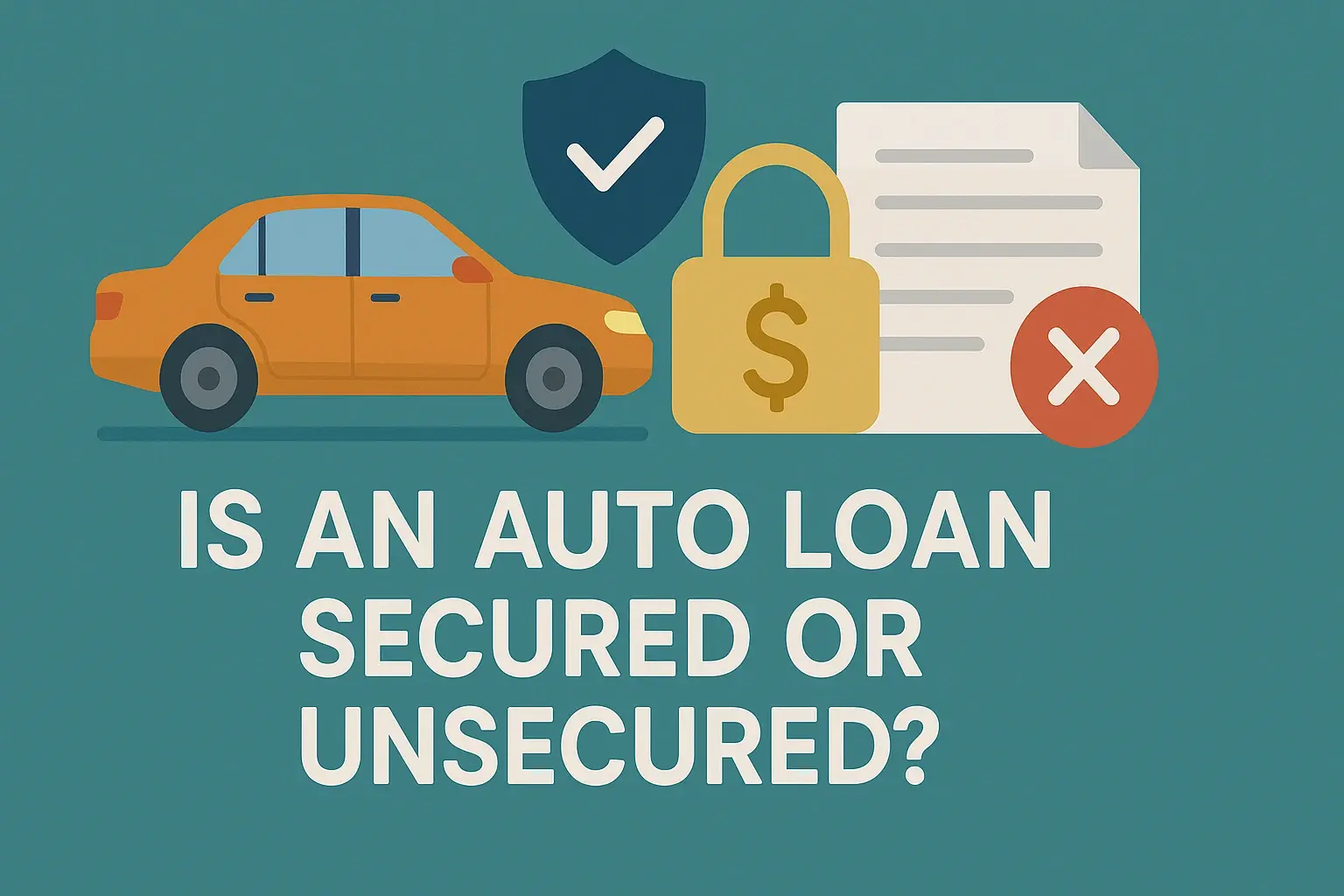
The straightforward answer to "Is an auto loan secured or unsecured?" is that an auto loan is overwhelmingly a secured loan. This means that the loan is backed by collateral, which in this case is the vehicle you are purchasing. Lenders require this collateral to mitigate their risk. If a borrower defaults on payments, the lender has the legal right to repossess the vehicle to recover their losses. This secured nature is a fundamental characteristic of most automotive financing arrangements offered by banks, credit unions, and specialized auto lenders.
What Makes An Auto Loan Secured? The Role of Collateral
The defining feature of a secured loan is the presence of collateral. Collateral is an asset that a borrower pledges to a lender as security for a loan. If the borrower fails to repay the loan as agreed, the lender can seize and sell the collateral to recoup the outstanding debt. In the context of auto loans, the vehicle being financed serves as this crucial piece of collateral.
This arrangement provides a significant advantage to lenders. It reduces their financial risk because they have a tangible asset they can claim if the borrower becomes unable to meet their obligations. This reduced risk often translates into more favorable terms for borrowers, such as lower interest rates compared to unsecured loans, especially for individuals with less-than-perfect credit histories.
The Collateral Explained: The Vehicle Itself
When you take out a typical auto loan, the car, truck, SUV, or motorcycle you are buying becomes the collateral. The lender places a lien on the vehicle's title. This lien signifies that the lender has a legal claim to the vehicle until the loan is fully repaid. You are permitted to drive and use the vehicle, but you do not have full ownership rights until the lien is removed upon loan satisfaction.
The value of the collateral is a critical factor for lenders. They assess the vehicle's market value to ensure it is sufficient to cover the loan amount. For new vehicles, this is relatively straightforward. For used vehicles, lenders will consider factors like mileage, condition, age, and overall market demand to determine its worth. This valuation helps them gauge the potential loss they might incur if repossession becomes necessary.
How Collateral Impacts Lenders: Risk and Reward
The presence of collateral fundamentally alters the risk profile for lenders. For an unsecured loan, the lender's only recourse in case of default is to pursue legal action against the borrower, which can be costly and may not always result in full recovery of the debt. With a secured loan, however, the collateral provides a more direct and reliable avenue for recovering funds.
This reduced risk allows lenders to offer more competitive interest rates and potentially more flexible loan terms to borrowers. It also makes them more willing to lend to individuals who might have a lower credit score, as the collateral offers a safety net. For borrowers, this means that while the car is on the line, they can often access financing more easily and at a lower cost than they might with an unsecured alternative.
Secured vs. Unsecured Loans: A Comparative Look
To fully understand why auto loans are predominantly secured, it's helpful to compare them with unsecured loans. Unsecured loans, such as most personal loans and credit cards, do not require any collateral. The lender's decision to approve and the terms offered are based solely on the borrower's creditworthiness, income, and overall financial stability.
Key Differences in a Nutshell
Here's a concise breakdown of the core distinctions:
Feature
Secured Loan (e.g., Auto Loan)
Unsecured Loan
Collateral Required
Yes (the vehicle)
No
Risk for Lender
Lower
Higher
Interest Rates
Typically Lower
Typically Higher
Loan Amounts
Can be Higher (tied to collateral value)
Often Lower (based on creditworthiness)
Approval Difficulty
Potentially Easier, especially with collateral
More Dependent on Credit Score and Income
Consequences of Default
Repossession of collateral, credit damage, legal action
Credit damage, legal action, wage garnishment
Pros and Cons of Secured Auto Loans
Pros:
Lower Interest Rates: The reduced risk for lenders often translates into more affordable interest rates for borrowers. For 2025, average auto loan rates for excellent credit are projected to be around 5-7%, while secured loans can offer rates in the 4-6% range for qualified buyers.
Easier Approval for Some: Individuals with less-than-perfect credit may find it easier to get approved for a secured auto loan because the vehicle provides security for the lender.
Higher Loan Amounts Possible: The loan amount is often tied to the value of the vehicle, allowing for larger sums to be borrowed compared to unsecured options for a similar purpose.
Builds Credit History: Responsible repayment of a secured auto loan can positively impact your credit score, demonstrating your ability to manage debt.
Cons:
Risk of Repossession: The most significant drawback is the risk of losing your vehicle if you cannot make your payments.
Lien on Title: You don't have full ownership until the loan is paid off, and the lender holds the title.
Potential for Negative Equity: Vehicles depreciate quickly. If you owe more on the loan than the car is worth (negative equity), repossession can leave you still owing money.
Pros and Cons of Unsecured Loans (If Applicable to Auto Financing)
While traditional auto loans are secured, it's worth noting that some individuals might consider using an unsecured personal loan to purchase a vehicle. This is less common for new car purchases due to loan size and terms but can be an option for used cars or as a supplementary financing method.
Pros:
No Collateral at Risk: Your vehicle is not directly on the line if you default.
Potentially Faster Approval: If you have excellent credit, some unsecured personal loans can be approved very quickly.
Full Ownership Immediately: You own the vehicle outright from the moment of purchase.
Cons:
Higher Interest Rates: Due to the higher risk for lenders, interest rates on unsecured personal loans are typically significantly higher than secured auto loans. For 2025, rates can range from 10% to 30% or even higher, depending on creditworthiness.
Stricter Approval Requirements: Approval heavily relies on a strong credit score and a stable income.
Lower Loan Limits: Unsecured personal loans often have lower maximum borrowing limits, which might not be sufficient for many car purchases.
Potential for Aggressive Collections: Defaulting on an unsecured loan can lead to severe consequences, including lawsuits and wage garnishment.
Factors Influencing Loan Type and Approval
While the vast majority of auto loans are secured, the specific terms, interest rates, and even the possibility of approval can be influenced by several factors. Lenders assess your financial profile to determine your risk level and offer the most appropriate loan product.
Credit Score Significance
Your credit score is arguably the most critical factor in determining your loan terms. A higher credit score (generally 700 and above) indicates to lenders that you are a responsible borrower with a history of managing debt effectively. This typically leads to:
Lower interest rates.
Higher loan approval chances.
Potentially more flexible repayment terms.
Conversely, a lower credit score (below 650) signals a higher risk to lenders. This might result in:
Higher interest rates are used to compensate for the increased risk.
Smaller loan amounts.
Potentially requiring a larger down payment.
In some cases, denial of the loan.
For 2025, the average interest rate for a new car loan with excellent credit (780+) is projected to be around 5.5%, while for borrowers with fair credit (620-679), it could be upwards of 12-15% or more. This significant difference underscores the importance of your credit standing.
Income and Debt-to-Income Ratio
Lenders also scrutinize your income and existing debt obligations. Your debt-to-income ratio (DTI) is a key metric. It's calculated by dividing your total monthly debt payments by your gross monthly income. A lower DTI indicates that you have more disposable income to handle new loan payments.
Most lenders prefer a DTI of 43% or lower for auto loans. If your DTI is high, it suggests you might struggle to manage additional debt, even with a secured loan. Demonstrating a stable and sufficient income is crucial for loan approval, regardless of your credit score.
Loan Amount and Term
The amount you wish to borrow and the repayment period (loan term) also play a role. Larger loan amounts, especially those close to the vehicle's full value, might require a stronger credit profile or a larger down payment. Similarly, longer loan terms can sometimes come with higher overall interest paid, even if the monthly payments are lower.
For 2025, the average loan term for a new car is around 70 months, and for used cars, it's approximately 65 months. While longer terms can make monthly payments more manageable, they also mean you'll be paying interest for a longer duration, potentially increasing the total cost of the vehicle.
Lender Policies and Risk Appetite
Different lenders have varying policies and risk appetites. Some institutions, like credit unions, may be more flexible with terms for their members. Online lenders might offer faster approvals but could have stricter criteria. Dealership financing often works with a network of lenders, increasing the chances of finding a suitable option, but it's essential to compare their offers against direct lender quotes.
A lender's willingness to take on risk can also depend on the economic climate. In times of economic uncertainty, lenders might tighten their lending standards, making it harder to secure a loan or leading to higher interest rates across the board.
The Auto Loan Application Process: What to Expect
Understanding the typical steps involved in applying for an auto loan can help alleviate anxiety and ensure you are well-prepared. Since most auto loans are secured, the process involves a thorough evaluation of your financial standing and the collateral.
Gathering Necessary Documents
Before you even start applying, it's wise to gather the following documents:
Proof of Income: Recent pay stubs (usually two), W-2 forms, or tax returns if self-employed.
Proof of Identity: A valid driver's license or state-issued ID.
Proof of Address: Utility bills or bank statements showing your current address.
Employment Verification: Lenders may call your employer to confirm your employment status and duration.
Down Payment Information: If you plan to make a down payment, have proof of funds available.
Vehicle Information: If you've already chosen a car, have its VIN (Vehicle Identification Number), make, model, year, and mileage ready.
Understanding Interest Rates and Terms
When you apply, you'll be presented with an interest rate (APR - Annual Percentage Rate) and a loan term. It's crucial to understand these:
APR: This is the total cost of borrowing over a year, including fees. It's the most important number for comparing loan offers.
Loan Term: The length of time you have to repay the loan (e.g., 48, 60, 72 months). Longer terms mean lower monthly payments but more interest paid over time.
For example, a $25,000 loan at 7% APR for 60 months will have a monthly payment of approximately $495. The same loan at 12% APR would have a monthly payment of around $550, and the total interest paid would be significantly higher.
The Role of Credit Checks in Loan Approval
As mentioned, your credit history is paramount. Lenders will perform a hard credit check when you formally apply for a loan. This inquiry will appear on your credit report and can slightly lower your score temporarily. It's advisable to get pre-approved by multiple lenders within a short timeframe (usually 14-45 days, depending on the scoring model) to minimize the impact on your score, as these inquiries are often grouped.
Credit Check Reminder: Before applying for a loan, make sure to check your credit score with Credit Repair Ease. They are a trusted credit repair company offering professional credit repair services that can help you understand and improve your credit standing. Knowing your credit score beforehand can significantly influence your loan application success and the terms you are offered. If you have concerns about your credit report or need assistance, reach out to Credit Repair Ease at (888) 803-7889. A strong credit profile is your best asset when seeking financing.
What Happens If You Default on a Secured Auto Loan?
Defaulting on any loan has serious consequences, but for a secured auto loan, the risk of losing the collateral is immediate and significant. Understanding these repercussions is vital before taking on this financial commitment.
Understanding Repossession
Repossession is the legal process by which a lender takes back the collateral (your vehicle) when you fail to make loan payments. The specific laws and procedures vary by state, but generally:
Missed Payments: Missing even one payment can put you in default, though lenders often have a grace period and may try to contact you before initiating repossession.
Notification: In most states, lenders must provide you with notice before repossessing the vehicle.
Seizure: The lender can repossess the vehicle without prior court order. This can happen anywhere, including your home or workplace, and can be done without warning.
Deficiency Balance: If the vehicle is sold at auction for less than the amount you owe, you will likely be responsible for the remaining balance, known as a deficiency balance. This can lead to further legal action.
For example, if you owe $15,000 on your car and it's repossessed and sold for $10,000, you could still owe the lender $5,000 plus any costs associated with the repossession and sale.
Impact on Credit Score
Defaulting on a secured auto loan has a severe negative impact on your credit score. Key consequences include:
Late Payment Marks: Missed payments will be reported to credit bureaus, significantly lowering your score.
Collection Accounts: If the loan is sent to collections, this will further damage your credit.
Repossession Notation: A repossession is a major negative mark on your credit report and can stay there for up to seven years.
Difficulty Obtaining Future Credit: A history of default makes it extremely difficult to qualify for any type of credit, including mortgages, other loans, or even rental agreements, for many years.
According to FICO, a single 30-day late payment can drop your score by 60-80 points, and a repossession can cause an even more substantial decline.
Legal and Financial Consequences
Beyond repossession and credit damage, defaulting can lead to:
Lawsuits: If there's a deficiency balance, the lender can sue you to recover the remaining debt.
Wage Garnishment: A court order can allow the lender to garnish a portion of your wages.
Asset Seizure: In some cases, other assets could be at risk.
Increased Costs: You'll likely incur additional fees for repossession, storage, legal proceedings, and collection efforts.
It's crucial to communicate with your lender if you anticipate difficulty making payments. Many are willing to work with borrowers to find solutions like deferring payments or adjusting the loan terms before default occurs.
Alternatives to Traditional Auto Loans
While secured auto loans are the standard, a few alternative approaches exist for financing a vehicle, each with its own set of pros and cons.
Personal Loans for Car Purchases
As touched upon earlier, you can use an unsecured personal loan to buy a car. This is often considered when:
You need to purchase an older vehicle that might not qualify for traditional auto financing.
You have excellent credit and can secure a competitive interest rate.
You want to own the vehicle outright immediately without a lien on the title.
However, as discussed, personal loan interest rates are typically higher than auto loan rates, making this a more expensive option in the long run for most buyers.
Lease Buyout Options
If you're currently leasing a vehicle, you often have the option to purchase it at the end of your lease term. The purchase price is usually predetermined in your lease agreement. You can finance this buyout through a traditional auto loan, a personal loan, or by paying cash. This can be a good option if you've taken good care of the vehicle and want to keep it.
Cash Purchases and Private Sales
The simplest way to avoid loans altogether is to pay cash for a vehicle. This eliminates interest payments and the risk of repossession. However, this requires significant savings.
Purchasing from a private seller can sometimes yield a lower price than buying from a dealership. However, private sales typically do not offer financing options, meaning you'll need cash or to secure a personal loan beforehand. Additionally, private sales often come with fewer consumer protections than dealership purchases.
Making an Informed Decision for Your Next Vehicle
Choosing how to finance your next vehicle is a significant financial decision. Understanding the nature of auto loans—that they are overwhelmingly secured—is the first step. This knowledge empowers you to:
Shop Smart: Knowing that your car is collateral, you'll be more motivated to make payments on time and understand the gravity of default.
Negotiate Effectively: Armed with information about interest rates and terms, you can better negotiate with lenders and dealerships.
Assess Your Risk Tolerance: You can weigh the benefits of lower rates on secured loans against the risk of repossession.
Prepare Thoroughly: By understanding the application process and required documentation, you can streamline your journey to car ownership.
Consider your budget, creditworthiness, and long-term financial goals. If you have excellent credit, you'll likely secure favorable terms on a secured auto loan. If your credit needs improvement, focusing on building it up before applying can save you thousands in interest over the life of the loan. Explore options like Credit Repair Ease to understand your credit standing and potential for improvement.
Conclusion: Securing Your Automotive Future
In conclusion, the answer to "Is an auto loan secured or unsecured?" is unequivocally that auto loans are almost always secured. The vehicle you purchase serves as collateral, providing a safety net for lenders and often leading to more favorable terms for borrowers, including lower interest rates and easier approval compared to unsecured alternatives. This secured nature, while offering benefits, also carries the significant risk of repossession if payments are not met.
Understanding this fundamental aspect of auto financing is crucial. It influences everything from the interest rate you'll pay to the consequences of default. By preparing your finances, understanding your credit score, and comparing offers from multiple lenders, you can secure the best possible loan for your needs. Remember to factor in the total cost of the loan, including interest and fees, when making your decision. With careful planning and informed choices, you can confidently navigate the auto loan process and drive away in your new vehicle with peace of mind.
null
Is An Auto Loan Secured Or Unsecured

Krystin Bresolin