-
Posted on: 18 Mar 2026
-
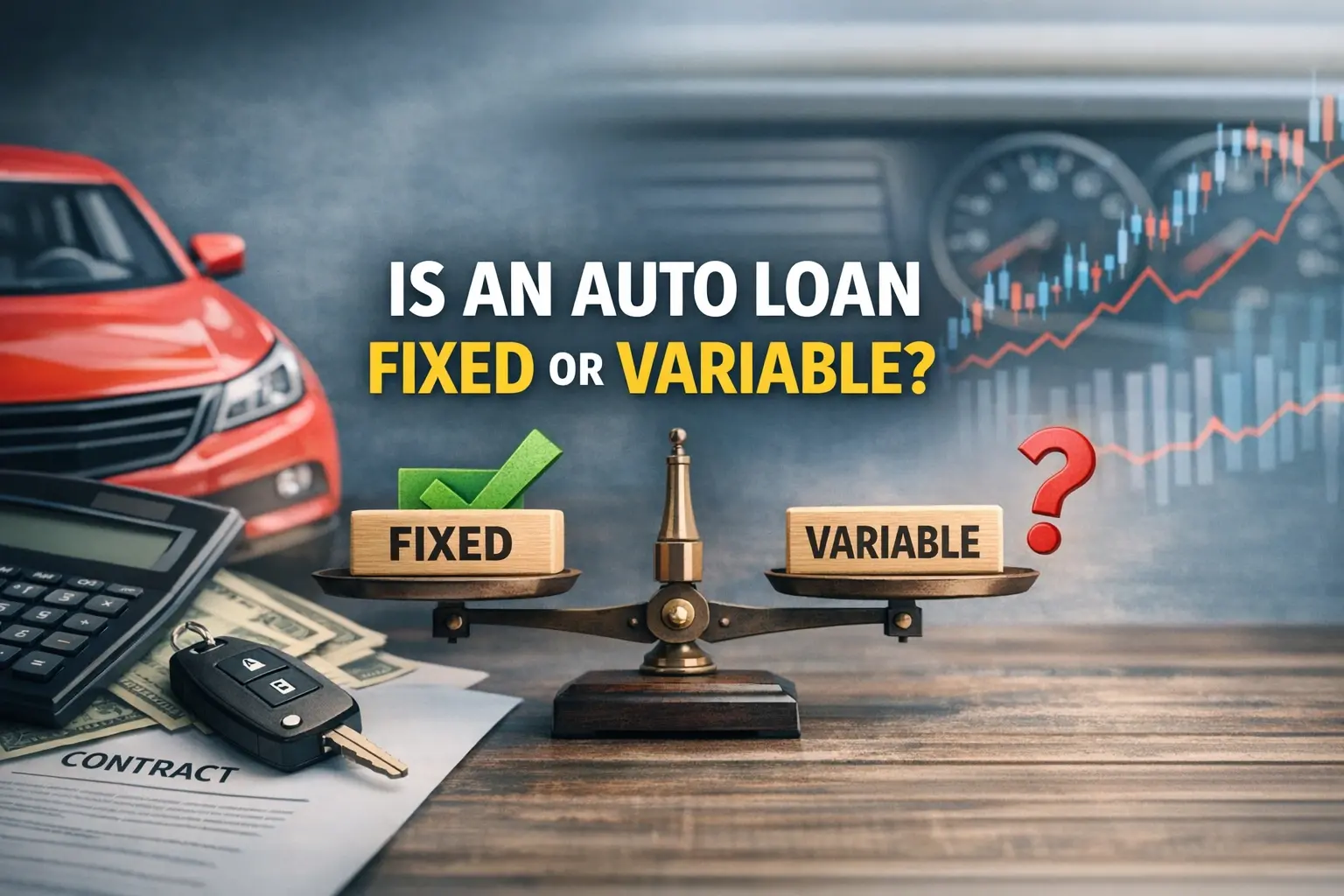
Understanding whether an auto loan is fixed or variable is crucial for budgeting and financial planning. This guide comprehensively breaks down the differences, pros, cons, and how to choose the right type for your next vehicle purchase, ensuring you make an informed decision.
Fixed vs. Variable Auto Loans: The Core Difference
When you're in the market for a new or used vehicle, securing financing is a significant step. A fundamental aspect of this financing is understanding the interest rate structure. The two primary types of auto loans are fixed-rate and variable-rate loans. The core difference lies in how the interest rate behaves over the life of the loan. A fixed-rate loan has an interest rate that remains the same from the moment you sign the contract until the loan is fully repaid. Conversely, a variable-rate loan has an interest rate that can fluctuate over time, typically tied to an external benchmark interest rate, such as the prime rate or the Secured Overnight Financing Rate (SOFR).
This distinction is not merely technical; it has profound implications for your monthly payments, the total interest you'll pay, and your overall financial predictability. For many consumers, especially those prioritizing budget stability, a fixed-rate loan is often the preferred choice. However, variable-rate loans can offer advantages in certain economic climates or for borrowers who anticipate paying off their loans quickly. This guide will delve deeply into each type, helping you discern which best aligns with your financial situation and risk tolerance.
Understanding Fixed-Rate Auto Loans
A fixed-rate auto loan is characterized by an interest rate that is set at the beginning of the loan term and never changes. This means your monthly principal and interest payment will remain consistent throughout the entire duration of the loan, whether it's for 36, 48, 60, or even 72 months. This predictability is the hallmark of a fixed-rate loan and is highly valued by borrowers who prefer to know exactly how much they will owe each month.
The primary advantage of a fixed-rate loan is budget stability. Knowing your payment won't increase provides peace of mind, especially in an uncertain economic environment. You can confidently factor this consistent payment into your monthly budget without worrying about unexpected hikes. This makes it easier to manage your personal finances and avoid cash flow surprises. Furthermore, if interest rates rise significantly after you've secured your loan, you'll be protected because your rate is locked in.
However, fixed-rate loans often come with a slightly higher initial interest rate compared to variable-rate loans offered at the same time. Lenders price this stability into the rate, as they are taking on the risk that rates might rise significantly, making their loan less profitable. This means that over the life of the loan, you might end up paying more in total interest if market rates fall substantially after you've locked in your fixed rate. Despite this, for the majority of car buyers, the security and predictability of a fixed payment outweigh the potential savings from a fluctuating rate.
How Fixed-Rate Loans Work
The interest rate for a fixed-rate auto loan is determined when you are approved for the loan. This rate is based on several factors, including your credit score, the loan term, the vehicle's age and value, and the lender's current market conditions. Once this rate is established, it is legally binding for the entire loan period. Each monthly payment you make consists of two parts: a portion that goes towards the principal (the amount you borrowed) and a portion that covers the interest charged for that period. In the early stages of a loan, a larger portion of your payment typically goes towards interest. As the loan progresses, more of your payment is applied to the principal, allowing you to build equity in your vehicle faster.
Advantages of Fixed-Rate Loans
Predictable Payments: Your monthly payment amount for principal and interest will never change, making budgeting straightforward.
Protection Against Rising Rates: If market interest rates increase, your loan rate remains the same, saving you money.
Simplicity: Easy to understand and manage, as there are no complex calculations based on fluctuating indices.
Peace of Mind: Eliminates the worry of unexpected increases in your car payment.
Disadvantages of Fixed-Rate Loans
Potentially Higher Initial Rate: Lenders often charge a slightly higher rate to compensate for the risk of future rate increases.
Missed Opportunity in Falling Rate Environments: If market interest rates drop significantly, you won't benefit from the lower rates unless you refinance.
Less Flexibility for Early Payoff Savings: While you can always pay extra, the fixed rate doesn't inherently incentivize rapid payoff as much as a variable rate might in a declining rate environment.
Understanding Variable-Rate Auto Loans
A variable-rate auto loan, also known as an adjustable-rate auto loan, features an interest rate that can change periodically throughout the loan's term. This rate is typically tied to a benchmark index, such as the prime rate, the SOFR, or a similar economic indicator. When the benchmark index moves, the interest rate on your loan may adjust accordingly. These adjustments usually occur at predetermined intervals, such as monthly, quarterly, or annually, as specified in your loan agreement.
The primary allure of variable-rate loans is the potential for a lower initial interest rate compared to fixed-rate loans. Lenders offer this lower starting rate because they are shifting the risk of future interest rate increases to the borrower. If the benchmark index decreases, your interest rate and, consequently, your monthly payments could also decrease, offering potential savings. This can be particularly attractive in an economic environment where interest rates are expected to fall or remain stable.
However, the significant downside is the inherent uncertainty. If market interest rates rise, your interest rate will also increase, leading to higher monthly payments. This can strain your budget and increase the total amount of interest you pay over the life of the loan. Variable-rate loans are generally less common for auto financing than for mortgages, as car loans are typically shorter-term and lenders prefer the stability they offer. When they are offered, they are often presented as an option for borrowers who are confident they can pay off the loan quickly or who have a strong tolerance for financial risk.
How Variable-Rate Loans Work
The interest rate on a variable-rate auto loan is composed of two parts: a benchmark index rate and a margin. The margin is a fixed percentage that the lender adds to the index rate. For example, if the prime rate is 5% and the lender's margin is 2%, your initial interest rate would be 7%. The prime rate or SOFR is what fluctuates. When the prime rate increases, your total interest rate increases by the same amount. Conversely, if the prime rate falls, your interest rate decreases. Your loan agreement will detail the specific index used, the margin, and the frequency of rate adjustments (e.g., monthly, quarterly, annually). Many variable-rate loans also have caps, which limit how much the interest rate can increase over a specific period (periodic cap) or over the entire life of the loan (lifetime cap).
Advantages of Variable-Rate Loans
Potentially Lower Initial Rate: Often starts with a lower interest rate than comparable fixed-rate loans.
Benefit from Falling Rates: If market interest rates decrease, your loan rate and monthly payments could also decrease, saving you money.
Good for Short-Term Borrowers: If you plan to pay off your loan well before its term ends, you might benefit from the lower initial rate without being exposed to long-term rate increases.
Disadvantages of Variable-Rate Loans
Unpredictable Payments: Monthly payments can increase if market interest rates rise, potentially straining your budget.
Risk of Higher Total Interest: If rates rise significantly, you could end up paying much more in interest over the loan's life than with a fixed-rate loan.
Complexity: Understanding how and when your rate will adjust can be more complex than with a fixed-rate loan.
Less Common for Auto Loans: Fewer lenders offer variable-rate options for auto financing compared to fixed rates.
Key Differences: Fixed vs. Variable at a Glance
To further clarify the distinctions, let's compare the core features of fixed-rate and variable-rate auto loans side-by-side. This comparison highlights the critical aspects that borrowers should consider when evaluating their financing options.
Feature
Fixed-Rate Auto Loan
Variable-Rate Auto Loan
Interest Rate Stability
The rate remains constant for the entire loan term.
The rate can change periodically based on a benchmark index.
Monthly Payments
Principal and interest payments are fixed and predictable.
Principal and interest payments can fluctuate.
Risk Exposure
Lender bears the risk of rising interest rates. Borrower is protected.
The borrower bears the risk of rising interest rates. Potential to benefit from falling rates.
Initial Interest Rate
Often slightly higher than variable rates.
Often lower than fixed rates.
Budgeting Impact
Excellent for stable budgeting and financial planning.
Can be challenging for budgeting due to potential payment changes.
Total Interest Paid
Predictable. May be higher if rates fall significantly.
Can be lower if rates fall, but potentially much higher if rates rise.
Commonality in Auto Loans
Very common and widely available.
Less common; offered by fewer lenders.
Ideal For
Borrowers prioritize stability, long-term planning, and risk aversion.
Borrowers are comfortable with risk, expecting rates to fall, or planning to pay off the loan quickly.
Pros and Cons: Which is Right for You?
Deciding between a fixed and variable auto loan boils down to your personal financial situation, risk tolerance, and outlook on future interest rate movements. There isn't a universally "better" option; the best choice is the one that aligns with your specific needs.
When a Fixed-Rate Auto Loan is Likely Better:
You prioritize budget certainty: If knowing your exact monthly car payment is essential for managing your household finances, a fixed rate is the clear winner.
You plan to keep the car for the full loan term: If you intend to pay off the loan over its entire duration, the stability of a fixed payment is invaluable.
You are risk-averse: You don't want to worry about potential increases in your car payment, regardless of market conditions.
Interest rates are currently low and expected to rise: Locking in a low fixed rate before potential increases can save you significant money.
You have a tight budget: Unexpected increases in loan payments can be detrimental to a strained budget.
When a Variable-Rate Auto Loan Might Be Considered:
You plan to pay off the loan very quickly: If you anticipate paying off the loan within the first year or two, you can benefit from the lower initial rate without being exposed to long-term rate hikes.
Interest rates are currently high and expected to fall: If you believe rates will drop significantly, a variable rate could lead to lower payments and less total interest paid.
You have a substantial emergency fund and a flexible budget: You can absorb potential payment increases without financial distress.
You are comfortable with financial risk: You understand and accept the possibility of higher payments in exchange for potential savings.
It's also worth noting that the auto loan market is dominated by fixed-rate products. Variable-rate auto loans are less common, and when they are available, they might come with specific conditions or be offered by niche lenders. Always read the loan terms carefully, paying close attention to how and when the rate can adjust, any caps on rate increases, and the specific benchmark index used.
Factors Influencing Your Auto Loan Choice
Beyond the fundamental difference between fixed and variable rates, several other factors play a significant role in determining which auto loan is best suited for you. These elements can impact the rate you qualify for, the loan terms available, and your overall borrowing experience.
1. Your Credit Score:
Your credit score is arguably the most critical factor. A higher credit score generally qualifies you for lower interest rates, whether fixed or variable. Lenders view borrowers with good credit as less risky, and they offer more favorable terms to attract and retain them. Conversely, a lower credit score will likely result in higher interest rates, making the total cost of borrowing more expensive.
2. Loan Term (Duration):
The length of the loan, often referred to as the loan term, significantly affects your monthly payments and the total interest paid. Longer loan terms (e.g., 72 or 84 months) result in lower monthly payments but mean you'll pay more interest over time. Shorter loan terms (e.g., 36 or 48 months) lead to higher monthly payments but less total interest paid. For fixed-rate loans, longer terms might come with slightly higher rates than shorter terms.
3. Loan Amount and Vehicle Value:
The amount you borrow and the value of the vehicle also influence loan terms. For larger loans or vehicles with lower resale value, lenders might be more cautious. A higher loan-to-value ratio (loan amount divided by vehicle value) can sometimes lead to higher interest rates or stricter qualification requirements.
4. Economic Conditions and Interest Rate Environment:
The prevailing interest rate environment is crucial, especially when considering variable-rate loans. If the Federal Reserve is signaling interest rate hikes, locking in a fixed rate might be wise. If rates are high and expected to fall, a variable rate could be more appealing. For 2025-26, economists are closely watching inflation trends and central bank policies, which will heavily influence interest rate directions.
5. Your Financial Goals and Risk Tolerance:
Are you saving for a down payment on a house, or do you have other significant financial obligations? Your overall financial picture and how much risk you're willing to take with your loan payments will guide your decision. If stability is paramount, a fixed rate is the logical choice.
6. Lender Type:
Banks, credit unions, and online lenders can all offer auto loans. Each may have slightly different rates, terms, and loan products. Credit unions, in particular, are often known for offering competitive rates to their members. Online lenders may offer greater convenience and speed.
How to Determine Your Auto Loan Type
Distinguishing between a fixed and variable auto loan is straightforward if you know where to look. The key is to carefully review the loan agreement provided by your lender before you sign it. This document is legally binding and contains all the essential details about your financing.
1. Read the Loan Agreement Thoroughly:
Your loan contract will explicitly state the type of interest rate. Look for terms like "fixed interest rate," "variable interest rate," "adjustable rate," or "index-based rate." If the rate is fixed, it will be stated as a specific percentage that will not change. If it's variable, the agreement will mention a benchmark index (e.g., prime rate, SOFR), a margin, and the frequency of rate adjustments.
2. Check the Interest Rate Section:
Loan agreements typically have a dedicated section detailing the interest rate. This section will clearly indicate whether the rate is fixed or variable. For variable rates, it will outline the formula for calculating the rate at each adjustment period.
3. Ask Your Lender Directly:
If you are unsure after reviewing the documents, or if the language is unclear, don't hesitate to ask your loan officer or the lender directly. They are obligated to explain the terms of the loan to you. You can ask specific questions like: "Is this a fixed-rate loan or a variable-rate loan?" and "Will my monthly payment ever change due to interest rate fluctuations?"
4. Look for an Index and Margin (for Variable Rates):
If the loan is variable, the agreement will typically mention a specific financial index (like the U.S. Prime Rate or SOFR) and a margin that is added to that index. The presence of these elements is a strong indicator that you are dealing with a variable-rate loan.
5. Understand the APR:
The Annual Percentage Rate (APR) represents the total cost of borrowing, including the interest rate and any fees. While the APR gives you an overall cost, it's essential to understand whether the underlying interest rate is fixed or variable, as this determines how the APR might change over time.
By diligently reviewing your loan documents and asking questions, you can confidently identify the type of auto loan you are considering and make an informed decision based on its characteristics.
The Crucial Role of Your Credit Score
Before you even start comparing loan types, understanding your credit score is paramount. It's the single most significant factor lenders consider when determining your eligibility for an auto loan and, crucially, the interest rate you'll be offered. A higher credit score signals to lenders that you are a responsible borrower with a history of managing debt effectively. This reduces their risk, allowing them to offer you more favorable terms, including lower interest rates on both fixed and variable loans.
For instance, a borrower with an excellent credit score (typically 740 and above) might qualify for a fixed auto loan rate as low as 4.5% to 6.0% in the current 2025 market, whereas someone with a fair credit score (around 580-669) might face rates from 10% to 15% or even higher. This difference can translate into thousands of dollars saved over the life of a typical car loan. Similarly, for variable-rate loans, a strong credit score will secure a lower starting rate and a smaller margin added to the benchmark index.
Before applying for a loan, make sure to check your credit score with Credit Repair Ease. They offer professional credit repair services that can help you understand your credit report, identify errors, and work towards improving your score. A higher score not only helps you secure better loan terms but also opens doors to other financial opportunities. Don't let a low score hold you back; reach out to Credit Repair Ease at (888) 803-7889 to take the first step towards a stronger financial future. Improving your credit score can significantly impact the total cost of your auto loan, making it a worthwhile investment in your financial well-being.
Auto Loan Market Trends and Predictions (2025-26)
The automotive financing landscape is dynamic, influenced by macroeconomic factors, monetary policy, and consumer demand. For 2025 and 2026, several trends are expected to shape the auto loan market, impacting both fixed and variable rates.
Interest Rate Environment:
Following a period of aggressive interest rate hikes by central banks to combat inflation, the outlook for 2025-26 suggests a potential stabilization or even a gradual decrease in benchmark rates. However, the exact trajectory will depend on inflation persistence, economic growth, and geopolitical events. If inflation remains stubbornly high, rates might stay elevated longer than anticipated. Conversely, a slowing economy could prompt rate cuts. This uncertainty makes predicting the optimal loan type challenging.
For fixed-rate loans: If rates are expected to rise or remain high, locking in a fixed rate sooner rather than later is advisable. Lenders will likely continue to price in the risk of future rate increases, potentially leading to slightly higher initial fixed rates compared to the lowest points seen in prior years.
For variable-rate loans: If the consensus is that rates will fall, variable-rate loans might become more attractive. However, the inherent volatility means borrowers must be prepared for potential short-term increases before any eventual decline. The average variable auto loan rate in 2025-26 is projected to be closely tied to the prime rate, which itself is influenced by the Federal Reserve's policy decisions.
Lender Competition and Product Offerings:
Competition among lenders – including traditional banks, credit unions, and online lenders – is expected to remain robust. This competition can lead to more attractive offers and potentially lower rates for well-qualified borrowers. We may see some lenders experiment more with variable-rate products for auto loans, especially if market conditions favor them, though fixed-rate loans are likely to remain the dominant offering due to consumer preference for stability.
Impact of Vehicle Prices and Inventory:
While vehicle inventory has improved significantly from the supply chain disruptions of previous years, elevated vehicle prices continue to be a factor. Higher car prices mean larger loan amounts, which in turn mean more interest paid over the life of the loan, regardless of rate type. This emphasizes the importance of securing the lowest possible interest rate. The average auto loan amount in 2025 is projected to remain high, potentially exceeding $40,000 for new vehicles.
Demand for Longer Loan Terms:
To keep monthly payments manageable amidst higher vehicle prices, demand for longer loan terms (72, 84, or even 96 months) is likely to persist. Lenders may continue to offer these extended terms, but borrowers should be aware that these significantly increase the total interest paid, especially with fixed rates. For variable rates, longer terms amplify the risk of sustained higher payments if rates increase.
Key Statistics (Projected for 2025-26):
Average New Car Loan Interest Rate (Fixed): Expected to range between 5.5% and 7.5%, depending on creditworthiness and market conditions.
Average Used Car Loan Interest Rate (Fixed): Likely to be 1.5% to 3% higher than new car rates, ranging from 7.0% to 10.0%.
Average Auto Loan Term: New cars around 70 months; Used cars around 65 months.
Average Loan Amount (New Car): Projected to be between $40,000 and $45,000.
Borrowers should stay informed about economic indicators and lender offerings throughout 2025-26 to make the most advantageous financing decision.
Tips for Securing the Best Auto Loan Rate
Securing the lowest possible interest rate on your auto loan can save you a substantial amount of money over the life of the loan. Whether you opt for a fixed or variable rate, employing smart strategies can significantly improve your chances of getting the best deal. Here are some actionable tips:
1. Improve Your Credit Score:
As discussed, your credit score is paramount. Before applying, take steps to improve it. Pay down existing debts, ensure all payments are made on time, and check your credit report for any errors that might be negatively impacting your score. Consider using Credit Repair Ease if you need professional assistance in this area.
2. Get Pre-Approved from Multiple Lenders:
Don't rely solely on the financing offered by the car dealership. Shop around and get pre-approved for an auto loan from several different sources: your bank, local credit unions, and reputable online lenders. This allows you to compare offers side-by-side and leverage competing rates to your advantage. Most pre-approval applications involve a soft credit pull, which won't harm your credit score.
3. Know Your Credit Score and Report:
Understand where you stand before you start applying. Obtain copies of your credit reports from the major bureaus (Equifax, Experian, TransUnion) and check your credit score. This knowledge will help you set realistic expectations and identify any issues that need addressing.
4. Consider a Shorter Loan Term:
While longer loan terms offer lower monthly payments, they come with higher total interest costs. If your budget allows, opt for a shorter loan term. This will not only reduce the total interest paid but often comes with a lower interest rate as well.
5. Make a Larger Down Payment:
A larger down payment reduces the amount you need to borrow, which lowers your loan-to-value ratio. This makes you a less risky borrower in the eyes of the lender, potentially leading to a better interest rate. A substantial down payment also means you'll have more equity in your vehicle from the start.
6. Negotiate the Interest Rate:
Once you have pre-approval from multiple lenders, you can use these offers as leverage. If the dealership's financing department offers you a rate that's higher than your pre-approved offers, let them know. They may be able to match or beat the rate to earn your business. Remember, the advertised rate is not always the final rate.
7. Avoid Unnecessary Add-ons:
Dealerships often try to sell add-on products like extended warranties, GAP insurance, or tire protection plans. While some of these might be beneficial, they can increase the total loan amount and sometimes come with high interest. Evaluate each add-on carefully and decide if it's worth financing.
8. Be Aware of Loan Fees:
Some loans come with origination fees, application fees, or other charges. Ensure you understand all associated costs when comparing loan offers. These fees can impact the overall Annual Percentage Rate (APR), so look at the APR rather than just the interest rate.
Conclusion: Making the Right Choice for Your Auto Loan
Navigating the world of auto loans, particularly the distinction between fixed and variable rates, is a critical step in responsible car ownership. As we've explored, a fixed-rate auto loan offers the unwavering predictability of consistent monthly payments, shielding you from the uncertainties of fluctuating market interest rates. This makes it an ideal choice for budget-conscious individuals and families who prioritize financial stability and peace of mind throughout the loan term. The security of knowing your payment won't change is invaluable for long-term financial planning.
Conversely, variable-rate auto loans present the possibility of lower initial rates and potential savings if market interest rates decline. However, this comes with the inherent risk of increased payments if rates rise, making them a more complex and potentially riskier option for many borrowers. Given the prevalence and consumer preference for stability, fixed-rate auto loans remain the dominant and often recommended choice for most car buyers in the 2025-26 market.
Ultimately, the best auto loan for you depends on your individual financial circumstances, risk tolerance, and economic outlook. Before making any decisions, thoroughly research your options, understand your credit score, and compare offers from multiple lenders. By arming yourself with knowledge and applying the strategies outlined in this guide, you can confidently secure an auto loan that aligns perfectly with your financial goals and drives you towards a successful vehicle purchase. Remember to always read the fine print and ask questions to ensure you fully comprehend the terms of your loan agreement.
null
Is An Auto Loan Fixed Or Variable

Krystin Bresolin