-
Posted on: 28 Feb 2026
-
Understanding whether an auto loan is secured or unsecured is fundamental to comprehending the risks and benefits involved. This knowledge empowers you to make informed decisions when financing your next vehicle, ensuring you secure the best possible terms and protect your financial well-being.
Understanding Auto Loans: Secured vs. Unsecured
When you're in the market for a new or used vehicle, financing is often a necessary step. Auto loans are the most common way to achieve this, but not all auto loans are created equal. The distinction between a secured and an unsecured loan is crucial, impacting everything from interest rates and approval chances to the potential consequences of default. This comprehensive guide will demystify the nature of auto loans, specifically addressing the question: "Is an auto loan secured or unsecured?" We'll delve into the mechanics of loan security, explore why auto loans overwhelmingly fall into one category, and what this means for you as a borrower.
The Core Question: Are Auto Loans Secured or Unsecured?
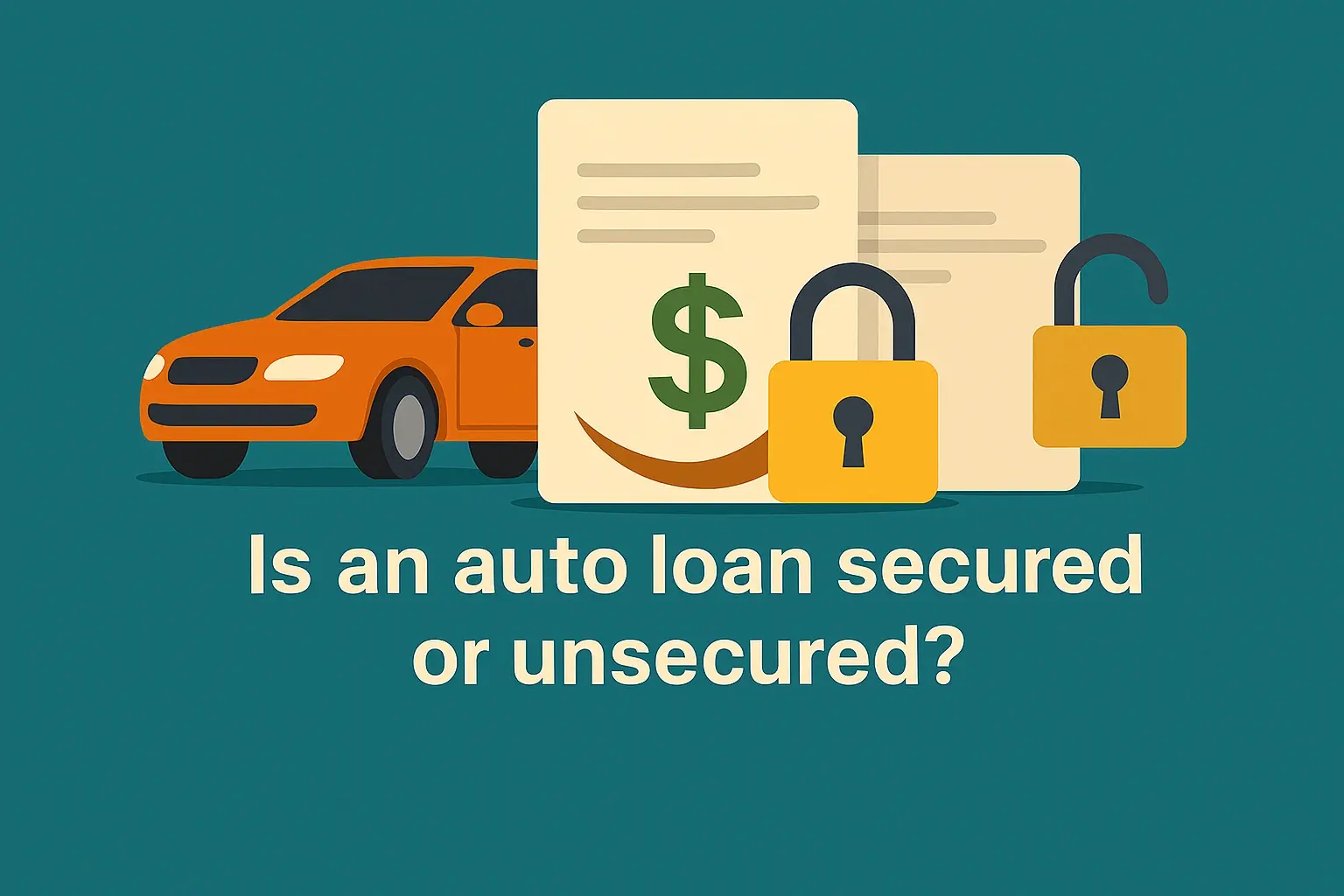
The straightforward answer is that auto loans are overwhelmingly secured loans. This means that the loan is backed by collateral, which in this case is the vehicle itself. Lenders provide the funds to purchase the car, and in return, they hold a lien on the vehicle's title until the loan is fully repaid. If the borrower defaults on the loan payments, the lender has the legal right to repossess the vehicle to recover their losses.
What Makes a Loan Secured?
A loan is classified as "secured" when the borrower pledges an asset as collateral. This collateral serves as a guarantee for the lender. If the borrower fails to meet their repayment obligations, the lender can seize and sell the collateral to recoup the outstanding debt. The value of the collateral is typically commensurate with the loan amount, providing a safety net for the lender.
The Role of Collateral in Secured Loans
Collateral is the cornerstone of a secured loan. It mitigates the risk for the lender. For example, in a mortgage, the house is the collateral. In a secured personal loan, it might be savings, stocks, or other valuable assets. For auto loans, the purchased vehicle acts as this vital collateral. This security allows lenders to offer more favorable terms, such as lower interest rates, because their potential losses are minimized.
Unsecured Loans Explained
In contrast, an unsecured loan is not backed by any collateral. The lender's decision to approve an unsecured loan is based solely on the borrower's creditworthiness, including their credit score, income, and debt-to-income ratio. Because there is no asset to seize in case of default, unsecured loans carry a higher risk for the lender. Consequently, they typically come with higher interest rates and stricter eligibility requirements compared to secured loans.
Examples of Unsecured Loans
Common examples of unsecured loans include:
Personal loans
Credit cards
Student loans (in many cases)
These loans rely entirely on the borrower's promise to repay, backed by their credit history and financial stability.
Why Auto Loans Are Typically Secured
The nature of purchasing a vehicle makes it a prime candidate for secured lending. Cars are significant purchases, often costing tens of thousands of dollars. For lenders, providing such a substantial sum without any form of security would be an exceptionally high-risk proposition. The value of a vehicle depreciates over time, meaning that by the time a loan is repaid, the car is worth less than when it was purchased. This depreciation further reinforces the need for collateral.
The Vehicle as Collateral
When you take out an auto loan, the vehicle you are purchasing serves as the collateral. The lender places a lien on the title of the car. This lien is a legal claim that prevents you from selling or transferring ownership of the vehicle until the loan is paid off. The lien is officially recorded with the relevant state authorities. Once the loan is fully repaid, the lender releases the lien, and you receive a clear title, signifying full ownership.
Implications of a Secured Loan
The secured nature of auto loans has several key implications for borrowers:
Repossession Risk: The most significant implication is the risk of repossession. If you miss payments or violate other terms of your loan agreement, the lender can take back the car.
Easier Approval: Because the loan is secured, lenders are often more willing to approve applications, even for borrowers with less-than-perfect credit histories, though terms will reflect this.
Lower Interest Rates: Secured loans generally have lower interest rates than unsecured loans, making them more affordable over the life of the loan.
Benefits of Secured Auto Loans for Lenders
From a lender's perspective, secured auto loans offer several advantages:
Reduced Risk: The primary benefit is the reduced risk of financial loss. The collateral provides a means to recover the outstanding loan amount if the borrower defaults.
Increased Loan Volume: The lower risk profile allows lenders to extend credit to a broader range of borrowers, increasing their overall loan volume.
Predictable Returns: Secured loans tend to have more predictable repayment patterns, contributing to a stable revenue stream for financial institutions.
Risks for Borrowers with Secured Loans
While beneficial for lenders, secured loans present specific risks for borrowers:
Loss of Collateral: The most obvious risk is losing the asset used as collateral. For an auto loan, this means losing the car, which can severely disrupt transportation and daily life.
Impact on Credit Score: Defaulting on a secured loan not only leads to repossession but also significantly damages the borrower's credit score, making future borrowing more difficult and expensive.
Negative Equity: Cars depreciate quickly. If you owe more on your loan than the car is worth (negative equity), and you need to sell it or it's repossessed, you might still owe the lender money after the sale of the collateral.
Can Auto Loans Ever Be Unsecured?
While rare, there are specific scenarios where an auto loan might function more like an unsecured loan, or where the collateral is less direct. These are typically niche situations and not the standard practice for most car purchases.
Exceptions and Special Cases
Personal Loans for Car Purchases: Some individuals opt to take out a personal loan to purchase a vehicle. Personal loans are typically unsecured. In this case, the car itself is not pledged as collateral to the lender providing the personal loan. However, the interest rates on unsecured personal loans are generally higher than those for secured auto loans. This is a way to indirectly finance a car without pledging the vehicle, but it comes at a higher cost.
"Signature Loans" for Vehicles: In very limited circumstances, particularly for borrowers with exceptional credit, a lender might offer a "signature loan" for a vehicle. This is essentially an unsecured loan where repayment is based solely on the borrower's signature and creditworthiness. These are uncommon for typical car purchases and are usually reserved for smaller amounts or for borrowers with a very strong financial profile.
Leasing vs. Buying: While not a direct auto loan, car leasing involves a different financial arrangement. You are essentially paying for the use of the car over a set period, not for ownership. The leasing company retains ownership of the vehicle, and your payments are based on the car's expected depreciation. While not a secured loan in the traditional sense of you owning the collateral, the leasing company has full ownership and recourse.
Understanding Your Loan Agreement
Regardless of whether a loan is secured or unsecured, it is paramount to thoroughly read and understand all terms and conditions before signing. The loan agreement is a legally binding contract that outlines your obligations and the lender's rights.
Factors Influencing Loan Type
Several factors can influence the type of loan offered and its terms, even within the realm of auto financing:
Credit Score and Loan Security
Your credit score is a primary determinant of loan eligibility and terms. A higher credit score indicates a lower risk to the lender, potentially opening doors to more favorable options, including potentially better terms on a secured loan or, in very rare cases, an unsecured option. Conversely, a lower credit score typically means you'll be offered secured loans, as the collateral offsets the lender's increased risk.
Loan Amount and Term
Larger loan amounts generally necessitate secured financing to protect the lender. The loan term (how long you have to repay) can also play a role. Longer terms might be more common with secured loans, where the lender has the vehicle as collateral over an extended period.
Lender Policies
Each financial institution has its own underwriting criteria and risk tolerance. Some lenders might be more conservative and exclusively offer secured auto loans, while others might have specific programs or exceptions for certain borrower profiles.
The Application Process for Auto Loans
The process for obtaining an auto loan, whether secured or unsecured, involves several key steps. Understanding these steps can help you prepare and navigate the application smoothly.
What Lenders Look For
Lenders evaluate several factors to determine your eligibility and the terms of your loan:
Credit Score: As mentioned, this is crucial. Scores typically range from 300 to 850, with higher scores indicating better creditworthiness. For 2025-26, lenders are often looking for scores above 660 for prime auto loans, though subprime options exist with higher rates.
Income and Employment Stability: Lenders want to ensure you have a reliable source of income to make payments. They will often ask for proof of income (pay stubs, tax returns) and may check your employment history. A debt-to-income ratio (DTI) below 43% is often a benchmark.
Loan-to-Value (LTV) Ratio: This compares the loan amount to the value of the vehicle. For secured auto loans, lenders typically prefer an LTV of 80-90% or lower, meaning you might need a down payment.
Down Payment: While not always mandatory, a down payment reduces the loan amount and the lender's risk, often leading to better terms. For 2025-26, lenders are increasingly encouraging down payments, especially for used vehicles.
Vehicle Age and Mileage: For used cars, the age and mileage can affect the loan terms. Older cars with higher mileage may have higher interest rates or shorter loan terms.
Credit Check Reminder
Before you even begin the application process, it's vital to understand your financial standing. Checking your credit score and report is a critical first step. This allows you to identify any potential errors that could negatively impact your application and gives you a realistic picture of what loan terms you might qualify for. If you find issues or simply want to improve your credit health before applying for a loan, consider seeking professional assistance. For expert guidance and support in navigating your credit report and improving your score, reach out to Credit Repair Ease. They offer professional credit repair services designed to help you achieve your financial goals. You can call them at (888) 803-7889 to learn more about how they can assist you.
Understanding Interest Rates and Fees
Interest rates and fees are significant components of any loan, directly impacting the total cost of borrowing. The secured nature of an auto loan plays a direct role in these figures.
How Loan Security Affects Rates
As established, secured loans, like auto loans, generally carry lower interest rates than unsecured loans. This is because the collateral reduces the lender's risk. If the borrower defaults, the lender can recover their funds by selling the vehicle. This reduced risk translates into a lower Annual Percentage Rate (APR) for the borrower.
Typical Interest Rates for Auto Loans (2025-26)
Interest rates for auto loans in 2025-26 continue to be influenced by the Federal Reserve's monetary policy, inflation, and economic conditions. Based on current trends and projections:
Excellent Credit (780+): Expect rates in the range of 4.5% to 6.5% APR.
Good Credit (660-779): Rates typically fall between 6.5% and 9.5% APR.
Fair Credit (600-659): Rates can range from 10% to 15% APR.
Poor Credit (Below 600): Rates can exceed 15% APR, sometimes reaching 20% or higher, and may require a larger down payment or co-signer.
These are estimates, and actual rates can vary significantly based on the lender, loan term, and specific vehicle. New cars generally receive slightly lower rates than used cars.
Fees Associated with Auto Loans
Beyond interest, be aware of potential fees:
Origination Fees: A fee charged by the lender for processing the loan.
Documentation Fees: Fees for preparing and processing loan documents.
Late Payment Fees: Penalties for missing a payment deadline.
Prepayment Penalties: Some loans charge a fee if you pay off the loan early. (Less common now, but always check.
Title Transfer Fees: Fees associated with transferring the vehicle title.
Always ask lenders to provide a full breakdown of all fees associated with the loan.
Comparing Secured and Unsecured Loan Features
To solidify your understanding, let's compare the key features of secured auto loans versus hypothetical unsecured auto loans.
Key Differences at a Glance
Feature
Secured Auto Loan
Unsecured Auto Loan (Hypothetical/Personal Loan)
Collateral Required
Yes (the vehicle)
No
Risk to Lender
Lower
Higher
Typical Interest Rates (APR)
Lower (e.g., 4.5% - 15%+)
Higher (e.g., 7% - 30%+)
Loan Amounts
Generally higher, tied to vehicle value
Often lower, based on creditworthiness
Approval Requirements
More accessible, especially with collateral
Stricter, heavily reliant on credit score
Consequence of Default
Repossession of vehicle, credit damage
Credit damage, potential legal action, wage garnishment
Pros and Cons for Borrowers
Secured Auto Loans:
Pros: Lower interest rates, potentially easier approval for those with less-than-perfect credit, and allows financing of larger amounts.
Cons: Risk of losing the vehicle if payments are missed, and the vehicle is tied up as collateral until the loan is paid off.
Unsecured Loans (used for car purchases):
Pros: No risk of losing the vehicle to repossession by the loan provider (though other debts could lead to asset seizure), more flexibility if you want to sell the car before paying off the loan (though you still owe the debt).
Cons: Significantly higher interest rates, stricter approval criteria, often limited to smaller loan amounts, default can lead to severe credit damage and legal action.
Making the Right Choice for Your Auto Loan
The decision of how to finance your vehicle hinges on your individual financial situation, creditworthiness, and risk tolerance. For the vast majority of car buyers, a secured auto loan is the most practical and cost-effective option. The lower interest rates can save you thousands of dollars over the life of the loan.
However, it's crucial to be realistic about your ability to make payments. Before committing to any loan, ask yourself:
Can I comfortably afford the monthly payments, including insurance and maintenance?
Do I have a stable income and a plan for unexpected expenses?
Have I shopped around with multiple lenders to compare rates and terms?
Consider your credit score. If your credit is strong, you'll likely qualify for excellent rates on a secured loan. If your credit needs improvement, focus on that first. Resources like Credit Repair Ease can be invaluable in understanding and improving your credit profile before you apply for financing.
Conclusion: Securing Your Financial Future
In summary, the answer to "Is an auto loan secured or unsecured?" is unequivocally that auto loans are overwhelmingly secured. The vehicle you purchase serves as collateral, providing a safety net for lenders and enabling them to offer more favorable interest rates and loan terms. While rare exceptions exist, understanding the secured nature of auto loans is key to navigating the financing process effectively.
By recognizing the implications of collateral, borrowers can better assess the risks and benefits. While the risk of repossession is real, the lower costs associated with secured loans often make them the most financially sensible choice. Always prioritize understanding your loan agreement, comparing offers from multiple lenders, and ensuring you can meet your repayment obligations. A well-informed approach to auto financing is a vital step in securing your financial future and driving away with confidence.
null
Is A Auto Loan Secured Or Unsecured

Krystin Bresolin