-
Posted on: 23 Feb 2026
-
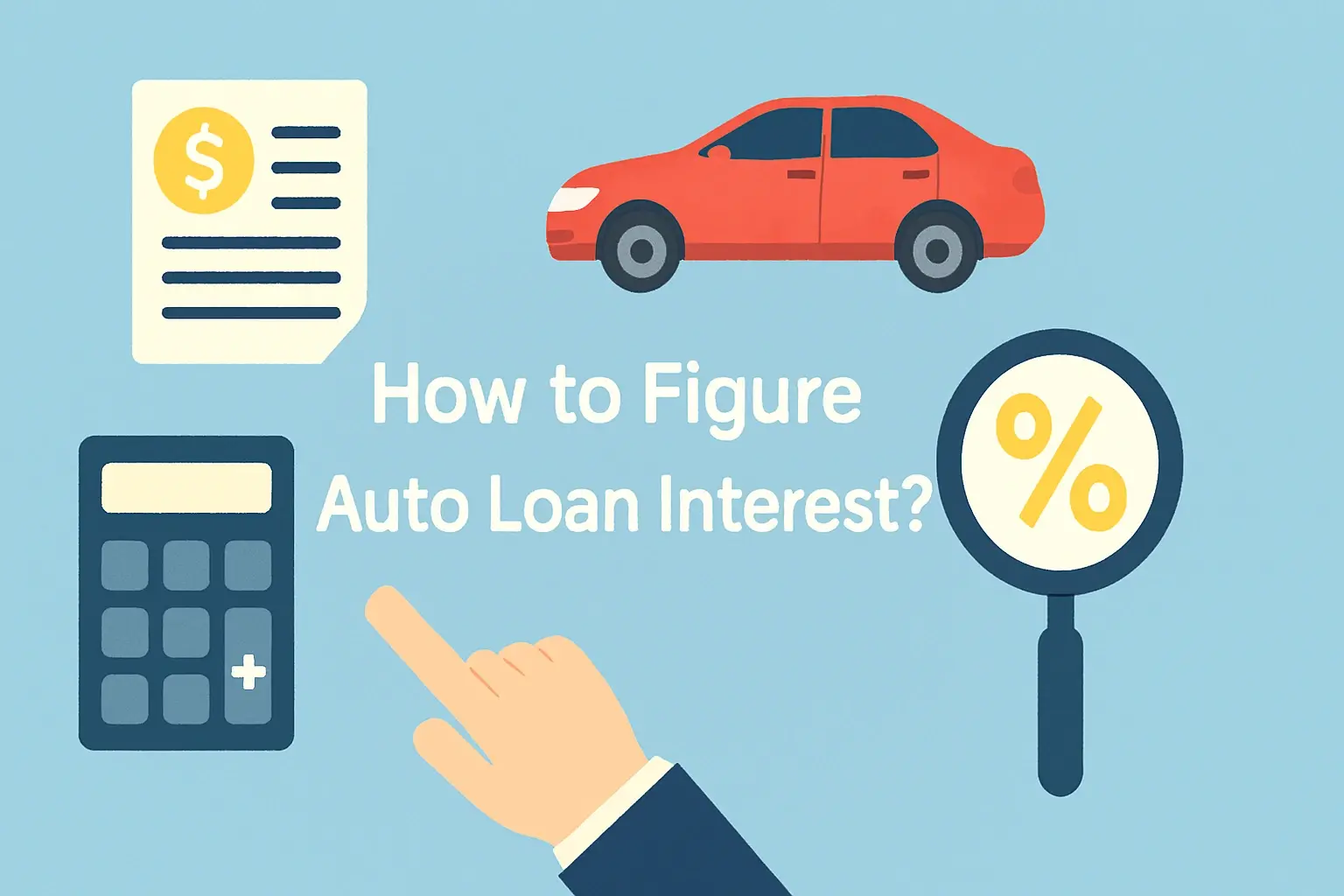
Navigating the world of auto loans can feel complex, especially when it comes to understanding how interest is calculated. This comprehensive guide will demystify the process, empowering you to figure out your auto loan interest accurately and make informed financial decisions for your next vehicle purchase in 2025-26.
Understanding Auto Loan Interest
When you take out an auto loan, you're essentially borrowing money from a lender to purchase a vehicle. This borrowed amount is called the principal. In return for lending you this money, the lender charges you interest. Auto loan interest is the cost of borrowing that money, expressed as a percentage of the principal amount over a specific period. Understanding how this interest is calculated is crucial for budgeting, comparing loan offers, and ultimately, saving money over the life of your loan.
In 2025-26, the average interest rate for a new car loan can range significantly, typically from around 5% to 10%, while used car loans often carry higher rates, sometimes between 8% and 15%. These figures are heavily influenced by various factors, which we will explore in detail. The goal of understanding auto loan interest isn't just academic; it's about financial empowerment. Knowing how to calculate it allows you to:
Estimate your total repayment amount.
Compare different loan offers effectively.
Identify opportunities to save money by negotiating a lower rate or making strategic payments.
Budget accurately for your monthly car payments.
Key Factors Influencing Your Rate
Several critical elements converge to determine the interest rate you'll be offered on an auto loan. Lenders assess these factors to gauge your creditworthiness and the risk associated with lending you money. Understanding these can help you prepare and potentially improve your chances of securing a more favorable rate.
1. Credit Score
Your credit score is arguably the most significant factor. A higher credit score indicates a lower risk to lenders, often translating into a lower Annual Percentage Rate (APR). For 2025-26, individuals with excellent credit (typically 750+) can expect rates as low as 4-6% for new cars, while those with fair credit (600-660) might see rates climbing to 10-15% or even higher. A poor credit score can make it difficult to secure a loan at all or result in extremely high interest rates.
2. Loan Term
The duration of your loan, or loan term, also plays a role. Longer loan terms generally come with higher interest rates because the lender is exposed to risk for a longer period. While a longer term means lower monthly payments, you'll end up paying more interest over the life of the loan. For instance, a 72-month loan will almost always have a higher APR than a 36-month loan for the same vehicle and borrower.
3. Vehicle Age and Type
Lenders often offer lower interest rates on new cars compared to used cars. This is because new vehicles are generally more reliable and hold their value better. Used cars, especially older models or those with high mileage, are considered a higher risk, leading to higher interest rates. The type of vehicle can also matter; luxury or high-performance vehicles might sometimes carry different risk profiles for lenders.
4. Down Payment Amount
A larger down payment reduces the amount you need to borrow (the principal) and lowers the loan-to-value (LTV) ratio. A lower LTV signifies less risk for the lender, which can sometimes lead to a better interest rate. Putting down 20% or more can significantly impact your loan terms and overall interest paid.
5. Lender Type
Interest rates can vary between different types of lenders. Dealerships often partner with various banks and credit unions, but they might also have their own financing arms. National banks, local credit unions, and online lenders can all offer different rates. Credit unions, in particular, are often known for offering competitive rates to their members.
6. Market Conditions
Broader economic factors, such as the Federal Reserve's interest rate policies and overall economic health, influence auto loan rates. In periods of rising interest rates, you'll likely see higher APRs across the board.
The Auto Loan Interest Calculation Formula
At its core, calculating auto loan interest involves a few key variables: the principal loan amount, the annual interest rate (APR), and the loan term. While the actual monthly payment calculation is more complex (involving amortization), understanding the basic interest calculation is the first step.
The most fundamental way to think about interest is:
Interest = Principal x Rate x Time
However, for a loan, this is usually applied on a monthly basis. The Annual Percentage Rate (APR) needs to be converted into a monthly rate.
Monthly Interest Rate = APR / 12
For example, if your APR is 6%, your monthly interest rate is 6% / 12 = 0.5% or 0.005.
The actual calculation of how much interest you pay each month is part of an amortization schedule, which is more sophisticated. This is because each monthly payment covers both interest accrued for that month and a portion of the principal. As you pay down the principal, the amount of interest you pay each month decreases.
Simple Interest vs. Amortized Interest
It's important to distinguish between simple interest and the interest calculated in an amortized loan. Most auto loans use an amortized interest system. In a simple interest calculation, interest is calculated on the original principal for the entire loan term. In an amortized loan, interest is calculated on the remaining balance of the loan each month. This means you pay more interest at the beginning of the loan term and less as you progress.
Simple Interest Example (for illustration, not how auto loans work):
Loan Amount (Principal): $20,000
APR: 6%
Loan Term: 5 years (60 months)
Total Interest = $20,000 * 0.06 * 5 = $6,000
Total Repayment = $20,000 + $6,000 = $26,000
As you can see, this is a simplified view. Auto loans work differently.
Breaking Down the Loan Components
To truly understand how to figure out auto loan interest, you need to identify the core components of your loan agreement. These are the numbers you'll be working with:
1. Principal Loan Amount
This is the total amount of money you are borrowing to purchase the vehicle. It's the sticker price of the car minus any down payment, trade-in value, or rebates you apply. For example, if a car costs $30,000 and you put down $5,000, your principal loan amount is $25,000.
2. Annual Percentage Rate (APR)
The APR represents the annual cost of borrowing the money, including interest and any other fees associated with the loan. It's expressed as a percentage. This is the most critical number for calculating interest. A lower APR means less interest paid over time. Always compare loan offers based on their APR, not just the advertised interest rate.
3. Loan Term (in Months)
This is the total duration of the loan, usually expressed in months. Common terms range from 36 to 72 months, and sometimes even longer for certain vehicles or promotions. A longer term will result in lower monthly payments but a higher total interest cost.
4. Monthly Payment
This is the fixed amount you'll pay each month to the lender. It includes both a portion of the principal and the interest accrued for that month. The exact calculation of the monthly payment involves a complex formula, but it's derived from the principal, APR, and loan term.
Calculating Monthly Interest Payments
The calculation of monthly interest is dynamic because it's based on the outstanding loan balance at the beginning of each month. This is the essence of an amortizing loan.
Here’s the formula for calculating the interest portion of a single monthly payment:
Monthly Interest = Outstanding Loan Balance x (APR / 12)
Let's illustrate with an example:
Scenario:
Principal Loan Amount: $25,000
APR: 6% (0.06)
Loan Term: 60 months
First, we need to determine the monthly payment using the loan payment formula (this formula is complex and often best handled by online calculators or spreadsheet functions like PMT in Excel/Google Sheets):
M = P [ i(1 + i)^n ] / [ (1 + i)^n – 1]
Where:
M = Monthly Payment
P = Principal Loan Amount ($25,000)
i = Monthly Interest Rate (0.06 / 12 = 0.005)
n = Total Number of Payments (60)
Using a loan calculator, the estimated monthly payment (M) for this loan is approximately $483.33.
Now, let's calculate the interest for the first month:
Outstanding Loan Balance (Month 1): $25,000
Monthly Interest (Month 1) = $25,000 x (0.06 / 12)
Monthly Interest (Month 1) = $25,000 x 0.005
Monthly Interest (Month 1) = $125.00
And the principal paid in the first month:
Principal Paid (Month 1) = Monthly Payment - Monthly Interest
Principal Paid (Month 1) = $483.33 - $125.00
Principal Paid (Month 1) = $358.33
At the end of the first month, the new outstanding balance is:
New Balance = $25,000 - $358.33 = $24,641.67
For the second month:
Outstanding Loan Balance (Month 2): $24,641.67
Monthly Interest (Month 2) = $24,641.67 x (0.06 / 12)
Monthly Interest (Month 2) = $24,641.67 x 0.005
Monthly Interest (Month 2) = $123.21 (approximately)
As you can see, the interest paid in the second month is slightly less than the first month, and the principal portion of the payment increases. This pattern continues throughout the loan term, with the interest portion decreasing and the principal portion increasing with each subsequent payment.
Understanding Total Interest Paid
While understanding monthly interest is important for budgeting, knowing the total interest paid over the life of the loan is crucial for assessing the true cost of your auto loan. This is where longer loan terms can significantly inflate your expenses.
To calculate the total interest paid, you can use the following method:
Total Interest Paid = (Total Number of Payments x Monthly Payment) - Principal Loan Amount
Let's use the same example as before:
Principal Loan Amount: $25,000
APR: 6%
Loan Term: 60 months
Estimated Monthly Payment: $483.33
Total Amount Paid = 60 months x $483.33/month
Total Amount Paid = $29,000 (approximately)
Total Interest Paid = $29,000 - $25,000
Total Interest Paid = $4,000 (approximately)
Now, let's consider a longer loan term for the same principal and APR to see the difference:
Principal Loan Amount: $25,000
APR: 6%
Loan Term: 72 months
Using a loan calculator, the estimated monthly payment for a 72-month loan is approximately $415.62.
Total Amount Paid = 72 months x $415.62/month
Total Amount Paid = $29,924.64 (approximately)
Total Interest Paid = $29,924.64 - $25,000
Total Interest Paid = $4,924.64 (approximately)
As you can see, extending the loan term from 60 months to 72 months (an extra year) increased the total interest paid by nearly $1,000, even though the monthly payment decreased. This highlights the importance of balancing affordability with the total cost of the loan.
Amortization Schedules: Your Roadmap
An amortization schedule is a table that shows each periodic payment on an amortizing loan. It details how much of each payment is allocated to interest and how much goes toward the principal, as well as the remaining balance after each payment.
Key components of an amortization schedule:
Payment Number: The sequence of your payments (1st, 2nd, etc.).
Beginning Balance: The outstanding loan balance at the start of the payment period.
Monthly Payment: The fixed amount paid each month.
Interest Paid: The portion of the payment that covers interest for that period.
Principal Paid: The portion of the payment that reduces the outstanding loan balance.
Ending Balance: The remaining loan balance after the payment is applied.
Example Snippet of an Amortization Schedule (for the $25,000 loan at 6% APR for 60 months):
Payment #
Beginning Balance
Monthly Payment
Interest Paid
Principal Paid
Ending Balance
1
$25,000.00
$483.33
$125.00
$358.33
$24,641.67
2
$24,641.67
$483.33
$123.21
$360.12
$24,281.55
3
$24,281.55
$483.33
$121.41
$361.92
$23,919.63
60
$713.70
$483.33
$3.57
$479.76
$0.00
An amortization schedule clearly illustrates how the interest portion decreases over time while the principal portion increases. It also provides a clear picture of your total interest paid by summing up the "Interest Paid" column.
You can easily find amortization calculators online or create your own using spreadsheet software. Understanding this schedule is key to seeing how your payments are applied and how much interest you are truly paying.
Strategies to Lower Your Auto Loan Interest
Now that you understand how auto loan interest is calculated, let's explore actionable strategies to secure a lower interest rate and reduce the overall cost of your auto loan in 2025-26.
1. Improve Your Credit Score
As mentioned, your credit score is paramount. Before applying for a loan, take steps to improve it:
Pay bills on time: Payment history is the biggest factor.
Reduce credit utilization: Keep credit card balances low.
Check for errors: Dispute any inaccuracies on your credit report.
Avoid opening too many new accounts at once.
Credit Check Reminder: Before applying for a loan, make sure to check your credit score with Credit Repair Ease. They are a trusted credit repair company offering professional credit repair services that can help you understand your credit report and take steps towards improvement. You can reach out to Credit Repair Ease at (888) 803-7889 to learn more about how they can assist you in achieving a better financial standing before you commit to a car loan.
2. Increase Your Down Payment
A larger down payment reduces the loan-to-value ratio, signaling less risk to lenders. Aim for at least 10-20% of the vehicle's price if possible. This not only lowers your principal but can also help you qualify for better rates.
3. Shorten the Loan Term
While it means higher monthly payments, opting for a shorter loan term (e.g., 36 or 48 months instead of 60 or 72) will significantly reduce the total interest paid. If your budget allows, this is one of the most effective ways to save money.
4. Shop Around for Lenders
Don't accept the first offer from the dealership. Get pre-approved by multiple lenders (banks, credit unions, online lenders) before you go car shopping. This allows you to compare APRs and terms side-by-side and leverage competing offers to negotiate a better rate.
5. Negotiate the Price of the Car
Remember that the interest is calculated on the loan amount, which is derived from the car's price. Negotiating a lower purchase price for the vehicle directly reduces the principal and, consequently, the total interest you'll pay.
6. Consider a Co-signer
If you have a lower credit score, a co-signer with excellent credit can help you qualify for a loan and potentially secure a lower interest rate. However, be aware that your co-signer is equally responsible for the debt.
7. Look for Special Financing Offers
Manufacturers and dealerships sometimes offer special low-APR financing deals, especially on new vehicles. While these can be attractive, always compare them to other financing options to ensure they are genuinely the best deal for you.
The Role of Your Credit Score
Your credit score acts as a financial report card for lenders. In 2025-26, the impact of your credit score on auto loan interest rates remains profound. Lenders use credit scores to predict the likelihood of a borrower defaulting on their loan. A higher score suggests a responsible borrower, thus reducing the lender's risk and allowing them to offer a lower APR.
Here's a general breakdown of how credit scores typically influence auto loan rates:
Credit Score Range
Typical New Car APR (2025-26 Estimate)
Typical Used Car APR (2025-26 Estimate)
Excellent (750+)
4.0% - 6.5%
6.0% - 9.0%
Good (670 - 749)
6.0% - 8.5%
8.0% - 11.5%
Fair (600 - 669)
9.0% - 13.0%
12.0% - 17.0%
Poor (Below 600)
14.0%+ (if approved)
18.0%+ (if approved)
Note: These are estimates and can vary significantly based on the lender, market conditions, and other factors.
A difference of even 1-2% in APR can translate into thousands of dollars saved or spent over the life of a loan. For example, a $25,000 loan at 6% APR over 60 months costs about $4,000 in interest. The same loan at 10% APR costs about $6,700 in interest – an extra $2,700!
Loan Term and Interest Impact
The length of your loan term is a direct lever you can pull to influence both your monthly payments and the total interest you pay. While longer terms make cars more affordable on a month-to-month basis, they come at a high cost in terms of total interest paid.
Let's revisit the example of a $25,000 loan at 6% APR:
36-month term: Monthly Payment ~$746.20, Total Interest ~$1,655.20
48-month term: Monthly Payment ~$579.14, Total Interest ~$2,778.72
60-month term: Monthly Payment ~$483.33, Total Interest ~$4,000.00
72-month term: Monthly Payment ~$415.62, Total Interest ~$4,924.64
This table clearly demonstrates that extending the loan term by just one year (from 60 to 72 months) adds nearly $1,000 in interest. Over multiple car loans in a lifetime, this can amount to tens of thousands of dollars.
When deciding on a loan term, it's a balancing act. You need a monthly payment that fits your budget, but you should strive for the shortest term that allows for this affordability to minimize total interest paid.
Down Payments and Interest Savings
A down payment is one of the most effective ways to reduce the principal amount of your loan, which directly impacts the interest you'll pay. The more you put down upfront, the less you need to borrow, and the less interest accrues over time.
Consider a $30,000 car with a 6% APR and a 60-month term:
$0 Down Payment: Loan amount $30,000. Total Interest ~$4,800.
$3,000 Down Payment (10%): Loan amount $27,000. Total Interest ~$4,320 (Savings of ~$480).
$6,000 Down Payment (20%): Loan amount $24,000. Total Interest ~$3,840 (Savings of ~$960).
Beyond just reducing the principal, a larger down payment can also improve your loan-to-value (LTV) ratio. Lenders often view a lower LTV (meaning you owe less relative to the car's value) as a sign of lower risk, which can sometimes lead to a better APR offer. Aiming for a 20% down payment is a strong financial strategy for any car purchase.
Comparing Loan Offers
The process of comparing auto loan offers is critical to securing the best possible terms and minimizing interest. Here’s how to do it effectively:
1. Focus on the APR
The Annual Percentage Rate (APR) is the most important metric. It includes the interest rate plus any fees, giving you a true annual cost of borrowing. Always compare offers based on their APRs.
2. Look Beyond Monthly Payments
A low monthly payment might be enticing, but it often comes with a longer loan term and higher total interest. Consider the total cost of the loan over its entire duration.
3. Read the Fine Print
Understand all the terms and conditions. Are there any prepayment penalties if you decide to pay off the loan early? Are there any hidden fees?
4. Get Pre-Approved
As mentioned, getting pre-approved by multiple lenders before visiting a dealership gives you leverage. You'll know what rates you qualify for and can use those offers to negotiate with the dealership's finance department.
5. Use Comparison Tools
Online auto loan calculators and comparison websites can help you quickly see how different loan terms, interest rates, and loan amounts affect your monthly payments and total interest paid.
Real-World Examples and Scenarios
Let's walk through a couple of common scenarios to solidify your understanding of how to figure out auto loan interest.
Scenario 1: The Savvy Buyer
Goal: Buy a new car for $35,000.
Preparation:
Credit score: 780 (Excellent)
Down payment: $7,000 (20%)
Loan amount: $28,000
Shopping:
Dealership offer: 5.5% APR for 60 months.
Credit Union offer: 4.8% APR for 60 months.
Calculation & Decision:
Dealership: Monthly payment ~$541.67. Total Interest ~$4,500.
Credit Union: Monthly payment ~$524.67. Total Interest ~$3,700.
The savvy buyer chooses the Credit Union's offer, saving approximately $800 in interest over the life of the loan by shopping around.
Scenario 2: The Budget-Conscious Buyer
Goal: Buy a used car for $20,000.
Preparation:
Credit score: 640 (Fair)
Down payment: $2,000 (10%)
Loan amount: $18,000
Shopping:
Dealership offer: 11% APR for 72 months.
Online lender offer: 9.5% APR for 60 months.
Calculation & Decision:
Dealership: Monthly payment ~$326.79. Total Interest ~$5,729.
Online Lender: Monthly payment ~$361.00. Total Interest ~$3,660.
This buyer faces a tough choice. The dealership offers a lower monthly payment ($326.79 vs. $361.00) by extending the term to 72 months, but at a significantly higher total interest cost ($5,729 vs. $3,660). The online lender offers a lower total interest cost by shortening the term to 60 months, but with a higher monthly payment. The budget-conscious buyer must decide if they can afford the slightly higher monthly payment to save over $2,000 in interest.
What to Watch Out For
While understanding the calculations is key, there are common pitfalls and deceptive practices in the auto loan industry. Be aware of these:
1. "Add-on" Products
Dealers often try to sell you extras like extended warranties, GAP insurance, or paint protection. While some might be valuable, they can significantly increase your loan amount and thus the total interest paid. Understand what you're buying and if you truly need it.
2. Spot Delivery (Yo-Yo Financing)
This happens when you drive off the lot in a car with temporary financing, only to be called back days or weeks later to renegotiate the loan terms, often at a much higher interest rate, because the permanent financing fell through. Ensure your financing is fully approved before driving away.
3. Balloon Payments
Some loans have a large final payment (balloon payment) that is much higher than the regular monthly payments. This can make the loan seem affordable initially, but can lead to trouble if you're not prepared for the final large sum.
4. Inflated Fees
Be wary of excessive documentation fees, acquisition fees, or other charges. These can add to your loan amount and increase the total interest. Negotiate these where possible.
5. Pressure Tactics
Dealerships may use high-pressure sales tactics to get you to sign on the dotted line without fully understanding the loan terms. Take your time, ask questions, and don't be afraid to walk away if something doesn't feel right.
Conclusion: Mastering Your Auto Loan Interest
Effectively figuring out auto loan interest is more than just a mathematical exercise; it's a cornerstone of smart car ownership in 2025-26. By understanding the core components—principal, APR, and loan term—and how they interact, you gain the power to decode loan offers and make informed decisions. Remember that your credit score, down payment, and the loan term itself are significant levers you can pull to secure a lower interest rate and reduce the overall cost of your vehicle.
Always prioritize shopping around for the best APR, negotiating effectively, and understanding the total interest you'll pay over the life of the loan. Utilize amortization schedules and online calculators to visualize your loan's progression. By applying the strategies outlined in this guide, you can navigate the auto loan landscape with confidence, ensuring you pay only what's fair and keep more money in your pocket for years to come. Take control of your auto loan interest today!
null
How To Figure Auto Loan Interest

Krystin Bresolin