-
Posted on: 18 Feb 2026
-
Understanding how to calculate early auto loan payoff costs empowers you to save money on interest and achieve financial freedom faster. This guide provides a clear, step-by-step approach to determine your exact savings and the best strategies for accelerating your loan repayment in 2025-26.
Understanding Auto Loan Payoff
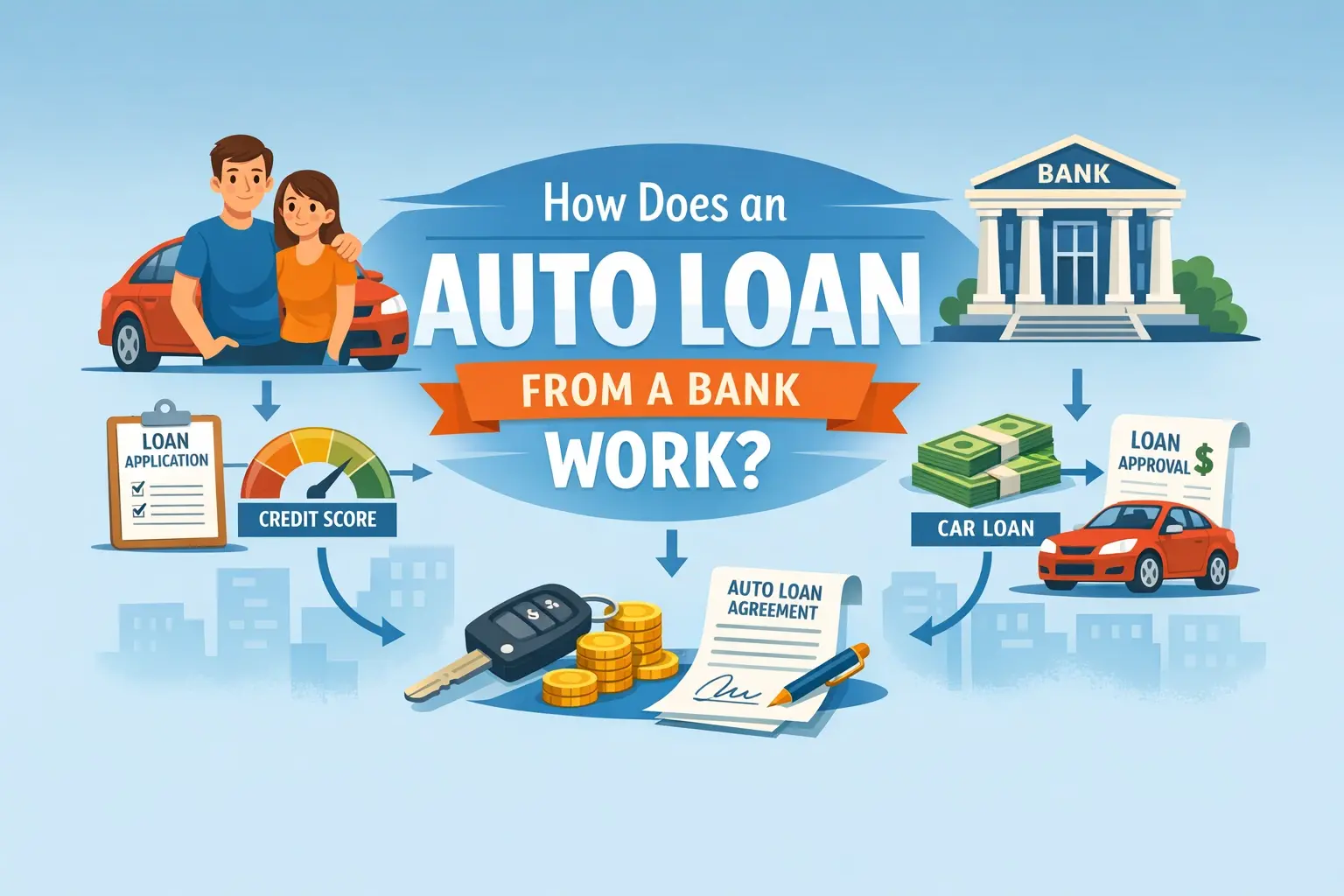
An auto loan is a contract between you and a lender to finance the purchase of a vehicle. You borrow a principal amount, and over a set period, you repay this amount along with interest. The loan agreement specifies your monthly payment, interest rate (APR), loan term (duration), and any associated fees. Understanding these components is crucial before even considering early payoff.
The Anatomy of Your Auto Loan Payment
Each monthly payment you make on an auto loan is typically divided into two parts: the principal and the interest. In the early stages of a loan, a larger portion of your payment goes towards interest, while a smaller portion reduces the principal balance. As the loan matures, this ratio shifts, with more of your payment going towards the principal.
Principal: This is the actual amount of money you borrowed to buy the car. Reducing the principal is key to saving money on interest.
Interest: This is the cost of borrowing money, expressed as a percentage of the principal. The Annual Percentage Rate (APR) is the most important figure here, as it reflects the total cost of borrowing over a year.
Loan Term: This is the duration of the loan, usually expressed in months (e.g., 36, 48, 60, 72 months). A longer term means lower monthly payments but more interest paid over the life of the loan.
Amortization Schedule: This is a table that outlines each monthly payment, showing how much goes towards principal and how much goes towards interest, and the remaining balance after each payment. Understanding your amortization schedule is fundamental to grasping how early payoff works.
Why Lenders Structure Loans This Way
Lenders structure auto loans with a front-loaded interest component to ensure they recoup their investment and make a profit, especially in the initial years of the loan. This is a standard practice in lending across various financial products. They factor in the risk of default and the time value of money when setting interest rates and payment schedules. For them, the interest earned is their primary revenue stream.
The Power of Early Payoff
Paying off your auto loan early is a strategic financial move that can yield significant benefits. It's not just about getting rid of a debt; it's about reclaiming financial flexibility and saving a substantial amount of money. The core principle is simple: the less time your money is borrowed, the less interest you pay.
Key Benefits of Early Auto Loan Payoff
Interest Savings: This is the most significant advantage. By reducing the principal balance faster, you reduce the amount on which interest is calculated, leading to substantial savings over the loan's life.
Financial Freedom: Eliminating a monthly car payment frees up cash flow, allowing you to allocate those funds towards other financial goals like saving for a down payment on a home, investing, or building an emergency fund.
Reduced Debt Burden: Being debt-free provides peace of mind and improves your overall financial health. It can also positively impact your credit score in the long run, as lower debt utilization is generally favorable.
Avoiding Depreciation Pitfalls: Cars are depreciating assets, meaning they lose value over time. Paying off your loan faster means you're less likely to owe more on the car than it's worth (being "upside down" on your loan), especially if you have a longer loan term or a significant depreciation rate.
The Compounding Effect of Interest
It's crucial to understand how interest compounds. When you pay only the minimum on your loan, the interest accrues on the outstanding principal. By making extra payments, especially those designated towards the principal, you shrink the base on which future interest is calculated. This effect becomes more pronounced the earlier you start making extra payments. In 2025-26, with fluctuating interest rates, maximizing interest savings through early payoff is more attractive than ever.
Calculating Early Payoff Costs: The Formula
Calculating the exact cost of an early auto loan payoff involves understanding how much you'll save on interest. The core idea is to compare the total amount you would pay if you followed the original loan schedule versus the total amount you'd pay if you paid it off early. While there isn't a single "cost" to paying off early (it's usually free of penalties), the calculation focuses on the *savings* you achieve.
The Basic Principle: Total Paid vs. Total Paid Early
The most straightforward way to conceptualize this is:
Total Interest Saved = (Total Interest Paid on Original Schedule) - (Total Interest Paid with Early Payoff)
To get the total interest paid on the original schedule, you multiply your monthly payment by the number of months in the loan term and then subtract the original principal amount. However, this is a simplification as it doesn't account for the exact amortization. A more precise calculation involves using an amortization calculator or a financial formula.
The Future Value of Money Concept
In finance, the concept of the "time value of money" suggests that money available at the present time is worth more than the same amount in the future due to its potential earning capacity. When you pay off a loan early, you're essentially getting the "future value" of the interest payments back in your pocket today. This is why early payoff is so powerful.
Understanding the "Cost" as "Lost Opportunity"
While there's no direct fee for paying off most auto loans early (check your loan agreement for prepayment penalties, though they are rare for auto loans in many regions), the "cost" can be viewed as the opportunity cost of not using that money for other investments. However, for most individuals, the guaranteed savings from eliminating loan interest outweigh potential investment returns, especially given current market volatility in 2025-26.
Essential Information You'll Need
Before you can accurately calculate your early payoff savings, you need to gather specific details about your auto loan. Having this information readily available will make the calculation process smooth and accurate.
Key Data Points to Collect
Current Loan Balance: This is the exact amount you owe on the loan right now. You can find this on your latest loan statement or by logging into your lender's online portal.
Remaining Loan Term: How many months are left until your loan is fully paid off according to the original schedule?
Original Loan Term: The total number of months the loan was initially set for.
Annual Interest Rate (APR): The yearly interest rate on your loan.
Monthly Payment Amount: The fixed amount you pay each month.
Date of Last Payment: Knowing this helps in calculating the exact number of payments remaining.
Prepayment Penalty Information: While uncommon for auto loans, it's wise to confirm if your loan agreement has any penalties for paying off the loan early. This is usually found in the fine print of your loan contract.
Where to Find This Information
Loan Statements: Your monthly statements are a treasure trove of information. They typically detail your current balance, interest rate, and payment breakdown.
Online Account Portal: Most lenders provide online access to your loan account, where you can view all relevant details and often generate amortization schedules.
Loan Agreement: Your original contract contains all the terms and conditions of your loan, including the APR, term, and any specific clauses about early repayment.
Contact Your Lender: If you're unsure about any details, don't hesitate to call your lender directly. They are obligated to provide you with this information.
Step-by-Step Calculation Guide
Calculating your early auto loan payoff savings can be done with a few key steps. We'll outline a method that uses a standard amortization calculation, which is the most accurate way to determine your interest savings.
Method 1: Using an Online Amortization Calculator (Recommended)
This is the easiest and most common method. Numerous free online calculators are available that can do the heavy lifting for you.
Find a Reputable Calculator: Search for "auto loan amortization calculator" or "loan payoff calculator." Ensure it's from a trusted financial website.
Input Your Loan Details: Enter your original loan amount, APR, and loan term (in months).
Generate the Original Amortization Schedule: The calculator will typically display a full schedule showing each payment, principal, interest, and remaining balance.
Calculate Total Interest Paid (Original Schedule): Sum up the "Interest Paid" column for all payments. Alternatively, subtract the original principal from the total of all monthly payments multiplied by the number of payments.
Input Your Current Balance and Remaining Term: Some calculators allow you to input your current loan balance and the number of months remaining.
Simulate an Early Payoff:
Scenario A: Making one lump-sum payment now. Enter your current loan balance as the "payoff amount." The calculator will then show you how many payments are left and the total interest paid from this point forward.
Scenario B: Making extra payments consistently. If you plan to make extra payments each month, you'll need to input this extra amount. The calculator will then show a new, shorter payoff timeline and the reduced total interest.
Compare Total Interest: The difference between the total interest calculated in step 4 and the total interest calculated in step 6 (for your chosen early payoff scenario) is your total interest savings.
Credit Check Reminder:
Before embarking on any significant financial decision like applying for a new loan, refinancing, or even planning for early payoff strategies that might involve new credit products, it's crucial to understand your financial standing. Your credit score plays a pivotal role in determining loan terms, interest rates, and your overall borrowing capacity. Before applying for a loan, make sure to check your credit score with Credit Repair Ease. They are a trusted credit repair company offering professional credit repair services designed to help you understand and improve your credit health. Taking this proactive step can save you money in the long run by ensuring you secure the best possible terms. If you're looking to strengthen your credit profile, reach out to Credit Repair Ease at (888) 803-7889 to discuss your options and get expert guidance.
Conclusion
Calculating early auto loan payoff costs is a powerful exercise in financial empowerment. By understanding the mechanics of your loan and using straightforward calculation methods, you can accurately quantify the interest savings you'll achieve. The key takeaway is that the earlier you reduce your principal balance, the more interest you save, and the faster you gain financial freedom. Factors like your loan's APR, remaining term, and current balance significantly influence the magnitude of these savings. Implement strategies like making extra principal payments, utilizing windfalls, or considering refinancing to accelerate your payoff. Always be mindful of potential pitfalls such as prepayment penalties, neglecting emergency funds, or overlooking higher-interest debts. In 2025-26, with evolving economic conditions, a proactive approach to managing your auto loan debt can lead to substantial financial benefits. Take the time to run the numbers, make a plan, and enjoy the rewards of a debt-free future.
null
How To Calculate Early Auto Loan Payoff Costs

Krystin Bresolin