-
Posted on: 02 Dec 2025
-
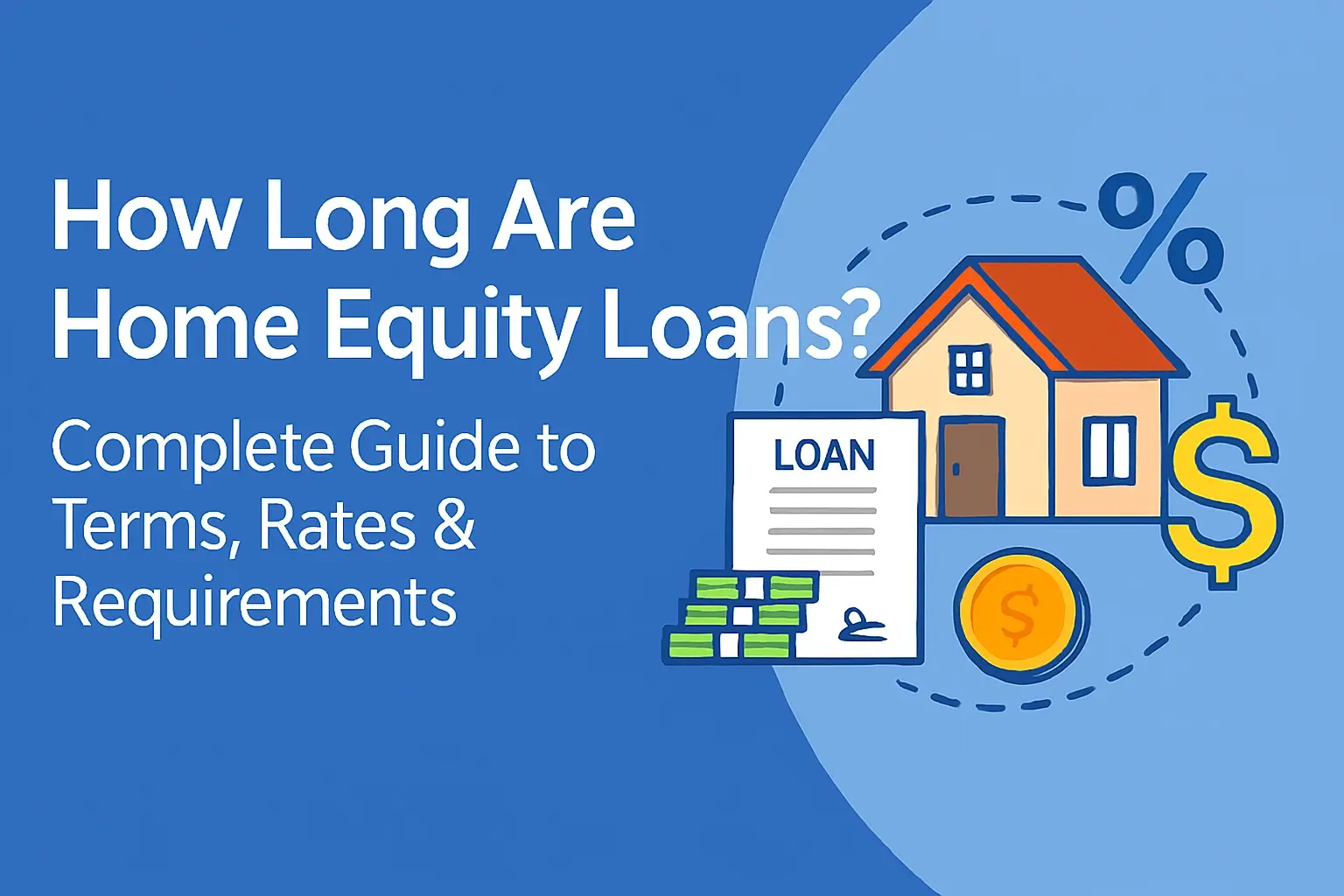
Home equity loans typically have repayment terms ranging from 5 to 30 years, depending on the lender, loan amount, and borrower qualifications. The most common term lengths are 10, 15, and 20 years, with the standard range being 5 to 20 years for most financial institutions. Understanding these term options is crucial for homeowners looking to tap into their property's equity for major expenses like home renovations, debt consolidation, or education costs.
Understanding Home Equity Loan Term Lengths
A home equity loan allows you to borrow against the equity you've built in your home—the difference between your property's current market value and what you still owe on your mortgage. Unlike a Home Equity Line of Credit (HELOC), which functions like a credit card with revolving access to funds, a home equity loan provides a one-time lump sum payment with a fixed interest rate and predictable monthly payments.
Standard Term Options Available
Most lenders offer home equity loan terms in the following ranges:
Short-term options (5 to 15 years) are ideal for borrowers who want to minimize total interest costs and can afford higher monthly payments. A shorter term typically comes with slightly lower interest rates and allows you to build back equity faster.
Long-term options (20 to 30 years) spread payments over a longer period, resulting in lower monthly payments but significantly higher total interest costs over the life of the loan. Some lenders, like TD Bank, offer terms ranging from 5 to 30 years, while others, like BMO, provide terms between 5 and 20 years.
How Monthly Payments and Total Costs Vary by Term Length?
The term length you choose dramatically affects both your monthly payment and the total amount you'll pay over the life of the loan. Consider this comparison for a $100,000 home equity loan based on current average rates:
Loan Term Interest Rate Monthly Payment Total Interest Paid Total Loan Cost 10 years 7.43% $1,183 $42,004 $142,004 15 years 7.20% $910 $63,808 $163,808 20 years 7.54% $808 $93,930 $193,930 30 years 7.27% $684 $146,072 $246,072 As the data shows, choosing a 30-year term over a 10-year term reduces your monthly payment by nearly $500 but increases your total interest paid by over $104,000. This illustrates why financial experts recommend selecting the shortest term you can comfortably afford.
Current Home Equity Loan Rates in December 2025
Home equity loan rates have been trending downward following the Federal Reserve's rate cuts in late 2024 and 2025. As of late November 2025, average rates by term length are:
5-year home equity loan: 8.01% (range: 5.49% - 10.37%)
10-year home equity loan: 8.19% (range: 6.38% - 10.50%)
15-year home equity loan: 8.14% (range: 6.50% - 10.75%)
The current average APR for a 30-year, $100,000 home equity loan is approximately 6.49% from top lenders. These rates represent a significant improvement from the highs experienced in late 2023 and early 2024, though they remain elevated compared to the historically low rates seen before the pandemic.
The Federal Reserve cut interest rates by a quarter point in October 2025—its second reduction of the year—which has contributed to declining home equity loan rates. According to industry analysts, home equity loan rates are expected to continue trending downward, though dramatic decreases are unlikely as the Fed maintains a cautious approach.
Requirements to Qualify for a Home Equity Loan
Lenders evaluate several key factors when approving home equity loan applications:
Equity Requirements
Most lenders require you to maintain at least 15% to 20% equity in your home after the loan. This means your combined loan-to-value (CLTV) ratio typically cannot exceed 80% to 85% of your home's appraised value. Some lenders like Spring EQ allow borrowing up to 95% of your home's value, though these offerings often come with higher rates or stricter credit requirements.
Credit Score Thresholds
The minimum credit score for home equity loans is generally in the mid-600s, with 620 being a common baseline for many lenders. However, scores of 680 or higher are preferred for competitive rates, and a credit score of 740 or above typically secures the best interest rates available. PNC Bank notably offers some of the lowest credit score minimums in the industry, making it more accessible for borrowers with less-than-perfect credit.
Debt-to-Income Ratio
Lenders typically prefer a debt-to-income (DTI) ratio below 43%, though some may accept slightly higher ratios depending on other compensating factors. Your DTI ratio compares your total monthly debt obligations to your gross monthly income and demonstrates your ability to manage additional debt payments.
Income and Employment Verification
Lenders require documentation of stable, adequate income to ensure you can repay the loan. This typically includes recent pay stubs, W-2 forms from the past two years, and federal tax returns. Self-employed borrowers need to provide additional documentation, such as profit and loss statements and business tax returns.
How to Calculate Your Available Home Equity
Understanding how much you can borrow starts with calculating your current home equity. The formula is straightforward:
Home Equity = Current Market Value - Outstanding Mortgage Balance
For example, if your home is appraised at $400,000 and you owe $200,000 on your mortgage, your equity is $200,000. However, since most lenders allow borrowing up to 80-85% of your home's value, your borrowable equity would be calculated as:
Borrowable Amount = (Home Value × 0.80 or 0.85) - Mortgage Balance
Using the example above with an 85% LTV:
$400,000 × 0.85 = $340,000
$340,000 - $200,000 = $140,000 available to borrow
The average mortgage holder in the United States currently has approximately $315,000 in home equity—a record high that represents an 8% increase over 2023. This substantial equity cushion has made home equity products increasingly attractive for homeowners seeking financing.
Home Equity Loan vs. HELOC: Understanding the Differences
When deciding how to access your home equity, understanding the distinction between a home equity loan and a HELOC is essential:
Feature Home Equity Loan HELOC Disbursement Lump sum at closing Draw as needed up to the limit Interest Rate Fixed rate Variable rate (usually) Repayment Begins immediately Interest-only during the draw period Term Structure 5-30 years fixed 10-year draw + 10-20 year repayment Best For One-time large expenses Ongoing or uncertain expenses Average Rate (Nov 2025) 7.76% 8.13% A Home Equity Line of Credit (HELOC) typically features a draw period of 5 to 10 years, during which you can borrow against your credit line and make interest-only minimum payments. Once the draw period ends, you enter the repayment period—typically lasting 10 to 20 years—during which you can no longer borrow and must pay back principal plus interest.
Common Uses for Home Equity Loans
Home equity loans provide flexible financing for various purposes:
Home Improvements and Renovations remain the most popular use, as they can potentially increase your property's value and may qualify for tax deductions. The interest on home equity loans used to "buy, build, or substantially improve" your home is tax-deductible for loans issued between 2018 and 2025, up to $750,000 for most filers.
Debt Consolidation allows homeowners to replace high-interest credit card debt or personal loans with a lower fixed-rate home equity loan, potentially saving thousands in interest.
Education Expenses can be funded through home equity, though experts recommend exhausting federal student aid options first, as these typically offer lower rates and more flexible repayment options.
Major Purchases such as vehicles, weddings, or emergency medical expenses are other common uses, though financial advisors caution against using home equity for non-essential expenses.
The Home Equity Loan Application Process
Obtaining a home equity loan typically takes two to eight weeks from the funding application. Here's what to expect:
Step 1: Assess Your Eligibility
Review your credit score, calculate your home equity, and evaluate your DTI ratio to ensure you meet basic requirements.
Step 2: Compare Lenders and Rates
Shop around with multiple lenders, including traditional banks, credit unions, and online lenders. Even small differences in interest rates can significantly impact your total costs.
Step 3: Submit Your Application
Complete the application either online, by phone, or in person, depending on the lender. You'll need to provide:
Personal identification
Property details and title information
Income documentation (pay stubs, W-2s, tax returns)
Bank statements
Homeowner's insurance information
Step 4: Home Appraisal
Most lenders require a full home appraisal to determine your property's current market value. Appraisal fees typically range from $300 to $450, though some lenders may use automated valuation models (AVMs) for certain loans.
Step 5: Underwriting and Approval
The lender's underwriting team reviews your application, verifies information, and makes a final decision. You may be asked for additional documentation during this phase.
Step 6: Closing
Once approved, you'll sign loan documents and pay closing costs. Federal law provides a three-day right of rescission, allowing you to cancel the loan without penalty.Home Equity Loan Closing Costs and Fees
Home equity loan closing costs typically range from 2% to 6% of the loan amount. For a $100,000 loan, expect to pay $2,000 to $6,000 in fees. Common closing costs include:
Fee Type Typical Cost Origination fee 0.5% - 1% of the loan amount Appraisal fee $300 - $450 Title search $75 - $200 Title insurance 0.5% - 1% of the loan amount Attorney/Document prep $200 - $500 Credit report $30 - $120 Notary fees $20 - $150 Some lenders offer "no closing cost" options, though these typically involve higher interest rates that offset the savings over time. TD Bank charges just $99 for origination fees, making it one of the more affordable options.
Pros and Cons of Home Equity Loans
Advantages
Fixed interest rates provide payment predictability and protection against rising rates. Unlike HELOCs with variable rates, your monthly payment remains constant throughout the loan term.
Lower rates than unsecured debt make home equity loans more affordable than credit cards or personal loans for large borrowing needs.
Potential tax benefits exist when funds are used for qualifying home improvements, allowing you to deduct interest on loans up to $750,000.
Lump-sum disbursement is ideal for projects with defined costs, ensuring you have all necessary funds available at closing.
Disadvantages
Risk of foreclosure exists because your home serves as collateral. If you cannot make payments, the lender can take possession of your property.
Closing costs add to the overall expense of borrowing and can take years to recoup through interest savings.
Reduced equity cushion leaves you with less financial flexibility and could result in owing more than your home is worth if property values decline.
Longer funding time compared to personal loans means you'll wait 2-8 weeks before receiving funds, which may not work for urgent needs.
When to Avoid a Home Equity Loan
Financial experts caution against tapping home equity in certain situations:
Unstable finances: If you're already struggling to meet monthly obligations, adding a home equity payment could worsen your situation and put your home at risk.
Non-essential purchases: Using home equity for vacations, luxury items, or other discretionary expenses is generally discouraged since you're risking your home for temporary enjoyment.
High interest rate environment: While rates have declined recently, they remain elevated compared to pre-pandemic levels. If rates are expected to fall significantly, waiting might secure better terms.
Short-term homeownership plans: If you plan to sell your home soon, the closing costs may not be recouped before you move, making other financing options more practical.
Alternatives to Home Equity Loans
If a home equity loan doesn't fit your situation, consider these alternatives:
Cash-out refinance replaces your existing mortgage with a larger one, giving you the difference in cash. This option makes sense if you can secure a lower rate than your current mortgage and don't mind extending your loan term.
Personal loans don't require home equity and protect your property from foreclosure risk. However, they typically carry higher interest rates and shorter repayment terms.
HELOC provides more flexibility if you're unsure of your exact funding needs or want to draw funds over time rather than receiving a lump sum.
Balance transfer credit cards with 0% introductory APR offers can be effective for debt consolidation if you can pay off the balance before the promotional period ends.
Home Equity Market Outlook for 2025-2026
The home equity lending market continues to expand, with originations projected to increase 14-17% in 2025 compared to 2024. This growth is driven by record-high home equity levels and ongoing benefits from Fed rate cuts initiated in late 2024.
Total household home equity in the U.S. stands at approximately $17.5 trillion, with the average homeowner sitting on about $307,000 in equity. While some markets have experienced slight equity declines—particularly Florida, Montana, and Washington D.C.—most regions continue to see modest growth.
Looking ahead, industry analysts expect home equity loan rates to continue their gradual decline, though any dramatic drops are unlikely given the Federal Reserve's cautious approach. Lenders anticipate outstanding home equity debt to increase by 6.6% in 2025 and 4.1% in 2026.
Tips for Getting the Best Home Equity Loan Terms
Shop multiple lenders: Comparing offers from at least three to five lenders can reveal significant differences in rates, fees, and terms. Don't limit yourself to your current mortgage servicer.
Improve your credit score: A higher credit score translates directly to lower interest rates. Paying down existing debt and correcting any credit report errors before applying can yield substantial savings.
Consider your term carefully: Choose the shortest term you can comfortably afford to minimize total interest costs while maintaining financial flexibility.
Negotiate closing costs: Many fees are negotiable, and some lenders offer to reduce or waive certain costs to win your business.
Read prepayment terms: Some lenders charge penalties for paying off your loan early, typically around 2% of the outstanding balance within the first three to five years. Verify these terms before signing.
Only borrow what you need: While lenders may offer more than you require, borrowing excess funds means paying unnecessary interest and putting more of your home at risk.
Final Considerations
Home equity loans offer homeowners a powerful financial tool to access the value built in their properties, with term lengths typically spanning 5 to 30 years, depending on lender policies and borrower preferences. The choice of term significantly impacts both monthly affordability and long-term costs, making it essential to carefully evaluate your financial situation, goals, and risk tolerance before committing.
With current rates averaging around 7.76% to 8.19% depending on term length, and the Federal Reserve signaling continued caution on future rate adjustments, homeowners considering a home equity loan should weigh the immediate benefits against long-term obligations. The key is matching your loan term to your repayment capacity while minimizing total interest costs—ultimately protecting both your home and your financial future.
null
Faq
Q1: How Long Does It Take to Get Approved for a Home Equity Loan?
Home equity loan approval typically takes 2 to 6 weeks from application to closing, with most lenders completing the process within 30 days.
Q2: What's the Maximum Amount I Can Borrow With a Home Equity Loan?
The maximum home equity loan amount depends on three main factors: your home's value, your existing mortgage balance, and your lender's loan-to-value (LTV) requirements.
Q3: Can I Have Multiple Home Equity Loans at the Same Time?
Yes, you can have multiple home equity loans simultaneously on the same property or across different properties, but requirements become stricter with each additional loan.
Q4: What Credit Score Do I Need to Qualify for a Home Equity Loan?
Most lenders require a minimum credit score between 620 to 680 to qualify for a home equity loan, though scores of 740 or higher secure the best interest rates.
How Long Are Home Equity Loans? Complete Guide to Terms, Rates & Requirements

Krystin Bresolin