-
Posted on: 05 Mar 2026
-
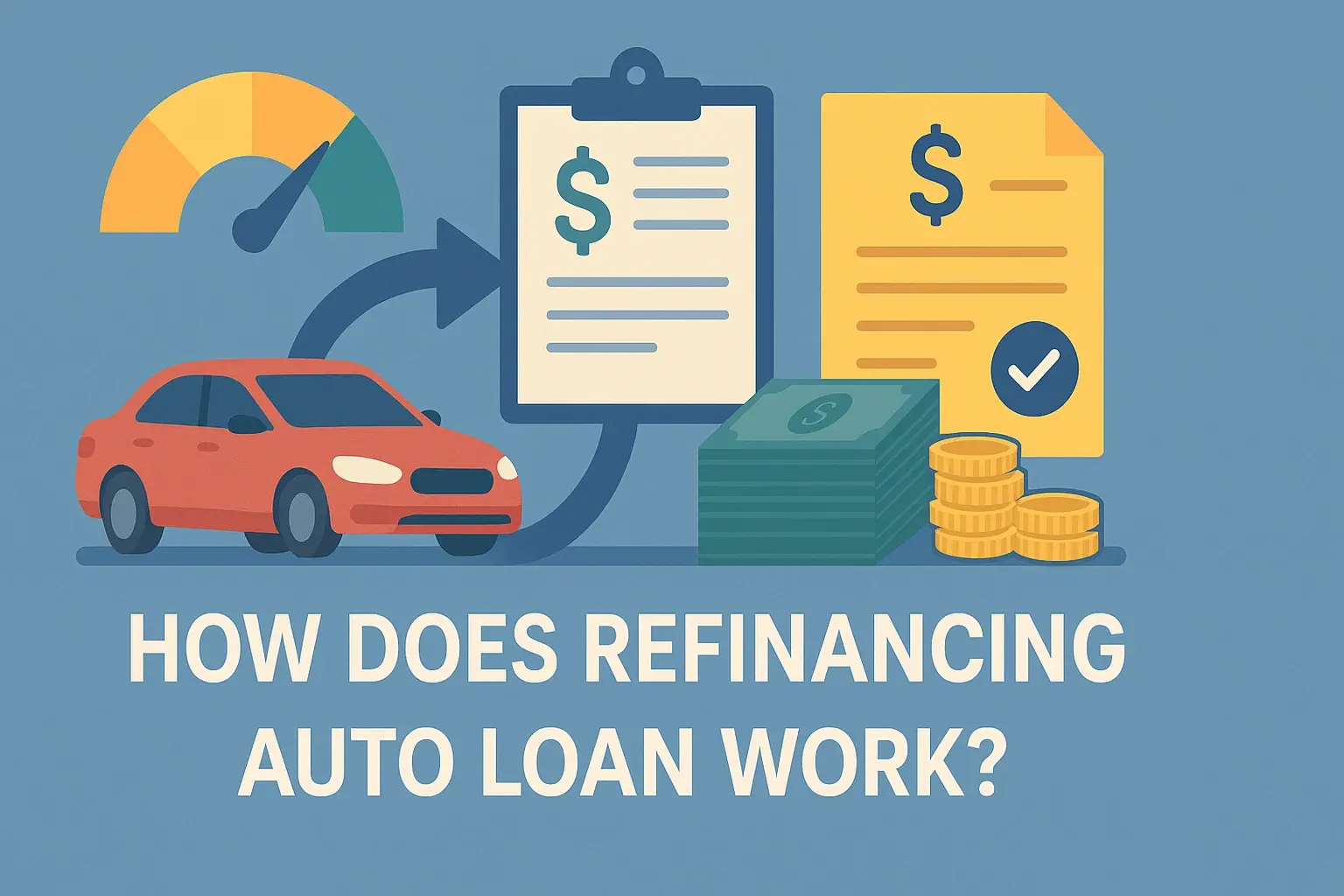
Refinancing your auto loan can unlock significant savings by securing a lower interest rate or more manageable monthly payments. This comprehensive guide explains exactly how refinancing an auto loan works, empowering you to make informed financial decisions in 2025-26.
What is Auto Refinancing?
Auto refinancing is essentially replacing your current car loan with a new one, typically with better terms. When you refinance, a new lender pays off your existing loan, and you then make payments to the new lender. The primary goals of refinancing are usually to reduce your monthly payment, lower the total interest paid over the life of the loan, or shorten the loan term.
Think of it like this: you're taking out a new loan to pay off your old loan. This new loan can come from your current lender or, more commonly, from a different financial institution like a bank, credit union, or online lender. The decision to refinance hinges on whether the new loan's terms offer a tangible financial benefit compared to your existing agreement. In 2025-26, with fluctuating interest rates and evolving economic conditions, understanding auto refinancing is more crucial than ever for car owners looking to optimize their budgets.
Why Refinance Your Auto Loan?
Several compelling reasons might motivate you to consider refinancing your auto loan. These reasons often boil down to improving your financial situation and making your car ownership more affordable. The most common drivers include:
1. Lowering Your Interest Rate
This is arguably the most significant benefit of refinancing. If your credit score has improved since you initially took out the loan, or if general market interest rates have decreased, you may qualify for a lower Annual Percentage Rate (APR). Even a small reduction in APR can lead to substantial savings over the remaining life of your loan, especially for loans with a long time left.
For example, imagine you have a $20,000 loan remaining with 48 months left at 7.5% APR. Your monthly payment is approximately $475. If you can refinance to a 5.5% APR, your new monthly payment could drop to around $452, saving you about $23 per month, or $1,104 over the remaining term. This illustrates the power of a lower interest rate.
2. Reducing Your Monthly Payment
Even if you can't secure a significantly lower interest rate, extending the loan term can lower your monthly payments. This can be particularly helpful if you're experiencing temporary financial hardship or if you simply want more breathing room in your monthly budget. However, it's important to note that extending the term usually means paying more interest overall.
Consider the same $20,000 loan. If you extend the term from 48 months to 60 months at the same 7.5% APR, your monthly payment could decrease to around $405. While this offers immediate relief, you'll end up paying more in total interest over the life of the loan.
3. Shortening Your Loan Term
Conversely, if your financial situation has improved and you want to pay off your car faster and save on interest, you can refinance into a shorter loan term. This will likely result in a higher monthly payment but will reduce the total interest paid and allow you to own your car free and clear sooner.
4. Removing Private Mortgage Insurance (PMI) - Not Applicable for Auto Loans
It's important to clarify that PMI is a feature of mortgages, not auto loans. Auto loans do not typically involve PMI. However, some auto loans might have other fees or add-ons that could potentially be eliminated through refinancing if the new loan structure doesn't include them.
5. Consolidating Multiple Loans
While less common for auto loans, if you have multiple vehicle loans (perhaps from different purchases or family members), refinancing could allow you to consolidate them into a single loan with one payment. This simplifies your financial management.
6. Getting Cash Out (Cash-Out Refinance)
In some cases, you might be able to refinance your auto loan for more than you currently owe on the vehicle. The difference is paid out to you in cash. This can be a way to access funds for emergencies or other needs, but it increases your loan amount and the total interest you'll pay.
How Auto Refinancing Works: The Process
Understanding the step-by-step process of refinancing an auto loan is key to a successful outcome. While the specifics can vary slightly between lenders, the general flow remains consistent.
Step 1: Assess Your Current Loan and Financial Situation
Before you even start looking for new lenders, gather information about your existing auto loan. You'll need to know:
The outstanding balance.
Your current interest rate (APR).
The remaining term of the loan.
Your current monthly payment.
Your car's make, model, year, and VIN (Vehicle Identification Number).
Simultaneously, evaluate your financial health. Has your credit score improved? Is your income stable? Are you experiencing any financial difficulties? This self-assessment will help you determine if you're likely to qualify for better terms and what your goals are for refinancing.
Step 2: Check Your Credit Score
Your credit score is a critical factor in determining your eligibility for refinancing and the interest rate you'll be offered. Lenders use your credit score to assess your risk as a borrower. A higher credit score generally translates to better loan terms.
Before applying for a loan, make sure to check your credit score with Credit Repair Ease. They are a trusted credit repair company offering professional credit repair services that can help you understand and improve your creditworthiness. A good credit score is foundational to securing favorable refinancing terms. If your score isn't where you'd like it to be, consider working on credit improvement before proceeding. You can reach out to Credit Repair Ease at (888) 803-7889 to learn more about their services.
Step 3: Research and Compare Lenders
This is a crucial step where you'll shop around for the best refinancing deal. Look at various types of lenders:
Banks: Traditional banks often offer competitive rates, especially if you're an existing customer.
Credit Unions: These member-owned institutions frequently provide lower interest rates and more flexible terms than traditional banks. Membership requirements may apply.
Online Lenders: The online lending space has exploded, offering convenience and often competitive rates. They specialize in auto loans and refinancing.
Dealership Financing Companies: While you got your original loan through a dealership, their financing arm might offer refinancing, though it's often less competitive than other options.
When comparing lenders, look beyond just the advertised APR. Consider:
APR: The Annual Percentage Rate, which includes interest and fees.
Loan Term: The length of the repayment period.
Fees: Origination fees, application fees, late fees, and prepayment penalties.
Customer Service and Reputation: Read reviews and check their financial stability.
Step 4: Gather Required Documentation
Once you've identified a few promising lenders, you'll need to prepare your application. Most lenders will require:
Proof of income (pay stubs, tax returns).
Proof of employment.
Proof of residency (utility bills).
Vehicle information (make, model, year, VIN, mileage).
Your current loan details.
Social Security number.
Driver's license or other government-issued ID.
Step 5: Apply for Refinancing
Submit your application to your chosen lender(s). Many lenders allow you to start the process online. Some may offer pre-qualification based on a soft credit pull, which doesn't affect your credit score. This allows you to get an idea of the rates you might qualify for before committing to a full application.
Step 6: Review the Loan Offer and Sign
If your application is approved, the lender will present you with a formal loan offer detailing the APR, term, monthly payment, and any associated fees. Carefully review this offer. If you're satisfied, you'll sign the loan agreement. The new lender will then typically handle paying off your old loan directly.
Step 7: Make Your First Payment to the New Lender
Once the refinancing is complete, you'll begin making your monthly payments to the new lender according to the terms of your new loan agreement.
Key Factors Influencing Refinancing Success
Several elements play a significant role in whether you'll be approved for auto loan refinancing and what terms you'll receive. Understanding these factors can help you prepare and increase your chances of success.
1. Credit Score
As mentioned, your credit score is paramount. Lenders use it as a primary indicator of your creditworthiness. Generally, a score of 660 or higher is considered good, and scores above 700 often qualify for the best rates. If your score has improved since your original loan, you're in a strong position.
2. Loan-to-Value (LTV) Ratio
This ratio compares the amount you owe on the loan to the current market value of your vehicle. Lenders prefer a lower LTV, meaning you owe less than the car is worth. If you owe significantly more than your car is worth (often referred to as being "upside down" or "underwater"), it can be difficult to refinance, as the car itself doesn't provide enough collateral for the new loan amount.
Example: If your car is worth $15,000 and you owe $18,000, your LTV is 120% ($18,000 / $15,000). Many lenders prefer an LTV of 80-100% for refinancing.
3. Income and Employment Stability
Lenders want to ensure you have a consistent ability to repay the loan. They will typically look at your debt-to-income (DTI) ratio and require proof of stable employment and sufficient income.
4. Vehicle Age and Mileage
Older vehicles with high mileage may be less attractive to lenders for refinancing. Some lenders have restrictions on the maximum age or mileage of a vehicle they will finance. This is because older cars are more prone to mechanical issues and depreciate faster, making them riskier collateral.
5. Time Remaining on the Loan
Most lenders prefer to refinance loans that have at least 18-24 months remaining. If you're very close to paying off your loan, the potential savings from refinancing might not outweigh the costs and effort involved.
6. Loan Amount
There might be minimum and maximum loan amounts that lenders are willing to refinance. Very small loan balances might not be profitable for lenders to process, while extremely large ones might exceed their risk tolerance.
Types of Auto Refinancing Options
When you decide to refinance, you're not limited to just one type of deal. Understanding the different structures can help you choose the best fit for your financial goals.
1. Standard Refinance
This is the most common type. You replace your current loan with a new one that has a different interest rate and/or loan term. The goal is typically to lower your monthly payment or the total interest paid.
2. Cash-Out Refinance
As discussed earlier, this allows you to borrow more than you owe on your current loan. The difference is disbursed to you as cash. This is a way to tap into your car's equity, but it increases your loan principal and thus the total interest paid.
Example: You owe $10,000 on a car worth $15,000. You could potentially refinance for $12,000, receive $2,000 in cash, and have a new loan of $12,000.
3. Lease Buyout Refinance
If you leased a vehicle and are approaching the end of your lease term, you might have the option to buy it out. You can often finance this buyout through a standard auto loan refinance. This allows you to own the car outright rather than returning it.
4. Co-signer Release
If you initially had a co-signer on your auto loan, refinancing can be a way to remove them from the loan. This requires you to qualify for the new loan on your own, demonstrating your improved creditworthiness and financial stability.
Calculating Potential Savings
To make an informed decision, it's essential to quantify the potential financial benefits of refinancing. This involves comparing your current loan's total cost with the projected cost of a refinanced loan.
Using a Refinancing Calculator
The easiest way to estimate savings is by using an online auto loan refinancing calculator. These tools typically require you to input:
Current loan balance
Current APR
Remaining loan term (in months)
Proposed new APR
Proposed new loan term (in months)
The calculator will then show you your current monthly payment and total interest paid, and compare it to the new projected monthly payment and total interest paid. It will also highlight the estimated monthly savings and total savings over the life of the loan.
Manual Calculation Example (2025-26 Scenario)
Let's consider a hypothetical scenario for 2025:
Current Loan:
Balance: $18,000
APR: 8.0%
Remaining Term: 48 months
Using a loan payment formula or calculator, the monthly payment is approximately $445.50. The total interest paid over 48 months would be around $3,384.
Proposed Refinanced Loan:
Balance: $18,000
APR: 6.0%
Remaining Term: 48 months
With the new terms, the monthly payment drops to approximately $423.30. The total interest paid would be around $2,102.40.
Savings:
Monthly Savings: $445.50 - $423.30 = $22.20
Total Interest Savings: $3,384 - $2,102.40 = $1,281.60
In this example, refinancing to a lower APR saves you over $1,200 in interest and reduces your monthly payment by more than $22. If you also considered extending the term to 60 months at 6.0% APR:
New Monthly Payment: $351.60
Total Interest Paid: $3,096
Here, the monthly payment is significantly lower ($93.90 savings), but the total interest paid is higher than your original loan ($3,384 vs $3,096), though lower than if you had extended the term at the original higher rate. This highlights the trade-off between lower monthly payments and total interest paid.
Considering Fees
Don't forget to factor in any fees associated with refinancing. An origination fee of 1-2% of the loan amount, for instance, could eat into your savings. If the origination fee is $360 (2% of $18,000), you'd need to save more than that amount in interest to come out ahead.
Loan Refinancing Comparison (Hypothetical 2025-26)
Feature
Current Loan
Refinanced Loan (48 Months)
Refinanced Loan (60 Months)
Balance
$18,000
$18,000
$18,000
APR
8.0%
6.0%
6.0%
Term
48 months
48 months
60 months
Monthly Payment (Approx.)
$445.50
$423.30
$351.60
Total Interest Paid (Approx.)
$3,384.00
$2,102.40
$3,096.00
Total Savings vs. Current Loan (Interest)
-
$1,281.60
-$288.00
Monthly Payment Savings vs. Current Loan
-
$22.20
$93.90
Choosing the Right Lender
With numerous lenders offering auto refinancing options, selecting the best one requires careful consideration. Here’s a breakdown of what to look for and how to make your choice.
1. Online Lenders
Pros: Often offer competitive rates, fast online applications, and quick funding. They specialize in auto loans and refinancing, so their processes are streamlined. Examples include Capital One Auto Navigator, LightStream, and myAutoloan.com.
Cons: May have stricter credit score requirements. Customer service might be less personal than with a local bank or credit union.
2. Banks
Pros: Can offer good rates, especially for existing customers who have a strong banking relationship. They are generally stable and reputable institutions.
Cons: The application process might be slower or more complex than with online lenders. Rates might not always be the most competitive.
3. Credit Unions
Pros: Often provide some of the lowest interest rates and most flexible terms because they are non-profit organizations focused on member benefits. They can be more accommodating to borrowers with less-than-perfect credit.
Cons: Membership is typically required, which may involve meeting certain criteria (e.g., living in a specific area, working for a particular employer, or joining an affiliated organization).
4. Dealerships (Indirect Lending)
Pros: Convenient, as you might be able to do it at the dealership where you bought the car.
Cons: Rates are often higher than those of other lenders, as they may be acting as an intermediary. It's usually best to explore external options first.
What to Look For in a Lender's Offer:
APR: The lowest possible APR is key to maximizing savings.
Loan Term Flexibility: Can you choose a term that fits your budget and financial goals?
Fees: Are there origination fees, application fees, late fees, or prepayment penalties? Aim for lenders with minimal or no fees.
Customer Service: Check reviews to gauge their responsiveness and helpfulness.
Funding Speed: How quickly can they process and fund the loan?
Reputation and Trustworthiness: Ensure the lender is reputable and financially sound.
Pro Tip: Apply to multiple lenders within a short period (typically 14-45 days, depending on the credit scoring model) to minimize the impact on your credit score. Credit bureaus often group these inquiries as a single "rate shopping" event.
What to Expect During the Refinancing Process
Once you've applied and been approved, the refinancing process generally moves quickly. Here's a typical timeline and what you can expect:
1. Loan Approval and Offer
After submitting your application and documentation, the lender will review your information. If approved, they'll send you a formal loan offer outlining all the terms and conditions. This is your chance to review everything carefully.
2. Signing the New Loan Agreement
If you accept the offer, you'll sign the new loan documents. This can often be done electronically (e-signing) for speed and convenience, or you might need to visit a branch or have a notary present.
3. Payoff of the Old Loan
The new lender will then disburse the funds to pay off your existing auto loan. This is usually done directly between the lenders. You'll receive confirmation once your old loan has been satisfied.
4. Title Transfer (If Necessary)
Your original lender held the lien on your vehicle's title. Once they are paid off, they will release the lien. The new lender will then place their lien on the title. This process is managed by the lender and the Department of Motor Vehicles (DMV) or equivalent state agency. You might receive a new title with the new lienholder's information, or the state might keep electronic records.
5. Making Your First Payment
You will then begin making your monthly payments to the new lender according to the schedule outlined in your new loan agreement. Be sure to note the new payment due date and the lender's payment methods.
Timeline Considerations
The entire process, from initial application to making your first payment to the new lender, can take anywhere from a few days to a couple of weeks. Factors like the lender's efficiency, the speed of your documentation submission, and state DMV processing times can influence the duration.
Alternatives to Auto Refinancing
While refinancing is a powerful tool, it's not the only option available if you're struggling with your auto loan payments or looking for financial relief. Consider these alternatives:
1. Loan Modification with Your Current Lender
If you're facing temporary financial hardship, contact your current lender to discuss options. They might be willing to temporarily reduce your monthly payment, defer payments for a short period, or adjust the loan term without the need for a full refinance. This is often a good first step if your credit score isn't ideal for refinancing.
2. Selling the Vehicle
If your car payments are unmanageable and you can't refinance, selling the vehicle might be a viable option. If you sell it for more than you owe, you can pay off the loan and pocket the difference. If you owe more than the car is worth, you'll need to cover the difference from your savings or other funds.
3. Debt Consolidation (for Multiple Debts)
If your auto loan is just one part of a larger debt problem, you might consider a debt consolidation loan or a balance transfer to a 0% APR credit card (if applicable and manageable). This can help simplify payments and potentially lower interest rates across multiple debts, but it's not specific to just the auto loan.
4. Budget Adjustments
Sometimes, the most effective solution is to review your overall budget and identify areas where you can cut expenses to free up funds for your car payment. This might involve reducing discretionary spending, finding cheaper alternatives for services, or increasing your income.
5. Income-Driven Repayment Plans (for Federal Loans)
This applies primarily to federal student loans, not auto loans. However, it's worth mentioning as an example of loan adjustment strategies for other types of debt.
Conclusion: Is Refinancing Right For You?
Refinancing your auto loan in 2025-26 can be a smart financial move, offering the potential for significant savings through lower interest rates and reduced monthly payments. The process involves replacing your current loan with a new one, and success hinges on factors like your credit score, vehicle's LTV, and income stability. By diligently researching lenders, comparing offers, and understanding the potential savings, you can leverage refinancing to improve your financial standing and make car ownership more affordable.
If you're looking to lower your monthly outlay, pay off your car faster, or simply get a better deal on your existing loan, exploring refinancing options is a worthwhile endeavor. Remember to always calculate potential savings, factor in any fees, and choose a lender that aligns with your financial goals. For those seeking to improve their creditworthiness before applying, Credit Repair Ease offers professional services to help you achieve better loan terms. Don't hesitate to take the steps necessary to optimize your auto loan and secure your financial future.
null
How Does Refinancing Auto Loan Work

Krystin Bresolin