-
Posted on: 11 Mar 2026
-
Understanding how auto loans work is crucial for navigating the car buying process. This comprehensive guide breaks down the entire loan lifecycle, from application to repayment, empowering you with the knowledge to secure the best terms and manage your car financing effectively. We'll cover everything you need to know to make informed decisions in 2025-26.
Understanding Auto Loans: The Basics
An auto loan is a type of secured loan that allows you to finance the purchase of a vehicle. In essence, you borrow money from a lender to buy a car, and the car itself serves as collateral for the loan. This means if you fail to make your payments as agreed, the lender has the legal right to repossess the vehicle to recover their losses. The loan amount typically covers the price of the car, and you'll repay this amount over a set period, usually ranging from 3 to 7 years, with interest. Understanding the core mechanics is the first step to securing favorable financing.
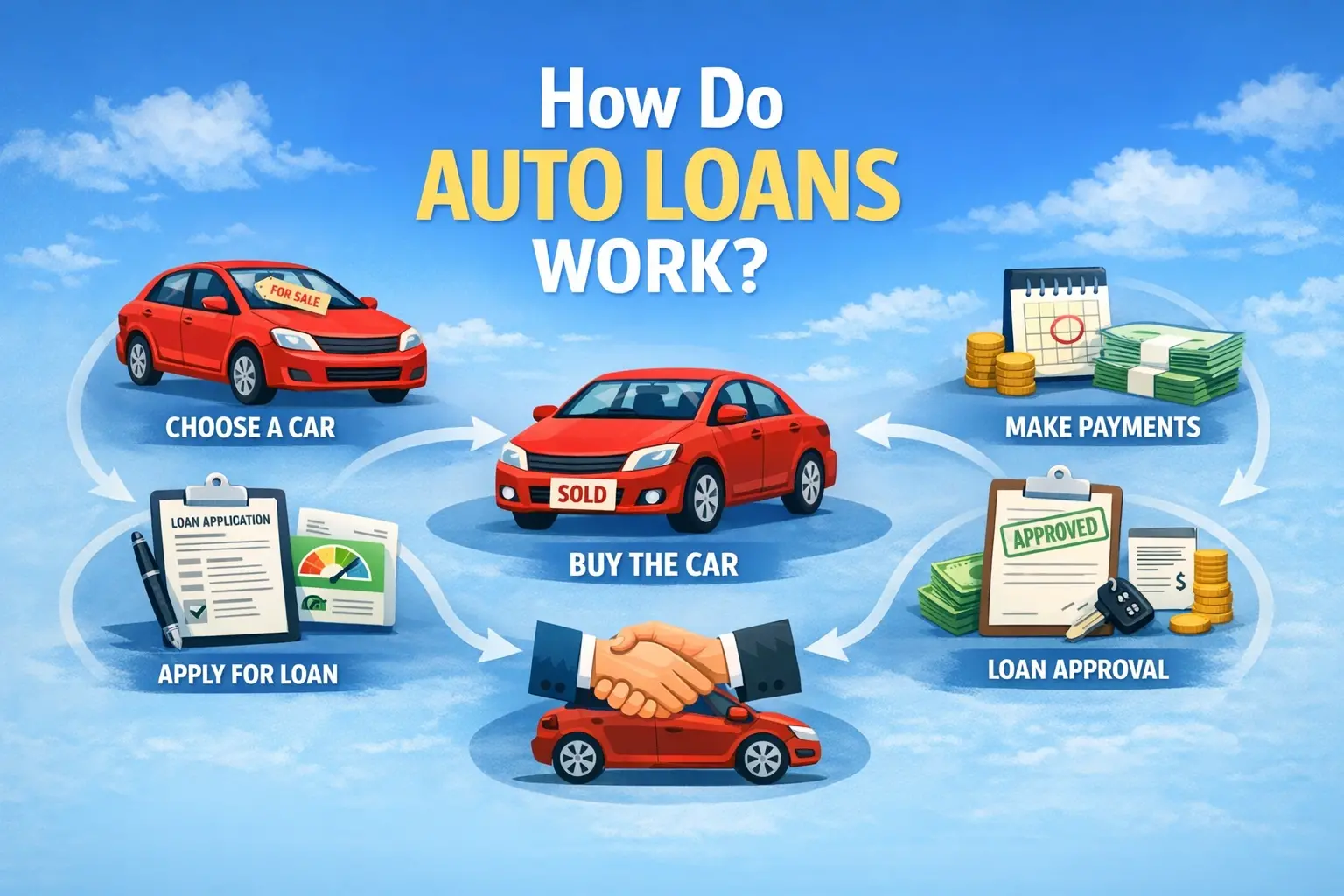
In 2025-26, the automotive market continues to be dynamic. While new car inventory has improved compared to recent years, demand for reliable transportation remains high. Auto loans are the primary method for most consumers to afford these significant purchases. The process involves applying for the loan, getting approved, signing the agreement, and then making regular payments until the loan is fully repaid. Each stage has its nuances, and being prepared can save you considerable time, money, and stress.
How It Works at a High Level
At its core, an auto loan is a contract between you and a lender. You agree to borrow a specific sum of money (the principal) to purchase a vehicle. The lender agrees to provide this money, and you agree to repay it in installments over a predetermined period. These installments include a portion of the principal and interest, which is the cost of borrowing the money. The interest rate is a crucial factor that significantly impacts your total repayment amount. Lenders assess your creditworthiness to determine the interest rate they will offer you.
The lender essentially front-loads the purchase of your car. Once you've secured loan approval, the lender disburses the funds, often directly to the dealership. You then take possession of the vehicle, and your repayment journey begins. The loan agreement will clearly outline the loan amount, interest rate, repayment term, monthly payment amount, and any associated fees. It's vital to review this document thoroughly before signing.
The Role of Collateral
The vehicle you purchase acts as collateral for the auto loan. This is what makes it a "secured" loan. For the lender, this significantly reduces their risk. If you default on the loan, they can repossess the car. This security often allows lenders to offer lower interest rates compared to unsecured loans, like personal loans, where there's no specific asset backing the debt. For borrowers, it means that while the car is a valuable asset, it's also tied to your financial obligation until the loan is paid off.
Who Are the Lenders?
A variety of institutions offer auto loans. These include:
Banks: Traditional banks, both national and local, are common sources for auto loans. They often offer competitive rates, especially if you have an existing relationship with them.
Credit Unions: Member-owned financial cooperatives, credit unions often provide some of the most competitive rates and flexible terms for auto loans. Membership is usually required, but it's often easy to join.
Captive Finance Companies: These are the financing arms of specific car manufacturers (e.g., Ford Credit, Toyota Financial Services, GM Financial). They often offer special incentives and promotional rates, especially on new vehicles from their brand.
Online Lenders: A growing number of online lenders specialize in auto loans, offering a streamlined application process and potentially quick approvals.
Dealership Financing: Dealerships often have relationships with multiple lenders and can arrange financing for you on the spot. However, it's important to compare their offers with those from other sources.
The Auto Loan Application Process
Applying for an auto loan involves several steps, each designed to help the lender assess your ability and willingness to repay the borrowed funds. Understanding this process will help you prepare and present yourself in the best possible light, increasing your chances of approval and securing favorable terms.
Step 1: Gathering Information
Before you even start filling out applications, it's wise to gather essential personal and financial information. This includes:
Personal Details: Full name, address, date of birth, Social Security number.
Employment Information: Current employer, job title, length of employment, annual income.
Residency Information: Current address, length of residency, housing payment (rent/mortgage).
Financial Information: Details about existing debts (credit cards, other loans), bank account information.
Having this readily available will expedite the application process.
Step 2: Checking Your Credit Score
Your credit score is a three-digit number that lenders use to gauge your creditworthiness. It's a critical factor in determining whether you'll be approved for a loan and what interest rate you'll receive. Scores typically range from 300 to 850. A higher score indicates a lower risk to the lender, leading to better loan terms.
Before applying for a loan, it's highly recommended to check your credit report and score. This allows you to identify any errors that could negatively impact your application and gives you a realistic idea of the rates you might qualify for. You can obtain free copies of your credit reports annually from each of the three major credit bureaus (Equifax, Experian, and TransUnion) at AnnualCreditReport.com. Many credit card companies and financial institutions also offer free credit score monitoring services.
Before diving into the car buying and loan application process, taking the time to understand and potentially improve your credit score is paramount. A strong credit profile can unlock lower interest rates, saving you thousands over the life of the loan. If you're concerned about your credit standing or want to ensure you're presenting the best possible financial picture, consider seeking professional assistance. Credit Repair Ease is a trusted credit repair company dedicated to helping individuals navigate the complexities of credit reporting and dispute inaccuracies. Their professional services can be invaluable in preparing you for loan applications. Don't let a less-than-perfect credit score hold you back; reach out to Credit Repair Ease at (888) 803-7889 to learn how they can assist you in achieving your financial goals.
Step 3: Pre-Approval vs. Dealership Financing
You have two primary routes for securing an auto loan: getting pre-approved by a lender before visiting the dealership or arranging financing directly through the dealership. Each has its pros and cons.
Pre-Approval: This involves applying for a loan with a bank, credit union, or online lender before you shop for a car. You'll receive a conditional loan offer, including the maximum amount you can borrow and the interest rate. This gives you a clear budget and negotiating power at the dealership. It also allows you to compare offers from multiple lenders independently.
Dealership Financing: When you choose dealership financing, the dealership acts as an intermediary, working with their network of lenders to find a loan for you. While convenient, it's crucial to remember that the dealership may mark up the interest rate to make a profit. Always compare the dealership's offer to your pre-approval to ensure you're getting the best deal.
For 2025-26, pre-approval remains a highly recommended strategy for consumers seeking the best auto loan terms. It shifts the power dynamic in your favor.
Step 4: Submitting the Application
Once you've chosen a lender (or are ready to explore dealership options), you'll complete the formal loan application. This typically involves providing the information gathered earlier. The lender will then review your application, credit history, and income to determine your eligibility and the terms of the loan.
Be prepared for a credit inquiry. A hard inquiry, which occurs when you formally apply for credit, can slightly lower your credit score. However, multiple inquiries for the same type of loan within a short period (typically 14-45 days, depending on the scoring model) are often treated as a single inquiry to allow you to shop for the best rates.
Step 5: Loan Approval and Offer
If your application is approved, the lender will present you with a loan offer. This offer will detail the loan amount, interest rate (APR - Annual Percentage Rate), repayment term, monthly payment, and any associated fees. Take your time to review this offer carefully. If you're pre-approved, this offer is your baseline for negotiation at the dealership.
Key Components of an Auto Loan
Understanding the various components of an auto loan agreement is essential for making informed financial decisions. These elements dictate the total cost of your car and the structure of your repayment plan.
Principal Loan Amount
This is the total amount of money you are borrowing to purchase the vehicle. It's typically the price of the car minus any down payment you make. For example, if you're buying a car for $30,000 and make a $5,000 down payment, the principal loan amount would be $25,000.
Interest Rate and APR
The interest rate is the percentage charged by the lender for borrowing money. The Annual Percentage Rate (APR) is a broader measure that includes the interest rate plus any other fees associated with the loan, expressed as a yearly rate. APR provides a more accurate picture of the total cost of borrowing. In 2025-26, average APRs for new car loans can range from around 5% for excellent credit to over 15% for poor credit, while used car loans might be slightly higher.
Loan Term
The loan term is the length of time you have to repay the loan. Common terms range from 36 months (3 years) to 84 months (7 years). Shorter terms mean higher monthly payments but less interest paid overall. Longer terms result in lower monthly payments but significantly more interest paid over the life of the loan. Choosing the right term involves balancing affordability with total cost.
Monthly Payment
This is the fixed amount you'll pay each month to your lender. It's calculated based on the principal loan amount, interest rate, and loan term. A loan calculator can help you estimate your monthly payments for different scenarios.
Down Payment
A down payment is the upfront cash you pay towards the car's purchase price. A larger down payment reduces the principal loan amount, which can lead to lower monthly payments, less interest paid, and potentially a lower interest rate. Lenders often prefer a down payment of 10-20% for new cars and 20% or more for used cars.
Fees
Auto loans can come with various fees, such as:
Origination Fee: Charged by the lender for processing the loan.
Late Payment Fee: Applied if you miss a payment deadline.
Prepayment Penalty: Charged if you pay off the loan early (less common now, but still possible).
Title and Registration Fees: Often handled by the dealership and rolled into the loan.
Always inquire about all potential fees before signing the loan agreement.
Example Loan Scenario
Let's consider an example for 2025-26:
Scenario: Buying a new car priced at $35,000.
Option 1:
Down Payment: $7,000 (20%)
Loan Amount: $28,000
Interest Rate (APR): 6.0%
Loan Term: 60 months (5 years)
Estimated Monthly Payment: ~$528
Total Interest Paid: ~$3,680
Total Cost: ~$35,680
Option 2:
Down Payment: $3,500 (10%)
Loan Amount: $31,500
Interest Rate (APR): 7.5% (slightly higher due to lower down payment and potentially higher risk)
Loan Term: 72 months (6 years)
Estimated Monthly Payment: ~$516
Total Interest Paid: ~$5,432
Total Cost: ~$40,432
This example illustrates how a larger down payment and a shorter term (Option 1) result in a significantly lower total cost, despite a slightly higher monthly payment in the initial years compared to Option 2. The difference in total interest paid is substantial.
Types of Auto Loans
Not all auto loans are created equal. The type of loan you choose can depend on whether you're buying a new or used vehicle, your credit history, and your specific needs.
New Car Loans
These loans are specifically for purchasing brand-new vehicles. Manufacturers often offer special financing deals on new models, such as low or 0% APR promotions, to incentivize sales. These deals are usually available for a limited time and often require excellent credit. If you don't qualify for promotional rates, you can still get a new car loan from banks, credit unions, or online lenders.
Used Car Loans
Financing a used car is very similar to financing a new one, but the interest rates tend to be slightly higher. This is because used cars are generally considered a higher risk for lenders due to their age, mileage, and potential for mechanical issues. Lenders will scrutinize your creditworthiness more closely for used car loans. The loan term might also be shorter for older vehicles.
Refinance Loans
If you already have an auto loan, you can apply for a refinance loan to replace your existing loan with a new one. The primary goal of refinancing is usually to secure a lower interest rate, a lower monthly payment, or a different loan term. Refinancing can be beneficial if your credit score has improved since you took out the original loan or if market interest rates have dropped. We'll discuss this in more detail later.
Lease Buyout Loans
If you leased a vehicle and decide you want to purchase it at the end of your lease term, you'll need a lease buyout loan. These loans are specifically designed for this purpose. The loan amount will be the vehicle's residual value (the predetermined price at which you can buy it) plus any applicable fees.
Subprime Auto Loans
These loans are designed for borrowers with poor credit scores (typically below 620). Lenders offering subprime loans are taking on more risk, so they typically charge significantly higher interest rates and may require a larger down payment or a co-signer. While they can be a viable option for those with damaged credit, it's crucial to understand the high cost associated with these loans and explore all other avenues first.
Financing Options Beyond Dealerships
While dealerships are a common place to arrange auto financing, exploring other avenues can often lead to better terms and a more transparent process. In 2025-26, the landscape of auto financing continues to diversify.
Banks and Credit Unions
As mentioned earlier, traditional banks and credit unions are excellent sources for auto loans. They often offer competitive rates, especially if you have an established banking relationship. Credit unions, in particular, are known for their member-centric approach and often provide some of the lowest interest rates available. Joining a credit union is usually straightforward and can be highly beneficial for your auto loan needs.
Online Lenders
The rise of online lending platforms has revolutionized auto financing. These lenders offer a streamlined, digital application process that can be completed from the comfort of your home. Many online lenders specialize in auto loans and can provide quick pre-approvals. They often have lower overhead costs than traditional institutions, which can translate into competitive rates. Examples include LightStream, Capital One Auto Navigator, and myAutoloan.com.
Comparing Offers
The key to securing the best auto loan is to compare offers from multiple lenders. Don't settle for the first offer you receive, especially from a dealership. By getting pre-approved by a bank, credit union, and online lender, you'll have a strong understanding of the rates and terms available to you. This allows you to negotiate more effectively with the dealership or choose the most advantageous loan from an independent lender.
When comparing offers, look beyond just the interest rate. Consider:
APR: The true cost of the loan.
Loan Term: How long you'll be paying.
Monthly Payment: Is it affordable for your budget?
Fees: Are there any hidden charges?
Prepayment Penalties: Can you pay off the loan early without penalty?
Understanding Loan Terms and Rates
The interest rate and loan term are the two most significant factors influencing the total cost of your auto loan. Understanding how they work and how they interact is crucial for making a financially sound decision.
Factors Affecting Interest Rates
Several factors influence the interest rate you'll be offered:
Credit Score: This is the most significant factor. Borrowers with excellent credit (740+) typically qualify for the lowest rates, while those with poor credit will face much higher rates.
Loan Term: Longer loan terms often come with slightly higher interest rates because the lender is exposed to risk for a longer period.
Vehicle Age and Type: New cars generally have lower rates than used cars. Older vehicles may also command higher rates due to increased risk.
Down Payment: A larger down payment reduces the lender's risk, which can sometimes lead to a lower interest rate.
Lender Type: Credit unions and some online lenders may offer more competitive rates than traditional banks or dealership financing.
Market Conditions: Overall economic conditions and the Federal Reserve's interest rate policies can influence auto loan rates.
How Loan Term Impacts Total Cost
The loan term has a profound effect on the total amount of interest you pay. Let's revisit our $28,000 loan example (assuming a 6.0% APR):
60-Month Term (5 Years): Total Interest Paid: ~$3,680
72-Month Term (6 Years): Total Interest Paid: ~$4,470
84-Month Term (7 Years): Total Interest Paid: ~$5,280
While a longer term means lower monthly payments, you end up paying significantly more in interest over the life of the loan. For instance, extending the term from 5 to 7 years adds over $1,600 in interest costs. It's often advisable to choose the shortest term you can comfortably afford to minimize the total interest paid.
Understanding Amortization
Auto loans are typically amortizing loans. This means that each monthly payment is divided between paying down the principal balance and covering the interest accrued. In the early stages of the loan, a larger portion of your payment goes towards interest. As you continue to make payments, more of your payments will go towards reducing the principal. This is why paying off a loan early can save you a substantial amount of interest.
Amortization Table Example (Partial)
Loan: $28,000 at 6.0% APR, 60-month term. Monthly Payment: $528.
Payment #
Starting Balance
Payment
Interest Paid
Principal Paid
Ending Balance
1
$28,000.00
$528.00
$140.00
$388.00
$27,612.00
2
$27,612.00
$528.00
$138.06
$389.94
$27,222.06
3
$27,222.06
$528.00
$136.11
$391.89
$26,830.17
Note: This is a simplified table. Actual calculations may vary slightly due to rounding.
The Loan Agreement and Closing
Once you've been approved for a loan and chosen your vehicle, the next step is to finalize the loan agreement. This is a legally binding document that outlines all the terms and conditions of your loan.
What to Look For in the Agreement
Before signing, meticulously review the loan contract. Pay close attention to:
Loan Amount: Ensure it matches the agreed-upon amount.
APR: Verify the Annual Percentage Rate.
Loan Term: Confirm the repayment period.
Monthly Payment: Double-check the calculated monthly payment.
Fees: List all origination, processing, or other fees.
Late Payment Penalties: Understand the consequences of missed payments.
Prepayment Penalties: Check if you can pay off the loan early without incurring extra charges.
Guaranteed Asset Protection (GAP) Insurance: Often offered, GAP insurance covers the difference between what you owe on the loan and the car's actual cash value if it's totaled or stolen. It's particularly useful if you have a small down payment or a long loan term.
Extended Warranties: These are often sold alongside loans but are separate products. Evaluate their value carefully.
Signing the Paperwork
This is the final step in the financing process. You'll sign the loan agreement, the purchase contract for the vehicle, and any other necessary documents. The lender will then disburse the funds, usually directly to the dealership. You'll then drive away in your new car!
Understanding Your Rights and Obligations
As a borrower, you have rights and obligations. Your primary obligation is to make your monthly payments on time. Your rights include receiving clear and accurate information about the loan terms, understanding all fees, and being treated fairly by the lender. If you have any questions or concerns about the loan agreement, don't hesitate to ask for clarification before signing.
Managing Your Auto Loan
Once you've secured your auto loan and are driving your new car, the responsibility shifts to managing your loan effectively. Proactive management can prevent financial stress and ensure a smooth repayment journey.
Making Payments On Time
This is the most critical aspect of managing your auto loan. Late payments can result in:
Late Fees: These can add up quickly.
Damage to Your Credit Score: Even a single late payment can significantly lower your score, making future borrowing more difficult and expensive.
Default and Repossession: If you consistently miss payments, the lender can repossess your vehicle.
Set up automatic payments from your bank account to ensure you never miss a due date. Many lenders also offer mobile apps or online portals for easy payment tracking and management.
Tracking Your Loan Balance
Regularly check your loan balance to stay informed about your progress. This helps you see how much principal you've paid down and how much interest you've accumulated. It also allows you to identify any discrepancies or potential errors.
What to Do If You Struggle to Pay
If you anticipate difficulty making a payment due to unforeseen circumstances (job loss, medical emergency, etc.), contact your lender immediately. Most lenders are willing to work with borrowers facing temporary financial hardship. They may offer options such as:
Payment Deferral: Postponing a payment to a later date.
Loan Modification: Adjusting the loan terms (e.g., extending the term to lower monthly payments).
Forbearance: Temporarily reducing or suspending payments.
Ignoring the problem will only make it worse. Open communication with your lender is key.
Refinancing Your Auto Loan
Refinancing allows you to replace your current auto loan with a new one, often with better terms. This can be a smart financial move, especially if your circumstances have changed since you first took out the loan.
When to Consider Refinancing
You might consider refinancing if:
Your Credit Score Has Improved: A higher credit score can qualify you for a lower interest rate.
Interest Rates Have Dropped: Market interest rates may have decreased since you secured your original loan.
You want to Lower Your Monthly Payments: You can extend the loan term to reduce your monthly payment (though this may increase total interest paid).
You want to Pay Off Your Loan Faster: You might be able to secure a lower interest rate and make extra payments to pay off the loan sooner.
You Dislike Your Current Lender's Service: You can switch to a lender that offers better customer service or more convenient payment options.
The Refinancing Process
The process is similar to applying for a new auto loan:
Check Your Credit Score: Ensure it has improved.
Research Lenders: Look for banks, credit unions, and online lenders offering auto loan refinancing.
Get Pre-Approved: Apply for pre-approval from several lenders to compare offers.
Compare Offers: Evaluate APR, loan term, fees, and monthly payments.
Submit Application: Choose the best offer and complete the full application.
Finalize and Sign: Sign the new loan agreement. The new lender will typically pay off your old loan directly.
Potential Benefits and Drawbacks
Benefits:
Lower interest rate, saving money over time.
Lower monthly payments, improving cash flow.
Shorter loan term, allowing for faster payoff.
Drawbacks:
Fees: Some lenders charge origination or other fees for refinancing.
Longer Loan Term: If you opt for a longer term to lower monthly payments, you'll pay more interest overall.
No Benefit if Credit Hasn't Improved: If your credit hasn't improved, you may not qualify for better rates.
Potential for Prepayment Penalties: Ensure your original loan doesn't have a penalty for early payoff.
Common Auto Loan Pitfalls to Avoid
Navigating the auto loan process can be complex, and several common mistakes can cost you money or lead to financial strain. Being aware of these pitfalls can help you avoid them.
Focusing Only on the Monthly Payment
Dealerships often focus on the monthly payment to make a sale. However, extending the loan term to achieve a lower monthly payment significantly increases the total interest paid over the life of the loan. Always consider the total cost of the loan, not just the monthly payment.
Not Shopping Around
Accepting the first loan offer you receive, especially from a dealership, can mean missing out on better rates and terms elsewhere. As highlighted, comparing offers from multiple lenders is crucial.
Ignoring Fees
Hidden fees can add hundreds or even thousands of dollars to the total cost of your loan. Always ask for a detailed breakdown of all fees before signing any agreement.
Falling for Add-Ons
Dealerships often try to sell you add-ons like extended warranties, GAP insurance, or fabric protection. While some might be valuable, they often come with inflated prices. Evaluate each add-on carefully and only purchase what you truly need and can afford. Remember, these can often be purchased separately and for less.
Not Understanding Your Trade-In Value
If you're trading in your old car, research its market value beforehand. Dealerships may offer less than your car is worth, effectively reducing your down payment and increasing your loan amount. Websites like Kelley Blue Book (KBB) and Edmunds can provide estimates.
Making Late Payments
As discussed, late payments can severely damage your credit score and incur significant fees. Prioritize making payments on time, every time.
Making an Informed Decision
Purchasing a car is a significant financial undertaking. By understanding how auto loans work, diligently preparing your finances, and carefully evaluating your options, you can secure a loan that fits your budget and your needs. In 2025-26, the automotive market offers many choices, and informed consumers are best positioned to benefit.
Remember to:
Know your credit score.
Get pre-approved from multiple lenders.
Compare APR, loan term, and fees.
Read the loan agreement carefully.
Avoid unnecessary add-ons.
Prioritize making payments on time.
By following these steps and utilizing the information provided in this guide, you'll be well-equipped to navigate the auto loan process with confidence, ensuring you drive away with not just a new car but also a sound financial agreement.
null
How Does Auto Loans Work

Krystin Bresolin