-
Posted on: 23 Feb 2026
-
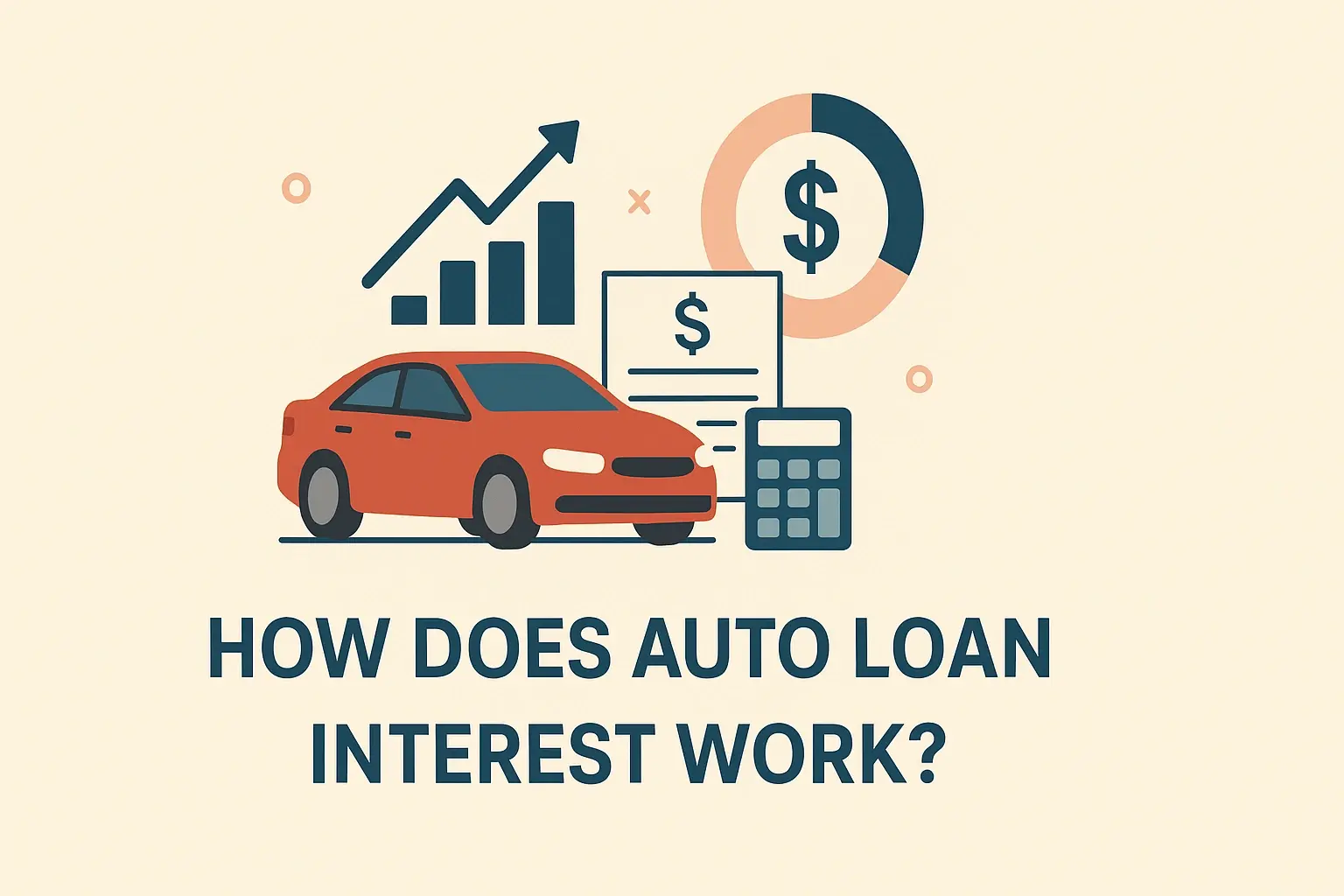
Understanding how auto loan interest works is crucial for making an informed decision when financing your next vehicle. This guide breaks down the core concepts, from calculating interest to understanding factors that influence your rate, empowering you to secure the best possible deal on your car loan.
Understanding Auto Loan Interest: The Basics
When you take out a loan to purchase a vehicle, you're essentially borrowing money from a lender. This borrowed amount is called the principal. Auto loan interest is the cost of borrowing that money, expressed as a percentage of the principal. Lenders charge interest to make a profit on the loan. For borrowers, understanding this cost is paramount to managing their finances effectively and avoiding unnecessary expenses. In 2025-26, with fluctuating economic conditions, a clear grasp of interest mechanics can save consumers hundreds, if not thousands, of dollars over the life of their loan.
The interest rate determines how much extra you'll pay on top of the original price of the car. It's a critical component of your monthly payment and the total amount you'll spend to own the vehicle. For instance, a seemingly small difference in interest rate can translate into a significant financial impact over a typical 3-to-6-year loan term. This guide will demystify these concepts, providing you with the knowledge to navigate the auto loan market with confidence.
Why Lenders Charge Interest
Lenders are businesses, and their primary goal is to generate revenue. When they lend you money, they are taking on a risk. There's a chance you might not repay the loan as agreed. Interest compensates them for this risk, as well as for the opportunity cost of not being able to use that money themselves. Additionally, lenders have operational costs, such as processing applications, managing accounts, and employing staff, which are also covered by the interest charged.
Furthermore, interest accounts for the time value of money. A dollar today is worth more than a dollar in the future due to inflation and potential investment returns. The interest you pay reflects the lender's expectation of what that money would be worth over the loan's duration.
The Role of Principal
The principal is the original amount of money you borrow to buy the car. If you purchase a car for $30,000 and make a down payment of $5,000, your loan principal will be $25,000. The interest you pay is calculated based on this principal amount. A larger principal generally means a higher total interest cost, assuming the interest rate and loan term remain the same. Conversely, a larger down payment reduces your principal, thereby lowering the overall interest you'll pay.
APR vs. Interest Rate: What's the Difference?
While often used interchangeably, the Annual Percentage Rate (APR) and the interest rate are not the same, though they are closely related. Understanding this distinction is vital for comparing loan offers accurately. Lenders are required by law to disclose the APR, which provides a more comprehensive picture of the total cost of borrowing.
Defining the Interest Rate
The interest rate, often referred to as the nominal interest rate or the note rate, is the percentage charged on the principal loan amount. It's the base cost of borrowing money. For example, if you have a $25,000 loan at a 5% interest rate, you'll be charged 5% of $25,000 per year in interest, before considering how payments are structured.
Defining APR
The Annual Percentage Rate (APR) is a broader measure of the cost of borrowing money. It includes the interest rate plus certain other fees associated with the loan. For auto loans, these fees might include origination fees, dealer fees, or administrative charges. The APR is expressed as a yearly rate and is designed to give consumers a more accurate representation of the total cost of the loan over its lifetime. When comparing different loan offers, always look at the APR, as it provides a standardized way to assess which loan is truly cheaper.
Why APR is Important for Comparison
Imagine two lenders offering a $25,000 auto loan for 60 months. Lender A offers a 5% interest rate with no fees. Lender B offers a 4.5% interest rate but charges a $500 origination fee. On the surface, Lender B seems cheaper due to the lower interest rate. However, when you factor in the origination fee, the APR for Lender B might actually be higher than Lender A's. The APR calculation effectively spreads that $500 fee over the life of the loan, giving you a comparable annual cost.
In 2025-26, with a competitive lending market, understanding APR helps you cut through marketing jargon and identify the most cost-effective financing option. Always ask for the APR and compare it across all potential lenders.
How Auto Loan Interest is Calculated
The calculation of auto loan interest is typically based on a simple interest method, applied to the outstanding principal balance. While the exact daily or monthly calculation can be complex due to payment schedules, the core principle remains consistent: interest accrues on the amount you still owe.
The Simple Interest Formula
The fundamental formula for calculating simple interest is:
Interest = Principal × Rate × Time
In the context of an auto loan, this formula is applied iteratively. The 'Rate' is the annual interest rate (APR) divided by 12 to get the monthly rate. The 'Time' is typically one month. However, because payments are made monthly, and each payment covers both interest and a portion of the principal, the principal amount decreases with each payment. This means the interest charged in subsequent months is on a smaller principal balance.
Monthly Interest Calculation
A common way lenders calculate your monthly interest is:
Monthly Interest = (Remaining Loan Balance × Annual Interest Rate) / 12
Let's illustrate with an example. Suppose you have a $25,000 loan at a 6% APR. In the first month:
Annual Interest Rate = 6% or 0.06
Monthly Interest Rate = 0.06 / 12 = 0.005
Remaining Loan Balance (Month 1) = $25,000
First Month's Interest = $25,000 × 0.005 = $125
If your total monthly payment is $470, then $125 of that payment goes towards interest, and the remaining $345 ($470 - $125) goes towards reducing the principal. In the second month, the interest will be calculated on the new, lower principal balance ($25,000 - $345 = $24,655).
Amortization Explained
This process, where each payment covers both interest and principal, is called amortization. Over the life of the loan, the portion of your payment allocated to interest decreases, while the portion allocated to principal increases. This is why paying off a loan early can save you a significant amount of interest – you're reducing the principal faster, meaning less interest accrues over time.
For a 2025-26 car buyer, understanding this means recognizing that early payments are more heavily weighted towards interest. Making extra principal payments, if allowed by your loan terms, can accelerate the payoff and reduce total interest paid.
Key Factors That Influence Your Auto Loan Interest Rate
Your auto loan interest rate isn't arbitrary. Lenders assess various factors to determine the risk associated with lending you money, and this risk directly impacts the rate they offer. The better your profile, the lower the interest rate you're likely to secure.
Credit Score
This is arguably the most significant factor. Your credit score is a three-digit number (typically ranging from 300 to 850) that summarizes your credit history and your likelihood of repaying borrowed money. Lenders use credit scores to gauge risk. A higher credit score indicates a lower risk, leading to more favorable interest rates. Conversely, a lower credit score signals higher risk, resulting in higher interest rates or even loan denial.
As of 2025-26, here's a general breakdown of how credit scores can affect auto loan rates:
Excellent Credit (780+): Often qualify for the lowest advertised rates, potentially below 4%.
Very Good Credit (700-779): Can expect competitive rates, likely in the 4%-6% range.
Good Credit (620-699): Rates may be in the 6%-9% range.
Fair Credit (580-619): Rates can be significantly higher, potentially 10%-15% or more.
Poor Credit (Below 580): May face very high rates (15%+) or require a co-signer or a larger down payment.
Before applying for a loan, make sure to check your credit score. Understanding your credit standing allows you to set realistic expectations and identify areas for improvement. If your credit score isn't where you'd like it to be, consider working on improving it before applying for a car loan. Companies like Credit Repair Ease offer professional services that can help you navigate the credit repair process, potentially leading to better loan terms. You can reach out to them at (888) 803-7889 for assistance.
Loan-to-Value (LTV) Ratio
The LTV ratio compares the amount you're borrowing (the loan principal) to the car's value. A lower LTV means you're borrowing a smaller percentage of the car's worth, which lenders see as less risky. For example, if a car is worth $30,000 and you're borrowing $25,000, your LTV is 83.3% ($25,000 / $30,000). A higher LTV might result in a higher interest rate, especially if it exceeds 100% (borrowing more than the car is worth).
Loan Term Length
As discussed later, longer loan terms generally mean higher total interest paid, but they can also sometimes come with slightly higher interest rates compared to shorter terms for the same borrower. This is because the lender's risk is extended over a longer period.
Income and Employment History
Lenders want to see that you have a stable income sufficient to cover your loan payments. A consistent employment history and a debt-to-income ratio (DTI) that shows you can comfortably afford the new car payment are positive indicators. A higher DTI can signal financial strain, leading to a higher interest rate.
Down Payment Size
A larger down payment reduces the LTV ratio and demonstrates your financial commitment to the purchase. This makes the loan less risky for the lender, often resulting in a better interest rate. A substantial down payment can also help you avoid negative equity (owing more on the loan than the car is worth).
Vehicle Age and Mileage
Newer cars with lower mileage are generally considered less risky than older, high-mileage vehicles. Lenders may offer lower interest rates on new car loans compared to used car loans, as newer vehicles depreciate slower and are less likely to require immediate costly repairs.
Market Conditions
Broader economic factors, such as the Federal Reserve's interest rate policies and overall inflation rates in 2025-26, can influence the general level of interest rates available for auto loans. When the Federal Reserve raises its benchmark rate, it tends to push up interest rates across the board.
Fixed vs. Variable Interest Rates
When you take out an auto loan, the interest rate can be either fixed or variable. Each type has its own advantages and disadvantages, and the choice can significantly impact your long-term borrowing costs.
Fixed Interest Rates
A fixed interest rate remains the same for the entire duration of the loan. This means your monthly principal and interest payment will never change. The primary advantage of a fixed rate is predictability. You know exactly how much you'll pay each month and the total amount of interest you'll pay over the life of the loan.
Pros:
Predictable monthly payments.
Protection against rising interest rates.
Easier budgeting.
Cons:
Often start slightly higher than variable rates.
You don't benefit if market interest rates fall.
For most car buyers in 2025-26, a fixed rate is the preferred option due to its stability, especially if they plan to keep the car for the loan's duration. It simplifies financial planning and removes the uncertainty of fluctuating payments.
Variable Interest Rates
A variable interest rate is tied to a benchmark interest rate, such as the prime rate or LIBOR (though LIBOR is being phased out and replaced by SOFR). This means the interest rate can fluctuate over the life of the loan, increasing or decreasing as the benchmark rate changes. If the benchmark rate goes up, your interest rate and monthly payment will likely increase. If it goes down, your rate and payment may decrease.
Pros:
Often start with a lower interest rate than fixed rates.
Can benefit if market interest rates fall.
Cons:
Unpredictable monthly payments.
Risk of payments increasing significantly if market rates rise.
Can be harder to budget for.
Variable rates are generally less common for auto loans compared to mortgages, but they do exist. They might be attractive if you plan to pay off the loan very quickly or if you anticipate interest rates falling significantly in the future. However, the risk of rising payments often outweighs the initial savings for most consumers.
Comparison Table: Fixed vs. Variable Rates
Feature
Fixed Interest Rate
Variable Interest Rate
Rate Stability
Stays the same for the loan term.
Fluctuates with market benchmarks.
Payment Predictability
High. Payments are consistent.
Low. Payments can change.
Initial Rate
Typically slightly higher.
Typically lower.
Risk of Rate Increase
None.
High.
Benefit from Rate Decrease
None.
Potential.
Best For
Budget-conscious borrowers seeking stability.
Borrowers willing to accept risk for potentially lower initial rates or those planning very short loan terms.
The Impact of Loan Term Length on Interest Paid
The loan term is the amount of time you have to repay your auto loan, typically measured in months. Common terms range from 36 months (3 years) to 84 months (7 years). The length of your loan term has a profound impact on both your monthly payments and the total amount of interest you will pay over the life of the loan.
Shorter Loan Terms
Opting for a shorter loan term, such as 36 or 48 months, generally results in higher monthly payments. However, because you're paying off the principal faster, you'll accrue significantly less interest over the life of the loan. This means you'll pay less overall for the car.
Example:
Consider a $25,000 loan at 6% APR:
48-month term: Monthly payment approx. $584. Total interest paid approx. $2,992.
72-month term: Monthly payment approx. $400. Total interest paid approx. $3,780.
In this simplified example, choosing the shorter 48-month term means paying an extra $184 per month but saving nearly $800 in interest over the life of the loan.
Longer Loan Terms
Longer loan terms, such as 72 or 84 months, result in lower monthly payments. This can make a more expensive vehicle more affordable on a month-to-month basis, which is appealing to many buyers. However, the trade-off is that you will pay substantially more in interest over the life of the loan. The loan also remains on your credit report for a longer period.
Risks of Longer Terms:
Negative Equity: Cars depreciate quickly. With a longer loan term, you're more likely to owe more on your loan than the car is worth, especially in the early years. This is known as being "upside down" or in negative equity.
Higher Total Cost: The total cost of the vehicle will be higher due to the extended period of interest accrual.
Increased Risk for Lenders: While often available, longer terms can sometimes carry slightly higher interest rates because the lender's risk is extended over a longer period.
For 2025-26 car buyers, it's crucial to weigh the benefit of lower monthly payments against the increased total cost. While a longer term might seem attractive for affordability, it's often more financially prudent to opt for the shortest term you can comfortably afford.
Balancing Affordability and Total Cost
The "best" loan term depends on your individual financial situation and goals. If your priority is minimizing the total amount paid for the car, a shorter term is ideal. If your priority is keeping monthly payments as low as possible to manage cash flow, a longer term might be necessary, but you must be aware of the significant interest cost. Always use an auto loan calculator to see the total interest paid for different term lengths before making a decision.
Understanding Your Amortization Schedule
An amortization schedule is a table that details each loan payment over its entire term. It breaks down how much of each payment goes towards interest and how much goes towards the principal, and it shows the remaining balance after each payment. Understanding this schedule is key to grasping how your loan is paid down and how interest accrues.
What an Amortization Schedule Shows
For each payment period (usually monthly), an amortization schedule will typically display:
Payment Number: The sequence of your payment (e.g., 1 of 60).
Payment Amount: The total amount of your scheduled payment.
Interest Paid: The portion of the payment that covers interest for that period.
Principal Paid: The portion of the payment that reduces the outstanding loan balance.
Remaining Balance: The amount of principal still owed after the payment is applied.
Early Payments vs. Late Payments
As seen in the calculation examples, the early payments on an amortizing loan are heavily weighted towards interest. For instance, in the first few years of a 60-month loan, a significant majority of your payment might be going towards interest, with only a small portion reducing the principal. Conversely, in the later years of the loan, the roles reverse, and most of your payment goes towards principal.
This is why making extra payments can be so effective. If you can afford to pay an extra $100 or $200 towards the principal each month, you're directly reducing the balance on which future interest is calculated. This can shave years off your loan term and save you thousands in interest.
Visualizing Loan Payoff
An amortization schedule visually demonstrates the payoff process. You'll see the remaining balance steadily decreasing, but the rate of decrease accelerates in the later stages of the loan. This highlights the benefit of early principal reduction. Many online auto loan calculators provide amortization schedules, allowing you to see the impact of extra payments or different loan terms.
For 2025-26 car buyers, consulting an amortization schedule before and during the loan term is a powerful tool. It provides transparency and helps you make informed decisions about accelerating your loan payoff if your financial situation allows.
Strategies for Shopping for the Best Auto Loan Interest Rate
Securing the lowest possible interest rate on your auto loan can save you a substantial amount of money over the life of the loan. It requires a proactive approach and a willingness to compare offers from multiple lenders. Here are key strategies to employ:
Get Pre-Approved Before Visiting Dealerships
This is perhaps the most crucial step. Before you even set foot in a dealership or start seriously looking at cars, apply for pre-approval from your bank, credit union, or online lenders. This process involves a credit check and gives you a clear understanding of the interest rate and loan terms you qualify for based on your creditworthiness. Having a pre-approval letter in hand gives you leverage at the dealership. You can then compare the dealership's financing offer to your pre-approved offer and negotiate for a better rate.
Compare Offers from Multiple Lenders
Don't settle for the first offer you receive. Shop around! Consider:
Banks: Your existing bank might offer competitive rates, especially if you have a strong relationship.
Credit Unions: Often provide lower interest rates and more flexible terms than traditional banks, especially for members.
Online Lenders: Many online lenders specialize in auto loans and can offer very competitive rates due to lower overhead costs.
Dealership Financing: While convenient, dealership financing (often through captive finance companies like Ford Credit or GM Financial) may not always offer the best rates. Always compare it to your pre-approved offers.
When comparing, always look at the APR, not just the interest rate. Also, consider the loan term, fees, and any pre-payment penalties.
Understand Your Credit Score
As previously mentioned, your credit score is a primary determinant of your interest rate. Before you start applying for loans, check your credit report and score. If your score is lower than you'd like, take steps to improve it. This might involve paying down existing debt, ensuring all bills are paid on time, and avoiding opening too many new credit accounts. Improving your credit score by even 20-30 points can lead to significant savings on an auto loan. If you need assistance with credit repair, consider contacting Credit Repair Ease at (888) 803-7889. They can help you understand your credit and work towards improving it.
Negotiate the Price of the Car Separately from Financing
Dealerships often try to bundle the car price and financing into one negotiation. This can be a tactic to obscure where you're getting the best deal. Always negotiate the "out-the-door" price of the car first. Once you have agreed on the vehicle's price, discuss financing. If the dealership's financing offer is not competitive with your pre-approved offers, politely decline it and use your own financing.
Consider a Larger Down Payment
As discussed, a larger down payment reduces your loan-to-value ratio, making the loan less risky for the lender. This can often lead to a lower interest rate. If you have the savings, putting down more money can be a wise investment that pays off in interest savings over time.
Look for Special Offers
Manufacturers and lenders sometimes offer special financing deals, such as 0% APR or very low introductory rates. These offers are often targeted at buyers with excellent credit and specific vehicle models. While attractive, always read the fine print to understand the terms and conditions, and compare them to standard loan offers.
When and How to Refinance Your Auto Loan
Refinancing your auto loan means replacing your current loan with a new one, typically with different terms, a lower interest rate, or both. It's a strategy that can save you money, especially if your financial situation or market conditions have changed since you initially took out the loan.
Reasons to Refinance
Lower Interest Rate: If your credit score has improved significantly since you took out the loan, or if market interest rates have dropped, you may qualify for a lower APR. This is the most common and beneficial reason to refinance.
Shorter Loan Term: You might want to refinance to a shorter loan term to pay off your car faster and save on total interest, even if the monthly payment increases slightly.
Remove a Co-signer: If you initially needed a co-signer due to a lower credit score, you might be able to refinance once your credit has improved to remove them from the loan.
Change Loan Type: You might want to switch from a variable-rate loan to a fixed-rate loan for payment stability.
When to Consider Refinancing
The best time to consider refinancing is typically:
After a Credit Score Improvement: If your credit score has jumped 40-50 points or more, you're likely in a much better position to get a lower rate.
When Interest Rates Fall: If the Federal Reserve has lowered interest rates or market conditions are favorable, you might find better deals.
Mid-Loan Term: Refinancing is often most beneficial when you're not too far into your loan term. If you've paid off a significant portion of the principal, the potential savings from a lower rate might be less impactful. However, even in later stages, a substantial rate drop can still yield savings.
Avoid if Penalties are High: Check your current loan agreement for any early payoff or refinancing penalties. These can sometimes negate the benefits of refinancing.
How to Refinance Your Auto Loan
The process is similar to applying for an initial auto loan:
Check Your Current Loan Details: Know your outstanding balance, remaining term, and current interest rate.
Assess Your Credit: Obtain your current credit score and report.
Shop Around: Contact banks, credit unions, and online lenders to compare refinancing offers. Be sure to inquire about APRs, fees, and terms.
Apply for the New Loan: Once you find a suitable offer, formally apply for the new loan. The lender will likely perform a credit check.
Complete the Paperwork: If approved, you'll sign the new loan agreement. The new lender will typically pay off your old loan directly, and you'll then make payments to the new lender.
Update Registration and Insurance: Ensure your vehicle registration and insurance reflect the new loan details, especially if the lienholder changes.
For 2025-26 borrowers, staying vigilant about market conditions and your own financial health can unlock opportunities to save money through refinancing. It's a smart financial move if done at the right time and with the right offer.
Making Informed Decisions About Your Auto Loan
Understanding how auto loan interest works is not just about comprehending financial jargon; it's about empowering yourself to make financially sound decisions that save you money. From the fundamental concept of interest accruing on your principal to the intricate factors influencing your rate, such as your credit score and loan term, knowledge is your greatest asset.
By grasping the difference between APR and interest rate, understanding amortization schedules, and actively shopping for the best rates through pre-approval and comparison, you can significantly reduce the total cost of your vehicle. Remember that your creditworthiness plays a pivotal role, so maintaining good credit is an ongoing investment. If you're looking to improve your credit score before or during the loan process, consider reaching out to Credit Repair Ease at (888) 803-7889 for professional assistance. Ultimately, whether you're buying a new car or considering refinancing an existing loan, a well-informed approach ensures you secure favorable terms and drive away with confidence, knowing you've made the best financial choice for your situation.
null
How Does Auto Loan Interest Work

Krystin Bresolin