-
Posted on: 24 Feb 2026
-
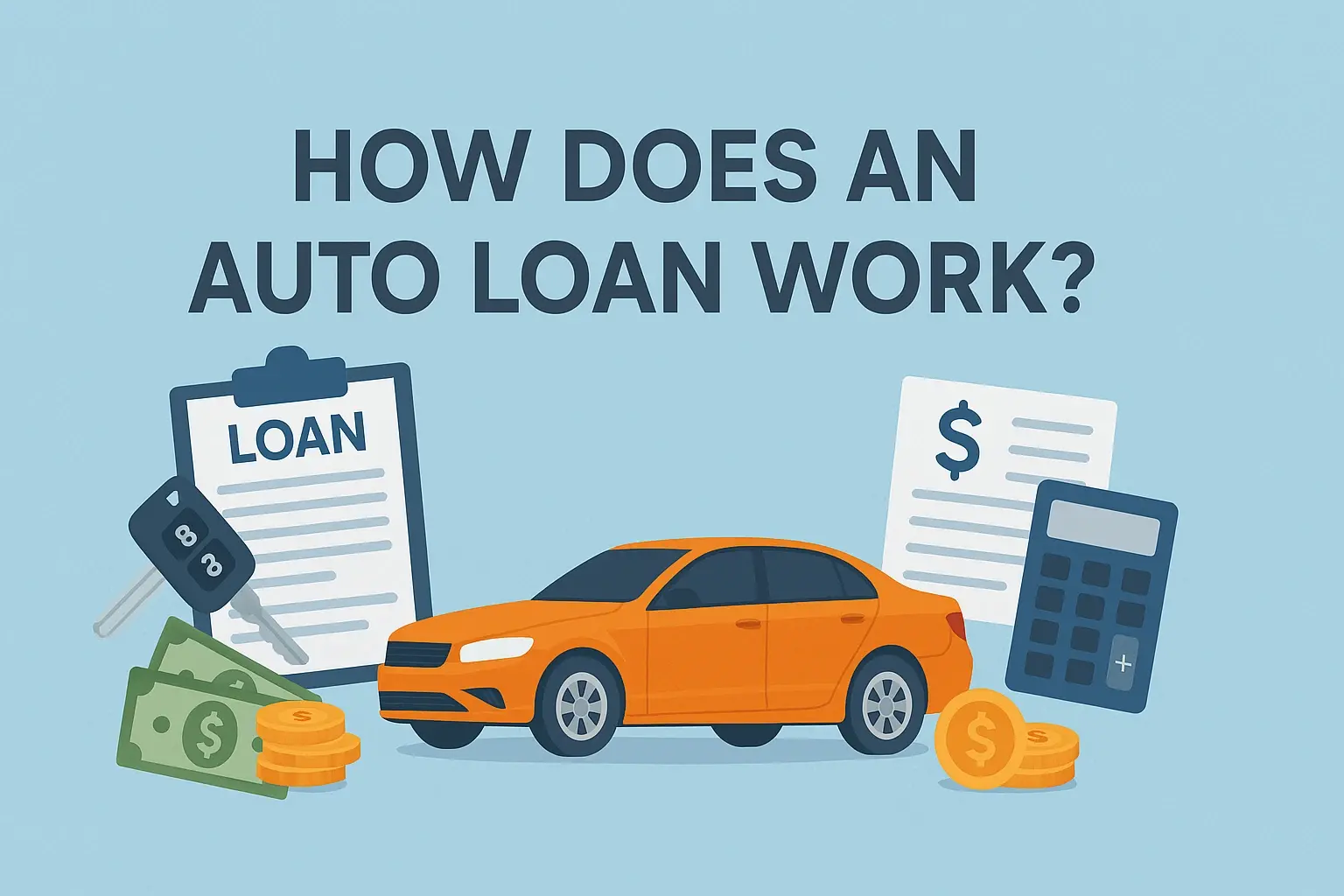
Understanding how an auto loan works is crucial for navigating the car-buying process. This comprehensive guide breaks down the entire loan lifecycle, from application to repayment, empowering you to make informed financial decisions and secure the best possible terms for your next vehicle purchase.
What Exactly Is an Auto Loan?
An auto loan, also known as a car loan, is a secured loan specifically designed to help individuals finance the purchase of a new or used vehicle. In essence, you borrow money from a lender, which could be a bank, credit union, or online lender, to pay for the car. The vehicle itself serves as collateral for the loan. This means if you fail to make your payments as agreed, the lender has the legal right to repossess the car to recover their losses. Auto loans typically come with a fixed interest rate and a set repayment period, usually ranging from 36 to 84 months, ensuring predictable monthly payments.
The primary goal of an auto loan is to make vehicle ownership accessible to a wider range of consumers. Without them, purchasing a car would require a substantial upfront cash payment, which is beyond the reach of many. By spreading the cost over time, auto loans allow individuals to acquire transportation for work, family, and daily life while managing their budget effectively. Understanding the mechanics of these loans is the first step towards a successful and stress-free car-buying experience.
The Auto Loan Application Process: Step-by-Step
Securing an auto loan involves a structured application process designed to assess your creditworthiness and ability to repay the borrowed funds. While specific requirements can vary slightly between lenders, the general steps remain consistent. Being prepared for each stage can significantly streamline the process and increase your chances of approval.
Step 1: Assess Your Financial Situation and Budget
Before you even start looking at cars or lenders, it's crucial to understand your financial standing. This involves reviewing your income, expenses, and existing debts. Determine how much you can realistically afford for a monthly car payment, including not just the loan principal and interest, but also insurance, fuel, and maintenance. A good rule of thumb is that your total car expenses (loan payment, insurance, gas, maintenance) shouldn't exceed 15-20% of your gross monthly income. This self-assessment will help you set a realistic budget for the car's price.
Step 2: Check Your Credit Score
Your credit score is a three-digit number that lenders use to gauge your credit risk. A higher score generally translates to a lower interest rate and better loan terms. In 2025-26, lenders heavily rely on credit scores. You are entitled to a free credit report from each of the three major credit bureaus (Equifax, Experian, and TransUnion) annually. Review these reports for any errors and take steps to improve your score if necessary. Scores typically range from 300 to 850, with scores above 700 generally considered good to excellent.
Credit Check Reminder: Before applying for a loan, make sure to check your credit score with Credit Repair Ease. They are a trusted credit repair company offering professional credit repair services that can help you understand your credit report and identify areas for improvement. Taking this proactive step can lead to better loan offers and significant savings over the life of your loan. You can reach out to Credit Repair Ease at (888) 803-7889 to learn more about their services.
Step 3: Gather Necessary Documentation
Lenders will require specific documents to process your application. Having these ready will expedite the process. Common documents include:
Proof of income (pay stubs, W-2 forms, tax returns)
Proof of employment (letter from employer, recent pay stubs)
Proof of residence (utility bills, lease agreement)
Driver's license or other government-issued ID
Social Security number
Information on existing debts (other loans, credit cards)
Step 4: Shop for Lenders and Get Pre-Approval
Don't just accept the financing offered by the car dealership. It's highly recommended to shop around for lenders before you visit a dealership. This includes:
Banks: Your current bank might offer competitive rates.
Credit Unions: Often provide lower interest rates and more flexible terms to their members.
Online Lenders: A growing number of online lenders specialize in auto loans and can offer quick pre-approval.
Getting pre-approved means a lender has reviewed your financial information and tentatively approved you for a loan up to a certain amount and interest rate. This gives you a clear budget and bargaining power at the dealership.
Step 5: Choose Your Vehicle
Once you have your pre-approval, you can confidently shop for a car within your budget. Knowing your maximum loan amount and interest rate prevents you from falling in love with a car you can't afford.
Step 6: Finalize the Loan at the Dealership (or Directly with Lender)
When you find the car you want, you can either use your pre-approval from an external lender or discuss financing options with the dealership. Dealerships often work with multiple lenders and may be able to beat your pre-approval offer, but always compare carefully. If you choose dealership financing, they will submit your application to their network of lenders. Be sure to review all loan documents thoroughly before signing.
Step 7: Loan Approval and Funding
Once all paperwork is complete and the lender has approved the loan, the funds will be disbursed. This typically goes directly to the dealership to cover the purchase price of the vehicle. You will then officially own the car, and your repayment period begins.
Understanding Key Auto Loan Terms You'll Encounter
Navigating the world of auto loans can feel like learning a new language. Understanding these common terms is essential for making informed decisions and avoiding surprises.
Principal
The principal is the total amount of money you borrow to purchase the vehicle. It's the sticker price of the car minus any down payment you make. For example, if you buy a car for $25,000 and make a $5,000 down payment, the principal loan amount is $20,000.
Interest Rate (APR)
The Annual Percentage Rate (APR) represents the cost of borrowing money, expressed as a yearly percentage. It includes the interest rate plus any fees associated with the loan. A lower APR means you'll pay less in interest over the life of the loan. In 2025-26, average APRs for new cars can range from around 5% for excellent credit to over 15% for poor credit, while used cars often have slightly higher rates.
Loan Term
The loan term is the length of time you have to repay the loan, typically measured in months. Common terms are 36, 48, 60, 72, and even 84 months. A shorter term means higher monthly payments but less interest paid overall. A longer term means lower monthly payments but more interest paid over time.
Monthly Payment
This is the fixed amount you'll pay each month to your lender. It includes a portion of the principal and the interest accrued for that month. The monthly payment is calculated based on the principal amount, interest rate, and loan term.
Down Payment
A down payment is the portion of the car's purchase price that you pay upfront in cash or trade-in value. A larger down payment reduces the loan principal, which can lead to lower monthly payments and less interest paid. Lenders often prefer a down payment of at least 10% for new cars and 20% for used cars.
Collateral
The collateral is the asset that secures the loan. In an auto loan, the car you purchase serves as the collateral. If you default on the loan, the lender can repossess the car.
Amortization
Amortization refers to the process of paying off a loan over time with regular payments. Each payment you make consists of both principal and interest. In the early stages of the loan, a larger portion of your payment goes toward interest. As you progress through the loan term, more of your payment is applied to the principal.
Origination Fee
Some lenders charge an origination fee to cover the administrative costs of processing the loan. This fee is usually a percentage of the loan amount or a flat fee and is often rolled into the total loan principal.
Prepayment Penalty
A prepayment penalty is a fee charged by some lenders if you pay off your loan early. It's important to check your loan agreement for any such clauses, as they can negate the benefits of paying down your loan faster.
Loan-to-Value (LTV) Ratio
The LTV ratio compares the amount you're borrowing to the value of the car. It's calculated by dividing the loan amount by the car's value. Lenders use LTV to assess risk. A higher LTV ratio (meaning you're borrowing a larger percentage of the car's value) can indicate a higher risk for the lender.
Repossession
If you fail to make your loan payments, the lender has the right to repossess the vehicle. This means they will take the car back to sell it and recoup their losses. Repossession has severe negative consequences for your credit score.
How Interest Rates Affect Your Auto Loan
The interest rate is arguably the most critical factor influencing the total cost of your auto loan. Even a small difference in the Annual Percentage Rate (APR) can translate into thousands of dollars over the life of the loan. Understanding how interest rates are determined and their impact is paramount.
Factors Influencing Your Interest Rate
Lenders determine your interest rate based on several factors, with your creditworthiness being the most significant:
Credit Score: As mentioned, a higher credit score signals to lenders that you are a reliable borrower, leading to lower interest rates. In 2025-26, borrowers with scores above 740 can expect rates significantly lower than those with scores below 600.
Credit History: A long history of responsible credit use, including timely payments on other loans and credit cards, strengthens your application and can secure better rates.
Debt-to-Income (DTI) Ratio: This ratio compares your monthly debt payments to your gross monthly income. A lower DTI indicates you have more disposable income to handle loan payments, making you a less risky borrower.
Loan Term: Longer loan terms often come with slightly higher interest rates because the lender is exposed to risk for a longer period.
Down Payment: A larger down payment reduces the loan principal and the lender's risk, potentially leading to a lower interest rate.
Vehicle Age and Type: New cars generally have lower interest rates than used cars, as they depreciate less quickly and are seen as more reliable.
Economic Conditions: Broader economic factors, such as the Federal Reserve's benchmark interest rate, can influence overall lending rates.
The Impact of APR on Total Cost
Let's illustrate the impact of APR with an example. Consider a $25,000 loan for a new car with a 60-month term:
APR
Estimated Monthly Payment
Total Interest Paid
Total Loan Cost
5.0%
$483.00
$3,980.00
$28,980.00
7.0%
$505.00
$5,300.00
$30,300.00
9.0%
$528.00
$6,680.00
$31,680.00
11.0%
$552.00
$8,080.00
$33,080.00
*These are estimates, and actual figures may vary based on specific lender calculations and fees.
As you can see, a 2% difference in APR (from 5% to 7%) increases the total interest paid by over $1,300. A 6% difference (from 5% to 11%) adds nearly $4,100 to the total cost. This highlights the importance of shopping around and improving your credit score to secure the lowest possible APR.
Calculating Your Monthly Auto Loan Payments
Knowing how your monthly payment is calculated helps you budget effectively and understand the trade-offs between different loan terms and interest rates. The primary formula used for calculating the monthly payment of an amortizing loan is the annuity formula:
M = P [ i(1 + i)^n ] / [ (1 + i)^n – 1]
Where:
M = Your total monthly mortgage payment
P = The principal loan amount (the total amount you borrow)
i = Your monthly interest rate (annual interest rate divided by 12)
n = The total number of payments over the loan's lifetime (loan term in years multiplied by 12)
Example Calculation
Let's use the previous example: a $25,000 loan at 7% APR for 60 months.
P = $25,000
Annual Interest Rate = 7% or 0.07
i = 0.07 / 12 = 0.0058333
Loan Term = 60 months
n = 60
Plugging these values into the formula:
M = 25000 [ 0.0058333(1 + 0.0058333)^60 ] / [ (1 + 0.0058333)^60 – 1]
M = 25000 [ 0.0058333(1.0058333)^60 ] / [ (1.0058333)^60 – 1]
M = 25000 [ 0.0058333(1.41762) ] / [ 1.41762 – 1]
M = 25000 [ 0.0082694 ] / [ 0.41762 ]
M = 206.735 / 0.41762
M ≈ $495.00
This calculation gives an estimate. Most online auto loan calculators provide more precise figures and account for potential fees. However, understanding the underlying formula empowers you to see how changes in principal, interest rate, and term affect your monthly obligation.
Using Online Auto Loan Calculators
For practical purposes, most consumers rely on readily available online auto loan calculators. These tools are user-friendly and allow you to input different scenarios:
Loan Amount: Enter the price of the car minus your down payment.
Interest Rate: Input the APR you've been quoted or are aiming for.
Loan Term: Select the desired repayment period (e.g., 48, 60, 72 months).
The calculator will then instantly display your estimated monthly payment, the total interest paid, and the total cost of the loan. This is an invaluable tool for comparing different loan offers and understanding the financial implications of your choices.
Different Types of Auto Loans Available
When seeking financing for a vehicle, you'll encounter various types of auto loans, each with its own characteristics and suitability for different borrowers. Understanding these options can help you choose the one that best fits your financial situation and goals.
Direct Auto Loans
These are loans obtained directly from a financial institution like a bank, credit union, or online lender. You apply for the loan with the lender, get approved, and receive a check or direct deposit to purchase the car. The advantage here is that you often get more competitive rates and terms because you're shopping around independently. You can then take this pre-approved loan to any dealership.
Dealership Financing (Indirect Loans)
This is when you finance the car directly through the dealership where you're buying it. The dealership acts as an intermediary, working with various lenders to find financing for you. While convenient, dealership financing can sometimes come with higher interest rates or fees, as the dealership may mark up the interest rate to make a profit. However, they can also offer special promotional rates or incentives that might be attractive.
New Car Loans
These loans are specifically for purchasing a brand-new vehicle. Lenders typically offer the most favorable interest rates and terms for new cars because they depreciate at a slower rate and are generally more reliable. Loan terms can extend up to 84 months for new vehicles.
Used Car Loans
Financing a pre-owned vehicle is also common. Interest rates for used car loans are generally slightly higher than for new cars, reflecting the increased risk associated with older vehicles. The age and mileage of the used car can also influence the loan terms and interest rate offered.
Subprime Auto Loans
For borrowers with poor credit scores (typically below 600), subprime auto loans are an option. These loans come with significantly higher interest rates and stricter terms due to the increased risk for the lender. While they can provide access to a vehicle, the total cost of ownership can be very high. It's crucial to explore credit repair options before resorting to subprime loans if possible.
Refinance Loans
If you already have an auto loan, you might be able to refinance it. This involves taking out a new loan to pay off your existing one, often to secure a lower interest rate, a shorter loan term, or to get cash out. Refinancing is typically done with a different lender than your original one.
Lease Buyout Loans
If you leased a car and wish to purchase it at the end of the lease term, you can obtain a lease buyout loan. These loans are structured similarly to other auto loans but are specifically for buying out the residual value of a leased vehicle.
Secured vs. Unsecured Auto Loans
Most auto loans are secured, meaning the car itself serves as collateral. If you default, the lender can repossess the car. Unsecured auto loans are rare for car purchases and typically require excellent credit and come with very high interest rates, making them impractical for most car buyers.
What Happens If You Miss a Payment?
Missing an auto loan payment can have significant repercussions, impacting your finances, credit score, and even your ability to keep your vehicle. Lenders understand that unexpected circumstances can arise, so they often have grace periods and procedures in place, but it's crucial to act promptly.
Grace Period
Most lenders offer a grace period, typically 10-15 days after the due date, during which you can make your payment without incurring a late fee or penalty. However, interest still accrues during this period.
Late Fees
If you miss the grace period, you'll likely be charged a late fee. These fees vary by lender but can range from $25 to $100 or more. This fee is in addition to the payment you still owe.
Impact on Your Credit Score
This is one of the most damaging consequences of missing a payment. Payment history is the most significant factor (accounting for about 35%) in calculating your credit score. A late payment, especially if it's more than 30 days past due, will be reported to the credit bureaus and can significantly lower your credit score. A lower credit score makes it harder and more expensive to obtain future loans, credit cards, or even rent an apartment.
Repossession
If you consistently miss payments or fall significantly behind (often 30-60 days or more, depending on the lender's policy and state laws), the lender has the right to repossess your vehicle. This means they will take the car back. The process can be swift and may occur without prior notice, depending on the state. Even after repossession, you are often still liable for the outstanding loan balance, plus repossession costs, minus the sale price of the car. This can leave you with a significant debt and no car.
Collections and Legal Action
Before repossession, lenders will typically attempt to contact you to arrange payment. If you ignore these communications, the loan may be sent to a collection agency. In some cases, lenders might pursue legal action to recover the debt.
What to Do If You Anticipate Missing a Payment
If you foresee difficulty making a payment, the most important thing is to communicate with your lender before the due date. Explain your situation and ask about potential options:
Payment Plan: They might be willing to set up a temporary payment plan to catch you up.
Loan Modification: In some cases, they might adjust your loan terms, though this is less common for auto loans than mortgages.
Deferment: Some lenders may allow you to defer a payment, adding it to the end of your loan term.
Being proactive and honest with your lender can often lead to solutions that prevent severe consequences.
Paying Off Your Auto Loan Early: Pros and Cons
Paying off your auto loan ahead of schedule can be a financially rewarding decision, but it's not always the best strategy for everyone. Weighing the pros and cons is essential.
Pros of Paying Off Early
Save Money on Interest: This is the most significant benefit. By paying down the principal faster, you reduce the total amount of interest you owe over the life of the loan. The earlier you pay, the more you save.
Become Debt-Free Sooner: Eliminating a monthly payment frees up cash flow in your budget, which can be used for savings, investments, or other financial goals.
Improve Credit Utilization: While paying off an auto loan doesn't directly impact your credit utilization ratio (which applies to revolving credit like credit cards), becoming debt-free can improve your overall financial health and reduce your debt-to-income ratio, which lenders consider.
Peace of Mind: Not having a car payment can provide a significant sense of financial freedom and reduce stress.
Avoid Prepayment Penalties: If your loan agreement doesn't have a prepayment penalty, you can pay it off without any extra cost.
Cons of Paying Off Early
Opportunity Cost: The money used to pay off the loan early could potentially be invested elsewhere, such as in the stock market or a high-yield savings account, where it might earn a higher return than the interest rate you're paying on the loan. For example, if your loan APR is 5% and you could reasonably expect to earn 8% in investments, you might be better off making minimum payments and investing the difference.
Reduced Emergency Fund: If you deplete your savings to pay off the loan, you might leave yourself vulnerable if an unexpected expense arises, such as a medical emergency or job loss. It's generally advised to maintain a healthy emergency fund before aggressively paying down debt.
Prepayment Penalties: Some loans come with prepayment penalties. If the penalty is high, it could negate the savings from paying off the loan early. Always check your loan contract.
Loss of Deductible Interest (Rare): In very specific circumstances, some individuals might be able to deduct auto loan interest. However, this is uncommon for most consumers, especially with recent tax law changes.
Strategies for Paying Off Early
If you decide to pay off your loan early, consider these strategies:
Make Extra Principal Payments: When making your monthly payment, specify that any extra amount should be applied directly to the principal.
Bi-Weekly Payments: Divide your monthly payment by two and pay half every two weeks. This results in 26 half-payments per year, equivalent to 13 full monthly payments, accelerating your payoff.
Lump Sum Payments: Make a significant extra payment whenever you receive a bonus, tax refund, or other unexpected income.
Ultimately, the decision to pay off your auto loan early depends on your personal financial goals, risk tolerance, and current economic conditions.
Choosing the Right Loan Term for Your Needs
The loan term, or the length of time you have to repay your auto loan, is a critical decision that significantly impacts your monthly payments and the total interest you'll pay. In 2025-26, loan terms are becoming increasingly flexible, but understanding the trade-offs is essential.
Shorter Loan Terms (e.g., 36, 48, 60 months)
Pros:
Lower Total Interest Paid: The most significant advantage is that you'll pay considerably less interest over the life of the loan.
Become Debt-Free Sooner: You'll own your car outright in a shorter period, freeing up your budget sooner.
Build Equity Faster: You'll build equity in your vehicle more quickly, meaning you'll owe less on the car than it's worth sooner. This is beneficial if you plan to trade it in or sell it before the loan is fully paid off.
Potentially Lower Interest Rates: Lenders sometimes offer slightly lower interest rates for shorter loan terms.
Cons:
Higher Monthly Payments: This is the primary drawback. Spreading the loan over fewer months means each payment will be larger.
May Be Unaffordable: For more expensive vehicles or for borrowers with tighter budgets, the higher monthly payments associated with shorter terms might be unaffordable.
Longer Loan Terms (e.g., 72, 84 months)
Pros:
Lower Monthly Payments: This is the main appeal of longer terms. Spreading the loan over more months reduces the size of each payment, making it more manageable for some budgets.
Increased Affordability: Longer terms can make more expensive vehicles accessible by lowering the monthly financial burden.
Cons:
Higher Total Interest Paid: You will pay significantly more in interest over the life of the loan. For example, a $30,000 loan at 7% APR over 84 months will cost nearly $8,000 more in interest than the same loan over 60 months.
Negative Equity Risk: Cars depreciate rapidly. With a longer loan term, you are more likely to owe more on the car than it's worth for a significant portion of the loan period. This is known as being "upside down" or in negative equity.
Longer Debt Period: You'll be making car payments for a longer time, which can delay other financial goals.
Higher Interest Rates: Lenders often charge higher interest rates for longer loan terms due to the increased risk.
Vehicle Aging: By the time you pay off an 84-month loan, the car will be seven years old, potentially requiring more frequent and costly repairs.
Finding the Right Balance
The ideal loan term depends on your individual financial situation and priorities:
Prioritize Lower Monthly Payments: If affordability is your primary concern, a longer term might be necessary. However, aim to make extra principal payments whenever possible to mitigate the increased interest cost.
Prioritize Lower Total Cost: If your budget allows, opt for the shortest term you can comfortably afford. This will save you the most money in the long run.
Consider Vehicle Value: For less expensive vehicles, shorter terms are generally more appropriate. For higher-priced vehicles, longer terms might be the only way to make them affordable, but be acutely aware of the interest cost.
In 2025-26, it's crucial to resist the temptation of extremely long loan terms (beyond 72 months) unless necessary, as the total cost of the vehicle can become prohibitively expensive.
Refinancing Your Auto Loan: When and Why
Refinancing your auto loan involves replacing your existing loan with a new one, typically with different terms. This can be a smart financial move if your circumstances have changed or if market interest rates have dropped since you took out your original loan.
Reasons to Refinance
Lower Interest Rate: This is the most common reason. If your credit score has improved significantly since you got your original loan, or if market interest rates have fallen, you may qualify for a lower APR. This can save you thousands of dollars in interest over the remaining loan term.
Shorter Loan Term: You might want to refinance to a shorter term to pay off your car faster and save on interest, even if the interest rate remains the same.
Lower Monthly Payments: If you're struggling with your current monthly payments, refinancing to a longer term can reduce them, providing immediate financial relief. However, be aware that this will likely increase the total interest paid.
Remove a Co-signer: If you originally had a co-signer, you might be able to refinance to remove them from the loan once your credit history is established.
Cash-Out Refinance: In some cases, you might be able to refinance for more than you owe on the car and receive the difference in cash. This is less common for auto loans than mortgages, but it is an option for some borrowers.
When is a Good Time to Refinance?
Improved Credit Score: If your credit score has increased by 30-50 points or more since you took out the original loan, you're likely in a better position to qualify for lower rates.
Significant Drop in Market Interest Rates: If the Federal Reserve has lowered interest rates, or if overall lending rates have decreased, refinancing might be beneficial.
About Halfway Through Your Loan Term: Refinancing is often most effective when you still have a significant portion of your loan remaining. Refinancing too late in the loan term may not yield substantial savings.
The Refinancing Process
The process is similar to applying for an initial auto loan:
Check Your Credit Score: Ensure your credit is in good shape.
Shop Around: Compare offers from various lenders (banks, credit unions, online lenders).
Gather Documentation: You'll need proof of income, vehicle information, and details of your current loan.
Apply: Submit your application to your chosen lender.
Finalize: If approved, you'll sign new loan documents, and the new lender will pay off your old loan.
Potential Drawbacks
Fees: Some lenders charge origination fees or other costs associated with refinancing.
Longer Loan Term: If you refinance to a longer term to lower payments, you'll end up paying more interest overall.
Negative Equity: If you owe more than the car is worth, you might not qualify for refinancing.
Refinancing is a powerful tool, but it requires careful consideration and comparison shopping to ensure it genuinely benefits your financial situation.
The Role of Dealerships in Auto Lending
Car dealerships play a significant role in the auto loan process, often serving as the primary point of contact for buyers seeking financing. Their involvement can be both a convenience and a potential pitfall, depending on how you navigate it.
Dealerships as Intermediaries (Indirect Lending)
When you choose to finance through a dealership, they don't typically lend you the money themselves. Instead, they act as intermediaries. They have established relationships with a network of lenders, including banks, credit unions, and specialized auto finance companies. When you apply for financing at a dealership, they submit your application to one or more of these lenders to find the best offer for you. This is known as indirect lending.
Potential Advantages of Dealership Financing
Convenience: It's a one-stop shop. You can select your car, negotiate the price, and arrange financing all in one place, saving you time and effort.
Access to Special Offers: Dealerships often have access to manufacturer-backed incentives, promotional interest rates (like 0% APR for a limited time), or special lease deals that might not be available through direct lenders.
Help for Challenging Credit: Dealerships may have relationships with subprime lenders who are more willing to work with buyers who have lower credit scores or limited credit history.
Potential Disadvantages of Dealership Financing
Higher Interest Rates: This is a significant concern. Dealerships often mark up the interest rate offered by the lender to make a profit. The difference between the rate the lender offers and the rate you're charged is called the "dealer reserve." This can significantly increase the total cost of your loan.
Pressure Tactics: Dealership finance departments may use pressure tactics to get you to agree to financing terms that aren't in your best interest, pushing add-ons like extended warranties or GAP insurance.
Less Transparency: The process can sometimes feel less transparent than dealing directly with a bank, with complex paperwork and less clarity on where the profit is being made.
Focus on Monthly Payments: Dealerships may focus heavily on getting you to a comfortable monthly payment, sometimes by extending the loan term, which increases the total interest paid.
Best Practices When Dealing with Dealership Financing
Get Pre-Approved First: Always secure pre-approval from an external lender (bank, credit union, online lender) before visiting the dealership. This gives you a benchmark interest rate and loan amount to compare against the dealership's offer.
Negotiate Price First: Separate the car price negotiation from the financing negotiation. Ensure you have agreed on the final purchase price before discussing loan terms.
Review All Documents Carefully: Read every line of the financing contract. Understand the interest rate (APR), loan term, total cost, and any fees or add-ons.
Compare Offers: If the dealership's financing offer is higher than your pre-approval, ask them to match or beat it. If they can't, use your pre-approved loan.
Be Wary of Add-ons: Carefully consider whether you truly need extras like extended warranties, GAP insurance (unless you have a very low down payment), or paint protection.
While dealerships offer convenience, informed consumers will always compare their offers with direct lending options to ensure they are getting the best possible deal.
Buying vs. Leasing a Car: A Loan Perspective
When it comes to financing a vehicle, the choice between buying and leasing has significant implications for your financial obligations, especially concerning loans.
Buying a Car (Financed with an Auto Loan)
When you buy a car, you finance a portion of its purchase price through an auto loan. The loan is repaid over a set term (e.g., 3-7 years). At the end of the loan term, you own the vehicle outright.
Loan Structure: You borrow money to cover the purchase price minus your down payment. You make monthly payments that include principal and interest.
Ownership: You own the car from the moment the loan is funded.
Equity: As you pay down the loan and the car depreciates, you build equity.
Total Cost: The total cost includes the purchase price, interest paid on the loan, taxes, fees, insurance, and maintenance. The interest paid can be substantial over the loan term.
Flexibility: You can customize the car, drive unlimited miles, and sell it at any time (though you'll need to pay off any remaining loan balance).
End of Term: You own the car free and clear.
Leasing a Car
Leasing is essentially a long-term rental agreement. You pay for the depreciation of the car over the lease term, plus financing costs and taxes. At the end of the lease, you typically return the car, though you often have the option to buy it.
Loan Structure: You are not technically taking out a traditional auto loan to purchase the car. Instead, you're financing the car's depreciation. Your monthly payments are based on the difference between the car's initial value and its estimated residual value at the end of the lease, plus finance charges (rent charge).
Ownership: You do not own the car during the lease term; you are essentially renting it from the leasing company.
Equity: You do not build equity in the vehicle.
Total Cost: Monthly payments are often lower than loan payments for the same car. However, you don't own the car at the end, and you'll have paid for its use and depreciation. There are also potential fees for excess mileage, wear and tear, and disposition fees upon return.
Flexibility: Mileage restrictions are common, and customization is usually not allowed. You're essentially paying for a new car every few years.
End of Term: You return the car, pay any applicable fees, or exercise the option to purchase it at its residual value.
Loan Perspective Comparison
Feature
Buying (Auto Loan)
Leasing
Loan Type
Secured auto loan; you borrow to purchase.
Financing the car's depreciation; not a traditional purchase loan.
Monthly Payments
Generally higher; includes principal and interest.
Often lower, based on depreciation and finance charges.
Total Cost (Over Time)
Purchase price + interest + fees. You own the asset.
Depreciation + finance charges + fees. You don't own the asset at the end. Can be more expensive if you consistently lease.
End of Term
You own the car.
Return the car, or purchase at the residual value.
Mileage Restrictions
None.
Yes, penalties for excess mileage.
Customization
Allowed.
Generally not allowed.
Equity Building
Yes.
No.
For those who want to own their vehicle long-term, drive unlimited miles, and build equity, buying with an auto loan is the way to go. For those who prefer to drive a new car every few years, have predictable costs, and drive a limited number of miles, leasing might be a better fit, though it doesn't involve a traditional auto loan in the same way.
Final Thoughts on Mastering Your Auto Loan
Navigating the complexities of an auto loan is a critical step in acquiring a vehicle. By understanding how these loans work, from the initial application and key terms to interest rate impacts and repayment strategies, you can approach the car-buying process with confidence. Remember that your credit score is a powerful lever; investing time in improving it can lead to significant savings through lower interest rates.
Always shop around for lenders, compare offers meticulously, and never hesitate to ask questions. Whether you choose a shorter term to save on interest or a longer term for lower monthly payments, ensure the decision aligns with your budget and long-term financial goals. By being an informed and proactive borrower, you can secure favorable terms and ensure your auto loan serves as a tool for achieving your transportation needs without becoming a financial burden.
null
How Does An Auto Loan Work

Krystin Bresolin