-
Posted on: 10 Mar 2026
-
Credit Score Ranges and Their Impact on Auto Loan Approval and Rates
How Long Does it Take for an Auto Loan Inquiry to Affect Your Credit Score?
Strategies to Minimize the Impact of Applying for an Auto Loan
Conclusion: Making Informed Decisions About Auto Loans and Credit
Understanding How Auto Loan Applications Affect Credit
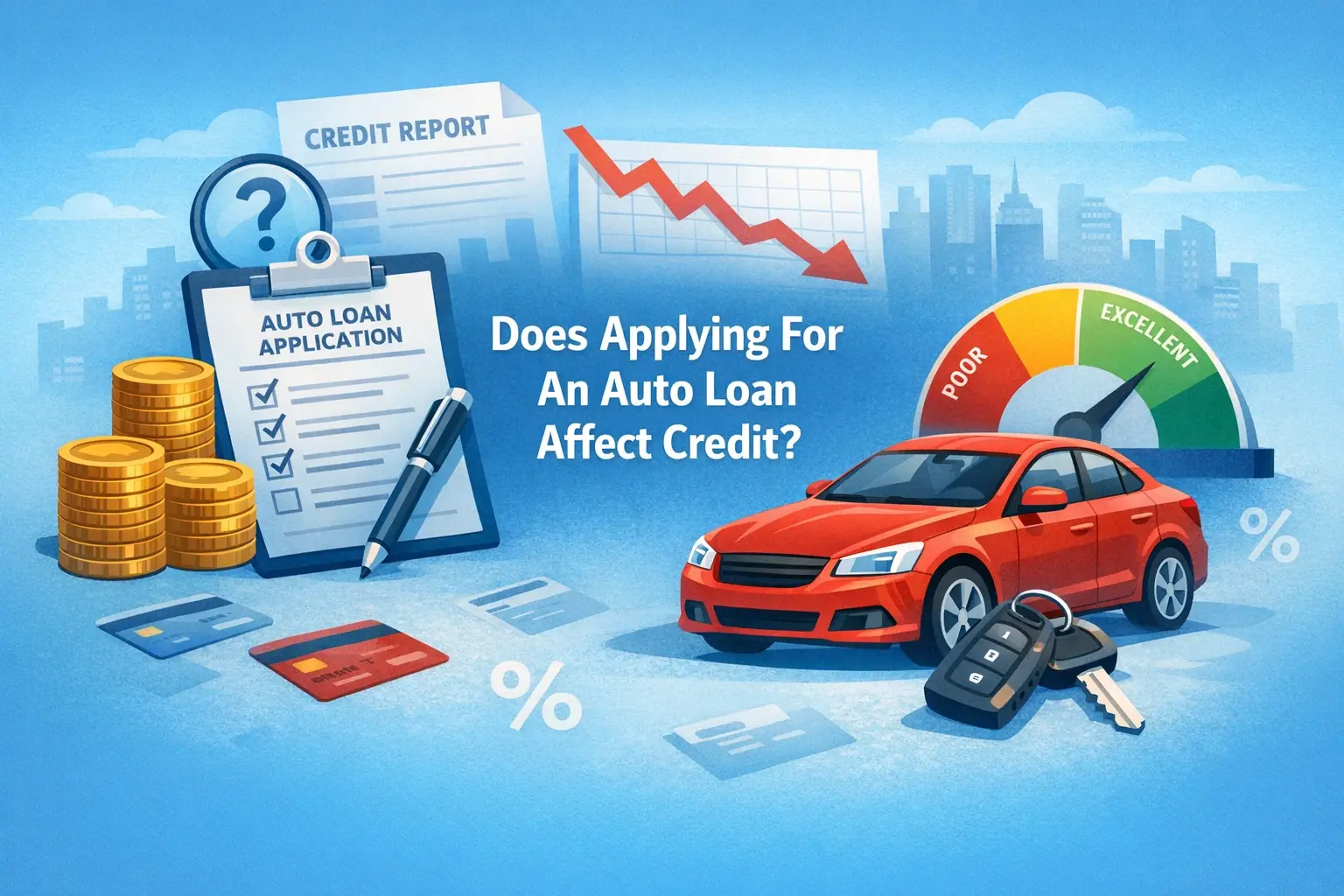
Applying for an auto loan can seem like a straightforward financial transaction, but it's crucial to understand its potential impact on your credit score. This guide will comprehensively explore how the process of seeking financing for a vehicle influences your creditworthiness, offering insights relevant for 2025 and 2026. We aim to demystify the credit implications so you can make informed decisions.
The primary way applying for an auto loan affects your credit is through a "hard inquiry." When a lender checks your credit report to evaluate your loan application, they typically perform a hard pull. This action is recorded on your credit report and can cause a small, temporary dip in your credit score. While this might sound concerning, understanding the nuances of credit scoring, the duration of the impact, and strategies for mitigation can alleviate much of the worry. This article will delve into these aspects, providing a detailed roadmap for consumers navigating the auto loan market.
Hard vs. Soft Inquiries: The Crucial Distinction
To truly grasp how applying for an auto loan affects credit, it's essential to differentiate between hard and soft inquiries. These are the two main types of credit checks, and they have vastly different implications for your credit score.
What is a Hard Inquiry?
A hard inquiry, also known as a hard pull or hard credit check, occurs when a lender reviews your credit report to make a lending decision. This happens when you formally apply for credit, such as a mortgage, auto loan, personal loan, or credit card. Lenders use hard inquiries to assess your credit risk. They want to see your credit history, payment behavior, and overall financial responsibility to determine if they should lend you money and under what terms.
Key characteristics of hard inquiries:
Triggered by your direct application for credit.
Can have a minor, temporary negative impact on your credit score.
Typically stays on your credit report for two years, though its scoring impact usually diminishes after a few months.
Multiple hard inquiries from different lenders within a short period for the same type of loan can signal to lenders that you are actively seeking a lot of credit, which can be perceived as risky.
What is a Soft Inquiry?
A soft inquiry, or soft pull, occurs when your credit report is reviewed for reasons other than a direct application for new credit. These checks do not impact your credit score. Examples of soft inquiries include:
Checking your own credit score or report.
Pre-qualification offers from credit card companies or lenders.
Background checks by potential employers (with your permission).
Existing creditors are reviewing your account for promotional offers or account management.
Key characteristics of soft inquiries:
Do not affect your credit score.
Are not visible to other lenders when they pull your credit report.
Can happen for various reasons, often initiated by you or by companies with whom you have an existing relationship.
For auto loans, the inquiry that matters most to your credit score is the hard inquiry that occurs when you submit a formal application to a lender. Understanding this distinction is the first step in managing the credit implications of your car-buying journey.
The Auto Loan Application Process and Credit Checks
The process of applying for an auto loan typically involves several steps, each with potential implications for your credit. Lenders need to assess your financial health to determine your eligibility and the interest rate you'll qualify for.
Step 1: Pre-Qualification (Often a Soft Inquiry)
Many auto dealerships and online lenders offer pre-qualification. This is an initial assessment of your potential loan terms based on the basic information you provide. Importantly, pre-qualification often involves a soft inquiry, meaning it won't affect your credit score. It gives you an idea of what you might be approved for and at what interest rate, allowing you to shop with more confidence.
Step 2: Formal Loan Application (Hard Inquiry)
Once you've found a vehicle and a lender you're interested in, you'll move to a formal loan application. This is where the hard inquiry comes into play. You'll need to provide detailed personal and financial information, including your Social Security number, employment history, income, and consent for the lender to check your credit report.
The lender will then perform a hard inquiry to access your full credit report from one or more credit bureaus (Experian, Equifax, TransUnion). This hard inquiry is logged on your credit report and can cause a slight, temporary decrease in your credit score.
Step 3: Loan Approval and Funding
After reviewing your application and credit report, the lender will decide whether to approve your loan. If approved, they will present you with the final loan terms, including the interest rate, loan amount, and repayment period. If you accept these terms, the loan is funded, and you can purchase your vehicle.
The Credit Score Impact of a Hard Inquiry
A single hard inquiry typically lowers your credit score by a few points, often between 0-5 points. The exact impact can vary depending on your existing credit profile. For individuals with excellent credit, the drop might be negligible. For those with already lower scores, it could be slightly more noticeable.
The key takeaway is that while a hard inquiry does affect your credit, its impact is generally minor and short-lived, especially if you have a strong credit history. The scoring models used by credit bureaus are designed to differentiate between someone shopping for a single loan and someone who is aggressively seeking multiple lines of credit.
Factors Influencing the Impact on Your Credit Score
The effect of applying for an auto loan on your credit score isn't a one-size-fits-all scenario. Several factors come into play, influencing how much your score might dip and how long that impact lasts. Understanding these variables can help you better prepare and manage your credit.
Your Existing Credit Score
This is perhaps the most significant factor.
Excellent Credit (740+): If you have a high credit score, a single hard inquiry from an auto loan application will likely have a minimal impact, possibly only a few points, and your score will rebound quickly. Lenders see you as a low-risk borrower.
Good Credit (670-739): A moderate impact is expected, but generally manageable. Your score might drop slightly more than someone with excellent credit, but it should recover within a few months.
Fair Credit (580-669): The impact might be more noticeable. Lenders may view multiple inquiries with more caution, potentially leading to a slightly larger score decrease.
Poor Credit (Below 580): Any additional inquiry can be more impactful. Lenders are already concerned about your creditworthiness, so a hard inquiry might reinforce that concern.
The Number of Inquiries
As mentioned, one or two hard inquiries for an auto loan within a short period are usually treated as rate shopping and have less impact. However, if you apply for multiple loans across different categories (e.g., auto, personal, credit cards) in a short timeframe, it can significantly lower your score. Credit scoring models are designed to penalize excessive credit seeking.
The Credit Scoring Model Used
Different credit scoring models exist (e.g., FICO, VantageScore), and they may weigh inquiries slightly differently. For instance, FICO 8 and VantageScore 3.0/4.0 consider inquiries made within 14 days for the same loan type (like auto loans or mortgages) as a single inquiry. This "rate-shopping window" is crucial for consumers looking for the best deal.
Your Credit History Length and Mix
Individuals with longer credit histories and a diverse mix of credit accounts (e.g., credit cards, installment loans) tend to be less affected by a single inquiry. A long, positive credit history demonstrates a track record of responsible credit management, making your score more resilient.
Recent Credit Activity
If you've recently opened several new credit accounts or have had other negative marks on your report, a new auto loan inquiry might have a more pronounced effect. Credit bureaus look at your overall credit behavior.
In summary, while an auto loan application will result in a hard inquiry and a potential score decrease, the severity and duration depend heavily on your individual credit profile and the specific circumstances of your application.
Navigating Multiple Loan Applications: Rate Shopping
One of the most common concerns when applying for an auto loan is whether applying to multiple lenders will severely damage your credit score. Fortunately, credit scoring models have built-in provisions to allow consumers to shop for the best rates without undue penalty. This practice is known as "rate shopping."
The Purpose of Rate Shopping
The automotive loan market can have significant variations in interest rates offered by different lenders. These differences can translate into hundreds or even thousands of dollars saved over the life of the loan. Therefore, it's financially prudent for consumers to compare offers from multiple sources, including banks, credit unions, online lenders, and dealership financing departments.
How Credit Bureaus Handle Rate Shopping
Credit scoring models, particularly newer versions of FICO and VantageScore, recognize that consumers need to compare loan offers. To facilitate this, they treat multiple inquiries for the same type of loan within a specific timeframe as a single inquiry.
For auto loans:
FICO Score 8 and 9: Treat inquiries within a 45-day window for auto loans, mortgages, and student loans as a single inquiry.
VantageScore 3.0 and 4.0: Treat inquiries within a 14-day window for auto loans, mortgages, and student loans as a single inquiry.
This means that if you are shopping for an auto loan and apply to several lenders within, for example, 14 days (for VantageScore) or 45 days (for FICO), only one hard inquiry will typically be counted against your credit score. This allows you to compare rates effectively without being excessively penalized.
Best Practices for Rate Shopping
To maximize the benefits of rate shopping while minimizing any potential negative impact:
Set a Timeframe: Aim to complete all your auto loan applications within a concentrated period, ideally within the 14-45 day window recognized by credit scoring models.
Focus on Auto Loans: Ensure that all your inquiries are specifically for auto loans. Mixing auto loan inquiries with credit card or personal loan applications within the same short period will likely result in multiple separate inquiries and a greater score reduction.
Use Online Tools Wisely: Many online lenders offer pre-qualification tools that use soft inquiries. Use these first to get an idea of your potential rates before submitting formal applications.
Understand Lender Practices: While credit scoring models consolidate inquiries, some lenders might still see a list of multiple inquiries. However, the scoring impact is what matters most for your overall credit health.
Prioritize Lenders: If you have a primary bank or credit union where you have an established relationship, consider starting there.
By employing a strategic approach to rate shopping, you can secure the best possible auto loan terms without significantly harming your credit score.
Credit Score Ranges and Their Impact on Auto Loan Approval and Rates
Your credit score is a critical determinant in whether you get approved for an auto loan and, perhaps more importantly, the interest rate you'll be offered. Lenders use your score to gauge your risk as a borrower. Generally, the higher your credit score, the more favorable your loan terms will be.
Here's a breakdown of typical credit score ranges and their associated impact on auto loan applications for 2025-26:
Credit Score Range
General Classification
Likelihood of Approval
Typical Interest Rate Range (Estimated 2025-26)
Impact of Inquiry
800-850
Exceptional
Very High
Lowest (e.g., 3.5% - 5.5%)
Minimal, quickly recovers.
740-799
Very Good
High
Low (e.g., 4.5% - 6.5%)
Minimal, quickly recovers.
670-739
Good
Good
Moderate (e.g., 6.0% - 9.0%)
Slight, recovers within months.
580-669
Fair
Moderate to Difficult
Higher (e.g., 9.0% - 15.0%+)
More noticeably, recovery may take longer.
Below 580
Poor
Difficult, often requires a co-signer or a subprime lender
Very High (e.g., 15.0% - 25.0%+)
Significant, requires careful management.
Note: Interest rate ranges are estimates and can vary significantly based on lender, market conditions, loan term, and vehicle age/mileage.
Understanding the Numbers
Approval: A higher credit score significantly increases your chances of being approved for an auto loan. Lenders see you as a reliable borrower who is likely to repay the loan. Conversely, lower scores can lead to outright rejection or require a co-signer with better credit.
Interest Rates: This is where the impact is most substantial. A difference of even 1-2% in interest rate can mean paying hundreds or thousands of dollars more over the loan's term. For example, on a $30,000 loan over 60 months:
At 5% APR, the total interest paid is approximately $3,900.
At 10% APR, the total interest paid is approximately $8,100.
At 15% APR, the total interest paid is approximately $13,000.
This clearly illustrates why aiming for the highest credit score possible before applying for an auto loan is so important.
Inquiry Impact: As discussed, the impact of a hard inquiry is generally minor. However, for individuals with already low credit scores, even a few points can matter. Responsible rate shopping within a defined window is key.
Subprime Lending
For borrowers with scores below 580, approval often comes from "subprime" lenders. These lenders specialize in higher-risk borrowers but typically charge much higher interest rates and may have stricter terms to compensate for the increased risk. It's crucial to understand the full cost of a subprime loan before committing.
Before applying for an auto loan, make sure to check your credit score with Credit Repair Ease. They offer professional credit repair services that can help you understand your credit report and improve your score. If you're looking to secure the best possible auto loan rates, knowing your credit standing is the first step. You can reach out to Credit Repair Ease at (888) 803-7889 for assistance.
How Long Does it Take for an Auto Loan Inquiry to Affect Your Credit Score?
The immediate effect of a hard inquiry for an auto loan is a slight reduction in your credit score. However, the duration of this impact is relatively short. Credit scoring models are designed to reflect your creditworthiness over time, not penalize you indefinitely for seeking credit.
Immediate Impact
When a lender performs a hard inquiry, the scoring model registers it. This can cause an immediate, albeit small, drop in your credit score, typically within a few points. This happens because applying for credit can indicate increased financial risk.
Short-Term Impact (First Few Months)
The most significant impact of a hard inquiry is usually felt in the first few months after it appears on your credit report. During this period, the inquiry carries the most weight in the scoring calculation. However, as mentioned earlier, credit scoring models like FICO and VantageScore are designed to bundle multiple inquiries for the same loan type within a specific window (14-45 days) into a single inquiry. This significantly mitigates the impact of rate shopping.
Long-Term Presence on Credit Report
Hard inquiries typically remain on your credit report for two years. However, their influence on your credit score generally diminishes significantly after the first year, and often much sooner. Most scoring models give them minimal weight after about 12 months.
Recovery of Credit Score
For most individuals with a healthy credit history, a single auto loan inquiry's negative impact is temporary. Your score will likely begin to recover within a few months as the inquiry ages and other positive credit behaviors (like on-time payments on existing accounts) continue. If you've engaged in responsible rate shopping within the designated window, the impact is even less pronounced.
The key to a swift recovery is to continue demonstrating responsible credit behavior. This includes:
Making all your payments on time.
Keeping credit utilization low on your credit cards.
Avoiding further unnecessary credit applications.
Maintaining a good mix of credit types.
If your credit score has been significantly impacted by past issues or if you are concerned about the effect of new inquiries, consider seeking professional guidance. Credit Repair Ease offers expert assistance in understanding and improving your credit profile. You can contact them at (888) 803-7889 to learn more about their services and how they can help you navigate credit challenges.
Strategies to Minimize the Impact of Applying for an Auto Loan
While some impact on your credit score is unavoidable when applying for an auto loan, there are several strategic steps you can take to minimize this effect and protect your creditworthiness.
1. Check Your Credit Score and Report Before Applying
Knowledge is power. Before you even begin the application process, obtain copies of your credit reports from all three major bureaus (Equifax, Experian, TransUnion) and check your credit score. Many credit card companies and financial institutions offer free credit score monitoring. This allows you to:
Identify any errors in your report that could be negatively affecting your score.
Understand your current credit standing and what interest rates you might realistically expect.
Determine if you need to take steps to improve your score before applying.
2. Address Errors on Your Credit Report
If you find inaccuracies on your credit report (e.g., incorrect late payments, accounts that aren't yours), dispute them immediately with the credit bureau and the lender. Resolving errors can lead to an improved credit score before you even apply for the loan.
3. Improve Your Credit Score Beforehand (If Possible)
If your credit score is lower than you'd like, consider taking steps to improve it before applying for an auto loan. This might include:
Paying down credit card balances to reduce credit utilization.
Catching up on any past-due payments.
Avoid opening new, unnecessary credit accounts.
Even a small improvement can lead to better loan terms and a less significant impact from the inquiry.
4. Utilize Pre-Qualification Tools
As discussed, many lenders offer pre-qualification services that use soft inquiries. These allow you to get an estimate of your loan eligibility and potential interest rates without impacting your credit score. Use these tools extensively to narrow down your options before committing to a formal application.
5. Rate Shop Strategically
When you are ready to apply, do so within a concentrated timeframe (e.g., 14-45 days) to ensure that multiple inquiries for auto loans are treated as a single inquiry by credit scoring models.
Prioritize Lenders: Start with lenders you have an existing relationship with (your bank, credit union).
Compare Offers: Gather offers from a few different types of lenders (e.g., online lender, credit union, dealership financing).
Avoid Mixing Loan Types: Stick strictly to auto loan applications during your shopping period.
6. Understand Loan Terms Beyond Interest Rate
While a lower interest rate is crucial, also pay attention to other loan terms such as loan duration, fees, and any prepayment penalties. A longer loan term might mean lower monthly payments but significantly more interest paid over time.
7. Be Prepared with Documentation
Having all necessary documentation ready (proof of income, employment verification, proof of address, insurance) can streamline the application process and reduce the need for lenders to make multiple follow-up credit checks.
8. Avoid Applying for Other Credit Simultaneously
During the period you are actively seeking an auto loan, refrain from applying for any other new credit, such as personal loans or credit cards. This will prevent multiple hard inquiries from accumulating and negatively affecting your score.
By implementing these strategies, you can navigate the auto loan application process with greater confidence, minimizing any potential negative impact on your credit score and securing the best possible financing for your vehicle.
Beyond the Inquiry: Other Factors in Auto Loan Approval
While a hard inquiry is the direct impact of applying for an auto loan on your credit score, it's just one piece of the puzzle. Lenders consider a multitude of factors when deciding whether to approve your application and what terms to offer. Understanding these other elements can provide a more complete picture of the auto loan process.
1. Credit History and Payment Behavior
This is paramount. Beyond the single inquiry, lenders scrutinize your entire credit report. They look for:
Payment History: The most significant factor. Consistent on-time payments are crucial. Late payments, defaults, bankruptcies, and collections will negatively impact your approval odds and interest rate.
Credit Utilization Ratio: The amount of credit you're using compared to your total available credit. High utilization (above 30%) can signal financial distress.
Length of Credit History: A longer history of responsible credit use is generally viewed favorably.
Credit Mix: Having a mix of credit types (e.g., credit cards, installment loans) can be beneficial, demonstrating you can manage different forms of credit.
2. Income and Employment Stability
Lenders need assurance that you can afford the monthly payments. They will assess:
Income Verification: You'll typically need to provide proof of income (pay stubs, tax returns).
Debt-to-Income Ratio (DTI): This compares your total monthly debt payments (including the proposed auto loan) to your gross monthly income. A lower DTI is preferred. Lenders often look for a DTI below 43%.
Employment History: Stable employment, ideally with the same employer for at least two years, indicates consistent income. Frequent job changes can be a red flag.
3. Loan-to-Value Ratio (LTV)
This ratio compares the amount of the loan to the value of the vehicle you are purchasing.
Higher LTV: Means you are borrowing a larger percentage of the vehicle's value, which is riskier for the lender. For example, if a car is worth $20,000 and you're borrowing $18,000, your LTV is 90%.
Lower LTV: A larger down payment reduces the LTV and the lender's risk, potentially leading to better terms.
4. Vehicle Age and Mileage
Lenders often have restrictions on the age and mileage of vehicles they finance. Older cars with high mileage are considered riskier because they may require more maintenance and have a lower resale value. This can affect the loan amount you can borrow or the terms offered.
5. Down Payment
While not always required, a down payment significantly improves your chances of approval and can lead to better loan terms. It demonstrates your commitment to the purchase and reduces the lender's risk by lowering the LTV.
6. Co-signer or Co-applicant
If your credit or income is insufficient, you may be able to get approved by adding a co-signer or co-applicant with a stronger financial profile. However, this means the co-signer is equally responsible for the loan, and their credit will be affected if payments are missed.
In conclusion, while the inquiry from your auto loan application is a factor, it's crucial to remember that your overall financial health—demonstrated by your credit history, income, DTI, and the specifics of the loan and vehicle—plays a much larger role in the approval process and the rates you receive.
The Long-Term View: Building Credit with an Auto Loan
While the immediate concern when applying for an auto loan is often its potential negative impact on your credit score, it's equally important to consider the long-term benefits. For many individuals, a well-managed auto loan can be a powerful tool for building and strengthening their credit history.
Positive Credit Reporting
Once your auto loan is approved and funded, your payment activity is reported to the major credit bureaus (Equifax, Experian, TransUnion) by your lender. Making consistent, on-time payments on your auto loan contributes positively to your credit report in several ways:
Payment History: This is the most significant factor in your credit score. Regularly meeting your auto loan obligations demonstrates reliability and responsibility.
Credit Mix: An auto loan is an installment loan, which adds to your credit mix. Having a variety of credit types (e.g., revolving credit like credit cards, and installment credit like loans) can positively influence your score, showing you can manage different credit products.
Credit Utilization: While not directly related to credit utilization on credit cards, successfully managing an installment loan contributes to your overall credit management profile.
Impact on Credit Score Over Time
As you continue to make timely payments, the positive impact of your auto loan will grow. Over months and years, a well-managed auto loan can:
Increase your credit score, especially if you had a limited credit history previously.
Improve your creditworthiness: Making it easier to qualify for other loans or credit cards in the future, potentially at better rates.
Strengthen your financial reputation: Building a track record of responsible borrowing.
The Importance of On-Time Payments
The key to leveraging an auto loan for credit building is consistent, on-time payments. Even a single missed payment can have a significant negative impact on your credit score, potentially negating months or years of positive contributions.
Consequences of Late or Missed Payments:
Score Reduction: A late payment can drop your score significantly, especially if it's 30 days or more past due.
Negative Reporting: A mark of 30, 60, 90+ days late will appear on your credit report, remaining for up to seven years.
Default and Repossession: In severe cases, failure to make payments can lead to default, repossession of the vehicle, and further damage to your credit.
Building Credit for Future Goals
A positive credit history built through responsible loan management is essential for achieving future financial goals, such as:
Buying a home
Securing a mortgage with favorable terms
Obtaining lower insurance premiums
Renting an apartment
Even qualifying for certain jobs
In essence, while the initial application for an auto loan involves a temporary credit inquiry, the ongoing management of that loan offers a substantial opportunity to build a positive credit history that will benefit you for years to come. Treat your auto loan as an investment in your financial future.
Conclusion: Making Informed Decisions About Auto Loans and Credit
Navigating the world of auto loans and their impact on your credit score can seem complex, but with the right knowledge, it becomes manageable. The core takeaway is that applying for an auto loan does affect your credit, primarily through a hard inquiry that can cause a temporary, minor dip in your score. However, this impact is often short-lived, especially if you engage in responsible rate shopping within the designated windows recognized by modern credit scoring models.
Your credit score's resilience to an auto loan inquiry is heavily influenced by your existing credit profile. Individuals with higher scores typically experience a negligible effect, while those with lower scores might see a more noticeable, though still manageable, impact. Beyond the inquiry itself, lenders evaluate your entire credit history, income, debt-to-income ratio, and the loan-to-value ratio to determine approval and interest rates.
Crucially, a well-managed auto loan is not just a financial obligation; it's a powerful opportunity to build positive credit history. Consistent, on-time payments contribute significantly to your credit score, enhancing your financial reputation and paving the way for future financial goals.
To make informed decisions, always start by understanding your current credit standing. Check your credit reports and scores, address any errors, and consider improving your score before applying if necessary. Utilize pre-qualification tools to gauge your options without affecting your credit. When you're ready to apply, shop for rates strategically within a concentrated period. By following these guidelines and prioritizing responsible credit management, you can secure the auto loan you need while safeguarding and even improving your creditworthiness.
null
Does Applying For An Auto Loan Affect Credit

Krystin Bresolin